

Building trust with stakeholders can shape the very future of an organization. Poor communication has been named a leading cause of project failure in over 56 percent of cases, showing just how much is at stake. Clear and consistent dialogue does more than just share updates or decisions. It lays the groundwork for transparency, invites collaboration, and prevents misunderstandings that could derail major initiatives. Understanding the true value of stakeholder communication helps organizations create stronger, more successful relationships from day one.
Table of Contents
- Defining Stakeholder Communication And Its Importance
- Key Types Of Stakeholder Communication Channels
- Core Principles And Best Practices Explained
- Roles, Responsibilities, And Common Pitfalls
- Benefits Of Effective Stakeholder Engagement
Key Takeaways
| Point | Details |
|---|---|
| Importance of Stakeholder Communication | Effective stakeholder communication fosters trust, enhances collaboration, and transforms challenges into opportunities for growth. |
| Diverse Communication Channels | Organizations should utilize a mix of traditional, digital, and multimedia channels tailored to stakeholder preferences for effective engagement. |
| Core Principles and Best Practices | Transparency, active listening, and empathy are essential principles for building strong stakeholder relationships. |
| Strategic Benefits of Engagement | Engaging stakeholders leads to improved decision-making, innovative solutions, and greater organizational adaptability, significantly enhancing project outcomes. |
Defining Stakeholder Communication and Its Importance
Stakeholder communication is the strategic process of exchanging information, insights, and expectations between an organization and its key stakeholders. According to research from Sage Publishers, stakeholder involvement fundamentally depends on active engagement and transparent communication that keeps interested parties informed about project goals, progress, and critical decisions.
At its core, stakeholder communication goes beyond simple information sharing. It represents a dynamic interaction that builds trust, manages expectations, and creates mutual understanding between an organization and the individuals or groups who have a vested interest in its success. These stakeholders might include employees, investors, customers, suppliers, regulatory bodies, and community members who are directly or indirectly impacted by organizational activities.

Effective stakeholder communication serves multiple crucial purposes. It helps organizations:
- Align expectations and reduce potential misunderstandings
- Create transparency and build long-term credibility
- Manage potential risks and conflicts proactively
- Gather valuable feedback for continuous improvement
- Foster a collaborative and supportive environment
The importance of robust stakeholder communication cannot be overstated. When done strategically, it transforms potential challenges into opportunities for growth, collaboration, and mutual success. Stakeholder Management Guide for Professionals provides deeper insights into developing comprehensive communication strategies that can help organizations navigate complex stakeholder relationships effectively.
Key Types of Stakeholder Communication Channels
Stakeholder communication channels are diverse and multifaceted, designed to ensure effective information exchange across different platforms and audiences. According to research from EIF, these channels encompass electronic media, print media, and digital platforms, each serving unique purposes in facilitating broad reach and engagement while overcoming communication barriers.
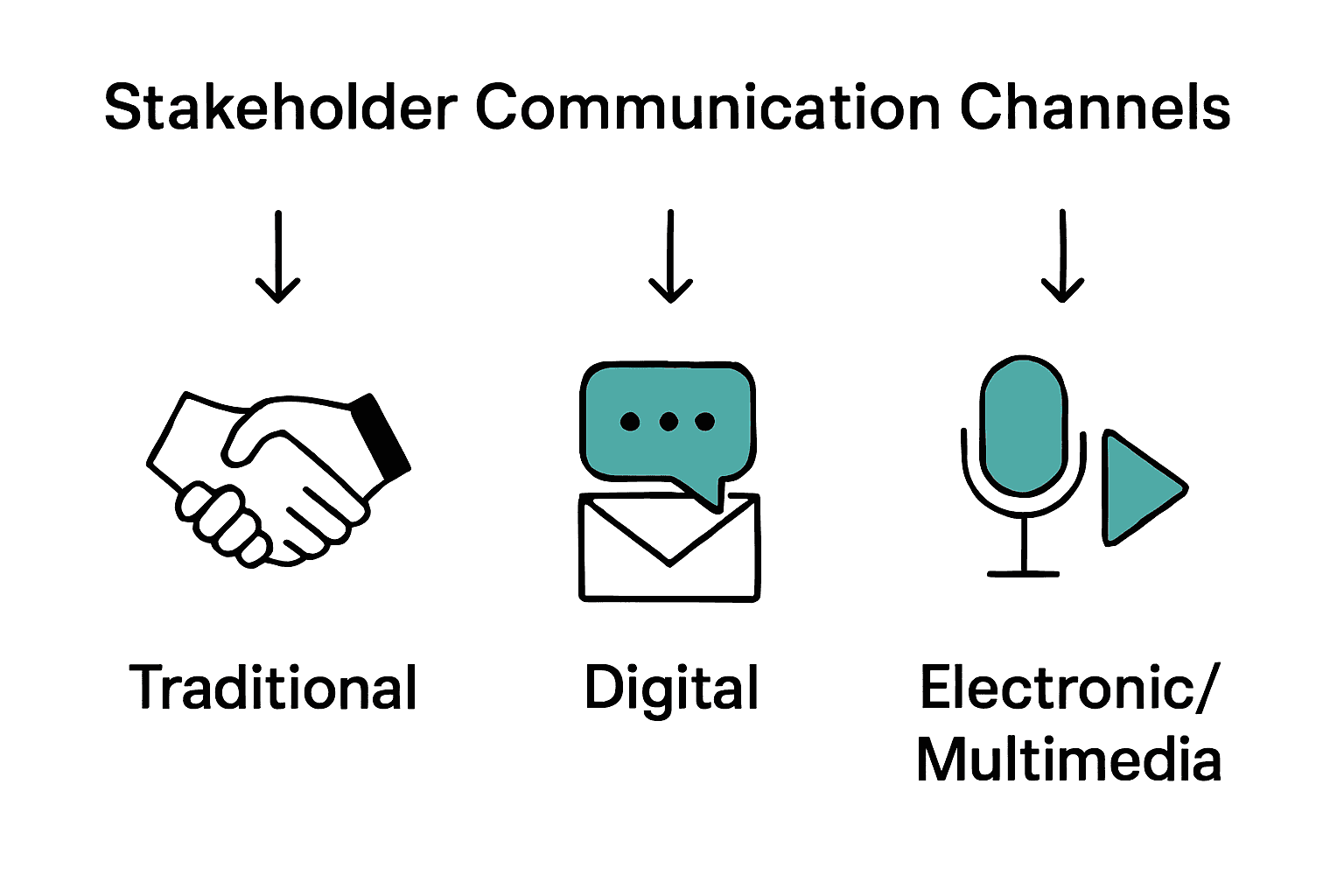
The primary types of stakeholder communication channels can be categorized into three main groups:
1. Traditional Communication Channels
- Face-to-face meetings
- Phone conversations
- Printed reports and newsletters
- Physical mail and written correspondence
- Conferences and workshops
2. Digital Communication Platforms
- Email communications
- Company websites
- Social media channels
- Video conferencing tools
- Collaboration software
- Webinars and online presentations
3. Electronic and Multimedia Channels
- Radio broadcasts
- Television presentations
- Podcasts
- Interactive online forums
- Multimedia presentations
- Digital brochures and interactive content
Organizations must strategically select communication channels based on their specific stakeholder demographics, preferences, and accessibility.
 Understanding What is Stakeholder Engagement can provide additional insights into tailoring communication approaches that resonate with different stakeholder groups. The key is flexibility and a nuanced understanding of how different channels can effectively convey information, build trust, and maintain productive relationships.
Core Principles and Best Practices Explained
Stakeholder communication is an intricate process that demands strategic approach and nuanced understanding. According to research from Alooba, the core principles of effective stakeholder communication center on transparency, active listening, empathy, and regular engagement. These foundational elements create a robust framework for meaningful interactions that transcend simple information exchange.
The best practices in stakeholder communication involve several critical strategies:
Key Best Practices:
- Tailor communication to specific stakeholder needs
- Maintain consistent and open dialogues
- Proactively address potential concerns
- Demonstrate genuine respect and understanding
- Ensure ethical and transparent interactions
Research from Jurnal Aspikom emphasizes that effective stakeholder relations are grounded in clear communication, mutual respect, and ethical engagement. Organizations must go beyond surface-level interactions, developing deep understanding of stakeholder interests and creating environments that foster trust and collaborative decision-making.
Implementing these principles requires continuous effort and adaptability. Corporate Coaching Strategies can provide additional insights into developing the communication skills necessary for building strong stakeholder relationships. Successful stakeholder communication is not a one-time event but an ongoing process of listening, understanding, and responding with empathy and strategic intent.
Roles, Responsibilities, and Common Pitfalls
Stakeholder communication requires a structured approach with clearly defined roles and responsibilities. According to research from arXiv, the primary roles involve identifying stakeholders, establishing communication channels, and maintaining consistent engagement. These roles are critical for ensuring that every stakeholder feels heard, valued, and appropriately informed throughout the communication process.
Key Stakeholder Communication Roles:
- Communication Managers: Develop overall communication strategy
- Project Leaders: Coordinate stakeholder interactions
- Engagement Specialists: Design targeted communication approaches
- Feedback Coordinators: Collect and analyze stakeholder input
- Executive Sponsors: Provide strategic oversight and support
Responsibilities for Effective Stakeholder Communication:
- Understand diverse stakeholder needs and expectations
- Provide timely and relevant information
- Create multiple feedback channels
- Maintain transparency and consistency
- Adapt communication strategies dynamically
Common Pitfalls to Avoid:
- Neglecting certain stakeholder groups
- Inconsistent or fragmented messaging
- Inadequate feedback mechanisms
- Overlooking cultural or communication differences
- Failing to prioritize stakeholder perspectives
Role of Goal Setting can offer additional insights into creating structured communication approaches that minimize potential risks and maximize stakeholder engagement. Successful stakeholder communication is an ongoing journey of understanding, adapting, and continuously improving organizational communication strategies.
Benefits of Effective Stakeholder Engagement
Stakeholder engagement is far more than a compliance exercise. According to research from arXiv, effective engagement fundamentally transforms organizational performance by driving innovation, collaboration, and strategic decision-making. When stakeholders are actively involved, organizations unlock powerful insights that can dramatically improve project outcomes and long-term success.
Strategic Benefits of Stakeholder Engagement:
- Enhanced decision-making quality
- Increased organizational adaptability
- Deeper understanding of diverse perspectives
- Improved risk management
- Stronger relationship building
- More comprehensive problem-solving
- Greater transparency and trust
Tangible Organizational Impacts:
- Reduced project implementation risks
- Accelerated innovation cycles
- More efficient resource allocation
- Improved stakeholder satisfaction
- Higher probability of project success
- Enhanced organizational reputation
- Better alignment with stakeholder expectations
The process of engaging stakeholders is not about mere communication, but about creating meaningful dialogues that generate mutual value. Understanding the Coaching Process Overview can provide additional context on developing collaborative approaches that transform stakeholder interactions from transactional exchanges to strategic partnerships. Ultimately, effective stakeholder engagement is an investment in organizational resilience and sustainable growth.
Transform Your Stakeholder Communication With Expert Coaching
Effective stakeholder communication demands more than just sharing information. It requires transparency, active listening, and tailored engagement to build trust and foster collaboration. If you find it challenging to navigate diverse stakeholder needs or struggle with maintaining consistent dialogue, you are not alone. Common pitfalls such as fragmented messaging and overlooked perspectives can create barriers to success and cause frustration.
Unlock the power of strategic stakeholder engagement with guidance from Tariq Juneja. Drawing on proven coaching methods in agile practices and business transformation, Tariq helps you master effective communication that drives innovation and stronger relationships. Take control of your organizational growth by learning how to adapt communication strategies that resonate with every stakeholder group.

Ready to move beyond communication hurdles and create meaningful stakeholder connections that fuel success now Visit Tariq’s coaching platform to explore personalized coaching programs. Discover how corporate coaching strategies and stakeholder management guides can elevate your approach. Book your free consultation today and start transforming your communication challenges into lasting opportunities.
Frequently Asked Questions
What is stakeholder communication?
Stakeholder communication is the strategic process of exchanging information, insights, and expectations between an organization and its key stakeholders, aiming to build trust and manage expectations effectively.
Why is effective stakeholder communication important?
Effective stakeholder communication is crucial as it aligns expectations, creates transparency, reduces misunderstandings, manages risks proactively, and fosters a collaborative environment that enhances organizational success.
What are key types of stakeholder communication channels?
Key types of stakeholder communication channels include traditional communication methods (like face-to-face meetings and printed reports), digital platforms (such as email and social media), and electronic channels (including podcasts and online forums).
What are some best practices for stakeholder communication?
Best practices for stakeholder communication involve tailoring communication to meet specific stakeholder needs, maintaining consistent dialogues, proactively addressing concerns, and ensuring ethical and transparent interactions.