

Over 60 percent of professionals report greater growth when learning in groups compared to solo efforts. Group coaching stands out by combining expert guidance with the power of collective insight, creating a space where individuals progress faster together. For anyone seeking stronger professional skills or meaningful personal development, understanding group coaching brings clarity on why so many find success in these collaborative environments.
Table of Contents
- Defining Group Coaching and Core Principles
- Different Types of Group Coaching Programs
- How Group Coaching Works in Practice
- Key Benefits for Organizations and Individuals
- Roles of Coaches, Members, and Participants
- Common Pitfalls and How to Avoid Them
Key Takeaways
| Point | Details |
|---|---|
| Group Coaching Overview | Group coaching fosters collective learning in small groups, facilitating individual and shared goal achievement through collaboration. |
| Types of Programs | Various programs exist, including leadership development, personal growth, and skill enhancement, tailored to specific developmental needs. |
| Benefits | Group coaching enhances collaboration, accelerates leadership development, and promotes individual growth, yielding significant organizational advantages. |
| Coaching Dynamics | Effective group coaching relies on balanced roles among coaches and participants, ensuring psychological safety, active engagement, and collaborative learning. |
Defining Group Coaching and Core Principles
Group coaching represents a strategic approach to professional and personal development that leverages collective learning and individual growth within a small group setting. According to catalogimages.wiley.com, group coaching is a targeted process that applies coaching principles to help participants achieve personal or professional goals while increasing self-awareness.
At its core, group coaching differs fundamentally from individual coaching by creating a collaborative environment where participants simultaneously learn from a professional coach and from each other’s experiences. The philosophyofcoaching.org research highlights that this approach involves skilled facilitation through active listening and meaningful questioning, designed to support both individual and collective learning objectives.
The primary characteristics of group coaching include:
- Small group size (typically 4-10 participants)
- Structured yet flexible learning environment
- Focus on shared yet personalized goal achievement
- Professional coach guidance and facilitation
- Emphasis on peer learning and collective insights
Understanding these core principles helps professionals and organizations recognize group coaching as a powerful developmental tool that maximizes learning potential through collaborative interaction. Understand more about coaching techniques with our guide on coaching techniques, which provides deeper insights into effective coaching methodologies.
Different Types of Group Coaching Programs
Group coaching encompasses diverse approaches tailored to meet specific organizational and personal development needs. According to profweblearning.com, these programs vary significantly, with team coaching representing one prominent model where coaches work with existing groups toward shared objectives.
The sajbm.org research highlights that group coaching programs can be strategically categorized based on distinct objectives. These categories typically include:
-
Leadership Development Programs
- Focus on enhancing management and strategic thinking skills
- Target emerging and established leaders
- Emphasize collaborative problem-solving
-
Personal Growth Coaching
- Address individual psychological and professional barriers
- Support holistic self-improvement
- Encourage personal accountability
-
Skill Enhancement Workshops
- Target specific professional competencies
- Provide structured learning environments
- Allow peer-to-peer skill exchange
For professionals seeking to understand more comprehensive coaching strategies, explore our guide on corporate coaching strategies, which provides deeper insights into organizational development approaches. These varied group coaching models demonstrate the flexibility and power of collaborative learning environments in driving individual and collective growth.
How Group Coaching Works in Practice
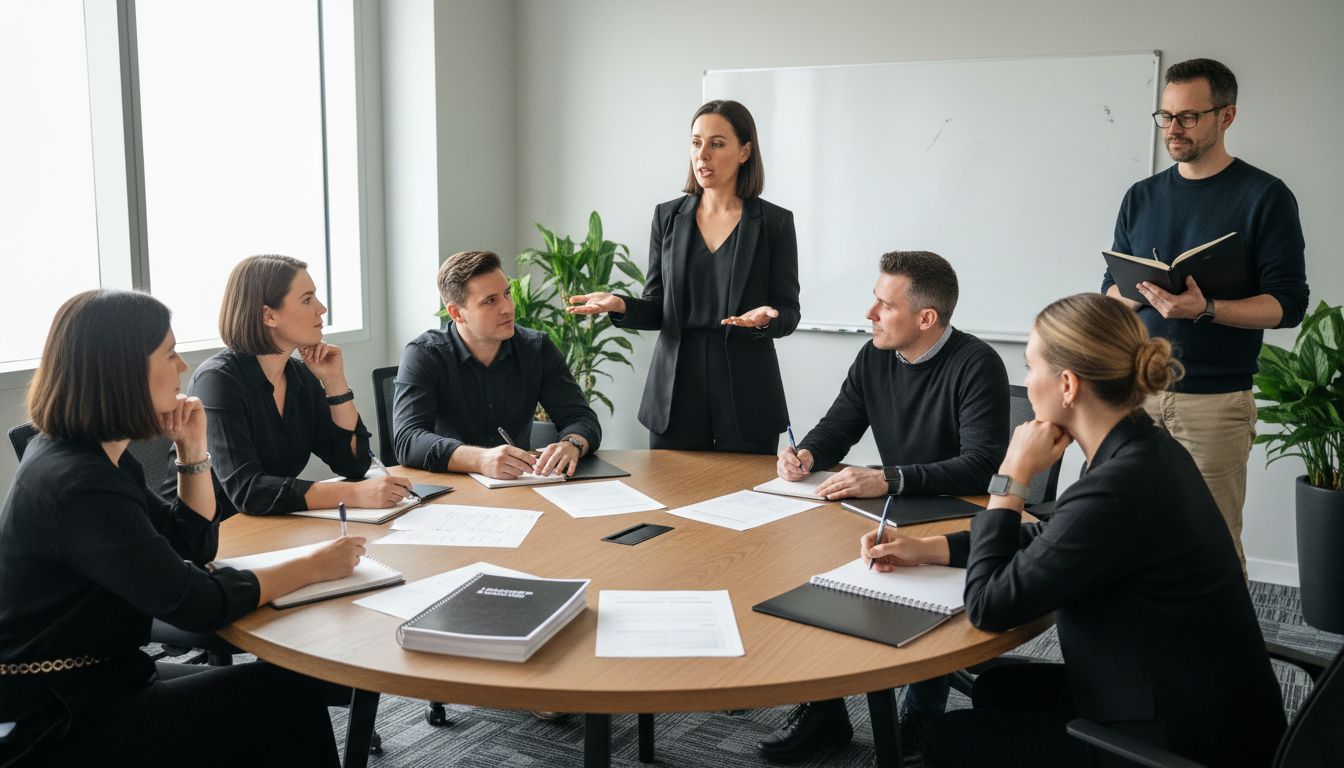
Group coaching operates through a sophisticated yet collaborative process that transforms individual and collective learning experiences. According to lifelong-learning.ox.ac.uk, the methodology involves understanding complex group dynamics while maintaining a delicate balance of guidance without direct leadership.
The practical implementation of group coaching follows a structured yet flexible framework. challengingbehavior.org illustrates this approach through a comprehensive process that typically includes:
-
Pre-Session Preparation
- Define clear group objectives
- Establish participant expectations
- Create a safe, supportive environment
-
Interactive Session Dynamics
- Facilitate collaborative discussions
- Encourage peer-to-peer learning
- Provide targeted professional guidance
-
Reflection and Implementation
- Share individual insights
- Plan actionable strategies
- Support ongoing personal development
The nuanced approach of group coaching allows participants to learn simultaneously from the coach and their peers, creating a rich, multidimensional learning experience.
Learn more about the coaching process in our comprehensive overview, which provides deeper insights into effective coaching methodologies and transformative learning strategies.
Key Benefits for Organizations and Individuals
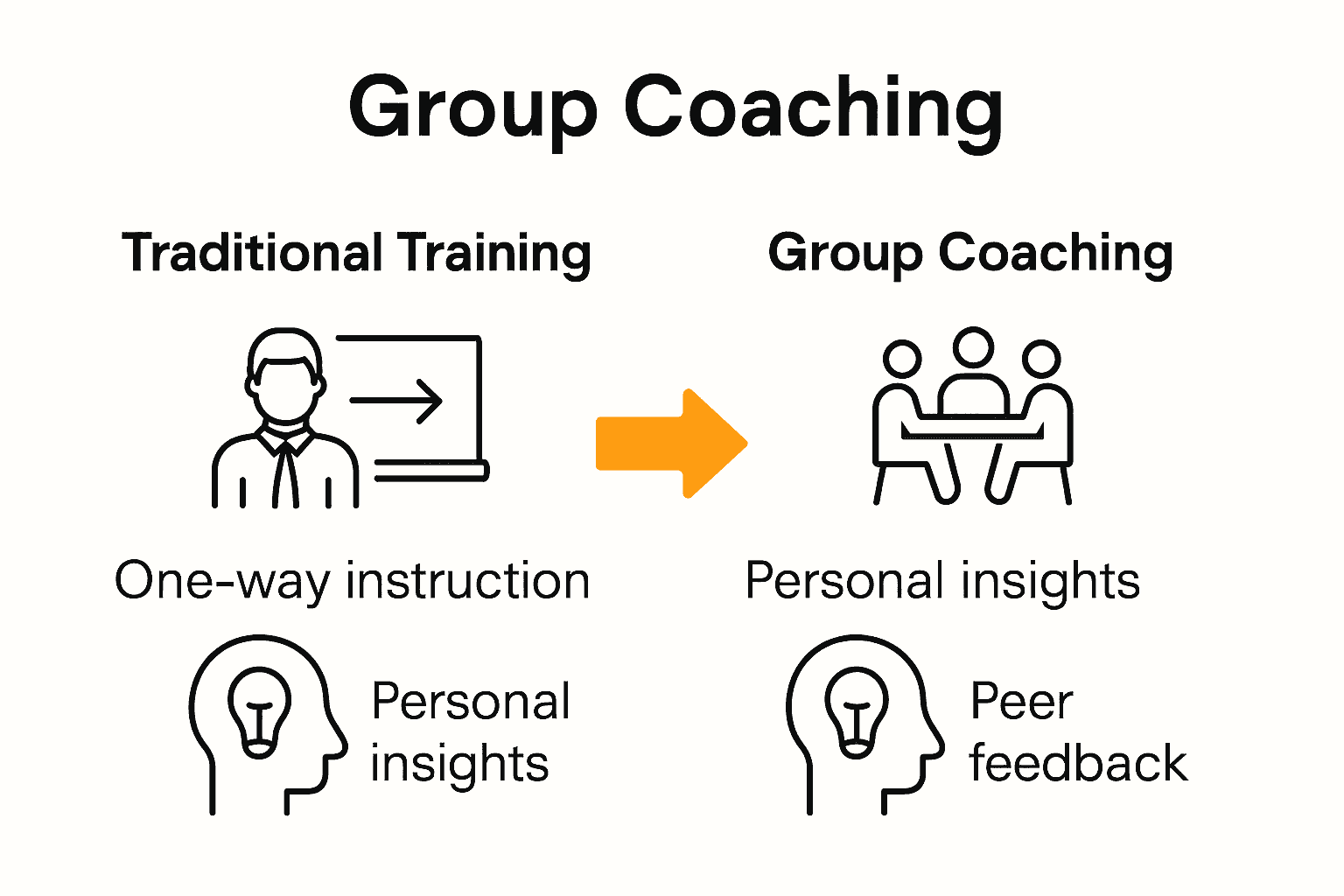
Group coaching delivers transformative advantages that extend far beyond traditional learning methods. According to crhleadership.com, these programs offer a comprehensive range of benefits including personalized guidance, shared insights, and collective problem-solving that can dramatically enhance both individual and organizational performance.
The psychological impact of group coaching is particularly profound. sajbm.org research reveals that these programs foster psychological safety and cohesion, enabling deep self-reflection and authentic self-development. This approach contributes significantly to leadership effectiveness and organizational resilience.
Key benefits for organizations and individuals include:
-
For Organizations
- Enhanced team collaboration
- Accelerated leadership development
- Improved organizational communication
- Cost-effective training approach
- Increased employee engagement
-
For Individuals
- Personal skill enhancement
- Expanded professional network
- Increased self-awareness
- Peer learning opportunities
- Structured personal growth framework
Discover strategies to improve organizational productivity with our comprehensive guide, which complements the transformative potential of group coaching approaches.
Roles of Coaches, Members, and Participants
Group coaching dynamics require a nuanced understanding of each participant’s role in creating a transformative learning environment. According to philosophyofcoaching.org, the interaction between coaches and group members is fundamentally about guiding participants through reflection, meaning-making, and objective achievement.
The coach’s primary responsibilities involve creating a supportive framework that enables participants to explore their potential, challenge existing perspectives, and develop actionable strategies. This requires a delicate balance of facilitation, where the coach provides structure without imposing direct solutions, allowing participants to discover insights organically.
Key roles in the group coaching ecosystem include:
Coach Responsibilities
- Facilitate group discussions
- Create psychological safety
- Ask provocative questions
- Monitor group dynamics
- Provide constructive feedback
Participant Expectations
- Active engagement
- Openness to feedback
- Willingness to share experiences
- Commitment to personal growth
- Respect for group learning process
Group Member Interactions
- Collaborative problem-solving
- Peer learning and support
- Mutual accountability
- Diverse perspective sharing
- Constructive challenge and dialogue
Learn more about creating effective coaching sessions with our comprehensive guide, which provides additional insights into structuring meaningful group coaching experiences.
Common Pitfalls and How to Avoid Them
Group coaching presents unique challenges that can derail the learning process if not carefully managed. According to siopsa.org.za, one of the most significant pitfalls is neglecting group dynamics, which can dramatically reduce the effectiveness of the coaching experience.
sajbm.org research emphasizes that psychological safety is crucial in preventing group coaching failures. Without creating an environment of trust and authentic self-development, participants may become hesitant to share, learn, and grow.
Common Pitfalls and Strategic Solutions:
Communication Barriers
- Pitfall: Dominant participants monopolizing discussions
- Solution: Implement structured turn-taking mechanisms
- Technique: Use round-robin sharing techniques
Engagement Challenges
- Pitfall: Uneven participant involvement
- Solution: Design inclusive interaction strategies
- Technique: Rotate leadership and facilitation roles
Trust and Safety Issues
- Pitfall: Lack of psychological safety
- Solution: Establish clear confidentiality guidelines
- Technique: Create group agreements at session onset
Explore our comprehensive guide on creating effective coaching sessions to develop strategies that address these critical group coaching challenges.
Unlock the True Power of Group Coaching for Lasting Transformation
Struggling to harness the full potential of group coaching in your organization or personal growth journey? This article highlights key challenges like creating psychological safety and maintaining engagement while leveraging collaborative learning. If you want to move beyond traditional coaching and experience transformative change through guided peer interaction and expert facilitation, understanding group coaching methods is critical.
Group coaching can accelerate leadership development, enhance team collaboration, and dramatically increase self-awareness. At Tariq Juneja, our proven coaching approaches blend transformational change with practical strategies inspired by agile and personal development principles. Explore our Life Coaching Archives to dive deeper into tailored growth programs or empower your organization through adaptive change with insights from the Change Management Archives.

Ready to transform challenges into breakthroughs with group coaching designed to unlock potential and foster meaningful collaboration? Visit Tariq Juneja to learn how to book your free consultation today and start a journey toward accelerated growth and productivity.
Frequently Asked Questions
What is group coaching?
Group coaching is a collaborative approach to personal and professional development where individuals learn from a coach and each other’s experiences in a small group setting.
What are the main types of group coaching programs?
Group coaching programs typically include leadership development, personal growth coaching, and skill enhancement workshops, each focusing on different objectives and areas of development.
How does group coaching work in practice?
Group coaching involves pre-session preparation, interactive session dynamics, and reflection and implementation phases, enabling participants to derive insights and actionable strategies collaboratively.
What are the benefits of group coaching for individuals and organizations?
Group coaching offers personalized guidance, enhanced collaboration, improved communication, and increased self-awareness, benefiting both individual participants and their organizations.