

More than 60 percent of professional coaches say ongoing supervision is vital to their growth and success in the field. With the demand for higher coaching standards and better client outcomes rising, understanding coaching supervision has never been more important. This guide sheds light on what coaching supervision really means, its main purposes, and how it shapes the effectiveness and professionalism of coaches across the industry.
Table of Contents
- Defining Coaching Supervision and Its Purpose
- Main Types of Coaching Supervision Approaches
- Core Processes and How Supervision Works
- Key Roles and Responsibilities in Supervision
- Ethical Standards and Common Pitfalls
Key Takeaways
| Point | Details |
|---|---|
| Purpose of Coaching Supervision | A structured process that supports coaches’ professional growth through reflective dialogue and ethical practice. |
| Types of Approaches | Key supervision approaches include developmental, normative, restorative, and formative, each catering to different developmental needs. |
| Core Processes | Coaching supervision follows a systematic approach involving assessment, reflective dialogue, case reviews, skill enhancement, and ongoing monitoring. |
| Ethical Standards | Essential in supervision, ethical standards include confidentiality, professional boundaries, and cultural sensitivity to protect clients and coaches alike. |
Defining Coaching Supervision and Its Purpose
Coaching supervision is a sophisticated professional development process designed to support, enhance, and refine coaching practices. According to associationforcoaching, it represents a “formal process of professional support” that ensures continuing development of coaches and the ongoing effectiveness of their coaching practice.
At its core, coaching supervision involves an interactive and collaborative approach where coaches engage with trained supervisors to explore their professional experiences. coachingfederation highlights that this process is fundamentally about reflective dialogue, skill enhancement, and deeper self-awareness. The primary objectives of coaching supervision include:
- Continuous professional growth
- Critical reflection on coaching methodologies
- Maintaining high ethical standards
- Enhancing overall coaching effectiveness
Unlike traditional mentoring, coaching supervision goes beyond simple guidance. It creates a structured environment where coaches can safely examine their practice, challenge their assumptions, and develop more nuanced approaches to supporting their clients. Through this process, coaches gain insights into their interpersonal dynamics, blind spots, and potential areas for improvement, ultimately delivering more impactful and transformative coaching experiences.
Main Types of Coaching Supervision Approaches
Coaching supervision encompasses several distinctive approaches, each designed to address unique professional development needs for coaches. While the fundamental goal remains consistent – supporting coaches’ growth and effectiveness – these approaches differ in their methodology, focus, and implementation.
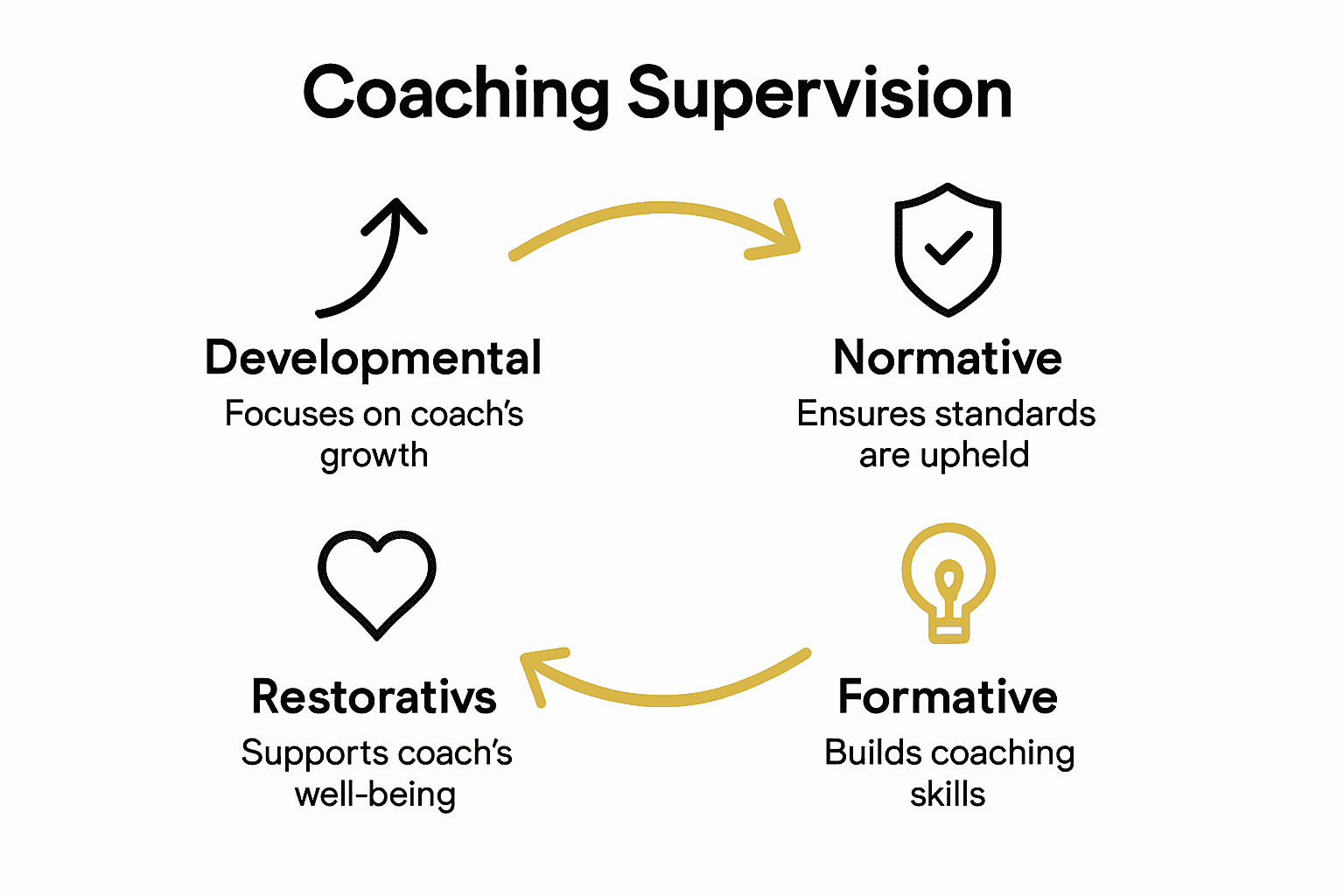
The primary types of coaching supervision approaches include:
- Developmental Supervision: Focuses on the coach’s ongoing learning and skill progression
- Normative Supervision: Emphasizes adherence to professional standards and ethical guidelines
- Restorative Supervision: Addresses emotional well-being and prevents professional burnout
- Formative Supervision: Concentrates on enhancing specific coaching competencies and techniques
Each approach offers unique benefits. Developmental supervision, for instance, creates a nurturing environment where coaches can explore their personal growth trajectories. Corporate Coaching Explained: Strategies, Types, Impact highlights how tailored supervision approaches can significantly impact a coach’s professional journey, enabling them to refine their skills and expand their understanding of complex coaching dynamics.
These supervision approaches are not mutually exclusive. Many coaches experience a blend of these methodologies, allowing for comprehensive professional development. By integrating different supervision strategies, coaches can create a holistic approach to their personal and professional growth, ultimately delivering more nuanced, effective, and transformative coaching experiences for their clients.
Core Processes and How Supervision Works
Coaching supervision operates through a structured and intentional process designed to support professional development and enhance coaching effectiveness. According to coachaccreditation, this process involves “a structured process where the coach engages in reflective dialogue with a supervisor to review client interactions, discuss challenges, and explore new perspectives.”
The core processes of coaching supervision typically follow a systematic approach:
- Initial Assessment: Evaluating the coach’s current professional skills and development needs
- Reflective Dialogue: Engaging in deep, honest conversations about coaching experiences
- Case Review: Analyzing specific client interactions and coaching approaches
- Skill Enhancement: Identifying and developing strategies for improvement
- Ongoing Monitoring: Tracking professional growth and addressing emerging challenges
As coachingstudies highlights, these supervision sessions are collaborative environments where coaches can deeply examine their practice. Understanding the Coaching Process Overview for Growth demonstrates that effective supervision goes beyond simple performance evaluation, creating a supportive space for holistic professional development.
The supervision process is fundamentally about creating a safe, confidential environment where coaches can be vulnerable, challenge their assumptions, and continuously refine their craft. By providing a structured yet flexible framework for professional growth, coaching supervision ensures that coaches maintain the highest standards of practice, continually adapt to evolving client needs, and develop the emotional intelligence and technical skills necessary for transformative coaching experiences.

Key Roles and Responsibilities in Supervision
Coaching supervision involves a complex interplay of roles and responsibilities, each critical to maintaining professional excellence and supporting coaches’ growth. According to associationforcoaching, the supervisor’s role encompasses “providing support, facilitating the coach’s development, and ensuring professional assurance by exploring the coach’s practice.”
The key roles in coaching supervision can be categorized into distinct responsibilities:
-
Supervisor’s Responsibilities:
- Provide objective, constructive feedback
- Create a safe, non-judgmental learning environment
- Help coaches reflect on their practice
- Maintain ethical standards
- Identify potential professional development areas
-
Coach’s Responsibilities:
- Demonstrate openness to feedback
- Actively engage in reflective practices
- Share challenging client scenarios
- Commit to continuous learning
- Maintain confidentiality
Coaching Techniques Explained: Understanding Their Impact reinforces that effective supervision is a collaborative process where both supervisor and coach work together to enhance professional capabilities. This partnership goes beyond traditional mentoring, creating a dynamic environment of mutual growth and professional accountability.
Ultimately, the supervision relationship is built on trust, transparency, and a shared commitment to professional excellence. By clearly defining and respecting these roles, coaches can develop a robust support system that not only improves their individual practice but also contributes to the broader evolution of coaching as a transformative professional discipline.
Ethical Standards and Common Pitfalls
Ethical standards form the cornerstone of effective coaching supervision, creating a framework that protects both coaches and their clients. Complete Guide to Executive Coaching Explained emphasizes the critical importance of maintaining professional boundaries and integrity throughout the coaching relationship.
Key ethical standards in coaching supervision include:
- Maintaining strict client confidentiality
- Avoiding conflicts of interest
- Establishing clear professional boundaries
- Practicing cultural sensitivity
- Ensuring transparent communication
Common pitfalls that coaches and supervisors must carefully navigate include:
-
Boundary Violations
- Becoming overly personal with clients
- Extending relationships beyond professional contexts
- Providing advice outside coaching expertise
-
Ethical Compromises
- Overlooking potential conflicts of interest
- Failing to disclose personal biases
- Breaching client confidentiality
-
Professional Misconduct
- Making unrealistic promises
- Exploiting client vulnerabilities
- Neglecting continuous professional development
Professional supervision serves as a critical checkpoint to identify and address these potential ethical challenges. By maintaining rigorous standards and fostering a culture of accountability, coaches can protect their clients’ interests while continuing to develop their professional capabilities. The goal is not just to avoid misconduct, but to create a supportive environment that prioritizes ethical practice, personal growth, and transformative coaching experiences.
Elevate Your Coaching Practice with Expert Supervision Support
Coaching supervision is essential when you want to overcome professional challenges such as ethical dilemmas, burnout risks, or stuck coaching approaches. This article highlights core concepts like developmental, restorative, and normative supervision that help coaches reflect deeply, refine skills, and maintain high ethical standards. If you are ready to move beyond simple guidance and create transformative coaching experiences for your clients, specialized support is key.

Discover how targeted supervision and agile frameworks can unlock your full potential. Explore proven strategies to enhance your professional growth in the Agile Coaching Archives and learn how sophisticated change methods evolve coaching effectiveness in the Change Management Archives. Visit https://tariqjuneja.com today for coaching programs designed to elevate your skill set and book a free consultation to start your transformational journey now.
Frequently Asked Questions
What is coaching supervision?
Coaching supervision is a formal professional development process aimed at supporting and enhancing coaching practices through reflective dialogue and collaboration between coaches and trained supervisors.
What are the main objectives of coaching supervision?
The primary objectives of coaching supervision include continuous professional growth, critical reflection on coaching methodologies, maintaining high ethical standards, and enhancing overall coaching effectiveness.
What are the different types of coaching supervision approaches?
The main types of coaching supervision approaches are developmental supervision, normative supervision, restorative supervision, and formative supervision, each focusing on different aspects of professional growth and coaching skills.
What ethical standards should be followed in coaching supervision?
Key ethical standards in coaching supervision include maintaining client confidentiality, avoiding conflicts of interest, establishing clear professional boundaries, practicing cultural sensitivity, and ensuring transparent communication.