

Most American businesses underestimate how much professional coaching can accelerate both individual and organizational growth. Choosing a coach is more than checking credentials—it is about finding someone who sharpens leadership skills and unlocks untapped potential. With over 60 percent of American executives crediting coaching for significant performance improvements, understanding the real impact and dispelling common myths about business coaching can directly shape long-term success and satisfaction.
Table of Contents
- Defining Business Coaching and Common Misconceptions
- Different Types of Business Coaches
- Core Skills and Approaches in Business Coaching
- Role of a Business Coach in Transformation
- Choosing Wisely and Mistakes to Avoid
Key Takeaways
| Point | Details |
|---|---|
| Role of Business Coaching | Business coaching is a strategic partnership aimed at unlocking potential and enhancing performance through personalized guidance. |
| Common Misconceptions | Many professionals mistakenly believe coaching is only for struggling leaders or requires industry-specific expertise, limiting their understanding of its adaptability. |
| Types of Coaches | Various coaching specializations exist, such as Leadership, Performance, and Executive Coaches, each targeting different aspects of professional development. |
| Selecting a Coach | Conduct thorough evaluations and initial consultations to ensure the coach’s expertise aligns with your professional development goals and organizational needs. |
Defining Business Coaching and Common Misconceptions
Business coaching represents a strategic partnership between a professional coach and business leaders aimed at unlocking individual and organizational potential. Unlike traditional consulting, business coaching focuses on developing leadership capabilities, enhancing performance, and facilitating transformational change through personalized guidance and structured interventions.
Many professionals harbor misconceptions about business coaching that prevent them from experiencing its true value. Common myths include believing coaching is prohibitively expensive, exclusively for struggling leaders, or requires coaches to have industry-specific expertise. In reality, business coaching transcends these limitations, offering adaptable strategies that apply across diverse professional contexts.
A business coach serves multiple critical functions: providing objective perspective, challenging existing thought patterns, developing strategic thinking skills, and creating accountability mechanisms. They work collaboratively with clients to identify potential roadblocks, design actionable growth strategies, and support sustained professional development. Effective coaching goes beyond mere advice-giving, instead empowering individuals to discover their own solutions and unlock latent potential.
Pro Coaching Insight: Before selecting a business coach, conduct thorough interviews and request sample coaching approaches to ensure alignment with your specific professional development goals and organizational culture.
Pro Tip: Schedule an initial consultation with potential coaches to assess their methodology, communication style, and compatibility with your professional objectives.
Different Types of Business Coaches
Business coaching encompasses diverse specializations designed to address unique organizational and professional development needs. Scholarly research reveals multiple coaching sub-groups that target specific performance enhancement objectives, each bringing distinctive methodologies and strategic approaches to professional growth.
Typical business coaching categories include Leadership Coaches, who concentrate on developing executive skills, strategic thinking, and organizational transformation. Performance Coaches focus on improving individual and team productivity, identifying performance barriers, and implementing targeted improvement strategies. Career Development Coaches specialize in guiding professionals through career transitions, skill enhancement, and strategic career planning.

Academic studies examining coaching variations highlight additional nuanced coaching types, such as Specialized Coaches who work within specific industry contexts. These include Technology Coaches for digital transformation, Agile Coaches for organizational adaptability, Wellness Coaches addressing workplace stress management, and NLP (Neuro-Linguistic Programming) Coaches focusing on communication and behavioral modification techniques.
Executive Coaches represent a premium segment, typically working directly with senior leaders to refine leadership capabilities, enhance decision-making processes, and cultivate advanced strategic perspectives. They often serve as confidential advisors helping top-tier professionals navigate complex organizational challenges and personal leadership development.
Pro Coaching Selection Tip: Assess a coach’s specific expertise, industry experience, and proven track record before engagement to ensure optimal alignment with your professional development goals.
Here is a comparison of key business coaching specializations and their strategic focus:
| Coaching Type | Main Area of Focus | Typical Clients |
|---|---|---|
| Leadership Coach | Executive development, vision | Managers, executives |
| Performance Coach | Productivity, goal achievement | Teams, individuals |
| Career Development | Career transitions, planning | Professionals, job seekers |
| Executive Coach | Strategic leadership, decisions | Senior leaders, C-suite |
| Specialized Coach | Industry-specific challenges | Tech, wellness, agile teams |
Core Skills and Approaches in Business Coaching
Business coaching demands a sophisticated blend of interpersonal skills, strategic thinking, and targeted intervention techniques. Research exploring coaching traits highlights critical competencies that distinguish exceptional coaches, emphasizing the importance of deep empathy, active listening, and nuanced communication strategies in driving meaningful professional transformation.
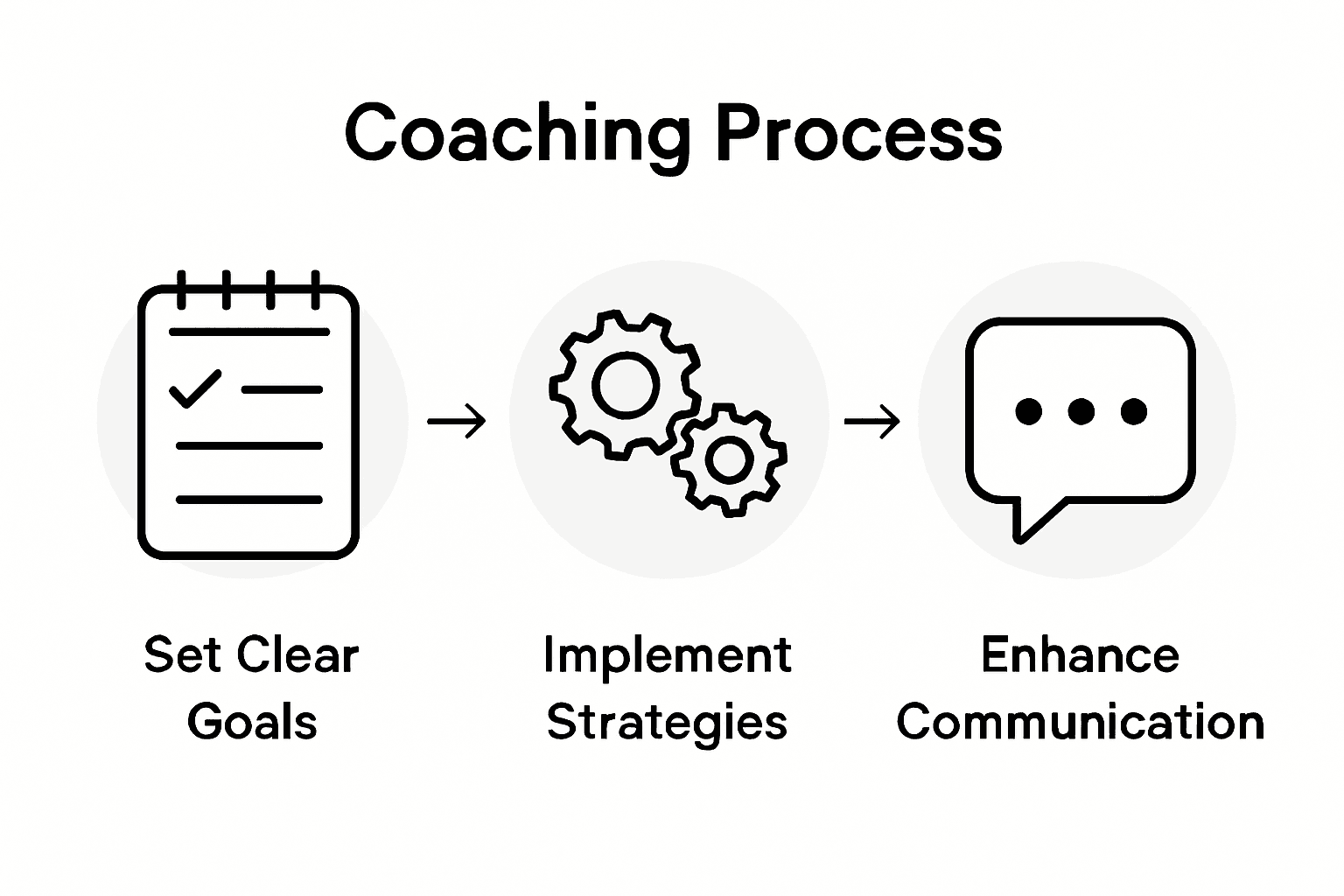
Core coaching approaches typically encompass several key methodological frameworks. Diagnostic Assessment involves comprehensive evaluation of individual and organizational performance gaps, utilizing advanced analytical tools to identify specific development needs. Transformational Coaching focuses on profound behavioral and mindset shifts, challenging existing paradigms and helping clients reimagine their potential. Performance Optimization strategies concentrate on developing actionable strategies, establishing measurable goals, and creating systematic accountability mechanisms.
Advanced coaching research underscores the significance of objective observation and real-time feedback techniques. Successful coaches leverage sophisticated communication tools to provide constructive, data-driven insights that enable clients to recognize unconscious behavioral patterns, overcome limiting beliefs, and develop more effective professional approaches. This requires mastering complex skills like emotional intelligence, reflective listening, and strategic questioning techniques.
Effective business coaches also integrate multiple psychological and professional development models, including cognitive behavioral approaches, neuro-linguistic programming, and agile methodology principles. These frameworks help coaches create customized intervention strategies that address unique individual and organizational challenges with precision and adaptability.
Pro Coaching Skill Development Tip: Continuously invest in personal skill enhancement through professional development programs, peer networking, and advanced certification training to stay current with emerging coaching methodologies and technological innovations.
The following table summarizes core skills that distinguish exceptional business coaches and their impact:
| Key Coaching Skill | How It Enhances Outcomes | Example Application |
|---|---|---|
| Deep Empathy | Builds client trust and openness | Navigating sensitive topics |
| Active Listening | Reveals real issues for progress | Uncovering underlying barriers |
| Strategic Questioning | Stimulates critical thinking | Challenging assumptions |
| Objective Feedback | Drives actionable improvement | Providing real-time insights |
| Emotional Intelligence | Manages emotions in high-stakes contexts | Navigating conflicts |
Role of a Business Coach in Transformation
Business coaches serve as catalysts for profound organizational and personal transformation, bridging the gap between current performance and unrealized potential. Systemic Team Coaching methodologies demonstrate how coaching extends beyond individual development to encompass broader organizational dynamics, focusing on creating sustainable value and enhancing collective leadership capabilities.
The transformational role of a business coach involves multiple strategic interventions. They help leaders and teams deconstruct existing mental models, challenge limiting beliefs, and develop more adaptive thinking patterns. Organizational Transformation becomes possible through targeted processes that include comprehensive performance diagnostics, strategic realignment, and the development of scalable leadership competencies. Coaches act as objective external partners, providing critical insights that internal team members might overlook due to established organizational biases.
Advanced learning research reveals that transformative coaching integrates theoretical knowledge with practical application, creating powerful learning experiences that drive meaningful change. This approach involves helping clients develop metacognitive skills, enabling them to reflect on their own thinking processes, recognize unconscious patterns, and implement strategic behavioral modifications that support long-term professional growth.
Successful business coaches facilitate transformation through a combination of diagnostic assessment, strategic intervention, and continuous support. They help organizations develop resilience, adaptability, and innovation capabilities by creating safe environments for experimentation, learning, and personal development. The ultimate goal is not just incremental improvement, but fundamental reimagining of professional potential and organizational effectiveness.
Pro Transformation Insight: Approach organizational transformation as a holistic journey, maintaining flexibility and openness to continuous learning while systematically addressing both individual and systemic challenges.
Choosing Wisely and Mistakes to Avoid
Selecting the right business coach is a critical decision that can significantly impact professional growth and organizational success. Common misconceptions about business coaching often lead professionals to make uninformed choices, potentially undermining their developmental objectives.
Key mistakes to avoid when choosing a business coach include settling for generic, one-size-fits-all approaches, neglecting to verify a coach’s credentials, and failing to establish clear expectations. Credential Verification involves thoroughly examining a potential coach’s professional background, certifications, proven track record, and demonstrated expertise in your specific industry or developmental area. Professionals should seek coaches with a combination of relevant experience, proven methodological approaches, and a demonstrable history of driving meaningful transformational outcomes.
Effective coach selection requires a comprehensive evaluation process that goes beyond surface-level impressions. Potential clients should conduct in-depth initial consultations, request detailed case studies, seek references from previous clients, and assess the coach’s communication style and philosophical approach. Critical assessment criteria include the coach’s ability to ask penetrating questions, provide objective perspectives, challenge existing mental frameworks, and create customized strategies that align with individual and organizational goals.
Red flags in coach selection include coaches who promise unrealistic outcomes, rely heavily on generic motivational rhetoric, demonstrate inflexible methodological approaches, or appear more interested in selling services than understanding your specific challenges. Successful coaching relationships are built on mutual trust, transparent communication, collaborative goal-setting, and a genuine commitment to professional development.
Pro Selection Insight: Always schedule an initial discovery session with potential coaches to assess personal chemistry, methodological compatibility, and genuine commitment to your professional growth objectives.
Unlock Your True Potential with Expert Business Coaching
Struggling to overcome performance barriers or seeking transformational leadership growth Understanding the vital role of a business coach in driving change can empower you and your organization to reach new heights. This article highlights key coaching types and skills essential for success. If you want strategies that foster real transformation and adaptability explore our tailored Agile Coaching Archives – Tariq Juneja for dynamic change management solutions.

Take control of your professional journey today by partnering with a seasoned coach who understands the nuances of business transformation and personal development. Visit https://tariqjuneja.com now to book a free consultation and discover personalized coaching programs designed to increase productivity, reduce stress, and help you embrace change with confidence. Don’t wait to start your path toward lasting impact and success. Learn more about leadership and change with resources at our Change Management Archives – Tariq Juneja and deepen your growth with Life Coaching Archives – Tariq Juneja.
Frequently Asked Questions
What is a business coach?
A business coach is a professional who partners with business leaders to unlock potential, enhance performance, and facilitate transformational change through personalized guidance and structured interventions.
How does business coaching differ from consulting?
While consulting typically focuses on providing expert advice and solutions, business coaching emphasizes developing leadership capabilities and empowering individuals to find their own solutions through collaborative processes.
What are the different types of business coaches?
Business coaching includes various specializations such as leadership coaches, performance coaches, career development coaches, executive coaches, and specialized coaches focused on specific industries or challenges.
Why does a business coach matter for professional development?
A business coach plays a crucial role in identifying potential roadblocks, designing actionable growth strategies, and fostering accountability, thus driving meaningful professional transformation and organizational success.
Recommended
- Complete Guide to Coaching Meaning in Business – Tariq Juneja
- Understanding the Role of Coaching in Business Growth – Tariq Juneja
- Complete Guide to Business Coaching Services – Tariq Juneja
- Understanding the Benefits of Business Coaching – Tariq Juneja
- Understanding Planning for Business Continuity – Onyx Removals