

Studies show nearly 80 percent of American professionals report feeling held back by self-doubt or negative thinking. This silent barrier affects not just confidence but real career progress and personal happiness. Mindset coaching stands out as a practical way to break these patterns, guiding people to rewrite unhelpful beliefs and reach new heights. Learn how these proven techniques can help transform what you believe is possible for both your work and your life.
Table of Contents
- Defining Mindset Coaching And Its Purpose
- Key Principles And Methods In Mindset Coaching
- Common Types Of Mindset Coaching Approaches
- Essential Qualifications And Professional Standards
- Benefits For Individuals And Organizations
- Risks, Limitations, And Common Missteps
Key Takeaways
| Point | Details |
|---|---|
| Mindset Coaching Defined | Mindset coaching helps individuals shift their mental frameworks to overcome personal and professional limitations. |
| Core Techniques | Common strategies include identifying limiting beliefs, cognitive reframing, and enhancing emotional intelligence. |
| Professional Standards | Effective mindset coaches typically hold advanced degrees and specialize in psychological techniques to guide their clients. |
| Benefits for Growth | Mindset coaching fosters personal empowerment, cognitive flexibility, and improved emotional resilience for both individuals and organizations. |
Defining Mindset Coaching and Its Purpose
A mindset coach represents a transformative professional who guides individuals through strategic mental shifts, helping them break through personal and professional limitations. Mindset coaching focuses on identifying and dismantling psychological barriers that prevent individuals from reaching their full potential.
At its core, mindset coaching operates on the fundamental principle that our thoughts and beliefs directly shape our experiences and outcomes. Professionals in this field work closely with clients to uncover limiting beliefs that may be unconsciously sabotaging their progress. These mental obstacles can manifest in various ways – from persistent self-doubt to ingrained negative thought patterns that restrict personal growth and professional advancement.
The primary purpose of mindset coaching extends beyond traditional therapy or counseling. Unlike therapeutic approaches that often examine past traumas, mindset coaching is forward-focused and action-oriented. Coaches help clients develop robust psychological frameworks that support resilience, adaptability, and continuous personal development. Key strategies include:
- Identifying self-imposed mental constraints
- Reframing negative thought patterns
- Developing proactive cognitive strategies
- Cultivating a growth-oriented perspective
- Building emotional intelligence
By working with a skilled mindset coach, individuals can systematically transform their internal dialogue, build sustainable confidence, and create meaningful pathways toward their most ambitious personal and professional goals.
Key Principles and Methods in Mindset Coaching
Mindset coaching operates through a sophisticated set of psychological strategies designed to transform an individual’s fundamental approach to challenges and personal growth. Understanding why coaching works reveals the intricate process of helping clients recognize and restructure deeply ingrained thought patterns that limit their potential.

The core methodology of mindset coaching centers on several interconnected principles. Coaches employ a range of targeted techniques to help clients develop psychological flexibility, including cognitive reframing, goal visualization, and strategic belief restructuring. These approaches are not about positive thinking in a simplistic sense, but about developing a nuanced, resilient mental framework that supports sustainable personal transformation.
Key methods in mindset coaching typically involve:
- Identifying Limiting Beliefs: Uncovering unconscious mental barriers
- Cognitive Reframing: Transforming negative thought patterns into constructive perspectives
- Goal Alignment: Connecting personal values with actionable objectives
- Emotional Intelligence Development: Enhancing self-awareness and emotional regulation
- Accountability Strategies: Creating structured approaches to personal growth
The ultimate aim of these mindset coaching techniques is to empower individuals to become active architects of their own psychological landscape. By systematically dismantling self-imposed limitations and constructing more adaptive mental models, clients can unlock unprecedented levels of personal and professional potential.
Common Types of Mindset Coaching Approaches
Mindset coaching encompasses a diverse range of sophisticated psychological approaches designed to unlock human potential. Transformational coaching explores multiple methodological frameworks that help individuals reshape their fundamental beliefs and cognitive patterns.
Psychological research identifies several core approaches to mindset coaching. The cognitive-behavioral approach focuses on identifying and restructuring negative thought patterns, while neuro-linguistic programming helps individuals reframe internal narratives that limit personal growth. These techniques share a common goal of developing psychological flexibility and expanding an individual’s perception of their capabilities.
The primary mindset coaching approaches include:
- Cognitive-Behavioral Techniques: Addressing thought patterns and behavioral responses
- Neuro-Linguistic Programming: Reframing internal communication and mental models
- Positive Psychology Methods: Emphasizing strengths and potential over limitations
- Dialogical Coaching: Engaging in reflective conversations to uncover deeper insights
- Directive Coaching: Providing structured guidance and clear performance strategies
Understanding these group coaching methods reveals the nuanced ways mindset coaches help clients breakthrough psychological barriers, enabling them to develop more adaptive and resilient mental frameworks that support sustained personal and professional growth.
Essential Qualifications and Professional Standards
Becoming a mindset coach requires a sophisticated blend of academic training, psychological expertise, and specialized certification. Transformational coaching credentials represent a comprehensive pathway that demands rigorous professional development and demonstrated competence in human psychological dynamics.
Professional mindset coaches typically pursue advanced educational backgrounds that may include degrees in psychology, counseling, organizational behavior, or related fields. The most effective practitioners combine academic knowledge with extensive practical experience, developing nuanced skills in interpersonal communication, cognitive assessment, and behavioral intervention strategies. Credible coaches often supplement their foundational education with specialized certifications from recognized coaching institutions, ensuring they maintain the highest standards of professional practice.
Key professional qualifications for mindset coaches include:
- Advanced Academic Credentials: Masters or doctoral degrees in relevant fields
- Professional Certifications: Accredited coaching program completions
- Specialized Training: Advanced workshops in psychological techniques
- Continuous Learning: Regular professional development and skill enhancement
- Ethical Standards Compliance: Adherence to professional coaching guidelines
Group coaching methodologies underscore the importance of ongoing professional growth, with top-tier coaches committed to maintaining the highest levels of expertise and ethical conduct in their transformational work.
Benefits for Individuals and Organizations
Mindset coaching delivers transformative outcomes that create profound impacts for both individual professionals and entire organizational ecosystems. Corporate coaching strategies demonstrate how targeted psychological interventions can unlock unprecedented levels of personal and collective performance.
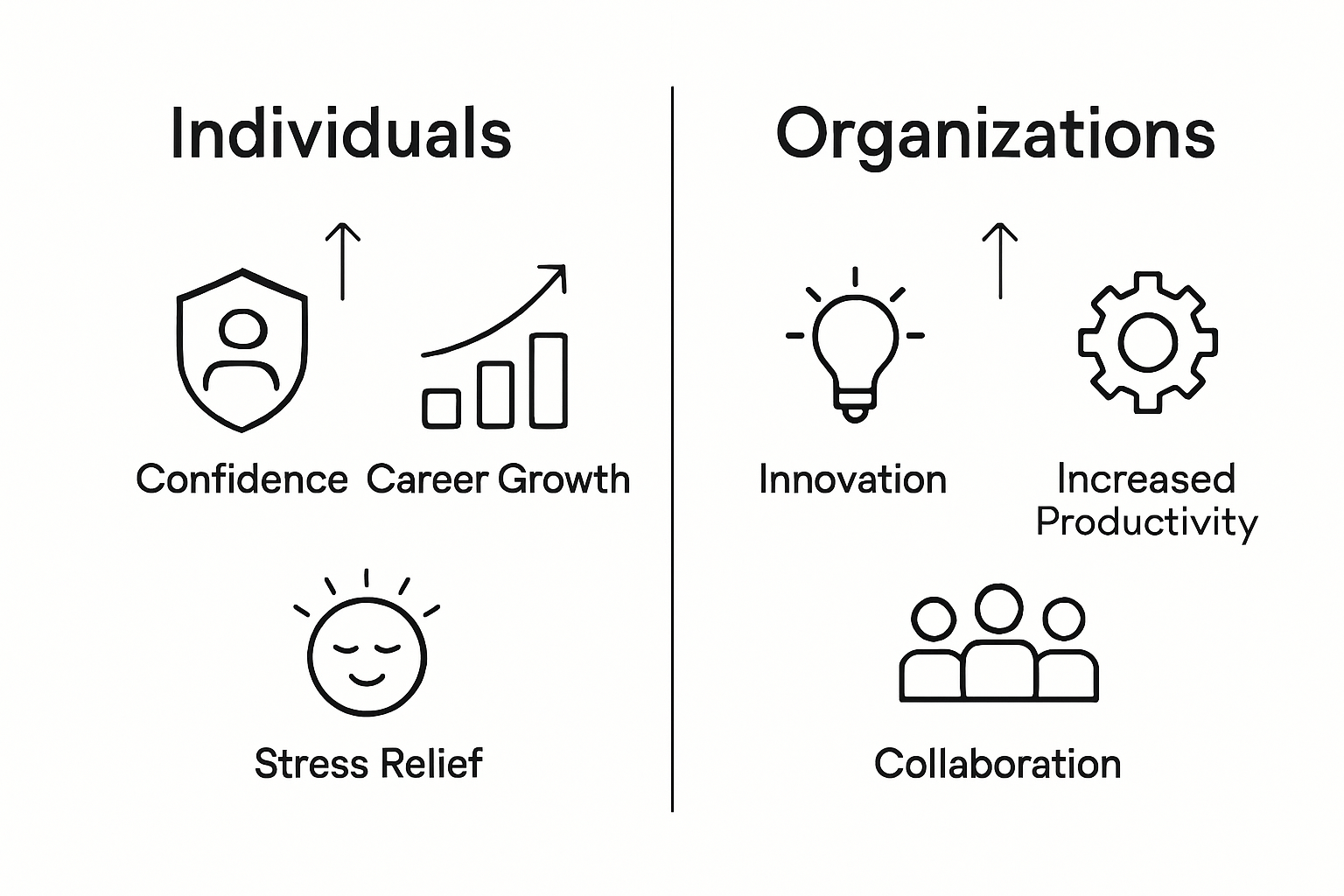
At the individual level, mindset coaching empowers professionals to overcome internal barriers, develop resilience, and cultivate a proactive approach to personal growth. Psychological transformation enables individuals to reframe challenges as opportunities, enhance emotional intelligence, and build sustainable strategies for navigating complex professional landscapes. Corporate life coaches help employees develop adaptive thinking patterns that translate directly into improved workplace effectiveness.
Key benefits for individuals and organizations include:
- Personal Empowerment: Enhanced self-awareness and confidence
- Cognitive Flexibility: Improved problem-solving and innovation capabilities
- Emotional Resilience: Better stress management and psychological adaptability
- Performance Optimization: Increased productivity and professional development
- Organizational Culture: Fostering a growth-oriented workplace environment
Research indicates that organizations benefit from cultivating growth mindset cultures, where employees feel comfortable proposing unconventional ideas, experimenting with new approaches, and learning from failures. This approach fundamentally transforms workplace dynamics, driving sustainable innovation and organizational agility.
Risks, Limitations, and Common Missteps
Mindset coaching, while powerful, is not a universal solution and comes with potential challenges that practitioners and clients must carefully navigate. Risk assessment strategies become critical in understanding the nuanced psychological terrain of personal transformation.
Professional mindset coaches must recognize that psychological change is a complex and nonlinear process. Transformation challenges can emerge when coaches fail to establish realistic expectations or overlook individual psychological complexity. Mindset coaching approaches require an ongoing process that does not happen overnight, demanding patience, precision, and deep psychological understanding.
Common risks and limitations in mindset coaching include:
- Unrealistic Expectations: Assuming immediate or dramatic psychological shifts
- Psychological Resistance: Encountering deep-seated defense mechanisms
- Oversimplification: Treating complex psychological patterns as easily changeable
- Boundary Challenges: Navigating professional versus therapeutic relationships
- Individual Variability: Recognizing that coaching strategies are not universal
The most significant missteps occur when coaches fail to directly address underlying mindsets or do not engineer experiences that genuinely challenge and transform limiting beliefs. Effective mindset coaching demands a nuanced, personalized approach that respects individual psychological landscapes while providing structured, supportive pathways for meaningful personal growth.
Unlock Your Potential with Expert Mindset Coaching
Facing limiting beliefs and mental barriers can keep you from achieving your personal and professional goals. If you have been struggling with negative thought patterns or seeking ways to cultivate resilience and a growth-oriented perspective this article shows how mindset coaching can offer powerful transformation. Embracing proven techniques like cognitive reframing and emotional intelligence development leads to breakthroughs that unlock confidence and empower lasting change.
Discover how Tariq Juneja’s tailored coaching programs guide you through these obstacles with an emphasis on strategic mental shifts. Explore the Life Coaching Archives – Tariq Juneja for insights and approaches that foster psychological flexibility and growth. 
Take the first step toward transforming your mindset by visiting https://tariqjuneja.com and booking your free consultation today. Learn how to break free from self-imposed limits and develop the mental frameworks for success through expert coaching designed just for you.
Frequently Asked Questions
What is the primary role of a mindset coach?
A mindset coach helps individuals identify and overcome psychological barriers that hinder personal and professional growth by guiding them through strategic mental shifts.
How does mindset coaching differ from traditional therapy?
Mindset coaching is forward-focused and action-oriented, primarily aimed at developing resilience and promoting personal development, while traditional therapy often examines past traumas.
What are some common techniques used in mindset coaching?
Common techniques include identifying limiting beliefs, cognitive reframing, goal alignment, developing emotional intelligence, and implementing accountability strategies.
What qualifications should a mindset coach have?
A competent mindset coach typically possesses advanced academic credentials, professional certifications, specialized training in psychological techniques, and a commitment to ongoing professional development.
Recommended
- Mindset Coach: Transforming Growth for Lasting Change – Tariq Juneja
- Role of Mindset Shifts: Complete Transformational Guide – Tariq Juneja
- What is a Coaching Mindset? Understanding Its Impact – Tariq Juneja
- What is Mindset Coaching? Understanding Its Impact – Tariq Juneja
- The Essential Guide to the Role of Founder Brand