

Stakeholder engagement sounds like corporate jargon but it shapes almost every big decision a company makes. Studies show that organizations with strong engagement strategies are far more likely to achieve sustainable outcomes and avoid major headaches down the line. Most people assume it is just about keeping people happy with newsletters and updates, but real engagement is more like building powerful alliances. The surprising part is how this process uncovers hidden risks and opens doors to growth, changing the way success happens.
Table of Contents
- Defining Stakeholder Engagement: What Does It Mean?
- The Importance Of Stakeholder Engagement In Business
- How Stakeholder Engagement Works: Key Processes
- Core Concepts In Stakeholder Engagement Explained
Quick Summary
| Takeaway | Explanation |
|---|---|
| Engage stakeholders for meaningful connections | Build relationships with stakeholders to foster trust and collaboration within your organization. |
| Implement proactive communication strategies | Maintain open channels for dialogue and feedback to enhance stakeholder understanding and involvement. |
| Integrate diverse perspectives in decision making | Utilize insights from various stakeholders to improve decision quality and organizational reputation. |
| Use engagement as a risk management tool | Identify emerging risks early through transparent stakeholder interactions to prevent potential conflicts and disruptions. |
| Create a sustainable value-driven approach | Transform transactional relationships into partnerships that promote innovation and shared economic benefits. |
Defining Stakeholder Engagement: What Does It Mean?
Stakeholder engagement represents a strategic approach organizations use to interact with individuals and groups who have a vested interest in their operations, decisions, and outcomes. According to the International Fund for Agricultural Development, stakeholder engagement is the process by which an organization involves people who may be affected by or can influence its decisions.
Core Components of Stakeholder Engagement
At its fundamental level, stakeholder engagement involves creating meaningful connections between an organization and its various stakeholders. These stakeholders can include employees, customers, investors, community members, regulatory bodies, and other groups directly or indirectly impacted by organizational activities. The primary goal is to establish transparent communication channels that facilitate mutual understanding, collaboration, and informed decision making.
To clarify the essential components of stakeholder engagement, the following table summarizes its core characteristics and what each entails.
| Core Component | Description |
|---|---|
| Proactive Communication | Actively sharing relevant information and updates with stakeholders |
| Genuine Listening | Demonstrating a true intent to hear and understand varied perspectives |
| Opportunities for Dialogue | Creating spaces for two-way interactions and meaningful conversations |
| Responsiveness | Taking action based on stakeholder input and addressing their concerns |
| Transparent Channels | Using open and accessible methods for stakeholder communication |
Key characteristics of effective stakeholder engagement include:
- Proactive and intentional communication
- Genuine commitment to listening and understanding perspectives
- Creating opportunities for meaningful dialogue
- Demonstrating responsiveness to stakeholder concerns
Strategic Importance and Value Creation
Stakeholder engagement goes beyond simple communication. It is a systematic approach to understanding diverse perspectives, managing potential risks, and creating shared value. By actively involving stakeholders in organizational processes, companies can:
- Gain deeper insights into potential challenges and opportunities
- Build trust and strengthen relationships
- Improve decision making through diverse input
- Enhance organizational reputation and credibility
Research from the OECD suggests that organizations implementing robust stakeholder engagement strategies are more likely to achieve sustainable outcomes and maintain positive long-term relationships with their key constituents. This approach transforms traditional top-down communication models into collaborative, inclusive frameworks that recognize the interconnected nature of modern business ecosystems.
The Importance of Stakeholder Engagement in Business
Stakeholder engagement has become a critical strategic imperative for modern organizations seeking sustainable growth and meaningful impact. According to the International Finance Corporation, effective stakeholder engagement is essential for securing social license to operate, reducing potential conflicts, and ensuring comprehensive project success.
Strategic Business Risk Mitigation
In today’s complex business environment, organizations cannot operate in isolation. Stakeholder engagement serves as a sophisticated risk management tool that helps companies anticipate, understand, and proactively address potential challenges before they escalate. By creating transparent communication channels with diverse stakeholder groups, businesses can identify emerging risks, gather critical insights, and develop more resilient strategic approaches.
Key risk mitigation benefits include:
- Early detection of potential operational challenges
- Understanding diverse perspectives and potential resistance
- Developing preemptive strategies to address stakeholder concerns
- Reducing likelihood of unexpected disruptions
Value Creation and Competitive Advantage
Beyond risk management, stakeholder engagement represents a powerful mechanism for value creation. Organizations that successfully integrate stakeholder perspectives into their strategic planning can unlock significant competitive advantages. This approach transforms traditional transactional relationships into collaborative partnerships that drive innovation, enhance reputation, and create shared economic and social value.
This table compares the primary benefits of stakeholder engagement for risk mitigation versus value creation, helping distinguish their different strategic impacts.
| Aspect | Risk Mitigation | Value Creation |
|---|---|---|
| Main Focus | Identifying and addressing potential challenges early | Leveraging stakeholder input for growth and innovation |
| Key Methods | Transparent communication, early detection of issues | Collaborative partnerships, integrating diverse perspectives |
| Outcomes | Minimizing disruptions, reducing resistance | Enhanced reputation, deeper market insights, new opportunities |
| Strategic Result | Increased resilience and operational stability | Competitive advantage and sustainable growth |
Strategic value creation opportunities encompass:
- Generating deeper market insights
- Identifying new product and service opportunities
- Building stronger brand loyalty and trust
- Developing more inclusive and responsive business models
Successful stakeholder engagement requires a genuine commitment to listening, understanding, and integrating diverse perspectives. It demands organizations move beyond superficial communication towards meaningful dialogue that recognizes the interconnected nature of modern business ecosystems.

How Stakeholder Engagement Works: Key Processes
Stakeholder engagement is a systematic approach that transforms organizational communication into a strategic, interactive process. According to ISO 26000, the process involves mapping relevant stakeholders, enabling active participation through dialogue, and establishing mechanisms to address concerns and evaluate outcomes.
Stakeholder Identification and Mapping
The initial stage of stakeholder engagement centers on comprehensive identification and strategic mapping. Organizations must conduct thorough assessments to determine which individuals, groups, and entities have a legitimate interest or potential impact on their operations.
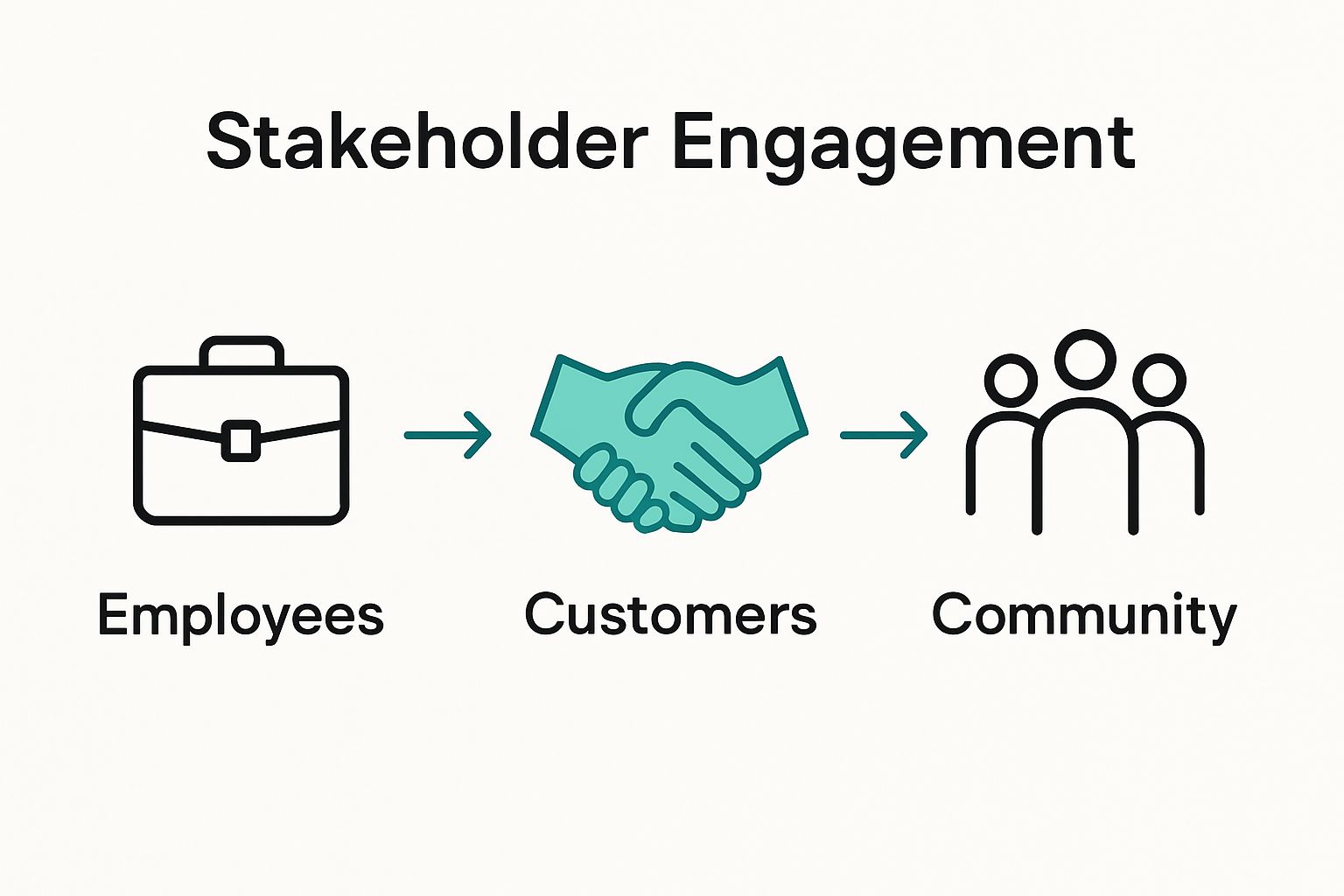 This process requires careful analysis of direct and indirect relationships, considering factors such as:
- Organizational mission and strategic objectives
- Potential influence on decision-making processes
- Level of interest and potential impact
- Existing and potential communication channels
Effective stakeholder mapping goes beyond simple categorization by understanding the nuanced relationships, power dynamics, and potential interactions between different stakeholder groups.
Engagement Strategies and Communication Frameworks
Successful stakeholder engagement demands sophisticated communication strategies that prioritize transparency, inclusivity, and meaningful dialogue. Organizations must develop tailored approaches that recognize the unique characteristics and expectations of different stakeholder groups.
Key engagement strategies include:
- Establishing multiple communication channels
- Creating platforms for genuine two-way dialogue
- Developing responsive feedback mechanisms
- Implementing consistent and transparent reporting processes
The ultimate goal is to create an environment where stakeholders feel genuinely heard, valued, and integrated into organizational decision-making processes. This approach transforms traditional hierarchical communication models into collaborative, inclusive frameworks that recognize the interconnected nature of modern business ecosystems.
Core Concepts in Stakeholder Engagement Explained
Stakeholder engagement represents a complex ecosystem of interactions, relationships, and strategic communications that extends far beyond traditional organizational approaches. Understanding its core concepts requires a nuanced exploration of the fundamental principles that drive meaningful stakeholder interactions.
Principles of Authentic Engagement
Authentic stakeholder engagement is rooted in several critical principles that distinguish it from superficial communication strategies. According to the World Business Council for Sustainable Development, genuine engagement demands transparency, reciprocity, and a commitment to understanding diverse perspectives.
Key principles include:
- Mutual respect and recognition of different viewpoints
- Commitment to open and honest communication
- Willingness to integrate stakeholder insights into decision making
- Demonstrating tangible responsiveness to stakeholder concerns
Power Dynamics and Inclusive Representation
Effective stakeholder engagement critically examines and addresses underlying power dynamics that can potentially marginalize certain groups or perspectives. Organizations must actively work to create inclusive platforms that ensure equitable representation and meaningful participation across different stakeholder groups.
Important considerations in managing power dynamics involve:
- Recognizing inherent power imbalances
- Creating accessible communication mechanisms
- Providing multiple participation channels
- Ensuring diverse voices are genuinely heard and considered
Stakeholder engagement is not a static process but a dynamic, evolving approach that requires continuous learning, adaptation, and commitment to building genuine, mutually beneficial relationships. By embracing these core concepts, organizations can transform stakeholder interactions from transactional exchanges into strategic partnerships that drive collective value and sustainable growth.
Unlock True Stakeholder Engagement with Transformational Coaching
Are you struggling to translate stakeholder engagement theory into real-world success? The article explored how ineffective stakeholder mapping, poor communication, and lack of inclusive practices can undermine even the best intentions. Many leaders feel the pressure to make meaningful change, but often find their efforts stall because teams lack unity, trust, or clear direction. If these pain points sound familiar, it is time to explore a transformational approach that bridges strategy and action.

Picture bringing your stakeholders together with authentic communication, strong relationships, and shared goals. At Tariq Juneja’s Coaching Platform, you will discover expert support for building agile, engaged teams. Explore our Success Stories to see how organizations have boosted productivity and embraced change by rethinking their engagement strategy. Ready for actionable solutions? Visit our homepage and book your free consultation now. Take the first step today toward lasting transformation and stronger stakeholder partnerships.
Frequently Asked Questions
What is stakeholder engagement?
Stakeholder engagement is the process of interacting with individuals and groups who have an interest in an organization’s operations. To understand this better, identify your key stakeholders and map out how their interests align with your business objectives.
Why is stakeholder engagement important for my organization?
Stakeholder engagement is crucial for building trust and managing risks associated with your operations. Start by creating open communication channels to foster relationships with your stakeholders and address their concerns effectively.
How can I identify the right stakeholders for my engagement strategy?
To identify the right stakeholders, assess who is impacted by or can influence your decisions. Make a list of these individuals or groups and evaluate their level of interest and potential impact on your organization.
What are effective strategies for engaging stakeholders?
Effective strategies for engaging stakeholders include maintaining transparency and establishing two-way communication through various channels. Outline a clear engagement plan that details how you will actively listen to and incorporate stakeholder feedback into decision-making.
How can stakeholder engagement help mitigate business risks?
Engaging stakeholders helps you identify potential challenges and understand different perspectives early on. Implement a regular feedback mechanism to gather insights from your stakeholders, allowing you to proactively address issues before they escalate.
What steps should I take to ensure meaningful stakeholder engagement?
To ensure meaningful stakeholder engagement, commit to open dialogue and responsiveness to feedback. Develop an engagement timeline that includes regular check-ins and updates with your stakeholders to keep them informed and involved.