

Business coaching sounds like it is only for executives at big companies. Yet according to a Harvard Business Review study, coaching can boost individual and organizational performance across all levels. You might expect it to be a one-way flow of advice, but the real secret is that the best coaches do not give answers. They ask the right questions and help clients discover solutions for themselves.
Table of Contents
- What Is Business Coaching And Its Purpose?
- The Importance Of Business Coaching For Growth
- Understanding How Business Coaching Works
- Key Benefits Of Business Coaching For Professionals
- Real-World Applications Of Business Coaching
Quick Summary
| Takeaway | Explanation |
|---|---|
| Business coaching enhances individual performance. | It empowers professionals to develop critical skills and strategies tailored to their unique strengths and challenges. |
| Coaching drives significant organizational growth. | By identifying performance gaps, coaching helps organizations implement targeted strategies for meaningful development and success. |
| Transformational outcomes are measurable. | Effective coaching results in improved leadership effectiveness, increased team performance, and higher employee engagement. |
| Coaching builds adaptive leadership capabilities. | It provides executives with the support needed to navigate complex challenges and enhance their strategic decision-making skills. |
| Personalized coaching fosters holistic development. | Clients benefit from targeted guidance that cultivates emotional intelligence, communication, and problem-solving abilities. |
What is Business Coaching and Its Purpose?
Business coaching represents a strategic professional relationship designed to propel individuals and organizations toward enhanced performance and transformative growth. According to research from Harvard Business Review, business coaching is a collaborative process where experienced professionals work closely with leaders and entrepreneurs to unlock their potential and address critical organizational challenges.
Understanding the Core Concept
At its essence, business coaching is about creating a structured, supportive environment where professionals can develop critical skills, gain objective insights, and design actionable strategies for personal and professional advancement. Unlike traditional training or mentoring, business coaching focuses on drawing out an individual’s inherent capabilities through targeted questioning, reflective practice, and customized guidance.
The following table summarizes the key differences between business coaching, traditional training, and mentoring to clarify how their approaches and outcomes vary.
| Approach | Purpose | Methodology | Typical Outcomes |
|---|---|---|---|
| Business Coaching | Unlock potential and drive growth | Targeted questioning, reflection | Enhanced leadership, self-driven change |
| Traditional Training | Transfer knowledge and skills | Structured content delivery | Skill acquisition, standardized learning |
| Mentoring | Advise and share experience | One-way advice, role modeling | Career guidance, knowledge transfer |
Businesses engage coaches to help leaders navigate complex scenarios, improve decision making, and cultivate leadership competencies. Coaches serve as impartial partners who challenge assumptions, provide external perspectives, and help individuals recognize and overcome performance barriers.
The Transformative Purpose of Business Coaching
The fundamental purpose of business coaching extends beyond simple skill enhancement. It aims to create comprehensive personal and organizational transformation by addressing multiple interconnected dimensions:
- Developing leadership capabilities
- Enhancing strategic thinking skills
- Creating sustainable performance improvement frameworks
- Facilitating personal and professional growth
Professional coaches like Tariq Juneja understand that coaching is not about providing direct solutions but empowering individuals to discover their own pathways to success. By asking powerful questions and creating structured reflection opportunities, coaches help clients generate innovative approaches to longstanding challenges.
Business coaching ultimately serves as a powerful catalyst for individual and organizational evolution, bridging the gap between current performance and potential excellence.
The Importance of Business Coaching for Growth
Business coaching plays a pivotal role in driving organizational and individual growth by creating strategic pathways for professional development and performance enhancement. Research from the American Psychological Association demonstrates that effective coaching can significantly transform workplace dynamics and individual potential.
Strategic Performance Acceleration
Business coaching serves as a powerful mechanism for accelerating organizational performance by targeting critical areas of professional development. Unlike traditional training programs, coaching provides personalized, dynamic interventions that address specific challenges and opportunities unique to each professional and organizational context.
Coaches work closely with leaders and teams to identify performance gaps, develop targeted strategies, and implement actionable plans that drive meaningful growth. This approach ensures that development efforts are precisely aligned with individual capabilities and organizational objectives.
Holistic Professional Development
The importance of business coaching extends far beyond simple skill enhancement. It encompasses a comprehensive approach to professional growth that addresses multiple dimensions of personal and organizational effectiveness:
- Enhancing leadership capabilities
- Building emotional intelligence
- Improving communication and interpersonal skills
- Developing strategic thinking and problem solving
- Creating sustainable performance improvement frameworks
Learn more about how coaching drives productivity in our comprehensive guide, which explores the transformative potential of targeted professional development strategies.
Measuring Growth and Impact
Effective business coaching is characterized by its ability to generate measurable, tangible outcomes. Successful coaching interventions typically result in improved leadership effectiveness, enhanced team performance, increased employee engagement, and accelerated organizational adaptability.
By providing structured support, objective feedback, and strategic guidance, business coaching empowers professionals to unlock their full potential and drive meaningful personal and organizational transformation.
Understanding How Business Coaching Works
Business coaching operates as a systematic, collaborative process designed to unlock professional potential through intentional dialogue, strategic reflection, and personalized development approaches. According to the Chartered Institute of Personnel and Development, coaching follows a structured methodology that transforms individual and organizational performance.
The Coaching Engagement Framework
Business coaching is not a one-size-fits-all intervention but a dynamic, customized process tailored to specific individual and organizational needs. The engagement typically begins with a comprehensive assessment phase where coaches work closely with clients to establish clear objectives, identify potential barriers, and design a targeted development strategy.
Key components of the coaching engagement include establishing trust, creating psychological safety, and developing a collaborative partnership that enables honest self-reflection and meaningful growth. Coaches utilize advanced listening techniques, powerful questioning strategies, and evidence-based interventions to facilitate profound professional insights.
This table breaks down the core methodological components of the business coaching process and explains the role each element plays in professional development.
| Component | Description |
|---|---|
| Diagnostic Assessment | Evaluates current capabilities and identifies areas for growth |
| Goal Setting and Strategic Alignment | Establishes clear objectives linked to professional priorities |
| Actionable Performance Strategies | Develops tailored plans to address challenges and opportunities |
| Progress Monitoring and Feedback | Tracks results and provides constructive feedback |
| Iterative Skill Enhancement | Refines skills through ongoing practice and behavioral adjustment |
Core Methodological Components
The business coaching process generally encompasses several critical methodological elements:
- Diagnostic assessment of current professional capabilities
- Goal setting and strategic alignment
- Development of actionable performance improvement strategies
- Regular progress monitoring and feedback
- Iterative skill enhancement and behavioral modification
Learn more about our comprehensive coaching process overview to understand how these methodological components integrate into transformative professional development.
Practical Implementation and Outcomes
Successful business coaching transcends theoretical frameworks by delivering tangible, measurable outcomes. Coaches employ various techniques such as reflective questioning, scenario planning, role-playing, and experiential learning to help professionals develop critical competencies and overcome performance limitations.
By providing structured guidance, objective perspectives, and personalized support, business coaching enables professionals to navigate complex workplace challenges, enhance leadership capabilities, and drive sustainable personal and organizational growth.
Key Benefits of Business Coaching for Professionals
Business coaching represents a transformative professional development strategy that delivers multifaceted benefits across personal and organizational dimensions. According to the American Psychological Association, professionals who engage in targeted coaching experience significant improvements in job satisfaction, performance, and overall career trajectory.
Personal Development and Performance Enhancement
Business coaching empowers professionals to unlock their inherent potential by providing structured, personalized guidance that addresses individual strengths, challenges, and growth opportunities. Unlike generic training programs, coaching focuses on cultivating self-awareness, developing advanced problem solving skills, and creating sustainable behavioral change.
Professionals working with coaches gain critical insights into their professional patterns, learn to overcome limiting beliefs, and develop more effective strategies for navigating complex workplace environments.
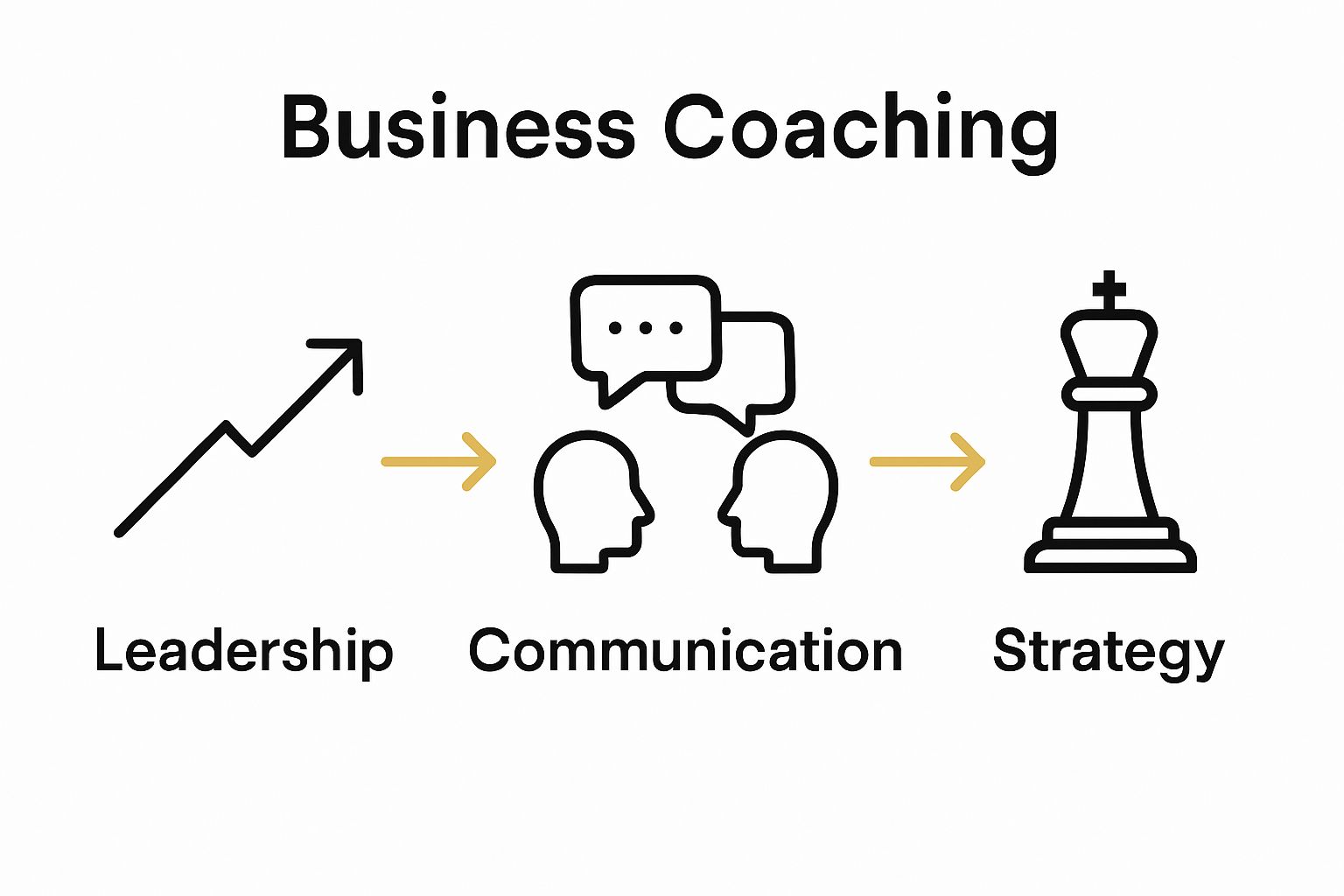 This targeted approach enables individuals to break through performance plateaus and achieve higher levels of professional excellence.
Strategic Career Advancement
The benefits of business coaching extend far beyond immediate skill enhancement, offering professionals comprehensive career development support:
- Accelerated leadership skill development
- Enhanced emotional intelligence
- Improved communication and interpersonal capabilities
- Strategic career planning and trajectory management
- Increased self confidence and professional resilience
Learn more about coaching strategies for entrepreneurs and discover how targeted professional development can transform your career pathway.
Holistic Professional Transformation
Business coaching delivers profound, measurable benefits that impact both individual performance and organizational effectiveness. By providing objective feedback, strategic guidance, and personalized development frameworks, coaching enables professionals to develop adaptive skills, expand their leadership capabilities, and create meaningful professional growth.
The most successful professionals recognize coaching as an investment in their personal and professional potential, viewing it as a strategic tool for continuous improvement and sustainable career advancement.
Real-World Applications of Business Coaching
Business coaching transcends theoretical concepts by delivering practical, measurable interventions across diverse professional environments. Research from the International Coach Federation demonstrates how coaching generates tangible organizational and individual transformations across multiple industry sectors.
Leadership and Organizational Transformation
Business coaching finds critical applications in leadership development, where executives and emerging leaders receive targeted support to enhance their strategic capabilities. Coaches work intimately with organizational leaders to address complex challenges, develop adaptive leadership skills, and create robust succession planning strategies.
In high-stakes corporate environments, coaching provides a confidential, objective platform for leaders to explore innovative approaches, challenge existing paradigms, and develop more effective communication and decision making frameworks. This targeted intervention helps organizations build resilient, forward thinking leadership pipelines.
Performance Optimization Strategies
Real world business coaching applications extend across multiple professional domains, including:
- Technology sector leadership development
- Startup entrepreneurial guidance
- Corporate change management
- Professional skill recalibration
- Executive team performance enhancement
Explore our comprehensive approach to entrepreneurial coaching and discover how targeted interventions can drive professional transformation.
Industry Specific Coaching Interventions
Business coaching demonstrates remarkable versatility by adapting its methodological approaches to meet unique industry requirements. From technology companies navigating rapid digital transformation to healthcare organizations managing complex operational challenges, coaching provides customized strategies that address sector specific performance barriers.
The most successful coaching interventions combine deep industry understanding with personalized development frameworks, enabling professionals to unlock their potential and drive meaningful organizational change. By bridging individual capabilities with strategic organizational objectives, business coaching emerges as a powerful tool for sustainable professional growth.

Experience Real Transformation with Professional Business Coaching
Have you ever felt stuck while trying to unlock your professional potential or frustrated when team performance plateaus in spite of your best efforts? This article highlighted how business coaching can accelerate your growth, build effective leadership skills, and overcome stubborn performance barriers. If you are ready to move beyond theory and experience the benefits of coaching firsthand, discover what is possible with expert support. For those looking to build agile mindsets and powerful change capacity, our Agile Coaching resources can show you proven methods for navigating business challenges and adapting to change.

Visit Tariq Juneja’s coaching platform now to explore transformational solutions tailored to your exact needs. You can also check out the full range of Life Coaching strategies designed to help you embrace change and reduce stress. Take the step today and book a free consultation to jumpstart your journey toward breakthrough performance and sustainable growth.
Frequently Asked Questions
What is the purpose of business coaching?
Business coaching aims to enhance individual and organizational performance by creating a structured environment where professionals can develop critical skills, gain insights, and design actionable strategies for growth.
How does business coaching enhance professional development?
Business coaching provides personalized guidance that focuses on unlocking individual potential, cultivating self-awareness, and developing advanced problem-solving skills, leading to sustainable behavioral change.
What are the measurable outcomes of effective business coaching?
Effective business coaching can result in improved leadership effectiveness, enhanced team performance, increased employee engagement, and faster organizational adaptability, driving meaningful transformation.
How can business coaching be applied in various industries?
Business coaching can be tailored to meet specific industry needs, addressing challenges in leadership development, performance optimization, and strategic planning, ultimately fostering growth and transformation in diverse professional environments.