

More than 60 percent of American-led remote teams admit their biggest challenge is building genuine collaboration across continents. For Agile coaches and IT managers, understanding what makes team building effective is critical when employees span time zones from Germany to Singapore. This article lays the groundwork for creating international teams that work as cohesive, productive units even when physical offices feel a world away.
Table of Contents
- Defining Team Building And Collaboration
- Types Of Team Building Approaches
- Virtual Collaboration Tools And Techniques
- Roles And Responsibilities In Agile Teams
- Common Pitfalls And How To Avoid Them
Key Takeaways
| Point | Details |
|---|---|
| Team Building and Collaboration Are Essential | Organizations must intentionally foster environments that enhance interpersonal relationships and collective performance for high effectiveness. |
| Strategic Approaches Improve Team Development | Utilizing varied methodologies like diagnostic methods and goal-setting frameworks can significantly boost team dynamics and productivity. |
| Virtual Collaboration Tools Are Crucial for Remote Teams | Selecting appropriate tools that match team needs enhances communication and coordination in distributed environments. |
| Agile Teams Thrive on Flexibility and Shared Accountability | Clearly defined roles and a culture of open communication are vital for maintaining high performance in agile settings. |
Defining Team Building and Collaboration
Team building and collaboration represent fundamental strategies for transforming individual contributors into high-performing, synergistic units capable of achieving exceptional organizational results. At its core, team building involves systematic processes designed to enhance interpersonal relationships, communication, and collective performance within work groups. Team formation strategies require understanding complex interdisciplinary dynamics that go beyond traditional workplace interactions.
Effective collaboration transcends mere coordination and involves creating shared mental models where team members develop mutual understanding, trust, and complementary skills. Organizations increasingly recognize that collaborative environments are not spontaneous but must be intentionally cultivated through structured approaches that align individual strengths with collective goals. These approaches typically involve developing communication protocols, establishing clear expectations, and creating psychological safety where team members feel empowered to contribute authentically.
Modern team building practices recognize that successful collaboration depends on multiple interconnected elements: emotional intelligence, mutual respect, transparent communication, and aligned objectives. Systematic approaches to team development enhance productivity and service quality by transforming groups of individuals into cohesive, high-performing units. This requires ongoing investment in understanding team dynamics, individual motivations, and creating environments that support collective achievement.
Pro tip: Conduct quarterly team health assessments using anonymous surveys to proactively identify and address collaboration barriers before they significantly impact performance.
Types of Team Building Approaches
Organizations leverage multiple strategic approaches to team building, each designed to address specific developmental needs and performance objectives. Evidence-based team development interventions can be categorized into four primary types: team training, leadership training, team building, and team debriefing. These methodologies offer targeted strategies for enhancing collective performance across diverse professional environments, from healthcare and aviation to technology and education.
The primary team building approaches include diagnostic methods, goal-setting frameworks, role clarification techniques, and problem-solving interventions. Each approach targets different aspects of team dynamics, focusing on improving communication, aligning individual capabilities with collective objectives, and creating robust collaborative structures. Diagnostic approaches involve systematic assessment of team strengths and weaknesses, while goal-setting frameworks help establish clear, measurable team objectives that motivate and guide collective efforts.
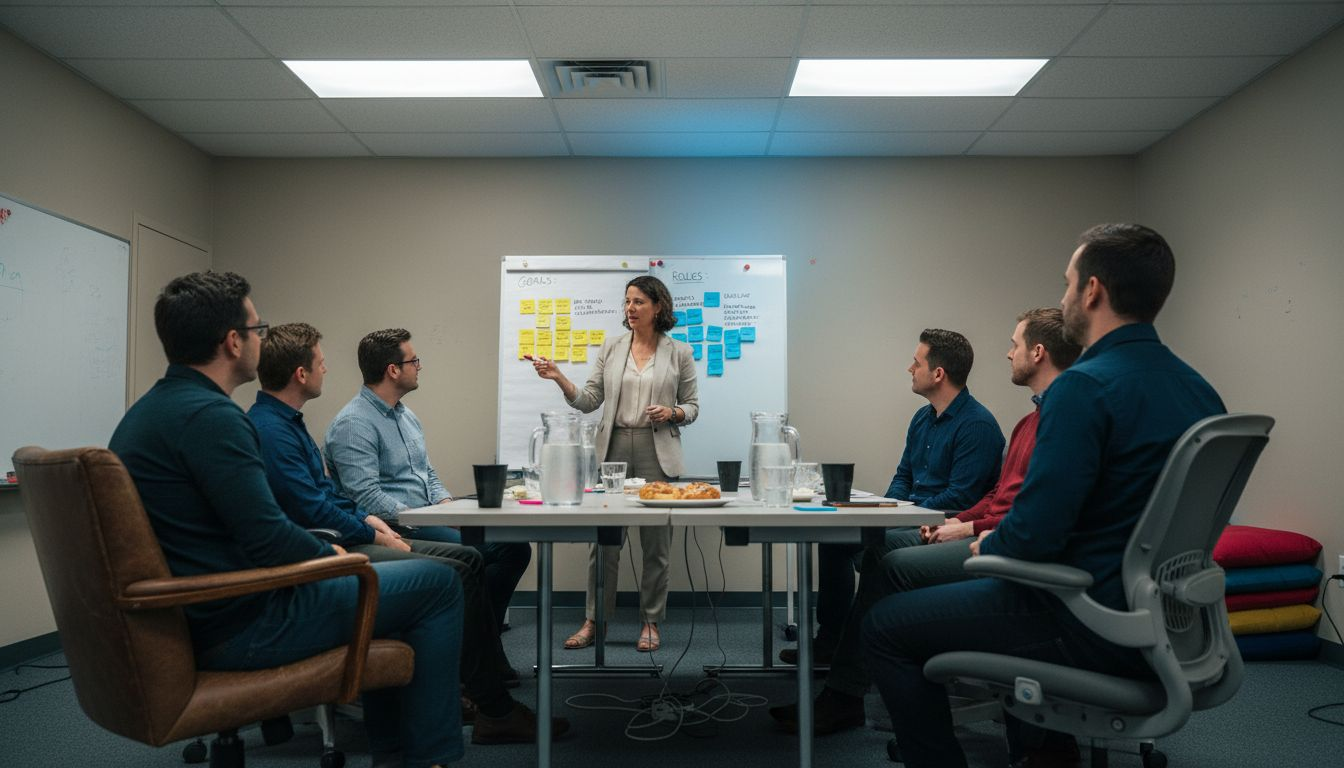
Systematic reviews of team building interventions reveal complex interactions between attitudinal, behavioral, and performance outcomes. Role clarification techniques, for instance, help team members understand their specific responsibilities and how they interconnect with others, reducing potential conflicts and enhancing overall team efficiency. Problem-solving interventions focus on developing collective strategic thinking, encouraging teams to approach challenges collaboratively and leverage diverse perspectives.
Here’s how different team building approaches address key development areas:
| Approach Type | Primary Focus | Typical Benefit | When to Use |
|---|---|---|---|
| Diagnostic | Assess team strengths and gaps | Informs targeted interventions | Team restructuring or new teams |
| Goal-Setting | Align objectives and efforts | Increases motivation and direction | Project launches or goal misalignment |
| Role Clarification | Define responsibilities and interactions | Reduces overlap and conflicts | When roles are unclear or shifting |
| Problem-Solving | Promote joint solutions to challenges | Fosters creative team culture | Facing recurring issues or innovations |
Pro tip: Design team building interventions using a mixed-method approach that combines multiple techniques to address both technical skills and interpersonal dynamics.
Virtual Collaboration Tools and Techniques
Emerging virtual collaboration technologies have dramatically transformed how distributed teams communicate and coordinate, addressing complex challenges inherent in remote work environments. Modern virtual collaboration tools go beyond simple communication platforms, offering sophisticated features that simulate in-person interactions and support seamless global teamwork. These technologies enable real-time communication, document sharing, project tracking, and synchronous collaborative experiences across geographic and temporal boundaries.
Effective virtual collaboration requires strategic tool selection that matches specific team needs. Communication platforms like video conferencing software provide face-to-face interaction capabilities, while project management tools enable task tracking, assignment, and progress monitoring. Collaborative document editing platforms allow multiple team members to simultaneously work on shared resources, breaking down traditional barriers of sequential work processes. Advanced tools now incorporate artificial intelligence features that can predict team communication patterns, suggest workflow optimizations, and identify potential collaboration bottlenecks.
Successful implementation of virtual collaboration technologies demands more than technical proficiency. Organizations must develop comprehensive digital literacy programs that train employees in effective remote communication strategies, tool utilization, and digital etiquette. This includes understanding how to manage digital interactions, interpret non-verbal cues in virtual environments, and maintain professional communication standards across diverse digital platforms. Cultural sensitivity and adaptive communication skills become crucial when teams span multiple geographic regions and professional backgrounds.
Pro tip: Conduct quarterly technology audits to evaluate your virtual collaboration tools, ensuring they continue to meet evolving team communication and productivity requirements.
Roles and Responsibilities in Agile Teams
Systematic research reveals complex dynamics underlying effective agile team compositions and role structures, emphasizing the critical importance of clearly defined yet flexible responsibilities. Unlike traditional hierarchical models, agile teams require dynamic role interactions that prioritize collective achievement over rigid organizational boundaries. The primary roles typically include the Product Owner, Scrum Master, and cross-functional team members, each bringing unique perspectives and responsibilities to the collaborative ecosystem.
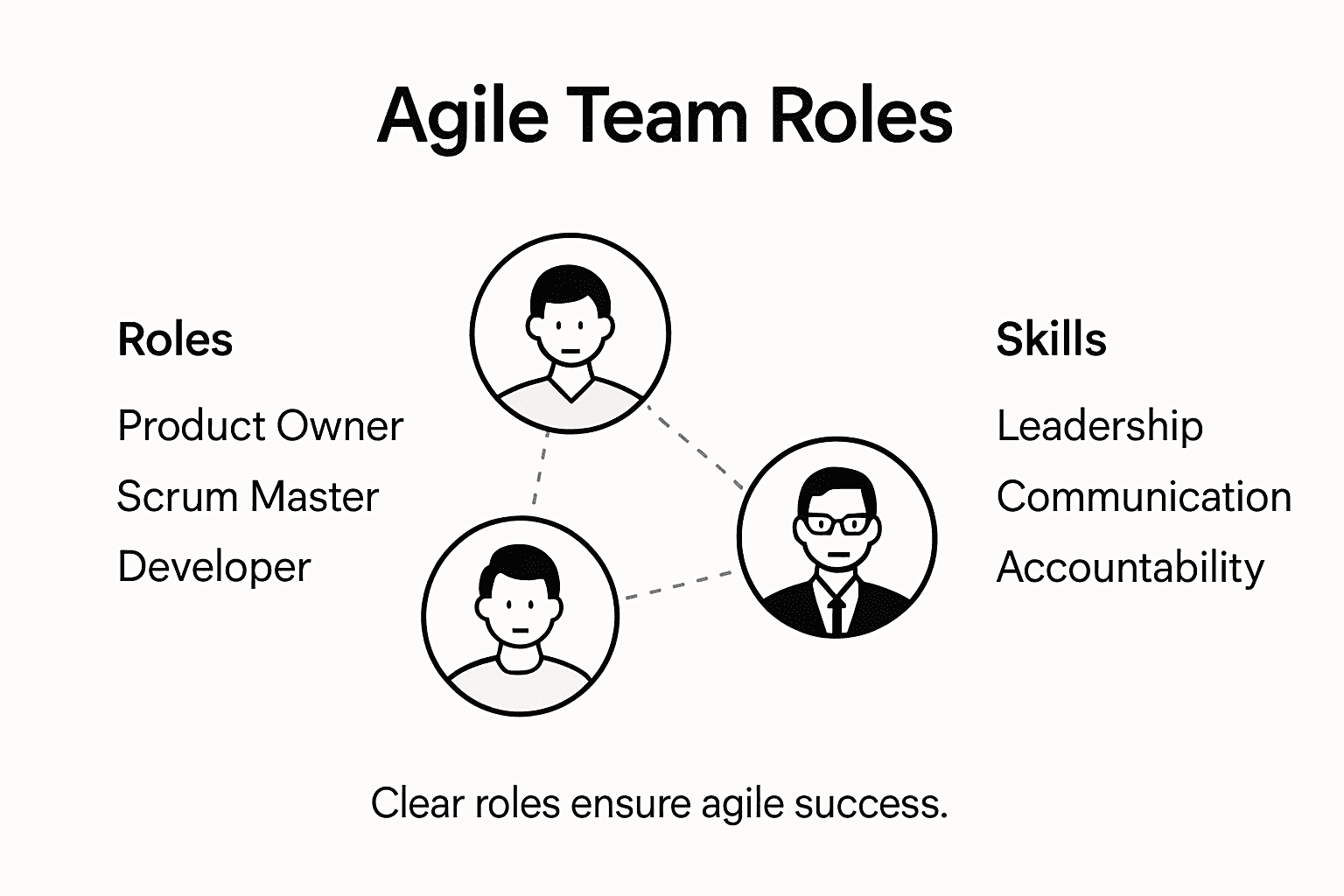
The Product Owner serves as the strategic liaison between stakeholders and the development team, responsible for defining product vision, prioritizing work items, and ensuring alignment with business objectives. The Scrum Master acts as a facilitator and coach, removing organizational impediments, protecting the team from external disruptions, and fostering an environment of continuous improvement. Cross-functional team members demonstrate remarkable adaptability, often switching roles and responsibilities to meet evolving project requirements, which distinguishes agile approaches from more traditional project management methodologies.
This table shows the main roles in agile teams and their core focus areas:
| Role | Core Responsibility | Key Value to Team |
|---|---|---|
| Product Owner | Prioritize work and represent stakeholders | Aligns product vision with business needs |
| Scrum Master | Facilitate and remove obstacles | Ensures process efficiency and team focus |
| Cross-Functional Member | Deliver varied technical and functional tasks | Increases team adaptability and speed |
Successful agile teams require more than just role definition they demand a culture of shared accountability, transparent communication, and continuous learning. This means team members must develop robust interpersonal skills, demonstrate proactive problem-solving capabilities, and maintain a commitment to collective performance. Distributed leadership becomes crucial, where decision-making authority is fluid and based on expertise rather than hierarchical position. Team members are expected to self-organize, take ownership of their work, and continuously seek opportunities for skill development and process improvement.
Pro tip: Implement quarterly role rotation exercises to enhance team flexibility and develop a deeper understanding of diverse team member capabilities.
Common Pitfalls and How to Avoid Them
Remote agile teams frequently encounter complex communication and coordination challenges that can significantly undermine project effectiveness, requiring proactive strategies to mitigate potential disruptions. These challenges emerge from multiple dimensions including technological limitations, interpersonal dynamics, and organizational structural barriers. Understanding these potential pitfalls becomes crucial for teams seeking to maintain high performance and collaborative momentum in increasingly distributed work environments.
One fundamental pitfall involves inadequate communication protocols and misaligned expectations, which can create systematic breakdowns in team coordination. Agile transformation efforts frequently stumble due to insufficient organizational support, generic implementation strategies, and lack of comprehensive team training. Organizations must invest in tailored approaches that recognize the unique contextual challenges of their specific team structures, avoiding one-size-fits-all methodologies that oversimplify the complexity of collaborative work.
Successful agile teams mitigate risks through deliberate, structured interventions that address both technical and human factors. This includes developing robust feedback mechanisms, creating transparent communication channels, and fostering a culture of continuous learning and adaptation. Leaders must actively cultivate psychological safety, encourage open dialogue about challenges, and create environments where team members feel empowered to experiment, learn from failures, and continuously refine their collaborative approaches. Cultural sensitivity, active listening, and flexible problem-solving become critical skills in navigating the intricate landscape of modern team dynamics.
Pro tip: Create a quarterly team retrospective template that systematically documents emerging challenges, proposed solutions, and measurable improvement strategies.
Unlock Agile Success Through Expert Team Building and Collaboration
Struggling with unclear roles, poor communication, or coordination challenges in your agile teams This article highlights the critical need for clearly defined responsibilities, continuous learning, and effective collaboration to drive high performance. If you want to transform your teams into empowered, adaptable units that thrive in dynamic environments explore expert insights and proven strategies on our Agile Coaching Archives – Tariq Juneja page.

Take control of your agile transformation journey today by learning how to foster psychological safety and build resilient teams with targeted coaching. Visit https://tariqjuneja.com to discover tailored coaching programs and workshops that help you increase productivity and reduce stress. For broader organizational change, also check our Change Management Archives – Tariq Juneja and start turning collaboration challenges into lasting success.
Frequently Asked Questions
What is team building and why is it important for collaboration?
Team building involves structured processes aimed at improving interpersonal relationships and collective performance within work groups. It is essential for fostering collaboration and enhancing the effectiveness of teams in achieving organizational goals.
What are the different types of team building approaches?
Common team building approaches include diagnostic methods, goal-setting frameworks, role clarification techniques, and problem-solving interventions. Each method targets specific areas of team dynamics to improve communication and collective performance.
How can organizations ensure effective virtual collaboration among remote teams?
Organizations can ensure effective virtual collaboration by selecting appropriate tools that match team needs, providing digital literacy training for employees, and fostering a culture of transparent communication and flexibility in digital interactions.
What are the primary roles in an agile team, and what do they entail?
Key roles in an agile team include the Product Owner, who prioritizes work and represents stakeholders; the Scrum Master, who facilitates the team and removes obstacles; and cross-functional team members, who tackle various tasks to enhance adaptability and speed.
Recommended
- 7 Essential Collaboration Tips for Leaders and Teams – Tariq Juneja
- How to Improve Team Productivity for Lasting Results – Tariq Juneja
- 7 Essential Project Management Tips for Lasting Success – Tariq Juneja
- How to Improve Productivity in an Organization Effectively – Tariq Juneja
- Outdoor Group Games For Adults Perfect for Team Building
- How to Manage Remote Teams for Seamless Video Production