

Nearly 90 percent of people who set goals admit they fall short without a clear strategy in place. Setting and achieving goals matters because it shapes how we grow, both personally and professionally. By understanding what makes goal setting effective, you can turn your ambitions into results and avoid the most common traps that stand in the way of real progress.
Table of Contents
- Defining Goal Setting And Core Principles
- Types Of Goals And Their Unique Purposes
- How Goal Setting Drives Transformation
- Implementing Effective Goal Setting Strategies
- Common Pitfalls And How To Avoid Them
Key Takeaways
| Point | Details |
|---|---|
| Goal Setting Fundamentals | Goal setting is a strategic process that transforms aspirations into actionable plans, emphasizing clarity, challenge, commitment, complexity, and feedback. |
| Types of Goals | Goals should be categorized into personal development, professional career, financial, health and wellness, and relationship objectives for tailored success. |
| Transformational Impact | Effective goal setting enhances motivation, focus, performance, and accountability, serving as a catalyst for personal and organizational transformation. |
| Common Pitfalls | Avoid vague objectives, unrealistic expectations, and lack of commitment to ensure successful goal achievement. |
Defining Goal Setting and Core Principles
Goal setting is a strategic process of identifying specific, desired outcomes and developing actionable plans to achieve them. According to research from ilomata, goal setting is a fundamental theory in human resources management that directly influences individual performance and motivation.
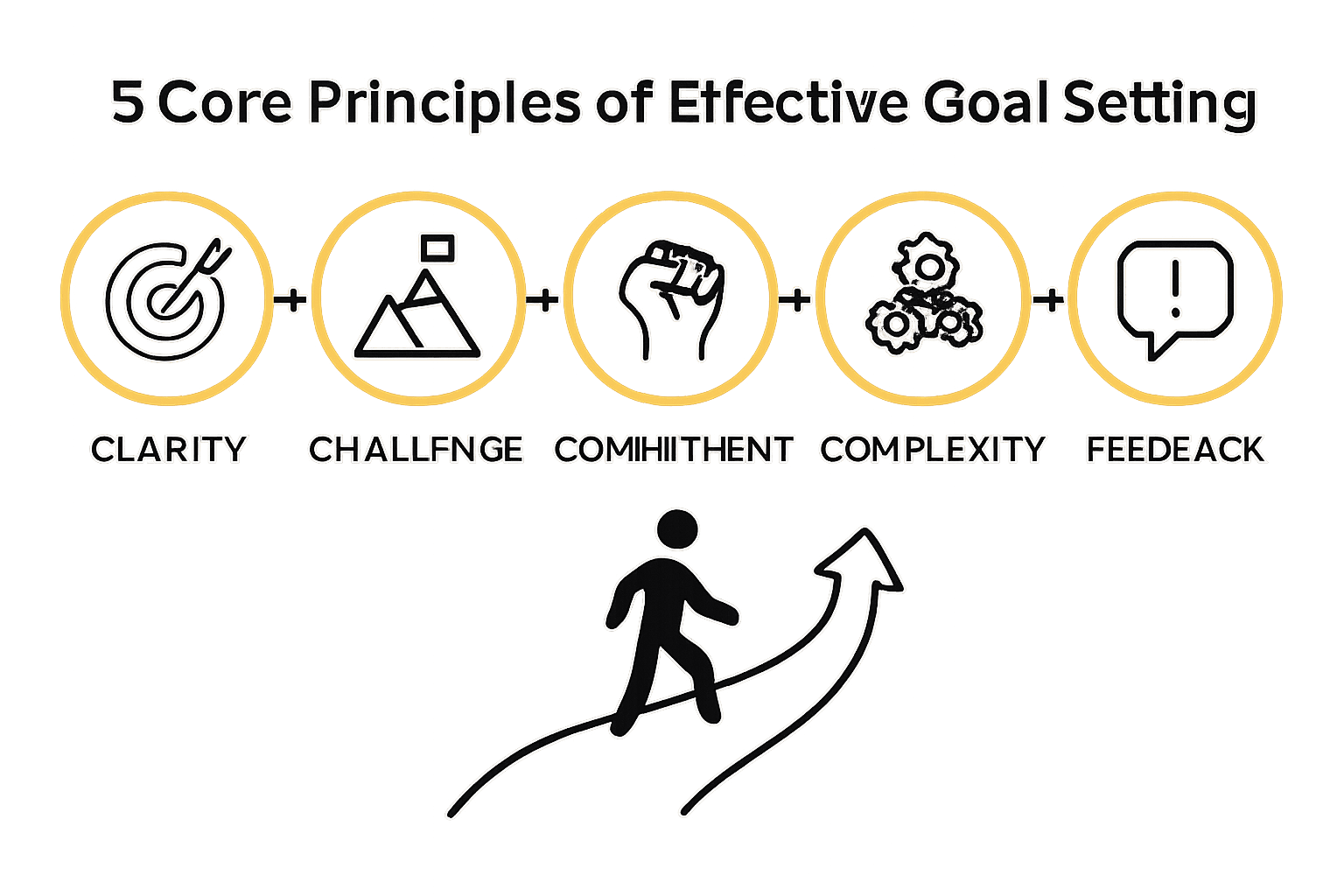
At its core, goal setting involves creating clear, measurable objectives that provide direction and purpose. As outlined by Locke and Latham in their seminal work from kumc, successful goal setting relies on five critical principles:
- Clarity: Goals must be specific and well-defined
- Challenge: Objectives should be difficult yet achievable
- Commitment: Personal investment in the goal is crucial
- Complexity: Consider the intricacy of tasks required
- Feedback: Regular progress monitoring is essential
Effective goal setting transforms abstract aspirations into concrete roadmaps for success. How to Set Goals for Lasting Success provides deeper insights into developing sustainable strategies. By breaking complex goals into manageable sub-goals, individuals can maintain motivation and track incremental progress, turning ambitious dreams into tangible achievements.
Types of Goals and Their Unique Purposes
Goals can be categorized into multiple dimensions, each serving distinct purposes in personal and professional development. According to GeeksforGeeks, understanding goal types is crucial for implementing the SMART framework—ensuring goals are Specific, Measurable, Achievable, Relevant, and Time-bound.
Typically, goals can be classified into several key categories:
- Personal Development Goals: Focus on individual growth, skills enhancement, and self-improvement
- Professional Career Goals: Target career progression, skill acquisition, and professional milestones
- Financial Goals: Address monetary objectives like savings, investments, and financial security
- Health and Wellness Goals: Concentrate on physical and mental well-being
- Relationship Goals: Aim to improve interpersonal connections and social interactions
Each goal type requires a tailored approach. Understanding Why Set Personal Goals for Success highlights that effective goal setting isn’t about creating a universal strategy, but developing personalized objectives that resonate with individual aspirations. By recognizing the unique purpose of different goal categories, individuals can create more targeted and meaningful roadmaps for success, transforming abstract desires into actionable plans.

How Goal Setting Drives Transformation
Transformation is not a passive process but an active journey powered by intentional goal setting. According to research from Notion, Latham and Locke’s goal-setting theory reveals how strategic objectives can fundamentally reshape individual and organizational performance.
The transformation driven by goal setting occurs through several powerful mechanisms:
- Motivation Enhancement: Goals create a clear destination, sparking intrinsic drive
- Focus Redirection: Specific objectives channel energy toward meaningful outcomes
- Performance Improvement: Challenging yet achievable goals push individuals beyond comfort zones
- Behavioral Modification: Goals act as catalysts for developing new skills and habits
- Accountability Creation: Measurable objectives establish personal responsibility
The psychology of goal setting is profound. Business Transformation: Everything You Need to Know demonstrates that successful transformation requires more than wishful thinking—it demands structured, intentional goal frameworks. By embracing goals as dynamic roadmaps, individuals and organizations can systematically deconstruct complex aspirations into actionable steps, turning potential into tangible progress and meaningful change.
Implementing Effective Goal Setting Strategies
Implementing successful goal-setting strategies requires a systematic and thoughtful approach. According to research from kumc, Locke and Latham’s groundbreaking work provides a robust framework for creating meaningful and achievable objectives through five critical principles.
To effectively implement goal-setting strategies, professionals should focus on these key elements:
- Precise Clarity: Define goals with extraordinary specificity
- Strategic Challenge: Design objectives that stretch capabilities
- Personal Commitment: Develop deep emotional investment
- Complexity Management: Break complex goals into manageable segments
- Continuous Feedback: Establish regular progress monitoring mechanisms
Successful implementation demands more than theoretical understanding. 7 Essential Tips for Setting Personal Goals in Life offers practical insights into translating these principles into actionable strategies. By combining structured methodology with personal motivation, individuals can transform abstract aspirations into concrete achievements, creating a powerful roadmap for personal and professional growth.
Common Pitfalls and How to Avoid Them
Goal setting is a nuanced process fraught with potential obstacles that can derail even the most well-intentioned efforts. According to research from Notion, Latham and Locke’s goal-setting theory highlights several critical pitfalls that can undermine goal achievement and personal performance.
The most common goal-setting traps include:
- Vague Objective Formulation: Setting unclear or ambiguous goals
- Unrealistic Expectations: Creating objectives that are either too easy or impossibly challenging
- Lack of Personal Investment: Failing to develop genuine commitment
- Inadequate Feedback Mechanisms: Neglecting regular progress tracking
- Complexity Mismanagement: Overlooking the intricate steps required for goal completion
10 Essential Tips for Achieving Business and Personal Goals provides strategic insights into navigating these challenges. Successful goal setters understand that avoiding these pitfalls requires a proactive approach—continuously refining objectives, maintaining flexibility, and developing a robust system of accountability that transforms potential obstacles into opportunities for growth and learning.
Unlock Your Full Potential with Expert Goal Setting Support
Many individuals struggle with unclear objectives, lack of commitment, and insufficient feedback when setting goals. This often leads to frustration and stalled progress despite strong desires for personal or professional growth. The article highlights key principles such as clarity, challenge, and continuous feedback that are essential to turning goals into meaningful transformation.
If you find yourself overwhelmed by vague targets or lost motivation along the way, you are not alone. You deserve a structured approach that fuels your drive and reshapes your habits for lasting success. That is where expert coaching can make all the difference.

Discover how you can apply these proven goal-setting strategies with personalized guidance at Tariq Juneja’s website. Explore How to Set Goals for Lasting Success to deepen your understanding or learn 7 Essential Tips for Setting Personal Goals in Life to immediately start turning your ambitions into action. Take the next step today by visiting https://tariqjuneja.com and book your free consultation to begin your transformational journey with expert coaching designed for real, measurable change.
Frequently Asked Questions
What is goal setting and why is it important?
Goal setting is the process of identifying specific, desired outcomes and creating actionable plans to achieve them. It is important because it provides direction, enhances motivation, and transforms abstract aspirations into concrete roadmaps for success.
What are the core principles of effective goal setting?
The core principles of effective goal setting include clarity (specific and well-defined goals), challenge (objectives that are difficult yet achievable), commitment (personal investment), complexity (understanding the intricacies involved), and feedback (regular progress monitoring).
How can I implement effective goal-setting strategies?
To implement effective goal-setting strategies, focus on defining goals with precision, designing challenging objectives, ensuring personal commitment, managing complexity by breaking goals into manageable segments, and establishing continuous feedback mechanisms to track progress.
What are common pitfalls in goal setting and how can I avoid them?
Common pitfalls in goal setting include vague objectives, unrealistic expectations, lack of personal investment, inadequate feedback mechanisms, and complexity mismanagement. To avoid these pitfalls, regularly refine your goals, maintain flexibility, and develop a robust system of accountability.