

Business coaching looks like something only big companies need, or maybe just another buzzword that gets tossed around in meetings. Yet according to research, executive coaching has a measurable impact on leadership performance and organizational growth. The surprising part is that coaching is not simply about fixing problems, but about unlocking potential that most companies do not even realize they have.
Table of Contents
- What Is Coaching And Its Relevance In Business?
- The Importance Of Coaching For Business Owners
- Key Concepts Behind Effective Business Coaching
- How Coaching Facilitates Growth And Development
- Real-World Examples Of Coaching Impacts In Business
Quick Summary
| Takeaway | Explanation |
|---|---|
| Business coaching enhances organizational growth. | Coaching helps unlock potential and drive performance improvement, leading to sustainable development. |
| Effective coaching requires personalized strategies. | Tailored interventions are essential for addressing unique challenges and leveraging individual strengths. |
| Coaching improves leadership capabilities. | Engaging with professional coaches increases self-awareness, emotional intelligence, and strategic decision-making skills. |
| Collaboration is key to successful coaching. | A trust-based relationship between coach and client fosters a safe environment for exploration and growth. |
| Coaching leads to measurable business outcomes. | Implementing targeted coaching strategies can reduce turnover and enhance operational efficiency. |
What is Coaching and Its Relevance in Business?
Business coaching represents a strategic partnership designed to unlock professional potential and drive organizational growth. At its core, coaching is a personalized development process where experienced professionals guide individuals or teams toward achieving specific business objectives and enhancing performance.
Defining Business Coaching
Coaching in a business context goes beyond traditional training or mentorship. It involves a structured, goal-oriented relationship between a coach and a client focused on improving professional capabilities, addressing specific challenges, and creating actionable strategies for success. According to research from Employee Relations, executive coaching significantly impacts leadership behaviors and organizational performance.
Key Characteristics of Effective Business Coaching
Effective business coaching encompasses several critical elements that distinguish it from other professional development approaches:
- Personalized Approach: Tailored strategies addressing unique individual and organizational needs
- Goal-Oriented Focus: Clear, measurable objectives driving professional and business growth
- Collaborative Problem Solving: Interactive process of identifying challenges and developing strategic solutions
The role of coaching in business extends far beyond simple skill enhancement. It serves as a transformative mechanism for professional development, organizational adaptation, and strategic performance improvement. Coaches work closely with business leaders, managers, and teams to identify potential barriers, develop innovative strategies, and create sustainable pathways for professional and organizational advancement.
By providing objective insights, challenging existing thought patterns, and offering structured guidance, business coaching enables professionals to unlock their full potential, enhance leadership capabilities, and drive meaningful organizational change.
The Importance of Coaching for Business Owners
Business coaching has emerged as a critical tool for entrepreneurs seeking sustainable growth and competitive advantage. For business owners navigating complex professional landscapes, coaching provides a strategic framework for personal and organizational development.
Transforming Business Performance
Coaching offers business owners a unique opportunity to gain external perspectives and insights that can dramatically transform their operational effectiveness. Research from James Cook University demonstrates that executive coaching significantly enhances leadership capabilities and organizational performance. Business owners who engage with professional coaches can systematically address challenges, identify blind spots, and develop targeted strategies for improvement.
Key Benefits for Business Owners
The strategic advantages of business coaching extend across multiple professional dimensions:
- Personal Development: Enhancing self-awareness, emotional intelligence, and leadership skills
- Strategic Planning: Developing clear, actionable roadmaps for business growth
- Performance Optimization: Identifying and overcoming operational bottlenecks
Business owners who coach themselves to become champions recognize that continuous learning and adaptability are fundamental to long-term success. Coaching provides a structured environment for introspection, skill refinement, and strategic thinking.
This table summarizes the main benefits that business owners receive from engaging in business coaching, helping clarify their practical value.
| Benefit | Explanation |
|---|---|
| Personal Development | Enhances self-awareness, emotional intelligence, and leadership |
| Strategic Planning | Creates clear, actionable roadmaps for business growth |
| Performance Optimization | Identifies and removes operational bottlenecks |
| Objective Insight | Provides external perspectives to uncover blind spots |
| Sustainable Transformation | Empowers owners to adapt and continuously learn |
Moreover, coaching transcends traditional consulting by creating a collaborative partnership focused on sustainable transformation. Coaches work closely with business owners to unlock potential, challenge existing paradigms, and develop innovative approaches to complex business challenges. This personalized guidance enables entrepreneurs to make more informed decisions, build resilient organizational cultures, and maintain a competitive edge in rapidly evolving markets.

Key Concepts Behind Effective Business Coaching
Effective business coaching is built upon a sophisticated framework of psychological, strategic, and interpersonal principles that transform professional development from a generic process to a targeted, impactful experience. Understanding these foundational concepts enables businesses to maximize the potential of coaching interventions.
Establishing Collaborative Partnerships
At the heart of successful business coaching lies a robust, trust-based relationship between the coach and client. Research from the American Psychological Association highlights that coaching effectiveness depends critically on creating a safe, non-judgmental environment where professionals can explore challenges, reflect on performance, and develop actionable strategies.
Core Principles of Coaching
Effective business coaching encompasses several fundamental principles that distinguish it from traditional consulting or training approaches
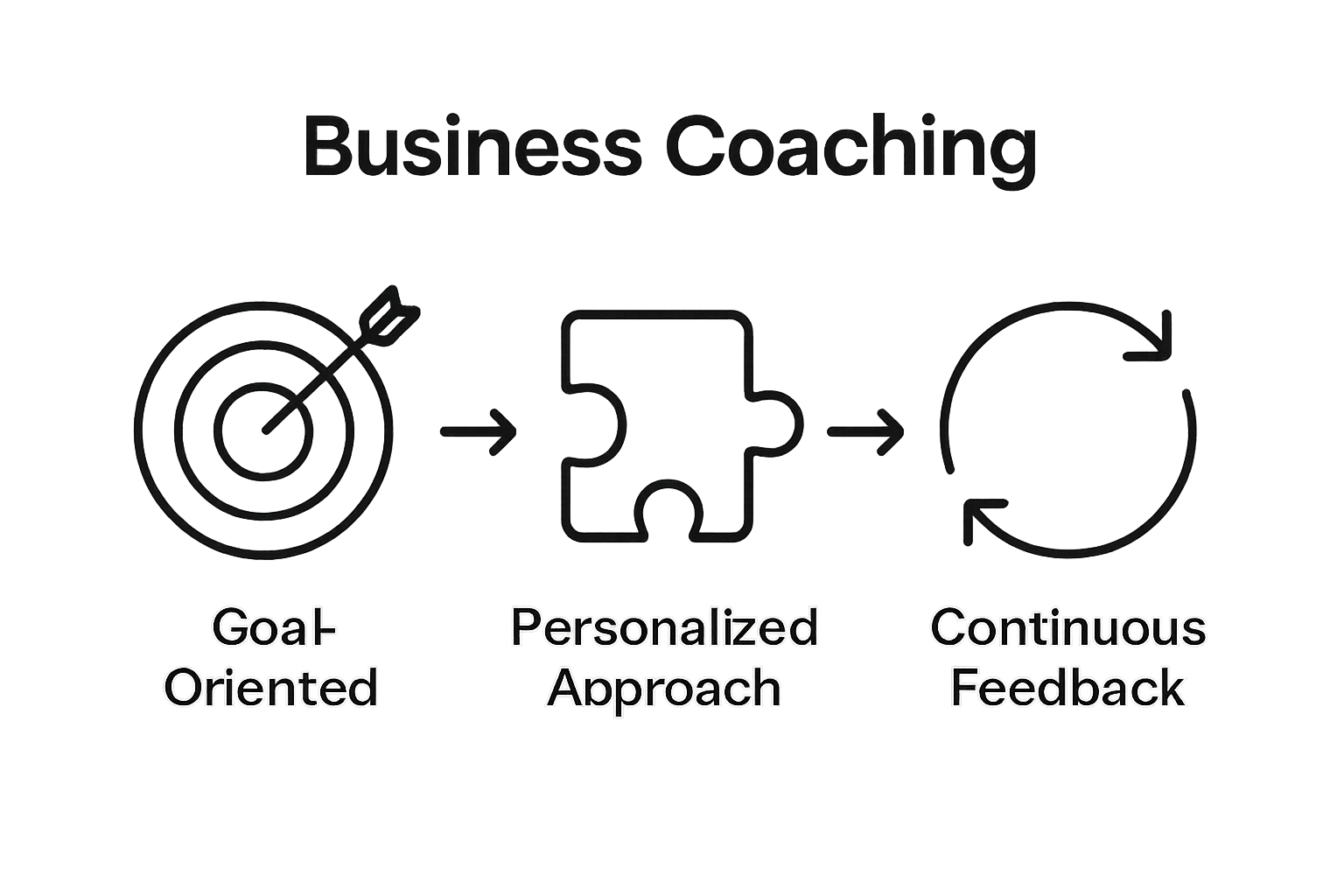 :
:
- Goal-Oriented Methodology: Establishing clear, measurable objectives that align with individual and organizational aspirations
- Personalized Approach: Tailoring strategies to unique professional contexts and individual learning styles
- Continuous Feedback Loop: Creating mechanisms for ongoing assessment and adaptive strategy development
Business owners seeking to understand change management strategies recognize that coaching is not about providing immediate solutions but facilitating self-discovery and empowering professionals to develop their own innovative approaches.
Moreover, successful coaching transcends superficial skill enhancement. It involves deep psychological insights, helping professionals understand their underlying motivations, challenge existing mental frameworks, and cultivate a growth mindset. Coaches act as strategic partners, offering objective perspectives, challenging assumptions, and supporting professionals in navigating complex business landscapes with greater confidence and strategic clarity.
How Coaching Facilitates Growth and Development
Coaching represents a powerful catalyst for professional and organizational transformation, enabling individuals and businesses to unlock their full potential through structured, intentional development strategies. By creating targeted pathways for personal and professional advancement, coaching transcends traditional training methods.
Transformative Learning Mechanisms
Research from leadership development studies demonstrates that coaching facilitates profound learning experiences by helping professionals develop critical self-awareness and adaptive capabilities. The process goes beyond skill acquisition, focusing on deep psychological insights that fundamentally reshape professional perspectives and behavioral patterns.
Strategic Growth Enablers
Coaching facilitates growth through several key strategic mechanisms:
- Personalized Development: Tailoring interventions to individual strengths, weaknesses, and aspirations
- Performance Acceleration: Identifying and removing psychological barriers that limit professional potential
- Continuous Improvement: Creating frameworks for ongoing learning and self-reflection
Professionals seeking comprehensive insights can learn more about my personal approach to development and understand how targeted coaching strategies can transform professional trajectories.
Moreover, coaching acts as a dynamic bridge between current performance and future potential. By providing objective feedback, challenging existing mental models, and supporting experimentation, coaches help professionals develop resilience, adaptability, and strategic thinking. This holistic approach ensures that growth is not just incremental but transformative, enabling individuals to consistently evolve and excel in increasingly complex professional environments.
Real-World Examples of Coaching Impacts in Business
Business coaching transcends theoretical discussions, delivering measurable, transformative outcomes across diverse organizational contexts. Real-world examples illustrate how strategic coaching interventions can drive substantial performance improvements and organizational evolution.
Leadership Performance Transformation
Research from Stanford Graduate School of Business reveals compelling evidence of coaching’s impact on executive performance. Companies implementing targeted coaching programs have witnessed remarkable improvements in leadership transparency, strategic decision-making, and organizational trust. Executives who engage in structured coaching experiences develop enhanced emotional intelligence, communication skills, and adaptive leadership capabilities.
Quantifiable Business Outcomes
Coaching produces tangible business results across multiple performance dimensions:
- Talent Retention: Reducing employee turnover through personalized professional development
- Operational Efficiency: Identifying and addressing systemic organizational barriers
- Strategic Alignment: Creating clearer pathways for individual and organizational growth
Business professionals interested in understanding comprehensive development strategies can explore more about personal growth approaches and their potential organizational impact.
Moreover, successful coaching interventions demonstrate that organizational transformation is not about implementing generic solutions but creating customized, context-specific strategies. By focusing on individual potential and organizational dynamics, coaching becomes a powerful mechanism for sustainable business growth. These real-world examples underscore coaching’s role as a strategic investment, enabling businesses to cultivate resilient, adaptive professionals who can navigate complex market challenges with confidence and innovation.
Unlock Real Business Growth With Expert Coaching
If you are struggling to break through stubborn barriers and achieve consistent growth, you are not alone. Many business leaders face hidden obstacles and operational bottlenecks that traditional solutions simply cannot overcome. The article above explored how personalized business coaching provides tailored development strategies, measurable goal-setting, and a proven framework for real transformation. Yet, real change requires specialized support and proven expertise.
Explore strategies for change management that turn uncertainty into opportunity.

Start investing in your company’s potential today. Secure a premium personal coaching session at https://tariqjuneja.com and learn how targeted coaching can reshape your leadership, motivate your teams, and strengthen your entire organization. Seats are limited and demand is high. Take action now to position your business for the next level of growth.
Frequently Asked Questions
What is business coaching?
Business coaching is a strategic partnership designed to unlock professional potential and drive organizational growth through a personalized development process guided by experienced professionals.
How does coaching impact business performance?
Coaching enhances leadership capabilities and organizational performance by facilitating introspection and helping business owners identify challenges and develop strategies for improvement.
What are the key benefits of coaching for business owners?
The key benefits include personal development, strategic planning for growth, and performance optimization by identifying and overcoming operational bottlenecks.
How does coaching differ from traditional mentorship or consulting?
Coaching focuses on a collaborative partnership that empowers individuals through self-discovery and personalized strategies, while traditional mentorship often involves advice from an experienced individual and consulting typically provides immediate solutions rather than fostering long-term growth.
The table below outlines the key differences between business coaching, traditional mentorship, and consulting to clarify how each approach impacts professional development.
| Approach | Main Focus | Relationship Type | Outcome Orientation |
|---|---|---|---|
| Business Coaching | Unlocking potential through personalized guidance | Collaborative partnership | Long-term growth and self-discovery |
| Traditional Mentorship | Sharing advice based on personal experience | Experienced mentor to mentee | Skill/knowledge transfer |
| Consulting | Providing solutions to identified issues | Expert to client | Immediate problem-solving |