

Nearly 60 percent of American executives and IT professionals confuse the roles of life coaches and therapists when searching for transformative support. This misunderstanding often leads to wasted time and missed opportunities for real progress. As competition for top performance grows in global tech, knowing the difference empowers leaders to maximize personal and professional growth. This article uncovers the clear boundaries, key qualifications, and major myths around life coaching and therapy so you can confidently choose the right path.
Table of Contents
- Defining Life Coach Therapist Roles And Myths
- Key Differences: Life Coaches Versus Therapists
- Qualifications, Certifications, And Ethical Boundaries
- When To Choose Each: Use Cases And Benefits
- Risks, Legalities, And What To Avoid
Key Takeaways
| Point | Details |
|---|---|
| Distinction Between Roles | Life coaches focus on future goals and personal development, while therapists address past traumas and mental health issues. |
| Credentials and Regulation | Therapists require state licensure and advanced degrees, whereas life coaches typically pursue voluntary certifications with no legal requirements. |
| When to Choose | Life coaching is best for high-functioning individuals seeking personal advancement, while therapy is essential for those experiencing significant emotional distress or mental health crises. |
| Ethical Boundaries | Coaches must respect their limitations and avoid diagnosing mental health conditions, making it crucial to refer clients to therapists when needed. |
Defining Life Coach Therapist Roles and Myths
Life coaches and therapists share some surface similarities but operate within distinctly different professional domains. While both aim to support human growth and development, their approaches, methodologies, and legal boundaries diverge significantly. Professional coaching research emphasizes that coaching represents a motivational and behaviorally oriented field focused on future outcomes and goal achievement.
Therapists are licensed mental health professionals trained to diagnose and treat psychological conditions, addressing past traumas, emotional challenges, and clinical mental health concerns. Conversely, life coaches concentrate on forward momentum, helping clients design actionable strategies for personal and professional advancement. Comparative studies highlight that coaches do not provide clinical interventions but instead serve as thought partners who facilitate strategic planning and self-discovery.
Common myths frequently blur the lines between these professions. Many people mistakenly believe life coaches can replace therapists or provide similar therapeutic interventions. In reality, responsible coaching practices mandate clear boundaries. A skilled life coach recognizes when a client’s needs extend beyond coaching’s scope and should professionally refer them to appropriate mental health resources. This ethical approach protects both the client and maintains the integrity of each professional domain.
Pro Tip: When selecting a life coach or therapist, always verify their credentials, professional certifications, and understand their specific service boundaries to ensure you receive appropriate, targeted support.
Key Differences: Life Coaches Versus Therapists
The professional landscape of personal development encompasses two distinct yet complementary roles: life coaches and therapists. While both aim to support individual growth, their methodological approaches, legal frameworks, and core objectives differ substantially. Life coach professional comparisons reveal critical distinctions that help clients understand which professional might best serve their needs.
Therapists operate within a licensed, clinically regulated environment, focusing on diagnosing and treating psychological conditions, processing past traumas, and addressing mental health challenges. Their training involves extensive academic credentials, including advanced degrees in psychology, counseling, or psychiatry, with mandatory state licensure. Life coaches, conversely, concentrate on forward momentum, helping clients establish actionable goals, develop strategic personal and professional plans, and unlock potential future achievements.

The fundamental differences extend beyond professional training. Therapists delve into emotional healing and psychological restructuring, often exploring deep-seated patterns and past experiences. Life coaches prioritize present capabilities and future possibilities, designing pragmatic strategies for personal transformation. This approach means coaches do not treat clinical conditions but instead empower clients to bridge gaps between their current state and desired outcomes. A skilled life coach recognizes when a client’s needs transcend coaching boundaries and can professionally recommend transitioning to therapeutic support.
Pro Tip: Before engaging with either a life coach or therapist, clearly define your personal goals and carefully assess which professional’s expertise aligns most closely with your specific needs and desired outcomes.
Here’s a side-by-side summary of life coach and therapist distinctions:
| Aspect | Life Coach | Therapist |
|---|---|---|
| Focus | Future-oriented goals | Healing past and present issues |
| Required Credentials | Voluntary certifications | Mandatory state licensure |
| Legal Regulation | Unregulated or lightly regulated | Strictly regulated by law |
| Scope of Practice | Motivation, strategy, planning | Diagnosis and treatment |
Qualifications, Certifications, and Ethical Boundaries
The professional credentials and ethical frameworks for life coaches and therapists represent fundamentally different regulatory landscapes. Professional coaching standards reveal that therapists operate under stringent legal requirements, while life coaches navigate a more flexible certification environment. Therapists must complete advanced academic degrees, pass comprehensive licensing examinations, and maintain ongoing professional development to practice legally.
Life coaching certifications differ significantly from therapeutic credentials. Unlike therapists, coaches are not legally mandated to obtain specific qualifications, though professional organizations like the International Coach Federation (ICF) offer voluntary certification programs. Ethical boundary research emphasizes that coaches must explicitly understand and respect their professional limitations. This means never attempting to diagnose or treat mental health conditions, which remain strictly within therapists’ professional domain.
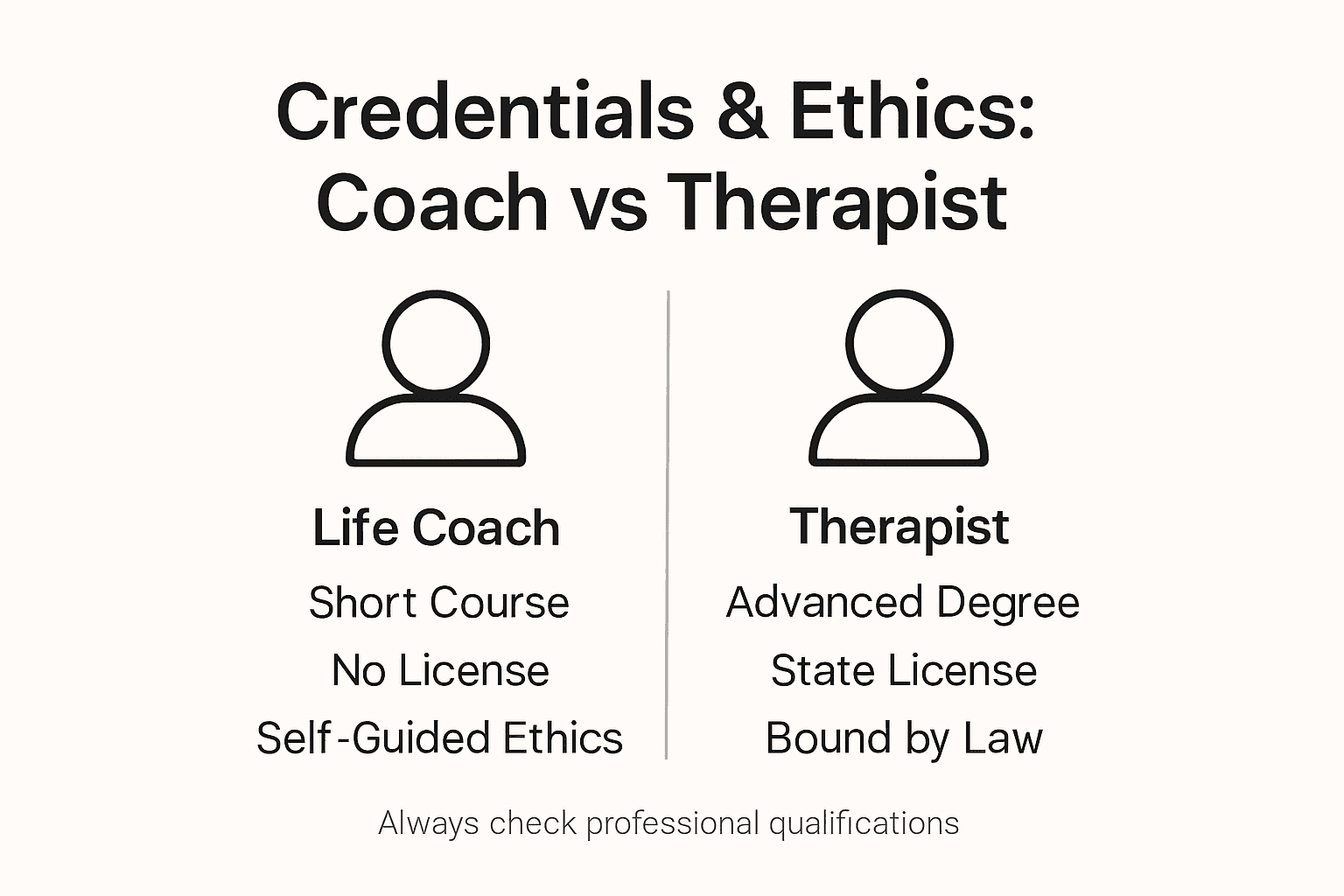
Ethical boundaries form the cornerstone of both professions, though their implementation varies dramatically. Therapists are bound by strict confidentiality laws, mandatory reporting requirements, and detailed clinical ethics protocols. Life coaches, while not legally regulated, are expected to adhere to professional conduct standards that prioritize client empowerment, transparent communication, and recognizing the boundaries of their professional expertise. A responsible coach understands when a client’s needs exceed coaching capabilities and should professionally recommend transitioning to therapeutic support.
Pro Tip: Always verify a professional’s credentials, ask about their specific certification, and understand their ethical guidelines before beginning any coaching or therapeutic relationship.
When to Choose Each: Use Cases and Benefits
Professional guidance for selecting between therapy and life coaching highlights the critical importance of understanding individual needs and psychological context. Life coaching serves individuals functioning well who seek strategic personal and professional advancement, while therapy addresses deeper emotional challenges and mental health complexities. The selection process requires careful self-assessment and an honest evaluation of current personal circumstances.
Therapy becomes the recommended path when experiencing significant emotional distress, unresolved trauma, clinical mental health diagnoses, or persistent psychological barriers. Trained therapists provide specialized interventions, helping clients process complex emotional experiences, develop coping mechanisms, and navigate deep-seated psychological patterns. Comprehensive professional distinctions indicate therapy’s primary focus on healing and psychological restructuring, making it ideal for individuals struggling with mental health challenges.
Conversely, life coaching emerges as the optimal solution for high-functioning individuals seeking structured goal achievement, personal transformation, and strategic life planning. Coaches excel at helping motivated clients create actionable roadmaps, overcome performance plateaus, enhance professional effectiveness, and unlock personal potential. These professionals provide accountability, challenge limiting beliefs, and support clients in designing and implementing meaningful life strategies. The key distinction lies in coaching’s future-oriented approach, emphasizing potential and progress rather than addressing past psychological wounds.
Pro Tip: Conduct an honest self-assessment of your current psychological state and specific objectives, then consult with professionals in both domains to determine the most appropriate support pathway for your unique situation.
Here’s a quick reference for situations best suited to coaching or therapy:
| Need | Life Coaching Best For | Therapy Best For |
|---|---|---|
| Goal achievement | Strategic action steps | Addressing mental blocks |
| Emotional healing | Supporting progress | Processing trauma |
| Professional growth | Enhancing performance | Coping with stress |
| Mental health crisis | Not appropriate | Essential intervention |
Risks, Legalities, and What to Avoid
Comprehensive research on professional coaching risks reveals critical legal and ethical challenges within unregulated coaching environments. The absence of standardized legal frameworks creates significant potential for client vulnerability, emphasizing the importance of understanding professional boundaries and potential risks associated with life coaching and therapeutic practices. Clients must remain vigilant about the professional credentials, ethical standards, and scope of practice for any personal development professional they engage.
Unregulated coaching practices pose substantial risks including confidentiality breaches, inappropriate intervention strategies, and potential psychological harm. Life coaches must explicitly avoid diagnosing mental health conditions, providing clinical interventions, or presenting themselves as qualified therapists. The most significant legal risks emerge when coaches exceed their professional boundaries, attempt to address complex psychological issues beyond their training, or fail to recognize when a client requires specialized clinical support. Responsible practitioners maintain clear communication about their qualifications, limitations, and ethical standards.
Key legal and ethical considerations require coaches to implement robust protective mechanisms. These include obtaining appropriate professional liability insurance, maintaining clear written agreements defining coaching scope, implementing strict confidentiality protocols, and establishing transparent communication about the limits of their professional expertise. Coaches must develop referral networks with licensed mental health professionals to ensure clients receive appropriate support when psychological challenges exceed coaching capabilities. Clients should always verify a coach’s credentials, understand their professional background, and confirm their commitment to ethical practice guidelines.
Pro Tip: Always request and verify a professional’s credentials, ask about their specific ethical guidelines, and maintain open communication about your personal goals and psychological needs before beginning any coaching relationship.
Understand Your Growth Path With Expert Coaching Support
Navigating the differences between life coaching and therapy can feel overwhelming when you are striving for personal transformation or overcoming challenges. This article clarifies these distinct roles and the importance of respecting professional boundaries to ensure you receive the right kind of support. Whether your focus is on designing strategic future goals or addressing deeper emotional hurdles, knowing whom to turn to is crucial for authentic progress.
By exploring tailored coaching approaches in the Life Coaching Archives – Tariq Juneja, you can discover transformative strategies that empower you toward actionable change. Tariq Juneja specializes in helping clients unlock potential through goal-oriented coaching aligned with ethical practices and a clear understanding of professional limits. Begin your journey today by visiting https://tariqjuneja.com to access engaging seminars, workshops, and one-on-one sessions designed for meaningful growth.

Take the next step toward clarity and transformation. Explore how expert coaching at Life Coaching Archives – Tariq Juneja can complement your personal development journey while honoring your unique needs. Book a free consultation now at https://tariqjuneja.com and embrace a future shaped by intentional change.
Frequently Asked Questions
What is the primary difference between a life coach and a therapist?
Life coaches focus on future-oriented goals and personal development, while therapists diagnose and treat psychological conditions, addressing emotional and mental health issues.
Can a life coach provide therapy or mental health treatment?
No, life coaches do not provide therapy or mental health treatment. They work on motivation and goal achievement, referring clients to therapists when psychological support is needed.
What qualifications do therapists typically have compared to life coaches?
Therapists usually have advanced degrees, state licensure, and extensive training in mental health, while life coaches can obtain voluntary certifications but are not legally required to have specific qualifications.
When should someone choose therapy over life coaching?
Therapy is recommended when a person experiences significant emotional distress, unresolved trauma, or mental health conditions. Life coaching is best for individuals seeking strategic personal and professional growth without deeper emotional challenges.
Recommended
- Coaching vs Consulting: Complete Guide for Leaders – Tariq Juneja
- What Is a Transformational Coach? Complete Overview – Tariq Juneja
- What Does a Mindset Coach Do: Transforming Growth – Tariq Juneja
- Coaching Versus Consulting: Choosing the Right Approach – Tariq Juneja
- Coaching vs Therapy: Difference between Coach and Therapist?
- 3 Types of Boundaries – Dr. Stephen Oreski & Associates