

Over 70 percent of people who work with a coach report improved performance, relationships, and communication at work. Personal coaching has gained attention as a practical path to unlocking potential that self-help books and seminars often miss. By understanding what personal coaching is and how it works, you can discover new ways to achieve your goals and overcome hidden barriers holding you back.
Table of Contents
- Defining Personal Coaching and Core Principles
- Major Types of Personal Coaching Explained
- How the Personal Coaching Process Works
- Top Benefits of Working With a Coach
- Costs, Commitments, and Common Pitfalls
- Personal Coaching vs. Self-Help Approaches
Key Takeaways
| Point | Details |
|---|---|
| Transformative Coaching Relationship | Personal coaching is a collaborative process that empowers individuals to unlock their potential and achieve meaningful personal and professional growth. |
| Diverse Coaching Approaches | Various coaching styles, such as performance and holistic coaching, cater to different aspects of personal development and individual needs. |
| Structured Coaching Process | The coaching journey involves initial assessments, goal setting, and regular feedback mechanisms to foster continuous improvement and accountability. |
| Benefits Over Self-Help | Personal coaching offers structured guidance and expert support, distinguishing it from self-help approaches by emphasizing personalized strategies and accountability. |
Defining Personal Coaching and Core Principles
Personal coaching represents a transformative professional relationship designed to unlock human potential and drive meaningful personal and professional growth. According to research from Eric.Ed.gov, personal coaching is a “collaborative, solution-focused, and results-oriented process” where coaches strategically facilitate enhanced life experiences and performance across multiple domains.
At its core, personal coaching operates through several fundamental principles. As documented by Cieca.eu, these principles include establishing an equal partnership between coach and client, promoting active participant engagement, and encouraging systematic goal identification and achievement. The process fundamentally centers on raising self-awareness, increasing personal responsibility, and systematically addressing internal barriers preventing meaningful change.
The coaching relationship differs significantly from traditional mentoring or consulting. Unlike directive approaches, personal coaching empowers individuals to generate their own solutions by asking powerful questions, providing objective perspectives, and creating structured accountability frameworks. Coaches serve as strategic facilitators who help clients discover their inherent capabilities, design actionable strategies, and navigate complex personal and professional challenges with greater clarity and confidence.
Key aspects of personal coaching include:
- Collaborative goal setting
- Customized strategy development
- Regular performance tracking
- Continuous feedback mechanisms
- Holistic personal development focus
For those interested in exploring this transformative process more deeply, our guide on understanding the coaching process provides comprehensive insights into how professional coaching can accelerate personal growth and performance.
Major Types of Personal Coaching Explained
Personal coaching is a dynamic field with multiple specialized approaches designed to address diverse individual needs and goals. According to research from Centre of Excellence, personal coaching encompasses various styles that cater to different aspects of personal and professional development.
Performance coaching focuses specifically on enhancing professional skills and achieving targeted objectives. This approach helps individuals identify performance gaps, develop strategic improvement plans, and systematically track progress towards specific career or professional goals. Coaches work closely with clients to break down complex objectives into actionable steps, providing structured accountability and targeted guidance.
Another significant approach is holistic coaching, which takes a comprehensive view of an individual’s life. Unlike narrow performance-focused methods, holistic coaching examines interconnected aspects of personal well-being, including emotional health, career satisfaction, relationships, and personal growth. The goal is to create balanced, sustainable transformation across multiple life domains.

Key types of personal coaching include:
Here’s a comparison of the main types of personal coaching:
| Coaching Type | Primary Focus | Typical Clients |
|---|---|---|
| Performance Coaching | Professional skills Goal achievement |
Corporate employees Managers |
| Leadership Coaching | Leadership development Strategic vision |
Executives Aspiring leaders |
| Career Transition | Career change Role shifts |
Job seekers Career changers |
| Holistic Coaching | Whole-life balance Personal growth |
Individuals seeking well-being |
| Executive Coaching | Senior leadership Organizational impact |
C-suite executives |
| Life Purpose Coaching | Self-discovery Meaningful direction |
Anyone seeking purpose |
- Performance coaching
- Leadership coaching
- Career transition coaching
- Holistic personal development coaching
- Executive coaching
- Life purpose coaching
For professionals seeking to understand leadership development more deeply, our personal leadership coaching guide provides comprehensive insights into how targeted coaching strategies can unlock individual potential and drive meaningful professional growth.
How the Personal Coaching Process Works
Personal coaching is a structured yet deeply personalized journey of professional and personal transformation. According to research from Eric.Ed.gov, the coaching process fundamentally involves a “collaborative partnership” where coaches support individuals in identifying meaningful goals and developing strategic approaches to achieve them.
Initial Assessment and Goal Setting represents the crucial first stage of the coaching process. During this phase, coaches engage in comprehensive discussions to understand the client’s current situation, aspirations, and potential obstacles. Clients are encouraged to articulate specific, measurable objectives that align with their personal and professional vision. This collaborative approach ensures that the coaching journey is tailored precisely to the individual’s unique needs and desired outcomes.
The coaching relationship is characterized by its dynamic, iterative nature. As documented by Cieca.eu, effective coaching processes are guided by principles of equality, active participation, and a focus on raising the client’s self-awareness and personal responsibility. Coaches employ various techniques to facilitate breakthrough insights, including:
- Powerful questioning
- Active listening
- Reflective feedback
- Accountability frameworks
- Personalized strategy development
To gain deeper insights into the transformative potential of coaching techniques, our guide on understanding why coaching works offers comprehensive exploration of the psychological and practical mechanisms that drive personal growth and professional development.
Top Benefits of Working With a Coach
Personal coaching represents a transformative approach to personal and professional development, offering profound benefits that extend far beyond traditional learning methods. According to research from Eric.Ed.gov, engaging with a personal coach can lead to “enhanced self-awareness” and “improved performance” across multiple life domains through a structured and supportive process.
Performance Acceleration emerges as a primary benefit of working with a coach. Professional coaches provide objective perspectives, helping individuals identify hidden potential, overcome internal barriers, and develop targeted strategies for achieving complex personal and professional goals. This process involves deep introspection, strategic planning, and consistent accountability that traditional training or self-directed learning often lacks.
Moreover, as documented by Cieca.eu, coaching promotes critical personal development attributes such as active learning, personal responsibility, and systematic strategy creation. The coaching relationship cultivates a unique environment where individuals can explore challenges, deconstruct limiting beliefs, and build sustainable growth mechanisms.
Key benefits of working with a professional coach include:
- Accelerated personal and professional growth
- Enhanced self-awareness and emotional intelligence
- Structured goal achievement strategies
- Personalized feedback and accountability
- Improved decision-making capabilities
- Stress reduction and enhanced resilience
Professionals seeking deeper insights into organizational coaching dynamics can explore our guide on understanding business coaching benefits, which provides comprehensive perspectives on how targeted coaching interventions drive meaningful transformation.
Costs, Commitments, and Common Pitfalls
Personal coaching represents a significant investment of both financial resources and personal energy. According to research from Eric.Ed.gov, potential clients must carefully consider the “financial investment, time commitment, and importance of selecting a qualified coach” to maximize the potential for meaningful transformation.
Financial Considerations play a critical role in the coaching decision-making process. Professional coaching fees can range substantially, typically from $100 to $500 per session, depending on the coach’s expertise, experience, and specialization. Potential clients should view this investment as a strategic commitment to personal development, understanding that the potential returns in career advancement, personal growth, and improved life satisfaction can far outweigh the initial monetary expenditure.
As documented by Cieca.eu, several common pitfalls can undermine the coaching experience, including “unclear goal-setting, insufficient commitment from the coachee, and lack of alignment between the coach’s methods and the individual’s learning style.” Successful coaching requires active participation, genuine commitment, and a willingness to engage in sometimes uncomfortable personal exploration.
Key considerations before starting a coaching engagement:
- Verify coach’s credentials and professional background
- Establish clear, measurable personal goals
- Understand the expected time and financial commitment
- Assess personal readiness for change and growth
- Develop a transparent communication strategy
- Plan for regular progress evaluations
For professionals seeking deeper insights into navigating the coaching landscape, our guide on understanding business coaching benefits offers comprehensive strategies for making informed coaching decisions.
Personal Coaching vs. Self-Help Approaches
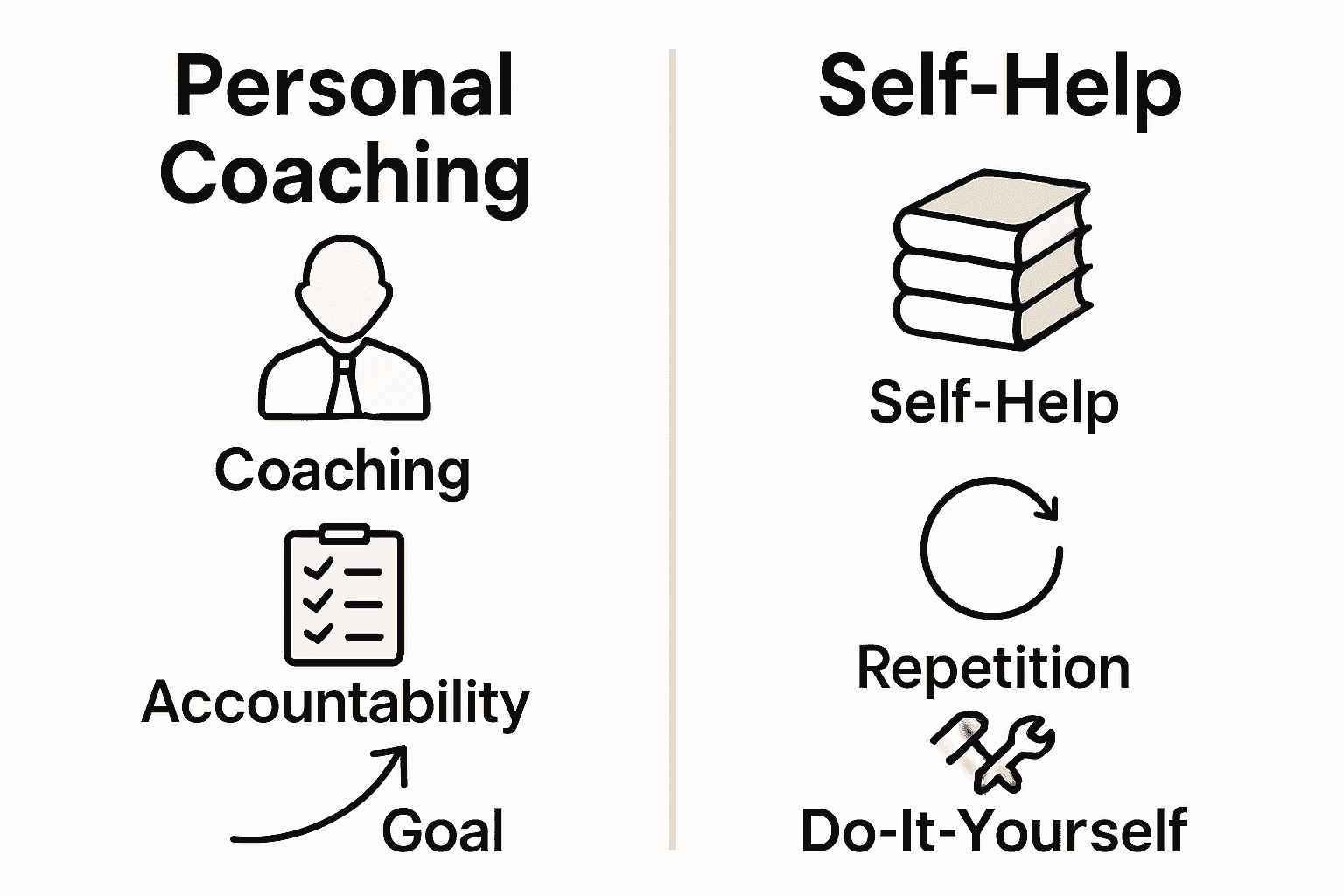
While self-help and personal coaching share the ultimate goal of personal development, they fundamentally differ in approach and effectiveness. According to research from Files.Eric.Ed.gov, personal coaching offers a “collaborative and structured process” that goes beyond traditional self-help methods by providing external support, facilitating goal identification, and creating robust accountability mechanisms.
Structured Guidance distinguishes personal coaching from self-directed approaches. Where self-help resources rely primarily on individual motivation and independent learning, professional coaching introduces an expert partner who provides objective perspectives, challenges limiting beliefs, and develops tailored strategies. As documented by Wikipedia, self-mentoring involves individuals independently “assessing their strengths and weaknesses,” whereas coaching actively intervenes to accelerate this process through professional intervention.
The critical differences between personal coaching and self-help approaches become evident in several key dimensions. Self-help typically involves:
- Generic, one-size-fits-all advice
- Minimal personalized feedback
- Inconsistent accountability
- Reliance on individual motivation
- Limited external perspective
In contrast, personal coaching provides:
- Customized strategy development
- Regular professional feedback
- Structured accountability mechanisms
- External expert perspectives
- Targeted performance improvement
Professionals seeking a deeper understanding of self-directed growth strategies can explore our guide on understanding self-coaching, which offers comprehensive insights into personal development approaches.
Unlock Your Potential with Expert Personal Coaching
Feeling stuck or overwhelmed by your personal and professional goals is common when facing complex challenges and seeking meaningful growth. This article highlights the power of personal coaching to increase self-awareness, develop tailored strategies, and stay accountable through a collaborative process designed to transform your journey. If you want to experience accelerated growth, improved performance, and balanced well-being, taking the right step now can change everything.
Discover how targeted coaching can help you break through barriers and embrace change with confidence. Visit Life Coaching Archives – Tariq Juneja to explore transformative coaching styles that match your unique needs. Learn more about professional guidance that integrates agile principles by visiting Agile Coaching Archives – Tariq Juneja. Ready to start your transformation journey? Head to https://tariqjuneja.com today and book your free consultation to unlock a clearer path forward.
Frequently Asked Questions
What is personal coaching?
Personal coaching is a transformative professional relationship aimed at unlocking human potential and facilitating personal and professional growth through a collaborative, solution-focused, and results-oriented process.
How does the personal coaching process work?
The personal coaching process involves an initial assessment to identify goals, followed by developing strategies and tracking progress through ongoing support, feedback, and accountability tailored to the individual’s unique needs.
What are the key benefits of working with a personal coach?
Key benefits of personal coaching include accelerated personal and professional growth, enhanced self-awareness, structured goal achievement strategies, and personalized feedback, ultimately leading to improved decision-making and resilience.
How is personal coaching different from self-help approaches?
Unlike self-help methods that rely on individual motivation, personal coaching provides structured guidance from an expert, personalized feedback, and robust accountability, helping individuals achieve their goals more effectively.
Recommended
- Personal Leadership Coaching: Everything You Need to Know – Tariq Juneja
- Understanding What is Self-Coaching for Personal Growth – Tariq Juneja
- Understanding Why Coaching Works: Keys to Growth – Tariq Juneja
- Create an Effective Coaching Session Plan for 2025 Success – Tariq Juneja
- Wisdom – Your AI Guide to Love, Success & Self-Mastery