

Most american IT managers in telecommunications report that over 60 percent of their teams struggle with adapting to rapid industry shifts. When constant change is the norm, even experienced leaders can feel pressure to drive results while nurturing agility and productivity. This article sheds light on how clear coaching strategies, tailored for modern IT environments, support transformational growth for both managers and their teams.
Table of Contents
- Defining Coaching for IT Professionals
- Types of Coaching That Drive Change
- How Coaching Transforms Telecom Teams
- AI and Data Trends in Modern Coaching
- Common Pitfalls and How to Avoid Them
Key Takeaways
| Point | Details |
|---|---|
| Coaching Empowerment | Coaching for IT professionals enhances individual growth and leadership capabilities through personalized development. |
| Types of Coaching | Key coaching types include performance, leadership, digital, and transformational coaching, each focused on specific aspects of development. |
| AI Integration | The use of AI and data analytics in coaching allows for more personalized and adaptive coaching experiences. |
| Avoiding Pitfalls | Successful coaching requires thorough preparation and ongoing assessment to avoid common challenges that undermine effectiveness. |
Defining Coaching for IT Professionals
Coaching in the IT professional context represents a strategic human resource intervention designed to empower technology leaders through personalized developmental conversations. Systematic research reveals that organizational coaching transcends traditional training, focusing instead on facilitating individual growth, self-awareness, and professional transformation.
At its core, digital coaching for IT professionals involves synchronous, technology-enabled conversations between a trained coach and a technology leader, aimed at unlocking potential and addressing complex workplace challenges. Digital coaching frameworks distinguish this approach from standard training by emphasizing active listening, open-ended questioning, and a client-centered methodology that respects the unique dynamics of technological environments.
Effective coaching for IT professionals goes beyond traditional mentorship by creating structured dialogues that help leaders navigate rapid technological changes, manage complex team dynamics, and develop strategic leadership capabilities. The process involves collaborative goal-setting, performance optimization, and continuous personal development tailored specifically to the technology sector’s unique demands. Coaches work closely with IT managers to enhance communication skills, strategic thinking, and emotional intelligence required for transformational leadership.
Pro tip: Schedule quarterly self-reflection sessions to assess your leadership growth trajectory and identify areas where targeted coaching could accelerate your professional development.
Types of Coaching That Drive Change
IT professionals encounter diverse coaching approaches designed to address specific organizational challenges and individual development needs. Executive coaching discourse practices reveal a complex taxonomy of intervention strategies that help technology leaders navigate transformation and personal growth. These approaches range from performance-focused models to more holistic leadership development frameworks.
The primary types of coaching that drive change in IT environments include performance coaching, leadership coaching, digital coaching, and transformational coaching. Systematic research identifies six critical factors influencing coaching effectiveness: coach characteristics, coachee attributes, relationship dynamics, specific coaching approaches, organizational context, and supporting technological tools. Performance coaching focuses on immediate skill enhancement and goal achievement, while leadership coaching develops strategic thinking and emotional intelligence necessary for complex technological environments.

Digital and hybrid coaching models have emerged as particularly powerful interventions for IT professionals, offering flexibility and targeted development opportunities. These approaches blend synchronous technology-enabled conversations with traditional coaching methodologies, allowing for more personalized and accessible developmental experiences. Transformational coaching goes beyond skill development, aiming to fundamentally reshape leadership perspectives, enabling technology managers to drive organizational innovation and cultural change.
Here’s a quick comparison of the main coaching types found in IT environments:
| Coaching Type | Primary Focus | Key Benefit |
|---|---|---|
| Performance Coaching | Immediate skill and goal improvement | Fast-track measurable results |
| Leadership Coaching | Strategic thinking and leadership skills | Enhances decision-making abilities |
| Digital Coaching | Flexible, tech-enabled development | Accessible anytime, anywhere |
| Transformational | Culture and mindset transformation | Drives innovation and change |
Pro tip: Assess your current leadership challenges and select a coaching approach that aligns specifically with your professional development objectives and organizational context.
How Coaching Transforms Telecom Teams
Telecom teams operate in a dynamic environment where continuous adaptation is crucial for success. Workplace coaching research demonstrates remarkable potential for transforming team performance by addressing complex organizational challenges and individual development needs. This approach goes beyond traditional training, focusing on holistic skill enhancement and leadership capabilities.
The transformation process in telecom teams involves multiple strategic dimensions. Coaching and mentoring interventions enable team members to develop critical skills such as adaptive communication, technological agility, and collaborative problem-solving. By creating a non-directive developmental environment, coaching helps telecommunications professionals navigate technological shifts, improve interpersonal dynamics, and build resilience in a rapidly evolving industry landscape.
Specifically, coaching transforms telecom teams by promoting a culture of continuous learning, encouraging innovation, and developing leadership potential at every organizational level. This approach helps teams break through traditional hierarchical barriers, fostering open communication, encouraging knowledge sharing, and creating a more flexible and responsive organizational structure. Coaches work directly with team members to identify potential barriers, develop strategic thinking skills, and create personalized development pathways that align individual growth with broader organizational objectives.
Pro tip: Implement a quarterly coaching feedback loop that allows team members to reflect on their professional development progress and realign their goals with organizational strategies.
AI and Data Trends in Modern Coaching
The coaching landscape is undergoing a dramatic transformation driven by artificial intelligence and advanced data analytics. Digital coaching platforms demonstrate remarkable potential for personalizing leadership development through technology-enabled interventions. This technological evolution enables more precise, data-driven coaching experiences that can track progress, identify skill gaps, and provide tailored recommendations with unprecedented accuracy.
Artificial intelligence is reshaping coaching methodologies by introducing sophisticated analytical capabilities that extend beyond traditional human-driven approaches. AI coaching research reveals significant potential for creating adaptive learning environments where coaching interventions can be dynamically adjusted based on real-time performance data. These technologies enable coaches to develop more nuanced understanding of individual leadership challenges, potential growth areas, and organizational dynamics.
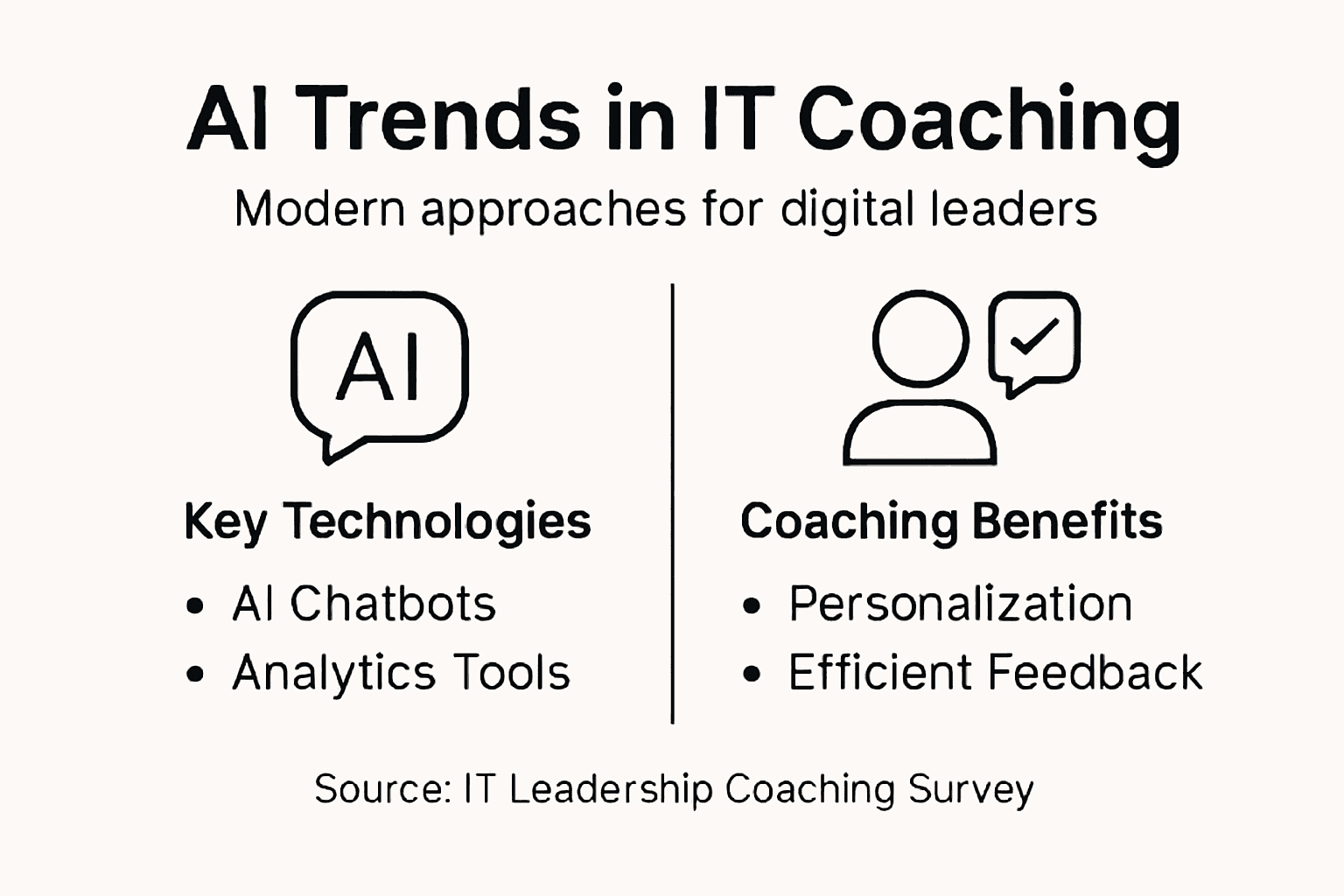
The integration of AI and data analytics in coaching represents a profound shift toward more intelligent, responsive developmental strategies. By leveraging machine learning algorithms and comprehensive data collection, coaches can now provide insights that were previously impossible to generate. This approach allows for predictive analysis of leadership potential, identification of subtle behavioral patterns, and creation of highly personalized development pathways that align individual growth with broader organizational objectives.
Below is a summary of how AI and data trends are shaping modern coaching:
| Technology | Main Contribution | Impact on Coaching Outcomes |
|---|---|---|
| Artificial Intel. | Real-time performance tracking | More targeted and adaptive feedback |
| Data Analytics | Skill gap identification | Personalized development pathways |
| Machine Learning | Predictive leadership analysis | Early detection of growth potential |
Pro tip: Regularly audit the ethical implications and human oversight of AI-driven coaching tools to ensure technological enhancements complement rather than replace human insight and empathy.
Common Pitfalls and How to Avoid Them
Transformational coaching requires strategic navigation to maximize its potential and minimize potential obstacles. Executive coaching research highlights critical organizational challenges that can undermine coaching effectiveness, including misaligned expectations, insufficient preparation, and lack of comprehensive support structures. Understanding these potential pitfalls allows IT leaders to design more robust and impactful coaching interventions.
Performance evaluation frameworks reveal several key challenges in implementing successful coaching programs. Common pitfalls include inconsistent coaching quality, limited empirical validation of methods, and difficulty adapting coaching approaches to diverse organizational contexts. IT leaders must develop rigorous selection criteria for coaches, establish clear performance metrics, and create flexible implementation strategies that can accommodate individual and team variations.
Successful coaching interventions demand a holistic approach that addresses potential barriers before they emerge. This involves careful coach selection, comprehensive organizational alignment, setting realistic expectations, and creating supportive infrastructures that enable continuous learning and development. Effective leaders recognize that coaching is not a one-size-fits-all solution but a nuanced process requiring ongoing refinement, transparent communication, and a commitment to individual and collective growth.
Pro tip: Develop a structured coaching impact assessment protocol that tracks both qualitative and quantitative outcomes to continuously validate and improve your coaching interventions.
Unlock Transformational Leadership with Expert Coaching Tailored for IT Professionals
Leading IT teams through rapid change is challenging. You may feel the weight of navigating complex organizational dynamics, mastering strategic thinking, and driving innovation all at once. This article highlights how coaching goes beyond traditional mentorship to unlock potential through personalized development, digital coaching tools, and transformational leadership practices.
If you are ready to overcome these challenges, embrace continuous learning, and inspire your telecom or IT team toward breakthrough performance, discover how Agile Coaching Archives – Tariq Juneja offers focused strategies that align perfectly with your growth objectives.

Take the next step in your transformational journey today by exploring practical coaching solutions at https://tariqjuneja.com. Benefit from proven frameworks in Change Management Archives – Tariq Juneja to elevate your leadership capabilities. Book a free consultation now to start accelerating your professional impact and lead with confidence.
Frequently Asked Questions
What is the primary goal of coaching for IT professionals?
The primary goal of coaching for IT professionals is to empower technology leaders through personalized developmental conversations that enhance their individual growth, self-awareness, and professional transformation.
How does digital coaching differ from traditional training?
Digital coaching focuses on facilitating technology-enabled conversations that prioritize active listening, open-ended questioning, and a client-centered methodology, while traditional training often relies on standardized instruction and passive learning.
What are the different types of coaching available for IT leaders?
The primary types of coaching for IT leaders include performance coaching, leadership coaching, digital coaching, and transformational coaching, each focusing on different aspects of professional development and creating unique benefits tailored to individual and organizational needs.
How can coaching transform telecom teams?
Coaching can transform telecom teams by promoting a culture of continuous learning, developing critical skills like adaptive communication and technological agility, and fostering open communication that breaks down traditional hierarchical barriers, thereby enhancing overall team performance.