

Transformative coaching has become a buzzword in professional growth circles. A recent study showed that organizations adopting this approach saw significant improvements in leadership and employee retention. Most people assume coaching is about fixing surface problems or boosting performance. The real surprise is that transformative coaching works by reshaping a person’s mindset and core beliefs, sparking deep and lasting change that goes way beyond meeting short-term goals.
Table of Contents
- Transformative Coaching Defined: The Core Concept
- The Importance of Transformative Coaching in Business
- Key Principles That Drive Transformative Coaching
- How Transformative Coaching Facilitates Change and Growth
Quick Summary
| Takeaway | Explanation |
|---|---|
| Transformative coaching emphasizes fundamental change | This coaching approach focuses on shifting core beliefs rather than just improving performance. |
| Self-reflection is essential for personal growth | Creating space for critical self-reflection allows individuals to gain deeper insights into themselves. |
| Collaboration enhances discovery in coaching | The coach acts as a facilitator, guiding clients to uncover their own insights and new perspectives. |
| Sustainable change originates from within | True transformation comes from internal shifts rather than external solutions imposed by others. |
| Improved emotional intelligence boosts workplace effectiveness | Transformative coaching leads to better emotional awareness, enhancing both individual and organizational performance. |
Transformative Coaching Defined: The Core Concept
Transformative coaching represents a powerful approach to personal and professional development that goes beyond traditional coaching methodologies. Unlike typical performance-oriented coaching, this approach focuses on fundamental shifts in an individual’s thinking, perception, and core beliefs.
The Philosophical Foundation
At its essence, transformative coaching operates on a profound understanding that human potential is not fixed but dynamically malleable. Research on coaching methodologies reveals that this approach leverages deep psychological principles to facilitate meaningful personal transformation. The core philosophy centers on helping individuals recognize and transcend their existing mental frameworks.
Key characteristics of transformative coaching include:
- Challenging existing mental models and belief systems
- Creating space for critical self-reflection
- Enabling profound personal insights and paradigm shifts
Distinguishing Features of Transformative Coaching
Transformative coaching differs significantly from traditional coaching approaches by prioritizing fundamental change over incremental improvement. While standard coaching might address surface-level performance goals, transformative coaching delves into the underlying narratives and unconscious patterns that limit an individual’s potential.
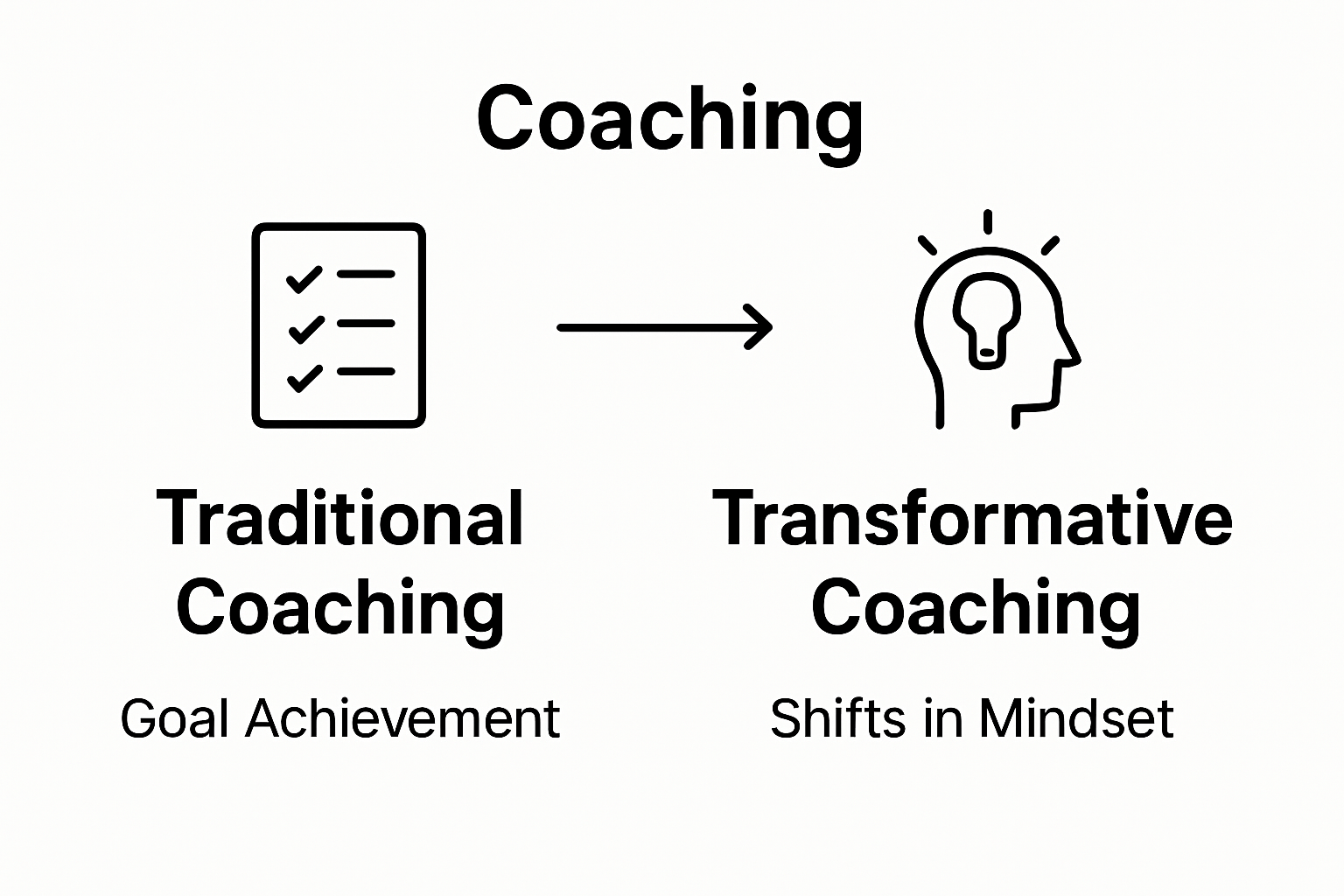
This approach requires a collaborative partnership between coach and client, where dialogue becomes a powerful tool for exploration and discovery. The coach serves not as an expert dispensing advice, but as a skilled facilitator who helps clients uncover their own insights and generate new perspectives.
For professionals interested in understanding more about coaching processes, read our comprehensive guide on coaching techniques.
Ultimately, transformative coaching represents a holistic approach to personal development. It recognizes that sustainable change occurs not through external interventions, but through internal shifts in perception, understanding, and self-awareness. By creating a supportive environment for deep reflection and meaningful dialogue, this approach empowers individuals to reimagine their potential and take purposeful action towards their most significant goals.
The Importance of Transformative Coaching in Business
In today’s rapidly evolving business landscape, transformative coaching has emerged as a critical strategy for organizational growth and individual professional development. This approach transcends traditional performance management by addressing the deeper psychological and emotional dynamics that influence workplace effectiveness.
Strategic Organizational Impact
Research from Stanford Graduate School of Business demonstrates the profound potential of transformative coaching in business settings. Organizations implementing this approach have observed significant improvements in individual and collective performance. These improvements are not merely incremental but represent fundamental shifts in how professionals approach challenges, collaborate, and drive innovation.
Key business benefits of transformative coaching include:
- Enhanced leadership capabilities
- Improved emotional intelligence
- Greater organizational adaptability
- Increased employee engagement and retention
Psychological Foundations of Business Transformation
Transformative coaching operates on the understanding that professional growth is intrinsically linked to personal development. By helping individuals understand and overcome their internal limitations, businesses can unlock extraordinary potential. The coaching process creates a safe environment for professionals to explore their beliefs, challenge existing paradigms, and develop more expansive thinking strategies.
For professionals seeking deeper insights into organizational development, explore our comprehensive guide on coaching’s role in business growth.
The true power of transformative coaching in business lies in its ability to create sustainable, systemic change. Unlike traditional training programs that offer temporary skill enhancements, this approach facilitates profound personal transformation that ripples through entire organizational cultures. By investing in transformative coaching, businesses are not just developing individual employees but fundamentally reimagining their approach to human potential, leadership, and collaborative excellence.
Key Principles That Drive Transformative Coaching
Transformative coaching is guided by a set of fundamental principles that distinguish it from traditional coaching approaches. These principles create a robust framework for personal and professional development, focusing on holistic growth and meaningful change.
The Core Philosophical Foundations
Research in adult learning theory reveals that transformative coaching is built on a profound understanding of human potential and psychological development. The approach recognizes that genuine transformation occurs through deep self-reflection, challenging existing mental models, and creating space for new perspectives.
Key philosophical principles include:
- Recognizing individuals as capable of self-directed learning
- Valuing personal experience as a critical learning resource
- Emphasizing critical reflection and perspective transformation
Relational Dynamics and Collaborative Exploration
At the heart of transformative coaching lies a unique relational approach that transcends traditional hierarchical coaching models. The coach serves not as an expert dispensing advice, but as a collaborative partner who facilitates profound personal insights. This principle requires a deep commitment to creating a safe, non judgmental environment where clients can explore their inner landscapes without fear of criticism.
Learn more about the nuanced coaching process that supports these transformative interactions.
The most critical principle driving transformative coaching is the belief that sustainable change emerges from within. Rather than imposing external solutions, this approach empowers individuals to discover their own insights, challenge limiting beliefs, and construct more expansive narratives about themselves and their potential. By honoring each person’s unique journey and inherent capacity for growth, transformative coaching creates a powerful pathway for personal evolution that extends far beyond traditional skill development or performance enhancement.
How Transformative Coaching Facilitates Change and Growth
Transformative coaching represents a sophisticated approach to personal development that goes beyond traditional skill enhancement, focusing instead on profound psychological and behavioral shifts. This method creates a dynamic pathway for individuals to unlock their full potential and navigate complex personal and professional challenges.
Psychological Mechanisms of Transformation
Research from the Institute of Coaching reveals that transformative coaching operates through intricate psychological mechanisms designed to catalyze deep personal change. The process is not about providing quick solutions but about creating environments where individuals can discover their inherent capacity for growth and self-directed learning.
Key psychological mechanisms include:
- Challenging existing mental models and belief systems
- Creating cognitive dissonance to stimulate personal reflection
- Developing emotional intelligence and self awareness
- Facilitating paradigm shifts in personal narrative
The Growth Journey: From Insight to Action
Transformative coaching distinguishes itself by emphasizing the journey from internal insight to external action. Coaches create a supportive yet challenging environment that encourages individuals to explore their deeper motivations, uncover limiting beliefs, and develop more expansive perspectives on their potential.
Explore strategies for embracing transformative change to understand how personal growth can be systematically approached.
The ultimate power of transformative coaching lies in its ability to help individuals rewrite their internal narratives. By providing a structured yet flexible approach to personal development, this method enables people to move beyond surface level behavioral modifications and achieve fundamental shifts in how they perceive themselves, their capabilities, and their potential for growth. Through this process, individuals learn to become active architects of their own transformation, creating sustainable change that resonates across personal and professional domains.

Ready to Experience the Power of Transformative Coaching?
If you found yourself resonating with ideas about breaking through limiting beliefs or are searching for lasting change rather than just surface improvement, you are not alone. Many people recognize the need for deeper shifts in thinking and self-awareness but struggle to know where to start. You have learned how transformative coaching explores personal insight and helps challenge old narratives. Now, discover how these principles come to life with direct support. To see real stories and practical strategies, visit our Life Coaching Archives.

Take the first step toward real change. Book your personalized discovery session and experience the professional guidance that turns insight into action. Do not let limiting patterns hold you back another day. See what is possible for you now at Tariq Juneja.
Frequently Asked Questions
What is transformative coaching?
Transformative coaching is an approach to personal and professional development that focuses on fundamental shifts in an individual’s thinking, perception, and core beliefs, rather than just performance-oriented improvements.
How does transformative coaching differ from traditional coaching?
Unlike traditional coaching, which often targets surface-level performance goals, transformative coaching addresses the underlying narratives and unconscious patterns that limit an individual’s potential, promoting deeper personal insights and paradigm shifts.
To clarify the distinctions between transformative coaching and traditional coaching, the following table compares their main focus, approach, and typical outcomes.
| Aspect | Transformative Coaching | Traditional Coaching |
|---|---|---|
| Core Focus | Fundamental shifts in mindset and beliefs | Targeted performance improvements |
| Coaching Approach | Collaboration and facilitation for deep self-insight | Expert-driven advice and structured goal achievement |
| Outcome | Lasting personal transformation and internal change | Incremental behavioral adjustments and skill development |
| Process Depth | Explores unconscious patterns, narratives, and identity | Focuses on observable actions and objectives |
| Role of Self-Reflection | Essential for uncovering limiting beliefs | Often secondary to action planning |
What are the key benefits of transformative coaching in a business context?
Key benefits of transformative coaching in business include enhanced leadership capabilities, improved emotional intelligence, greater organizational adaptability, and increased employee engagement and retention.
What principles guide transformative coaching?
Transformative coaching is guided by principles such as recognizing individuals as self-directed learners, valuing personal experiences as critical learning resources, and fostering a collaborative relationship between coach and client to create meaningful change.