

More than 60 percent of american professionals report feeling stuck in their growth, despite investing in traditional coaching. This highlights a growing need for approaches that create lasting change rather than just surface improvement. Transformational coaching stands out by focusing on genuine self-discovery and deep personal breakthroughs, helping individuals move beyond limiting beliefs and realize their full potential in every area of life.
Table of Contents
- Defining Transformational Coaching And Its Purpose
- Core Principles And Methods Of Transformational Coaching
- Types Of Transformational Coaches And Specializations
- Real-World Benefits And Use Cases For Clients
- Key Differences From Other Coaching Approaches
Key Takeaways
| Point | Details |
|---|---|
| Transformational coaching emphasizes deep personal change | This approach focuses on reshaping perspectives and fostering intrinsic growth, rather than merely improving performance. |
| Coaches serve as strategic partners | They guide clients through self-exploration, uncovering limiting beliefs and enhancing self-awareness for holistic development. |
| Focus on empowerment and holistic growth | This coaching method promotes radical personal accountability and encourages sustainable shifts in behavior and mindset. |
| Diverse specializations exist within transformational coaching | Coaches tailor their methods to target specific needs like leadership development, career transitions, and personal growth. |
Defining Transformational Coaching and Its Purpose
Transformational coaching represents a powerful approach to personal and professional development that goes far beyond traditional performance improvement methods. At its core, this coaching style focuses on helping individuals fundamentally reshape their perspectives, enabling profound changes in thinking, behavior, and potential. According to lifecoach-directory, transformational coaching empowers individuals to take genuine ownership of their lives, strategically aligning actions with their most authentic selves to achieve sustained personal growth.
The purpose of transformational coaching transcends simple skill enhancement or problem solving. Instead, it aims to create comprehensive, holistic change that touches multiple dimensions of an individual’s life. Transformational coaches work as strategic partners who guide clients through deep self-exploration, helping them uncover limiting beliefs, challenge existing thought patterns, and develop more expansive ways of perceiving themselves and their potential. aasa emphasizes that this approach particularly focuses on fostering equity and cultural responsiveness, promoting individual growth that connects personal development with broader systemic understanding.
Key characteristics of transformational coaching include:
- Focusing on internal transformation rather than external performance
- Encouraging profound self-reflection
- Challenging existing mental frameworks
- Supporting clients in developing authentic leadership and personal agency

- Creating sustainable behavioral and mindset shifts
In practice, transformational coaching involves a collaborative, deeply personalized process where coaches help clients navigate complex personal and professional landscapes. The ultimate goal is not just achieving specific objectives, but fundamentally reimagining what’s possible. Understanding Why Coaching Works: Keys to Growth provides additional insights into the powerful mechanisms that make this approach so effective in driving meaningful personal transformation.
Core Principles and Methods of Transformational Coaching
Transformational coaching is grounded in several foundational principles that distinguish it from traditional coaching approaches. At its core, this method is about creating profound, sustainable change through deep personal exploration and strategic intervention. pubmed highlights that transformational approaches involve creating dynamic relationships between individuals and knowledge, promoting personal growth through active engagement and problem-based learning techniques.
The core principles of transformational coaching typically encompass several key methodological strategies:
- Holistic Perspective: Viewing clients as complete, interconnected beings
- Self-Awareness Development: Helping clients understand their deeper motivations and unconscious patterns
- Radical Personal Accountability: Empowering clients to take full responsibility for their growth and choices
- Continuous Reflective Practice: Encouraging ongoing self-examination and critical thinking
- Strengths-Based Approach: Identifying and leveraging individual capabilities
Methodologically, transformational coaches employ sophisticated techniques designed to facilitate deep personal breakthrough. These include advanced listening skills, powerful questioning strategies, and techniques that challenge existing mental frameworks. What is Transformative Coaching? Understanding Its Impact explores how coaches create safe, supportive environments that allow clients to explore potentially uncomfortable personal insights while maintaining emotional safety.
Practical implementation of these principles requires coaches to balance empathetic support with strategic challenge.
Coaches must create a collaborative space where clients feel simultaneously supported and challenged to expand beyond their current limitations. This delicate balance involves using techniques like reflective dialogue, experiential learning exercises, and personalized strategic planning to help clients unlock their most significant potential and create meaningful, lasting transformation in their personal and professional lives.
Types of Transformational Coaches and Specializations
Transformational coaching encompasses a diverse range of specialized approaches, each targeting unique dimensions of personal and professional development. Professional coaches have evolved to address specific contexts and client needs, creating nuanced methodologies that go beyond traditional one-size-fits-all coaching models. en highlights systemic team coaching as a particularly sophisticated approach that considers teams as part of broader organizational ecosystems, emphasizing collective leadership and comprehensive stakeholder engagement.
Key types of transformational coaches include:
- Leadership Development Coaches: Focusing on executive and emerging leadership potential
- Career Transition Coaches: Guiding professionals through significant career transformations
- Personal Development Coaches: Supporting holistic individual growth and self-actualization
- Organizational Transformation Coaches: Helping businesses navigate complex change management
- Performance Enhancement Coaches: Optimizing individual and team productivity
Some specialized coaching methodologies offer particularly innovative approaches to personal change. en introduces symbolic modeling, a fascinating technique where coaches leverage clients’ personal metaphors to unlock deeper understanding of beliefs and goals. This method demonstrates how transformational coaches can use creative, client-generated insights to facilitate meaningful personal breakthroughs.
To dive deeper into the nuanced world of coaching techniques, Coaching Techniques Explained: Understanding Their Impact provides comprehensive insights into the sophisticated strategies professional coaches employ. The field continues to evolve, with coaches developing increasingly targeted and innovative approaches to help clients unlock their most significant potential across personal, professional, and organizational domains.
Real-World Benefits and Use Cases for Clients
Transformational coaching delivers tangible, measurable benefits across personal and professional domains, offering clients powerful strategies for meaningful change. tijer highlights the LADDER framework as a comprehensive approach demonstrating the profound and sustainable impact of transformational coaching across diverse contexts. The methodology goes far beyond traditional consulting by creating holistic, personalized pathways to individual and organizational growth.
Key real-world benefits for clients include:
- Enhanced Self-Awareness: Deep understanding of personal strengths and limiting beliefs
- Improved Decision-Making: More strategic and confident choices in professional and personal life
- Stress Reduction: Developing effective coping mechanisms and emotional resilience
- Career Acceleration: Identifying and removing barriers to professional advancement
- Leadership Development: Cultivating authentic leadership skills and emotional intelligence
Practical use cases reveal the versatility of transformational coaching. Professionals experiencing career transitions can leverage coaching to navigate complex career shifts, while executives can develop more adaptive leadership approaches. Entrepreneurs benefit from strategic guidance in business scaling, and individuals seeking personal growth can uncover deeper self-understanding and motivation.
Understanding the Benefits of Business Coaching provides additional insights into how targeted coaching interventions can create meaningful, sustainable change. By addressing root causes rather than surface-level symptoms, transformational coaches help clients unlock their most significant potential, transforming challenges into opportunities for profound personal and professional development.
Key Differences From Other Coaching Approaches
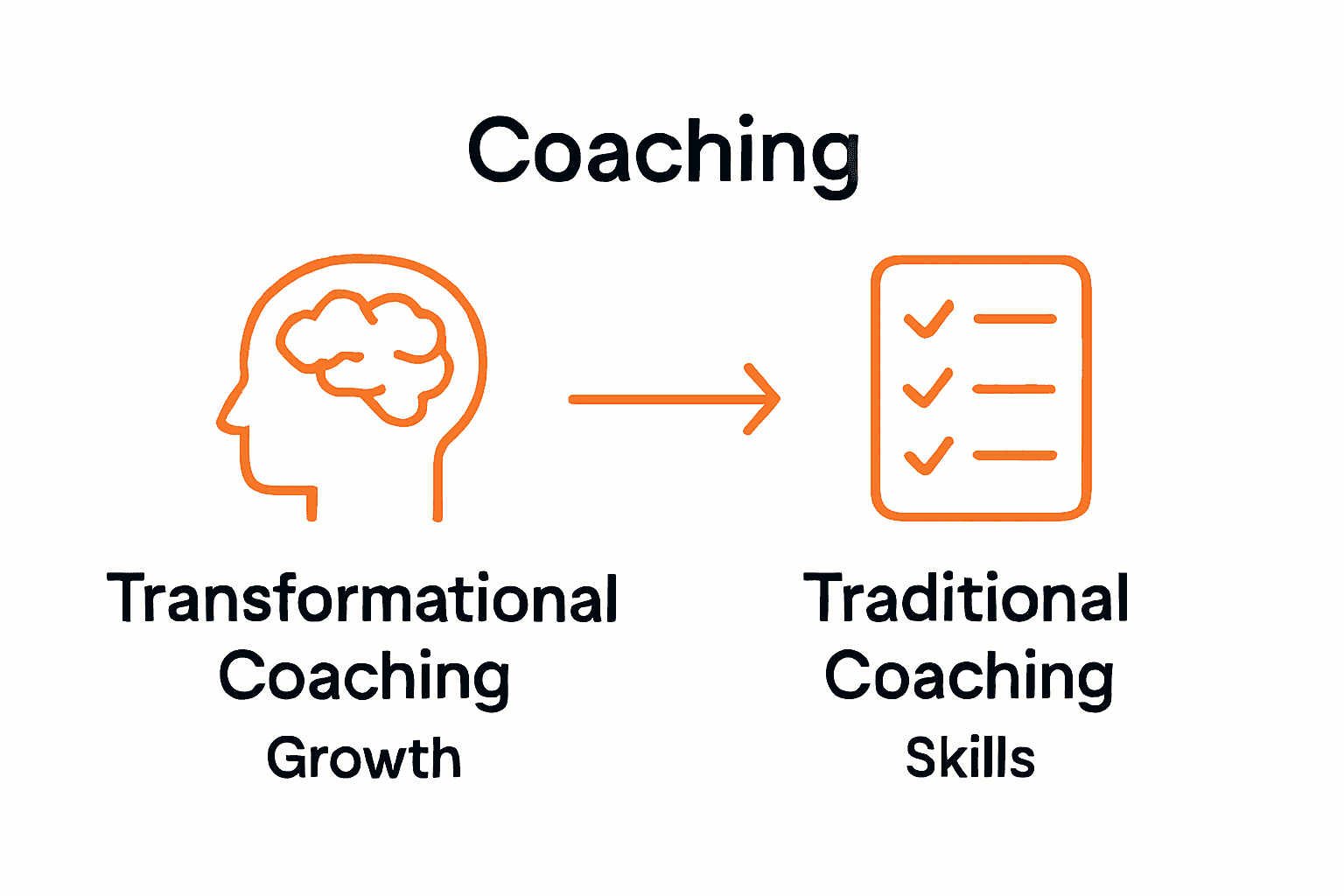
Transformational coaching distinguishes itself through a unique, holistic approach that fundamentally differs from traditional coaching methodologies. Unlike conventional approaches that focus primarily on surface-level performance improvement, transformational coaching delves deep into personal belief systems and systemic patterns. en highlights how different therapeutic approaches emphasize various aspects of personal development, with transformational coaching standing out for its commitment to fostering equity and comprehensive personal growth.
Key distinctions from other coaching approaches include:
- Depth of Intervention: Goes beyond tactical skill development to address root psychological patterns
- Holistic Perspective: Considers entire life systems rather than isolated professional or personal domains
- Client Empowerment: Focuses on self-generated insights versus prescriptive guidance
- Systemic Understanding: Explores interconnected personal and organizational dynamics
- Transformative vs. Transactional: Prioritizes fundamental change over incremental improvements
en introduces alternative coaching techniques like clean language, which supports clients in discovering personal metaphors, contrasting with transformational coaching’s direct approach of aligning actions with authentic selves. While other methodologies might offer temporary solutions, transformational coaching aims to create sustainable, profound personal shifts.
7 Key Differences Between Coaching vs Mentoring for Leaders provides additional context for understanding the unique positioning of transformational coaching. By challenging existing mental frameworks and supporting clients in reimagining their potential, this approach transcends traditional performance enhancement, offering a more comprehensive path to personal and professional transformation.
Unlock Deep Personal Growth with Transformational Coaching
If you have been seeking a way to move beyond surface-level changes and truly reshape your mindset and life, transformational coaching offers the breakthrough you need. This approach addresses core challenges like limiting beliefs and fragmented thinking to help you achieve genuine growth and authentic leadership. By embracing principles such as radical personal accountability and holistic self-awareness, you can build lasting positive shifts in behavior and perspective.
Discover how professional coaching can guide you through this meaningful process at Life Coaching Archives – Tariq Juneja.

Take control of your transformation now and explore tailored coaching programs designed for individuals ready to embrace change with confidence. Visit https://tariqjuneja.com today and start the journey toward unlocking your highest potential. For insights into navigating change in all areas of life, check out Change Management Archives – Tariq Juneja as well.
Frequently Asked Questions
What is transformational coaching?
Transformational coaching is a holistic approach to personal and professional development that focuses on reshaping perspectives, facilitating profound changes in thinking, behavior, and overall potential.
How does transformational coaching differ from traditional coaching?
Transformational coaching emphasizes deep personal exploration and root psychological patterns, while traditional coaching typically focuses on surface-level performance improvement and skill enhancement.
What are the key benefits of working with a transformational coach?
Clients can experience enhanced self-awareness, improved decision-making, stress reduction, accelerated career growth, and authentic leadership development through transformational coaching.
What types of specializations exist within transformational coaching?
Transformational coaching includes various specializations such as leadership development coaching, career transition coaching, personal development coaching, organizational transformation coaching, and performance enhancement coaching.