

Personal goals shape much more than daily routines. They serve as the backbone of self-improvement and ambition, steering life choices in ways many people never realize. According to psychological research, goal-oriented individuals experience reduced stress and greater emotional stability, bucking the myth that only high achievers benefit from goal setting. Even small, well-crafted goals can create powerful shifts in motivation and satisfaction that most people never expect.
Table of Contents
- What Are Personal Goals And Their Importance?
- The Benefits Of Setting Personal Goals
- How Personal Goals Influence Motivation And Focus
- Key Concepts Behind Effective Goal Setting
- Real-World Applications Of Personal Goals In Various Fields
Quick Summary
| Takeaway | Explanation |
|---|---|
| Personal goals guide behavior and identity. | They help individuals shape their aspirations and life direction effectively. |
| SMART framework enhances goal effectiveness. | Goals should be Specific, Measurable, Achievable, Relevant, and Time-bound for success. |
| Setting goals boosts mental well-being. | Clear objectives provide purpose, reducing stress and enhancing emotional resilience. |
| Align personal goals with professional aspirations. | This ensures targeted skill development and career advancement through strategic goal setting. |
| Goal-oriented individuals experience greater motivation. | Clear goals activate motivation and focus, leading to sustained effort towards achieving objectives. |
What Are Personal Goals and Their Importance?
Personal goals represent specific, intentional targets that individuals set to guide their behavior, aspirations, and overall life trajectory. According to psychological research from the American Psychological Association, these goals serve as internal representations of desired outcomes that help shape an individual’s identity and direction.
Defining Personal Goals
Personal goals are strategic objectives that individuals establish to drive personal growth, professional development, and meaningful life progression. They function as powerful motivational tools that transform abstract desires into concrete, actionable plans. These goals can span multiple life domains, including career advancement, personal skill development, health and wellness, financial stability, relationship building, and emotional well being.
The Significance of Goal Setting
The importance of setting personal goals extends far beyond simple task completion. Research from Stanford University highlights that goal setting encourages self-directed learning and personal growth by emphasizing reflection and accountability. Effective personal goals share several critical characteristics:
Below is a table outlining the characteristics of effective personal goals based on the SMART framework described in the article.
| Characteristic | Description |
|---|---|
| Specific | Goals are clearly defined with explicit outcomes. |
| Measurable | Goals include quantifiable progress tracking mechanisms. |
| Achievable | Goals are realistic and aligned with individual capabilities. |
| Relevant | Goals connect to broader personal or professional aspirations. |
| Time-bound | Goals have defined timelines that create accountability and urgency. |
- They are specific and clearly defined
- They are measurable with identifiable progress markers
- They are achievable yet challenging
- They are relevant to individual aspirations
- They are time-bound with realistic deadlines
By establishing well-structured personal goals, individuals create a roadmap for success that provides direction, motivation, and a sense of purpose. Check out our comprehensive guide on setting personal goals to learn more about transforming your aspirations into tangible achievements.
Ultimately, personal goals serve as powerful catalysts for personal transformation, enabling individuals to take deliberate steps toward their desired future and unlock their full potential.
The Benefits of Setting Personal Goals
Personal goals are more than just aspirational statements they are powerful mechanisms for driving individual transformation and success. Research from the National Institutes of Health demonstrates that goal setting is fundamentally linked to increased psychological well-being and life satisfaction.
Psychological and Emotional Advantages
Setting personal goals provides significant psychological benefits that extend beyond simple task achievement. When individuals establish clear objectives, they create a sense of purpose and direction that enhances motivation and emotional resilience. This process helps combat feelings of stagnation and uncertainty by offering a structured approach to personal development. Psychological research indicates that goal-oriented individuals experience lower stress levels and greater emotional stability because they have a clear framework for managing challenges and expectations.
Professional and Personal Growth Impacts
Personal goals serve as catalysts for comprehensive growth across multiple life domains. They enable individuals to:
- Develop targeted skill sets through intentional learning
- Create measurable pathways for career advancement
- Establish consistent personal accountability
- Generate momentum through incremental achievements
- Cultivate a growth mindset that embraces continuous improvement
Professional development becomes more strategic when individuals align their personal goals with broader career objectives. Learn more about achieving business and personal goals to understand how goal setting can transform your professional trajectory.
Ultimately, personal goals function as powerful transformative tools that empower individuals to take deliberate, informed steps toward their most ambitious aspirations. By providing structure, motivation, and a clear vision, these goals become the blueprint for personal and professional success.
The following table compares the psychological and practical impacts of personal goal setting on both emotional well-being and professional development, as discussed in the article.
| Impact Area | Key Benefits |
|---|---|
| Psychological & Emotional | Reduced stress, increased emotional stability, sense of purpose, enhanced motivation |
| Professional & Personal | Targeted skill growth, structured career advancement, continuous improvement, accountability |
| Motivation & Focus | Neurochemical reward system, persistent effort, sustained concentration |
| Health & Wellness | Structured management of habits, improved mental and physical health |

How Personal Goals Influence Motivation and Focus
Research from the National Institutes of Health reveals that personal goals are powerful psychological mechanisms that profoundly shape human motivation and cognitive focus. These intentional targets serve as internal compasses that guide behavior, channel mental energy, and transform abstract aspirations into concrete action plans.
The Psychological Mechanics of Goal-Driven Motivation
Personal goals operate as sophisticated motivational frameworks that activate specific cognitive and neurological processes. When individuals establish clear objectives, their brain generates increased dopamine responses, creating a neurochemical reward system that reinforces goal-pursuit behaviors. Motivation becomes intrinsically linked to the anticipation of achievement, driving persistent effort and sustained concentration toward desired outcomes.
Focusing Mental Resources Through Goal Orientation
Effective personal goals function as cognitive filters that help individuals direct their mental resources more strategically. They enable people to:
- Prioritize relevant tasks and opportunities
- Filter out distracting or unproductive activities
- Allocate mental and emotional energy efficiently
- Maintain consistent performance standards
- Develop selective attention mechanisms
Explore personal goal examples for young professionals to understand how targeted objectives can transform your professional approach.
The interplay between goals, motivation, and focus creates a powerful self-reinforcing cycle. As individuals make progress toward their objectives, they experience increased confidence and momentum, which further enhances their ability to maintain concentration and pursue ambitious targets with unwavering determination.
Key Concepts Behind Effective Goal Setting
Comprehensive research from MindTools reveals that successful goal setting involves sophisticated psychological strategies and structured methodological approaches. Understanding these foundational concepts transforms goal setting from a casual exercise into a powerful personal development mechanism.
The SMART Goal Framework
The SMART framework represents a sophisticated approach to crafting meaningful and achievable objectives. This methodology ensures that personal goals are precisely designed to maximize potential for success. Each component of the SMART framework plays a critical role in goal construction:
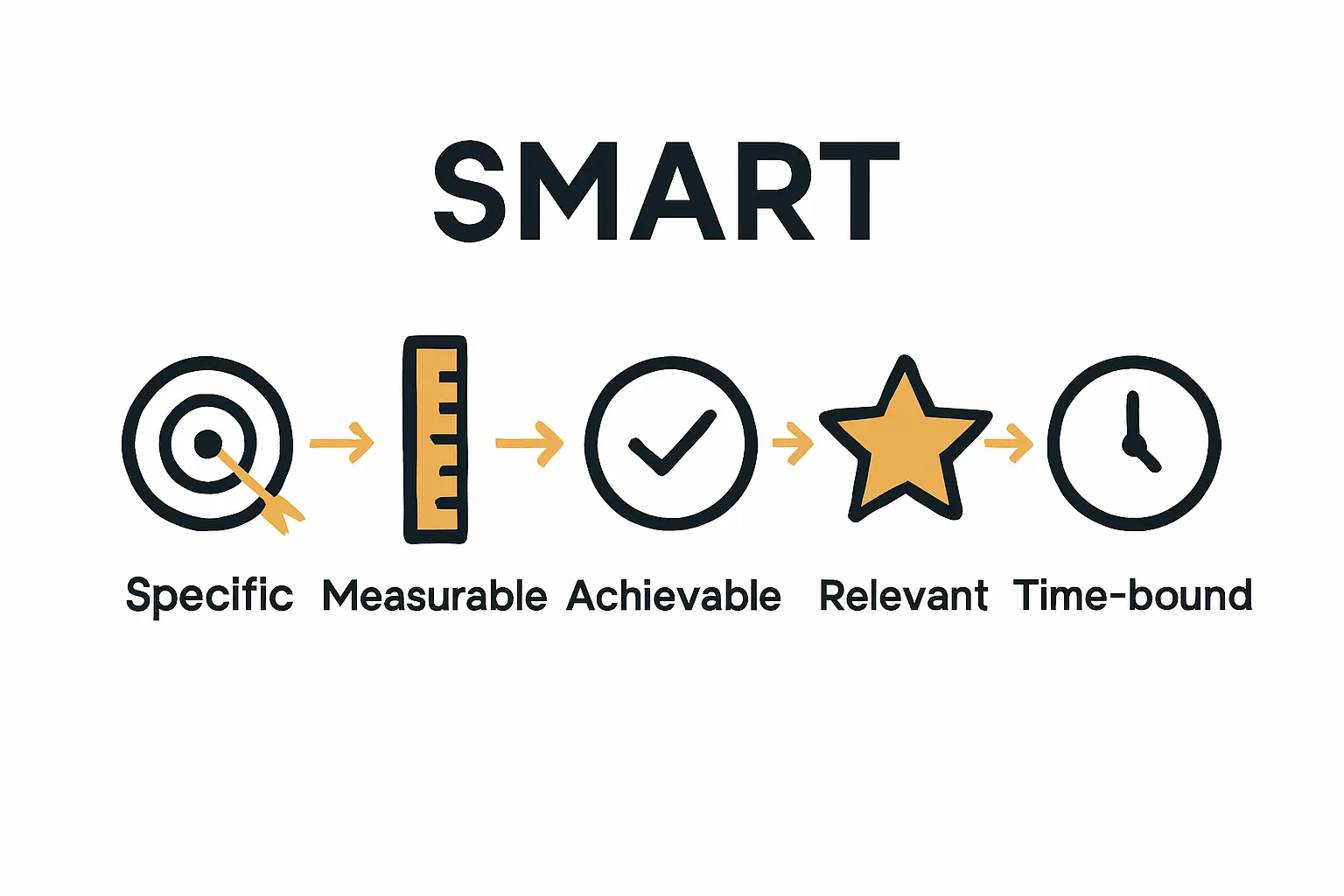
- Specific: Clearly defined objectives with explicit outcomes
- Measurable: Quantifiable progress tracking mechanisms
- Achievable: Realistic targets aligned with individual capabilities
- Relevant: Goals connected to broader personal or professional aspirations
- Time-bound: Defined timelines creating accountability and urgency
Psychological Foundations of Goal Alignment
Effective goal setting transcends mere task completion. It requires deep psychological engagement that connects individual objectives with intrinsic motivational systems. Psychological research demonstrates that goals must resonate with personal values, create emotional investment, and provide a sense of meaningful progression.
Learn more about setting personal goals for professional growth to understand how strategic objective setting can transform your career trajectory.
Ultimately, mastering goal setting involves continuous adaptation, self-reflection, and a willingness to recalibrate objectives based on evolving personal circumstances and insights.
Real-World Applications of Personal Goals in Various Fields
Clinical research in healthcare demonstrates that personal goal setting extends far beyond theoretical concepts, providing tangible benefits across diverse professional and personal domains. These strategic objectives serve as transformative mechanisms that drive performance, innovation, and individual growth.
Professional Development and Career Advancement
In the professional landscape, personal goals function as critical navigation tools for career progression. Targeted goal setting enables professionals to systematically develop skills, expand professional networks, and create deliberate career trajectories. Individuals who establish clear career objectives can:
- Identify specific skill development requirements
- Create strategic career progression pathways
- Cultivate professional relationships strategically
- Monitor individual performance metrics
- Adapt to evolving industry expectations
Health and Personal Wellness Applications
Personal goal setting plays a transformative role in individual health management. By establishing precise wellness objectives, individuals can develop more intentional approaches to physical and mental health. Wellness goals provide structured frameworks for:
- Managing chronic health conditions
- Implementing lifestyle modifications
- Tracking fitness and nutrition progress
- Developing mental health resilience
- Creating sustainable self-care practices
Explore personal goal examples for professional growth to understand how strategic objective setting can be applied across different life domains.
These real-world applications demonstrate that personal goals are not abstract concepts but practical tools for systematic personal and professional transformation.
Unlock Your Full Potential With Transformational Coaching
Are you struggling to turn personal goals into real progress? Many people set intentions but never see lasting change. This article explains how personal goals provide direction, boost motivation, and help you achieve professional and personal growth, but without the right strategy, you might end up feeling stuck or overwhelmed. If you are craving greater focus, sustainable success, or need a proven framework to translate goals into action, expert guidance can make all the difference.

Take the next step toward genuine transformation. Discover how coaching with Tariq Juneja can help you craft SMART goals, stay accountable, and overcome roadblocks. Benefit from personalized coaching, workshops, and real client success stories showcased throughout the site. Ready to move from learning about goals to actually achieving them? Start today by exploring the tools, resources, and free consultation options waiting for you now at Tariq Juneja’s website.
Frequently Asked Questions
What are personal goals and why are they important?
Personal goals are specific targets that individuals set to guide their behavior and aspirations. They are important because they provide direction, motivation, and a sense of purpose, helping individuals transform abstract desires into actionable plans.
How do personal goals enhance motivation?
Personal goals enhance motivation by creating a neurochemical reward system in the brain. When individuals set clear objectives, their brains release dopamine, which reinforces goal-pursuit behaviors and encourages persistence toward achieving those goals.
What characteristics make personal goals effective?
Effective personal goals are specific, measurable, achievable, relevant, and time-bound (SMART). This framework ensures that goals are clearly defined and structured, maximizing the potential for success and personal development.
How can I apply personal goals to my professional growth?
You can apply personal goals to your professional growth by identifying specific skills to develop, creating strategic career pathways, and setting measurable performance metrics. This targeted approach helps in systematically advancing your career and achieving your ambitions.