

Change seems like the one thing nobody is ever ready for, yet it keeps moving the business world forward. Studies show that companies which adapt fast outperform their static competitors by a wide margin. Most teams spend huge energy trying to avoid disruption, thinking stability is always safer. The surprise is that holding on too tight is what actually puts your company at risk.
Table of Contents
- What Does It Mean To Embrace Change?
- The Importance Of Change In Business
- Understanding The Logic Behind Change
- How Change Drives Innovation And Growth
- Real-World Examples Of Embracing Change
Quick Summary
| Takeaway | Explanation |
|---|---|
| Embrace change as an opportunity | View change as a chance to grow and innovate rather than a threat. This mindset leads to resilience and adaptability. |
| Foster a growth mindset | Encourage flexibility and curiosity within your organization to thrive in changing environments and drive sustainable success. |
| Implement proactive problem-solving | Equip leaders with skills to quickly address challenges and exploit new opportunities, essential for navigating uncertainty. |
| Adapt organizational culture | Build a culture that promotes continuous learning, collaboration, and agility to respond effectively to market shifts. |
| Recognize change as a strategic process | Approach change with clear objectives and analysis to ensure transformations align with long-term business goals and performance. |
What Does It Mean to Embrace Change?
Embracing change represents a fundamental mindset shift where individuals and organizations willingly accept uncertainty, adapt proactively, and view transformative experiences as opportunities for growth rather than threats. Research from the National Institutes of Health suggests that this approach supports psychological resilience and enables constructive responses to dynamic environments.
The Psychological Foundation of Change Acceptance
At its core, embracing change involves recognizing that static strategies become obsolete in rapidly evolving business landscapes. Successful professionals understand that flexibility is not just a skill but a critical survival mechanism. This means developing a mental framework that perceives disruption not as a challenge to resist, but as a potential pathway to innovation and improvement.
Key psychological components of embracing change include:
- Maintaining a growth mindset
- Developing emotional adaptability
- Cultivating curiosity about new possibilities
Practical Implications for Business Evolution
In practical terms, why embrace change means transforming how organizations approach challenges. Instead of viewing shifts as disruptions, forward-thinking businesses treat them as opportunities to reassess strategies, refine processes, and discover unexplored potential. This approach requires continuous learning, openness to new perspectives, and a willingness to experiment.
Business leaders who successfully embrace change demonstrate:
- Proactive problem-solving skills
- Quick decision-making capabilities
- Strategic thinking beyond immediate circumstances
Ultimately, embracing change is not about eliminating uncertainty but developing the confidence and skills to navigate it effectively. It represents a powerful combination of psychological resilience, strategic thinking, and a commitment to ongoing personal and professional development.
The following table summarizes key psychological and practical aspects of embracing change within organizations, providing a side-by-side comparison for better clarity.
| Aspect | Psychological Foundation | Practical Implication |
|---|---|---|
| Mindset | Growth mindset | Continuous learning and openness to new perspectives |
| Adaptability | Emotional adaptability | Quick decision-making |
| Curiosity | Curiosity about new possibilities | Willingness to experiment |
| Perception of Change | Sees disruption as opportunity | Treats shifts as chances to reassess strategies |
| Approach to Uncertainty | Builds psychological resilience | Develops confidence and navigation skills |
The Importance of Change in Business
Change is not merely a concept but a critical survival strategy in modern business environments.
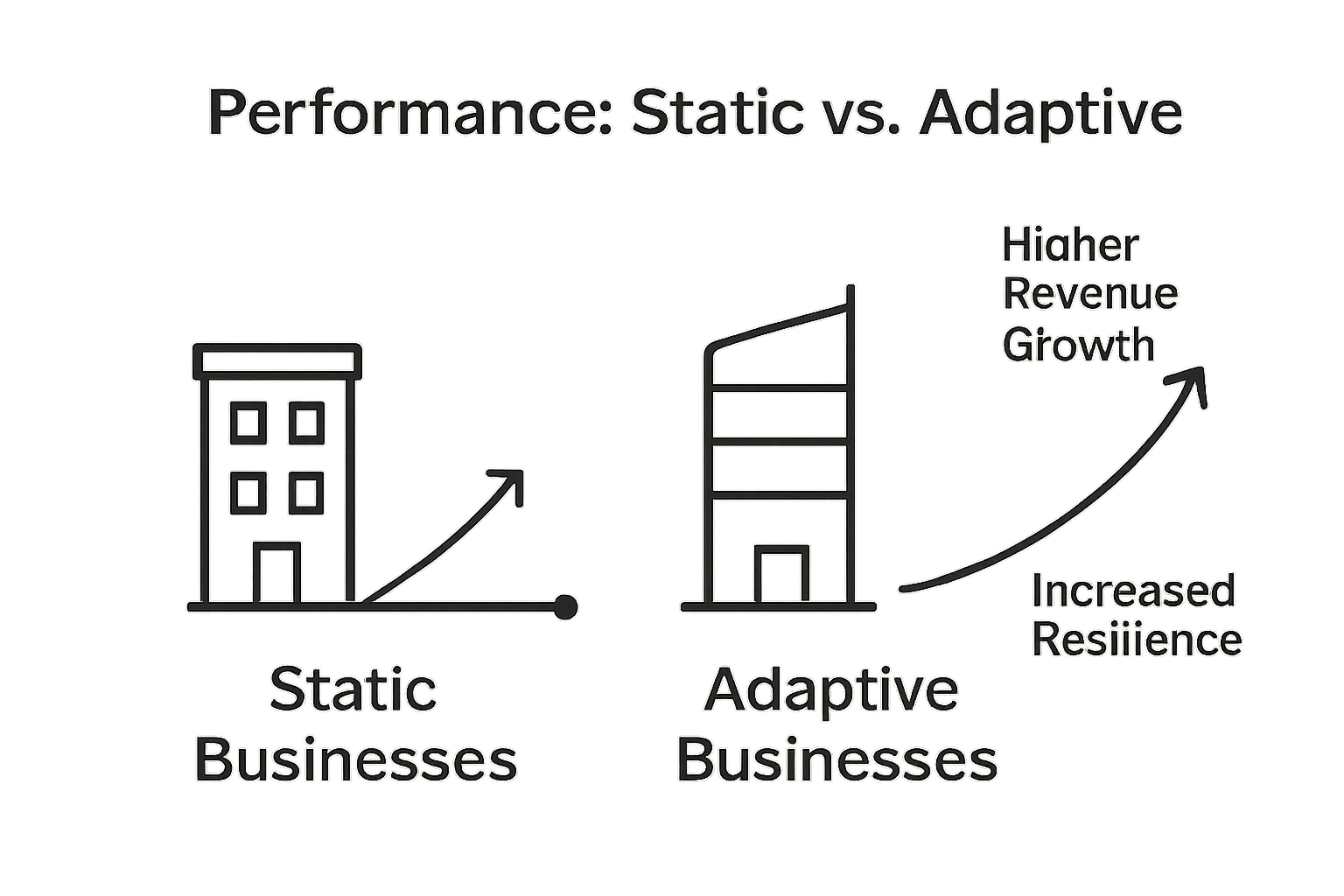 Research from McKinsey Global Institute reveals that organizations capable of rapidly adapting to market shifts demonstrate significantly higher performance and resilience compared to their static counterparts.
Strategic Competitive Advantage
Business change represents more than procedural adjustments. It encompasses a holistic approach to transforming organizational capabilities, culture, and strategic direction. Companies that prioritize adaptability create robust frameworks enabling them to anticipate market disruptions, pivot quickly, and capitalize on emerging opportunities. Successful businesses view change as a continuous process of strategic reinvention, not a one-time event.
Key strategic benefits of embracing change include:
- Creating competitive differentiation
- Accelerating innovation potential
- Building organizational agility
Financial and Operational Implications
The financial impact of strategic change extends beyond immediate operational improvements. Organizations that consistently evolve their business models experience more sustainable growth trajectories. Learn more about business transformation strategies that can help companies navigate complex market dynamics effectively.
Businesses implementing comprehensive change management strategies typically experience:
- Higher revenue growth rates
- Improved operational efficiency
- Enhanced employee engagement
Ultimately, the importance of change in business transcends theoretical concepts. It represents a fundamental approach to staying relevant, competitive, and responsive in an increasingly complex global marketplace. Successful organizations recognize that continuous adaptation is not optional but essential for long-term survival and prosperity.
This table outlines strategic and operational benefits that result from effectively embracing change in the business environment, organizing core outcomes for easier comparison.
| Benefit Category | Description |
|---|---|
| Competitive Advantage | Differentiates from competitors and enables quick response to market disruptions |
| Innovation Potential | Accelerates creation and implementation of novel ideas and processes |
| Organizational Agility | Builds structures capable of rapid strategic pivoting |
| Revenue Growth | Drives higher and more sustainable growth rates |
| Operational Efficiency | Improves day-to-day business performance and reduces inefficiencies |
| Employee Engagement | Enhances workforce motivation and commitment to company vision |
Understanding the Logic Behind Change
Research from the International Journal of Environmental Research and Public Health highlights that organizational change is a structured, intentional process driven by strategic reasoning rather than random adaptation. The logic behind change emerges from recognizing that businesses must proactively transform to maintain competitive relevance in dynamic markets.
Rational Foundations of Organizational Change
Change logic operates on fundamental principles of organizational development. Rational change is not about disruption for its own sake, but about systematic evolution aligned with strategic objectives. Businesses analyze internal capabilities, external market conditions, and potential growth trajectories to determine precise change requirements. This analytical approach ensures that transformations are purposeful, measurable, and strategically sound.
Key rational considerations for change include:
- Identifying performance gaps
- Assessing market opportunities
- Predicting potential competitive threats
Psychological and Behavioral Dimensions
Beyond rational analysis, change logic incorporates complex psychological dynamics. Organizations must understand how human behavior influences change acceptance and implementation. Learn more about the role of coaching in business transformation to comprehend how leadership can effectively guide organizational transitions.
Critical behavioral factors that shape change logic involve:
- Employee emotional readiness
- Organizational cultural flexibility
- Leadership communication effectiveness
Ultimately, understanding the logic behind change requires a multifaceted approach that balances strategic thinking, psychological insight, and practical implementation.
Successful organizations recognize that change is not a linear process but a dynamic, interconnected journey of continuous adaptation and strategic refinement.
How Change Drives Innovation and Growth
Research from McKinsey demonstrates that change is not just a reactive process but a powerful catalyst for organizational innovation and sustainable growth. Businesses that view change as a strategic opportunity rather than a threat can transform challenges into competitive advantages.
Transformative Power of Strategic Adaptation
Innovation emerges from the willingness to challenge existing paradigms and explore uncharted territories. Organizations that cultivate a culture of continuous learning and adaptability create environments where breakthrough ideas can flourish. Strategic change compels businesses to reassess their current models, identify potential inefficiencies, and develop more dynamic approaches to solving complex challenges.
Key drivers of innovation through change include:
- Encouraging experimentation
- Breaking down organizational silos
- Promoting cross-functional collaboration
Competitive Advantage through Continuous Evolution
Change acts as a mechanism for continuous organizational improvement. By remaining flexible and responsive, businesses can quickly adjust their strategies to meet emerging market demands. Learn more about business transformation strategies that can help companies leverage change as a growth mechanism.
Strategic growth elements triggered by change include:
- Developing new revenue streams
- Enhancing operational efficiency
- Attracting top talent attracted to innovative environments
Ultimately, change is not just about survival but about creating a proactive framework for sustained innovation. Successful organizations understand that growth is a dynamic process requiring constant reinvention, learning, and strategic realignment with evolving market landscapes.
Real-World Examples of Embracing Change
Research from Harvard Business Review reveals that organizations effectively navigating change share common strategies of proactive adaptation and strategic reinvention. Real-world examples demonstrate how successful businesses transform potential challenges into opportunities for growth and innovation.
Technology Sector Transformation
Technological disruption demands radical organizational flexibility. Companies like Netflix transformed from a DVD rental service to a global streaming platform by continuously reimagining their business model. By anticipating market shifts and proactively restructuring their approach, they converted potential obsolescence into industry leadership. Strategic change allowed them to pivot rapidly and create an entirely new entertainment consumption paradigm.
Key technological adaptation strategies include:
- Continuous market research
- Investing in emerging technologies
- Developing agile organizational structures
Traditional Industries Reinventing Themselves
Even traditional industries demonstrate remarkable change capabilities. Learn more about maintaining professional composure during transformation, which is crucial during significant organizational shifts. Companies like IBM successfully transitioned from hardware manufacturing to becoming a cloud computing and artificial intelligence solutions provider by embracing continuous learning and strategic repositioning.
Critical elements of successful industry transformation include:
- Recognizing emerging market trends
- Developing new core competencies
- Retraining existing workforce
These examples illustrate that embracing change is not about predicting the future perfectly, but maintaining organizational flexibility, curiosity, and the courage to experiment. Successful businesses view change not as a threat, but as an ongoing opportunity for innovation and strategic renewal.

Ready to Turn Change Into Growth?
You have just learned how embracing change can spark innovation, drive business success, and help your organization stay ahead. Despite these opportunities, navigating uncertainty and motivating teams to adopt new mindsets are real challenges. If you want to move from theory to action and see measurable improvement in your business, discover proven strategies from our Change Management resources.
Take the next step now. Book your personalized discovery session to get expert guidance tailored to your business goals. Unlock targeted solutions that align with your growth vision. The path to change starts today, and real results are just one conversation away.
Frequently Asked Questions
What does it mean to embrace change in business?
Embracing change in business means adopting a mindset that views change as an opportunity for growth and innovation rather than as a threat. It involves being flexible, open to new ideas, and proactive in adapting to evolving market conditions.
How can embracing change benefit my organization?
Embracing change can benefit your organization by enhancing its adaptability, fostering a culture of continuous learning, and driving innovation. This strategic approach can lead to improved performance, competitive differentiation, and long-term sustainability.
What are some key strategies for embracing change in a business environment?
Key strategies for embracing change include developing a growth mindset, promoting emotional adaptability, encouraging collaboration, and investing in ongoing training and skill development among employees.
How does change drive innovation in businesses?
Change drives innovation by compelling organizations to reassess their current models, encourage experimentation, and break down functional silos. This creates an environment conducive to generating new ideas and solutions, ultimately providing a competitive advantage.