

Coaching is everywhere these days and people keep talking about its impact on success and wellbeing. More surprising is that research shows coaching can lead to measurable improvements in goal achievement, stress management, and overall life satisfaction. But most people think coaching is just advice or simple motivation and they could not be more off the mark because real coaching goes much deeper and uses proven psychological methods to create lasting transformation.
Table of Contents
- What Is Coaching And Its Purpose?
- The Psychological Principles Behind Coaching
- The Impact Of Coaching On Personal Development
- How Coaching Facilitates Organizational Change
- Key Concepts And Methods In Coaching
Quick Summary
| Takeaway | Explanation |
|---|---|
| Coaching facilitates personal growth | Coaching empowers individuals to surpass barriers and unlock their potential through structured, supportive interactions. |
| Transformative experiences are key | Coaching produces profound personal and professional changes rather than mere problem-solving, enhancing overall life satisfaction. |
| Psychological principles drive coaching success | The effective use of cognitive and motivational psychology helps reshape limiting beliefs and fosters intrinsic motivation. |
| Coaching enhances leadership and collaboration | Organizations benefit from coaching by developing adaptive leadership skills and promoting a culture of continuous learning. |
| Client-centered approach promotes self-discovery | The non-directive nature of coaching allows clients to explore their own thoughts and develop personalized strategies for improvement. |
What is Coaching and Its Purpose?
Coaching represents a powerful professional development approach designed to unlock human potential and drive meaningful personal and organizational transformation. Research from the International Coaching Psychology Review highlights coaching as a collaborative process focused on facilitating enhanced performance and learning.
Defining Coaching
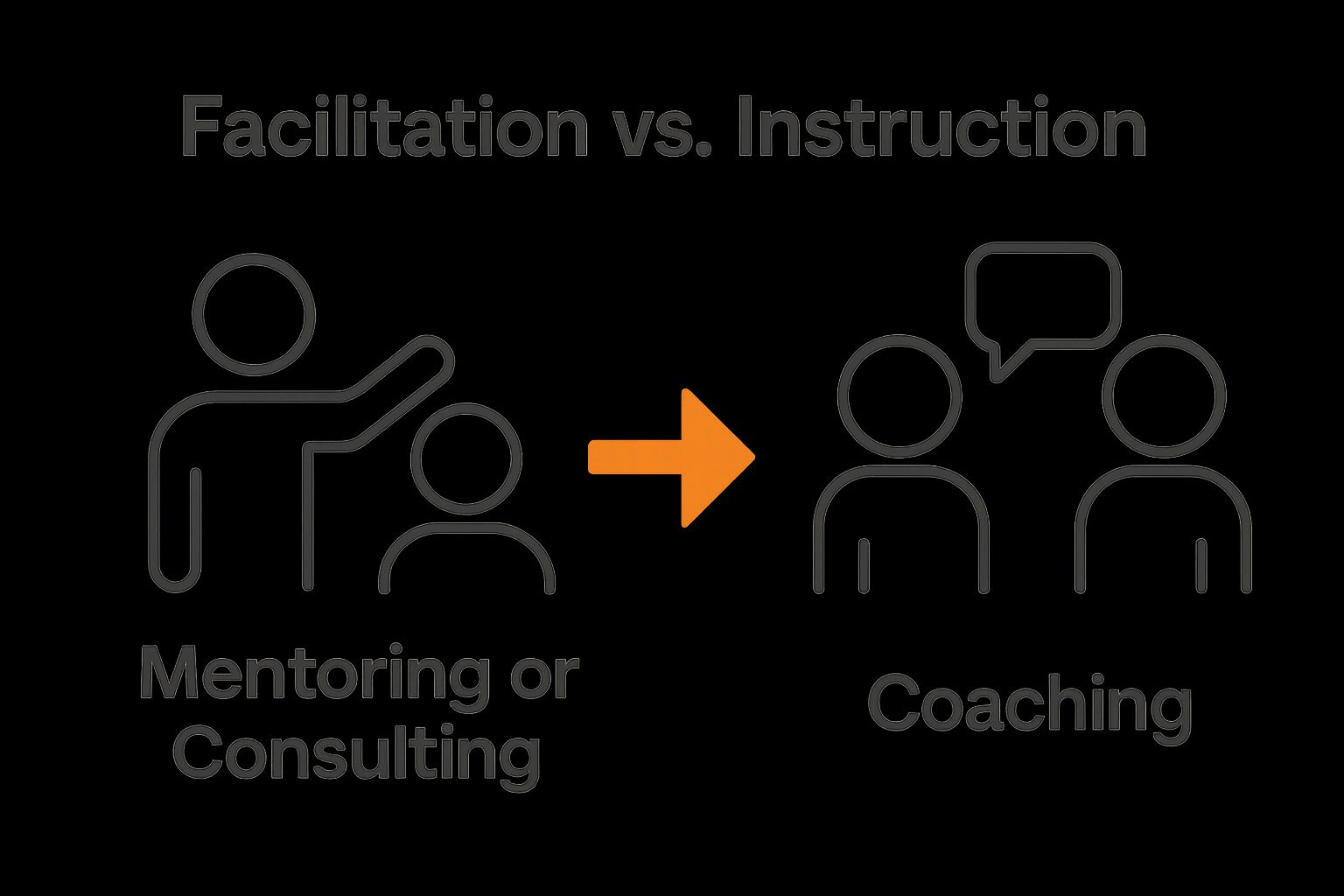
At its core, coaching is a structured, purposeful conversation between a trained professional and an individual seeking growth. Unlike traditional mentoring or consulting, coaching operates on the fundamental belief that individuals possess inherent capabilities to solve their own challenges.
To help readers distinguish between coaching, mentoring, and consulting, the following table compares their key characteristics, focus, and typical outcomes.
| Approach | Role of Practitioner | Focus | Outcome Type |
|---|---|---|---|
| Coaching | Facilitator | Unlocking personal potential | Personalized transformation |
| Mentoring | Advisor/Senior Peer | Guidance based on experience | Career/life skills growth |
| Consulting | Expert/Specialist | Providing solutions/advice | Problem-solving/implementation |
| The coach serves not as an instructor, but as a skilled facilitator who helps clients discover insights, challenge limiting beliefs, and develop actionable strategies. |
Key characteristics of coaching include:
- A forward-looking approach centered on potential and possibilities
- Client-driven objectives and outcomes
- Systematic methodology for personal and professional development
- Non-directive guidance that empowers self-discovery
The Purpose of Coaching
The primary purpose of coaching extends beyond simple problem-solving. It aims to create transformative experiences that enable individuals to:
- Identify and overcome personal and professional barriers
- Develop more effective leadership and communication skills
- Enhance self-awareness and emotional intelligence
- Create sustainable strategies for continuous improvement
Professionals across various sectors increasingly recognize coaching as a strategic tool for personal growth. Learn more about our comprehensive coaching process overview to understand how targeted interventions can unlock unprecedented potential.
By creating a supportive, non-judgmental environment, coaching helps individuals bridge the gap between their current state and desired outcomes. The process is highly personalized, acknowledging that each person’s journey of growth is unique and requires tailored approaches.
The Psychological Principles Behind Coaching
Research in psychological sciences reveals that coaching leverages sophisticated psychological frameworks to facilitate profound personal transformation. The process goes far beyond traditional advice-giving, drawing on intricate understanding of human behavior, motivation, and cognitive processes.
Cognitive and Behavioral Foundations
Coaching operates through several critical psychological mechanisms that enable sustainable personal growth. At its core, the approach recognizes that individuals have inherent capacities for change and self-directed learning. Cognitive behavioral principles play a significant role, helping individuals recognize and reshape limiting thought patterns that obstruct personal development.
This table summarizes the key psychological principles and techniques in coaching, highlighting how each contributes to personal growth and transformation.
| Principle or Technique | Purpose | Example in Coaching |
|---|---|---|
| Challenging Negative Self-Narratives | Overcoming limiting beliefs | Reframing negative thoughts |
| Adaptive Thinking Strategies | Developing problem-solving and resilience | Exploring new perspectives |
| Growth-Oriented Mindset | Fostering continuous self-improvement | Setting ambitious goals |
| Intrinsic Motivation | Enhancing engagement and drive | Aligning with personal values |
| Psychological Safety | Enabling honest exploration and vulnerability | Open, non-judgmental dialogue |
Key cognitive principles underlying coaching include:
- Challenging negative self-narratives
- Developing adaptive thinking strategies
- Reframing obstacles as opportunities
- Cultivating a growth-oriented mindset
Motivational Psychology in Coaching
Motivational psychology provides another crucial framework for understanding why coaching works. The approach taps into intrinsic motivation by helping individuals connect deeply with their personal values, aspirations, and potential. Learn more about developing a powerful coaching mindset to understand how psychological insights drive meaningful change.
By creating a psychologically safe environment, coaches enable clients to explore vulnerabilities, confront self-imposed limitations, and construct actionable pathways toward their goals. The process is fundamentally about empowering individuals to become architects of their own transformation, utilizing psychological understanding as a strategic tool for personal and professional evolution.
The Impact of Coaching on Personal Development
Empirical research demonstrates that coaching serves as a transformative process with profound implications for individual growth and self-actualization. Unlike traditional therapeutic or consulting approaches, coaching directly addresses personal potential by creating targeted pathways for meaningful change.
Dimensions of Personal Transformation
Coaching impacts personal development across multiple interconnected dimensions. Psychological growth emerges through systematic exploration of an individual’s internal landscape, challenging existing belief systems and expanding personal capabilities. This process enables individuals to transcend self-imposed limitations and develop more resilient, adaptive perspectives.
Key areas of personal development include:
- Enhanced self-awareness and emotional intelligence
- Improved confidence and personal agency
- Development of strategic life and career planning skills
- Increased capacity for navigating complex personal and professional challenges
Measurable Outcomes of Personal Growth
The tangible impact of coaching extends beyond subjective experiences. Explore our comprehensive coaching techniques to understand how targeted interventions create measurable personal transformations. Individuals consistently report significant improvements in goal achievement, stress management, and overall life satisfaction.
Coaching operates as a strategic intervention that empowers individuals to become architects of their own development. By providing structured support, objective feedback, and personalized strategies, coaches help clients unlock their inherent potential, translate insights into action, and create sustainable pathways for continuous personal evolution.
How Coaching Facilitates Organizational Change
Research in organizational psychology reveals that coaching serves as a powerful catalyst for strategic transformation within complex workplace environments. Organizations increasingly recognize coaching as a nuanced approach to driving meaningful, sustainable change beyond traditional top-down management strategies.
Strategic Change Management
Coaching functions as an advanced change management methodology that addresses organizational transformation at multiple levels. Systemic intervention occurs through targeted individual and team development, creating ripple effects that reshape organizational culture, communication patterns, and performance dynamics.
Key strategic dimensions of organizational change through coaching include:
- Developing adaptive leadership capabilities
- Enhancing cross-functional collaboration
- Breaking down organizational silos
- Cultivating a culture of continuous learning
Cultural and Performance Transformation
Learn more about transformative coaching approaches to understand how targeted interventions create comprehensive organizational shifts. Coaching enables organizations to move beyond reactive problem-solving toward proactive, holistic development strategies that align individual potential with broader strategic objectives.
By empowering leaders and teams to develop sophisticated interpersonal skills, self-awareness, and strategic thinking, coaching creates a dynamic environment where organizational change emerges organically. The process transforms traditional hierarchical structures into agile, responsive ecosystems capable of navigating complex business landscapes with greater resilience and innovation.

Key Concepts and Methods in Coaching
Research in coaching psychology reveals a sophisticated framework of concepts and methodologies that transform coaching from a casual conversation into a powerful developmental intervention. These approaches are grounded in psychological principles and designed to unlock human potential systematically.
Foundational Coaching Concepts
Coaching operates through a set of core philosophical principles that distinguish it from other forms of professional guidance. The fundamental belief is that individuals possess inherent capabilities to solve their own challenges, with coaches serving as skilled facilitators who create environments of discovery and empowerment.
Key foundational concepts include:
- Client-centered approach prioritizing individual agency
- Non-directive guidance that promotes self-discovery
- Holistic perspective addressing personal and professional dimensions
- Commitment to measurable, actionable outcomes
Structured Coaching Methodologies
Learn more about our comprehensive coaching techniques to understand the systematic approaches that drive meaningful transformation. Professional coaches utilize evidence-based frameworks like the GROW model (Goal, Reality, Options, Will), which provide structured yet flexible pathways for exploring challenges, generating insights, and developing concrete action plans.
These methodologies are not rigid prescriptions but adaptive tools that respect each individual’s unique context. By combining psychological understanding with practical strategy, coaching creates a dynamic process of personal and professional development that goes beyond traditional consulting or mentoring approaches.
Experience the True Power Behind Why Coaching Works
Do you want to break past limiting beliefs and reach your full potential? After exploring why coaching is effective and learning how it transforms both individuals and organizations, you now see that meaningful growth requires more than just advice. It demands expert guidance, proven techniques, and a partner who helps you take control of your journey. If you are ready for real change, Life Coaching solutions are tailored to help you identify personal roadblocks, develop a growth-focused mindset, and achieve clarity in your goals. You will not walk this path alone. Every session draws directly from the psychological foundations and results-driven strategies discussed in this article.
Take your next step with Tariq Juneja’s coaching expertise. Book a free consultation now to start your transformation or access free resources and proven methods designed to help you grow. Change begins the moment you decide not to settle for the status quo. Visit our main site today and see what is possible for your growth.
Frequently Asked Questions
What are the key psychological principles that explain why coaching works?
Coaching leverages cognitive and motivational psychology to facilitate personal transformation. It helps individuals challenge negative beliefs, develop adaptive thinking, and connect with their intrinsic motivations. Focus on enhancing your self-awareness and emotional intelligence to see the most significant impact on your growth journey.
How does coaching differ from mentoring or consulting?
Coaching differs in that it prioritizes client-driven outcomes, with the coach serving as a facilitator rather than an instructor. This empowering approach encourages individuals to discover their own solutions and develop actionable strategies. Seek a coach who aligns with your personal goals to maximize the benefits of this unique relationship.
What measurable outcomes can I expect from engaging in coaching?
Individuals often report improvements in goal achievement, stress management, and overall life satisfaction through coaching. On average, you might see significant changes within 30 to 60 days of consistent sessions. Set clear, specific goals at the outset to track your progress effectively.
How can coaching enhance my leadership skills?
Coaching helps develop adaptive leadership capabilities by fostering self-awareness, emotional intelligence, and strategic thinking. Commit to regular coaching sessions focused on these aspects to transform your leadership style from reactive to proactive within a few months.
What should I look for in a coaching methodology?
Look for a structured approach that employs evidence-based frameworks, such as the GROW model, which facilitates goal setting and action planning. Ensure your coach tailors their methodology to your unique context for optimal effectiveness. Take time to discuss your specific challenges and aspirations with potential coaches before starting to find the best fit for your needs.
How does coaching contribute to organizational change?
Coaching acts as a catalyst for organizational transformation by promoting individual and team development. It helps break down silos, enhance collaboration, and foster a culture of continuous learning. Implement regular coaching sessions across teams to initiate meaningful, systemic change within your organization.