

Coaching is everywhere now, changing how companies and people grow. But most folks still see it as just advice or mentoring. Turns out, research shows coaching can actually improve employee wellbeing, job performance, and even reshape entire workplace cultures. Most surprising of all, the true strength of coaching is not in the tips or quick solutions but in helping people unlock their own answers and real potential.
Table of Contents
- What Is Coaching? Defining The Basics
- The Importance Of Coaching In Business
- How The Coaching Process Works
- Key Concepts In Effective Coaching
- Real-World Applications Of Coaching Techniques
Quick Summary
| Takeaway | Explanation |
|---|---|
| Coaching is a goal-oriented partnership | It involves a trained professional supporting individuals to achieve specific personal and professional objectives. |
| Coaching empowers self-discovery and growth | It encourages clients to explore their barriers, develop self-awareness, and create actionable plans for personal change. |
| Business coaching boosts organizational performance | It enhances leadership development, employee engagement, and communication, thereby transforming workplace dynamics. |
| The coaching process includes a discovery phase | This initial stage focuses on assessing the client’s current situation and establishing core goals to guide future steps. |
| Effective coaching relies on key competencies | Successful coaches utilize active listening and powerful questioning to foster trust and stimulate meaningful insights. |
What is Coaching? Defining the Basics
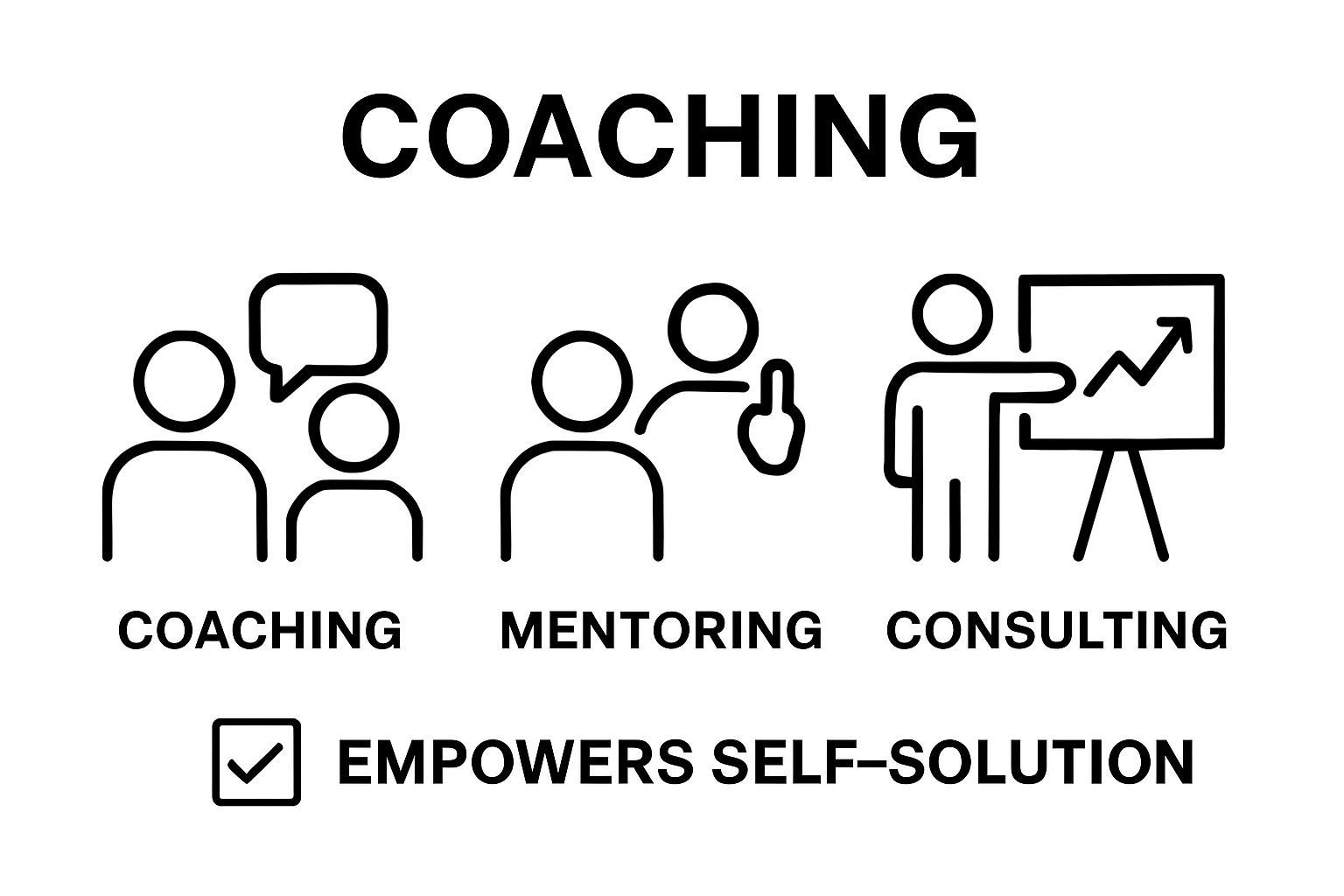
Coaching represents a transformative professional relationship designed to unlock human potential and drive meaningful personal and professional growth. Unlike traditional mentoring or consulting, coaching focuses on empowering individuals to discover their own solutions and pathways forward.
The Core Definition of Coaching
At its fundamental level, coaching is a collaborative, goal-oriented process where a trained professional supports an individual in achieving specific personal or professional objectives. According to research in Frontiers in Psychology, coaching is characterized by a thought-provoking and creative approach that inspires people to maximize their potential.
Key characteristics of coaching include:
- Client-centered approach where the individual drives the process
- Focus on present circumstances and future possibilities
- Structured conversations that promote self-discovery
- Actionable strategies for personal and professional development
How Coaching Differs from Other Development Approaches
Coaching distinguishes itself from other developmental practices through its unique methodology. While mentoring typically involves an expert sharing direct advice, and consulting provides specific solutions, coaching empowers individuals to generate their own insights and strategies.
The coaching process creates a supportive environment where clients can:
- Explore personal barriers and limiting beliefs
- Develop enhanced self-awareness
- Create targeted action plans
- Accountability for personal growth and change
Professional coaches leverage proven techniques to guide clients toward their objectives, using active listening, powerful questioning, and structured reflection. This approach enables individuals to tap into their inherent capabilities and overcome challenges more effectively than traditional directive methods.
Ultimately, coaching is about facilitating sustainable personal transformation by helping individuals recognize their strengths, address potential obstacles, and create clear pathways to achieve their most significant goals.
The Importance of Coaching in Business
Business coaching has emerged as a critical strategy for organizations seeking sustainable growth, enhanced leadership development, and improved workforce performance. By providing targeted professional guidance, coaching transforms workplace dynamics and individual potential.
Strategic Performance Enhancement
Coaching delivers significant organizational benefits by directly addressing individual and collective performance challenges. Research from the National Institutes of Health reveals that workplace coaching substantially improves employee wellbeing, job performance, and organizational resilience.
Key strategic advantages of business coaching include:
- Accelerated leadership development
- Improved employee engagement and retention
- Enhanced problem solving capabilities
- More effective communication across organizational levels
Transforming Organizational Culture
Business coaching goes beyond individual skill development. It fundamentally reshapes organizational culture by creating environments that prioritize continuous learning, personal accountability, and professional growth. Successful coaching interventions build adaptive workplace ecosystems where employees feel empowered to explore innovative solutions and take calculated risks.
Crucial cultural transformation elements include:
- Promoting psychological safety
- Encouraging transparent communication
- Developing growth mindsets
- Supporting individual and collective potential
By investing in professional coaching, businesses create sustainable frameworks for ongoing development. Coaches serve as strategic partners who help organizations navigate complex challenges, align individual talents with organizational goals, and build robust, adaptable workforce capabilities.
Ultimately, business coaching represents a forward-thinking approach to human capital development. It recognizes that an organization’s greatest asset is its people and provides structured pathways for continuous personal and professional evolution.
How the Coaching Process Works
The coaching process is a structured yet dynamic journey of personal and professional transformation. It operates through a strategic framework that enables individuals to unlock their potential, overcome challenges, and achieve meaningful growth.
The Initial Discovery Phase
Coaching begins with a comprehensive discovery stage where coach and client establish foundational understanding. According to research on evidence-based coaching practices, this initial phase involves deep exploration of the client’s current situation, aspirations, and potential barriers.
Key elements of the discovery phase include:
- Comprehensive personal and professional assessment
- Identification of core goals and desired outcomes
- Understanding existing strengths and development areas
- Establishing mutual expectations and coaching partnership
Developing Strategic Action Plans
Following initial discovery, coaches collaborate with clients to develop targeted, actionable strategies. This phase transforms insights into practical roadmaps for achievement. Effective action plans are specific, measurable, and aligned with the client’s broader objectives.
Critical components of strategic planning involve:
- Breaking down complex goals into manageable milestones
- Creating clear accountability mechanisms
- Identifying potential obstacles and proactive mitigation strategies
- Establishing metrics for tracking progress
The coaching process is inherently adaptive, recognizing that personal growth is nonlinear. Coaches provide ongoing support, challenge limiting beliefs, and help clients develop enhanced self-awareness and strategic thinking skills.
Ultimately, the coaching process is a collaborative journey of discovery, empowerment, and sustainable transformation. By combining structured methodology with personalized support, coaching enables individuals to unlock their most significant potential and create meaningful, lasting change.
Key Concepts in Effective Coaching
Effective coaching transcends simple advice-giving, representing a sophisticated approach to human development that integrates psychological insight, strategic thinking, and personalized support. Understanding core coaching concepts enables practitioners to create transformative professional relationships.
Foundational Coaching Principles
Coaching operates on fundamental principles of human potential and growth. Research from academic coaching programs emphasizes the critical importance of dialogic communication, self-reflection, and facilitating self-regulated learning.
Key foundational principles include:
- Client-centered approach prioritizing individual agency
- Commitment to nonjudgmental, supportive interactions
- Recognition of each person’s unique developmental journey
- Emphasis on strengths-based personal development
Core Competencies for Coaching Excellence
Successful coaches develop a sophisticated skill set that goes beyond traditional consulting or mentoring. Coaching excellence requires a nuanced blend of interpersonal skills, psychological understanding, and strategic thinking.
Critical coaching competencies involve:
- Active and empathetic listening
- Powerful questioning techniques
- Ability to provide constructive, meaningful feedback
- Creating safe, trust-based professional environments
Coaches must continuously refine their approach, adapting to each client’s unique context and developmental needs.
The table below summarizes the foundational principles and core competencies that underpin effective coaching, providing a quick reference to what makes coaching impactful.
| Principle or Competency | Description |
|---|---|
| Client-centered approach | Prioritizes individual agency and initiative |
| Nonjudgmental support | Creates an accepting, empathetic environment |
| Strengths-based development | Focuses on individual capabilities and growth |
| Active listening | Engages deeply to truly understand the client |
| Powerful questioning | Promotes reflection and insight through inquiry |
| Constructive feedback | Provides meaningful input to encourage improvement |
| Safe, trust-based setting | Ensures openness and psychological safety |
Ultimately, effective coaching is an art and science of human transformation. By integrating psychological insights, strategic methodologies, and genuine human connection, coaches create powerful pathways for personal and professional evolution.

Real-World Applications of Coaching Techniques
Coaching techniques extend far beyond traditional professional development, finding innovative applications across diverse fields. These strategies are increasingly being utilized to address complex challenges and drive meaningful transformation in various personal and professional contexts.
Workplace Performance and Team Dynamics
Coaching techniques are revolutionizing organizational performance strategies. Research exploring team interactions demonstrates how adaptive coaching approaches can significantly enhance team collaboration and individual productivity.
Key workplace applications include:
- Leadership development programs
- Performance improvement initiatives
- Conflict resolution strategies
- Employee engagement and retention efforts
Technological Integration in Coaching
Innovative technologies are expanding the boundaries of traditional coaching methodologies. Emerging platforms leverage artificial intelligence and adaptive technologies to provide personalized coaching experiences that can scale across different organizational and personal contexts.
Technological coaching applications encompass:
- AI-powered personalized learning platforms
- Virtual coaching and mentorship programs
- Real-time performance feedback systems
- Adaptive learning environments
Coaching techniques have demonstrated remarkable versatility, bridging gaps between theoretical knowledge and practical implementation. By combining psychological insights with technological innovations, coaches can create more responsive, individualized development approaches.
The future of coaching lies in its ability to adapt, integrate emerging technologies, and provide nuanced, personalized support across increasingly complex professional and personal landscapes. As organizations and individuals seek more sophisticated growth strategies, coaching will continue to evolve, offering transformative pathways for human potential.
Ready to Transform Your Growth Journey with Expert Coaching?
Understanding the core coaching process is only the first step. Many leaders and professionals still feel stuck when it comes to turning insight into actionable change and sustainable results. If you have ever struggled with creating strategic action plans, holding yourself accountable, or shifting organizational culture, you are not alone. The article highlights how crucial structure and ongoing support are for real progress.
Explore how coaching drives successful change management
Stop waiting for clarity or confidence to arrive on their own. Book a discovery session today and experience firsthand how targeted coaching can help you break personal barriers and achieve measurable growth. Take the next step and unlock your full potential now.
Frequently Asked Questions
What is the coaching process?
The coaching process is a structured journey of personal and professional transformation where a trained coach collaborates with an individual to unlock their potential, overcome challenges, and achieve specific goals.
How does coaching differ from mentoring or consulting?
Coaching focuses on empowering individuals to discover their own solutions, while mentoring involves an expert sharing advice and consulting provides specific solutions. Coaching is client-centered and emphasizes self-discovery.
What are the key phases of the coaching process?
The key phases of the coaching process include an initial discovery phase for assessing the client’s current situation and goals, followed by the development of strategic action plans that outline specific, measurable steps toward achieving those goals.
What competencies are essential for effective coaching?
Essential competencies for effective coaching include active listening, powerful questioning, providing constructive feedback, and creating a safe, trust-based environment to facilitate personal growth.
Recommended
- Change Management Archives – Tariq Juneja
- post 2 – Tariq Juneja
- A post – Tariq Juneja