

Most American corporations now view personal coaching as a vital tool for maximizing IT team productivity. One surprising fact is that structured coaching can improve individual performance by over 30 percent compared to traditional management methods. For mid-level IT managers working in complex global environments, understanding the distinct role of a personal coach helps pinpoint exactly where tailored guidance delivers measurable impact. This overview reveals practical strategies and actionable insights designed to transform how IT teams achieve professional growth.
Table of Contents
- Defining The Role Of A Personal Coach
- Types Of Personal Coaching And Distinctions
- Core Responsibilities And Expected Outcomes
- Personal Coaching Process And Key Techniques
- Common Pitfalls And Misconceptions To Avoid
Key Takeaways
| Point | Details |
|---|---|
| Role of a Personal Coach | A personal coach serves as a strategic partner focused on unlocking individual and team potential through tailored professional development. |
| Types of Coaching | Personal coaching includes various approaches, such as leadership and performance coaching, each designed to address specific development needs. |
| Core Responsibilities | Coaches conduct needs assessments, set actionable goals, and measure progress to facilitate tangible improvements in performance and well-being. |
| Common Misconceptions | Many misunderstand coaching as a one-size-fits-all solution, failing to recognize the need for personalized, context-driven approaches. |
Defining the Role of a Personal Coach
A personal coach represents a strategic partner dedicated to unlocking individual and team potential through structured professional development. Unlike traditional managers, these professionals provide targeted guidance designed to enhance performance, facilitate growth, and transform organizational capabilities. Workplace coaching interventions have emerged as critical tools for human resource development, offering nuanced approaches to professional advancement.
The core function of a personal coach involves creating customized strategies that address specific professional challenges and aspirations. These professionals employ diverse assessment techniques, leveraging psychological insights and performance data to design targeted development plans. Coaches work closely with individuals to identify strengths, overcome barriers, and establish clear, actionable goals that align with both personal career objectives and broader organizational strategies.
Modern personal coaching transcends traditional mentorship by incorporating technology-driven methodologies and professionally structured coaching formats. Coaches now utilize advanced diagnostic tools, digital platforms, and sophisticated assessment frameworks to provide more precise, measurable interventions. Their role has evolved from simple advisory positions to becoming sophisticated performance enhancement specialists who can diagnose complex professional dynamics and design transformative development pathways.
Pro tip: When selecting a personal coach, prioritize professionals with verifiable credentials, proven track records, and demonstrated expertise in your specific industry or professional domain.
Types of Personal Coaching and Distinctions
Personal coaching encompasses multiple specialized approaches designed to address diverse professional and personal development needs. Coaching cultures reveal distinct modalities that range from leadership and executive coaching to performance and career-focused interventions. Each type represents a targeted strategy for unlocking individual potential, with unique methodologies tailored to specific organizational and personal contexts.
Key coaching types include leadership coaching, which focuses on developing strategic thinking and organizational influence, and executive coaching, which supports high-level professionals in navigating complex business challenges. Performance coaching emerges as another critical category, concentrating on improving specific skills and achieving measurable professional outcomes. Purpose-based career coaching distinguishes itself by integrating cultural and spiritual dimensions into career guidance, offering a more holistic approach to professional development.
The differentiation between coaching types extends beyond mere technical distinctions. Each approach incorporates unique assessment techniques, communication strategies, and goal-setting frameworks. Some coaches specialize in specific industries, while others provide more generalized guidance. The selection of an appropriate coaching type depends on individual needs, organizational context, and specific professional objectives. Understanding these nuanced differences allows professionals to select the most effective coaching approach for their personal and organizational growth.
Pro tip: Evaluate potential coaches based on their specific expertise, proven track record, and alignment with your precise professional development goals.
Here’s how common types of personal coaching compare in focus and methodologies:
| Coaching Type | Primary Focus | Unique Methodologies |
|---|---|---|
| Leadership Coaching | Strategic thinking, influence | Scenario-based learning |
| Executive Coaching | Navigating business challenges | Psychometric and 360-degree tools |
| Performance Coaching | Skill improvement, results | Performance benchmarking |
| Purpose-Based Career | Career meaning and culture | Self-discovery, holistic approach |
Core Responsibilities and Expected Outcomes
Personal coaches shoulder critical responsibilities that extend far beyond traditional advisory roles. Executive coaching fundamentally drives behavioral change by focusing on enhancing self-efficacy, psychological resilience, and professional effectiveness. These professionals are tasked with developing comprehensive strategies that transform individual performance and organizational dynamics through targeted, scientifically informed interventions.
The core responsibilities of a personal coach encompass multiple interconnected domains. Initially, coaches conduct thorough needs assessments to understand each client’s unique professional landscape, psychological profile, and developmental objectives. This diagnostic phase enables them to design customized coaching frameworks that address specific performance gaps, leadership challenges, and personal growth opportunities. Tailored coaching interventions are meticulously crafted to promote measurable improvements in client effectiveness, organizational achievement, and individual well-being.

Expected outcomes from professional coaching extend beyond traditional performance metrics. Successful coaching engagements typically result in enhanced leadership capabilities, improved emotional intelligence, increased organizational adaptability, and more robust professional networks. Coaches are increasingly held accountable for delivering tangible, measurable results that demonstrate a direct correlation between coaching interventions and organizational success. These outcomes are systematically tracked through comprehensive performance assessments, psychological evaluations, and longitudinal studies that validate the transformative potential of targeted coaching approaches.
Pro tip: Request specific, measurable outcome metrics from potential coaches to ensure their approach aligns with your professional development goals.
This table outlines responsibilities of personal coaches and the impact on clients:
| Responsibility | Description | Typical Outcome |
|---|---|---|
| Needs Assessment | Identify strengths and development areas | Customized development plans |
| Goal Setting | Define clear, actionable professional goals | Improved career and leadership focus |
| Progress Measurement | Use qualitative and quantitative metrics | Evidence of tangible performance gains |
| Ongoing Feedback | Facilitate regular check-ins and guidance | Sustained growth and accountability |
Personal Coaching Process and Key Techniques
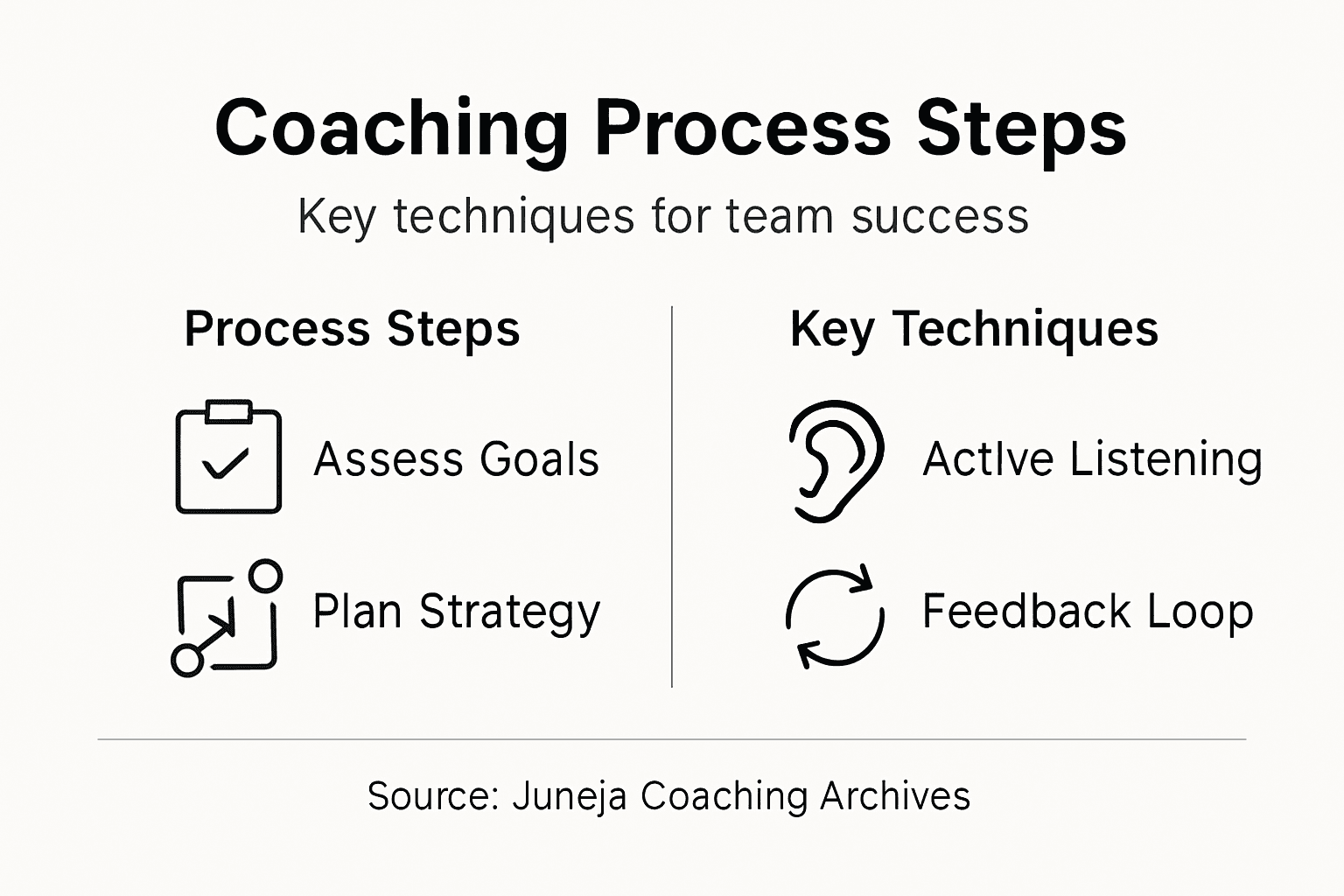
The personal coaching process represents a sophisticated, structured approach to professional development that goes beyond traditional mentoring or consulting. Purpose-based career coaching techniques incorporate comprehensive methodologies including self-discovery, skill assessment, and strategic career exploration. This systematic framework enables coaches to design personalized interventions that address individual professional challenges and aspirational goals with remarkable precision.
Critical stages in the coaching process typically involve multiple interconnected components. Initially, coaches conduct comprehensive diagnostic assessments to establish baseline performance metrics and understand the client’s unique professional context. Next, they collaboratively develop targeted development strategies that align individual capabilities with organizational objectives. Interpersonal communication techniques play a crucial role in building trust, maintaining engagement, and facilitating meaningful behavioral transformations throughout the coaching relationship.
Effective coaching techniques integrate both qualitative and quantitative approaches to drive meaningful professional growth. These may include reflective questioning, performance benchmarking, emotional intelligence assessments, and scenario-based learning modules. Coaches utilize advanced tools such as psychometric evaluations, 360-degree feedback mechanisms, and technology-enabled tracking systems to provide clients with comprehensive insights into their professional development journey. The ultimate goal remains creating sustainable performance improvements that generate measurable organizational and personal value.
Pro tip: Request a detailed breakdown of your potential coach’s specific techniques and assessment methodologies to ensure alignment with your professional development objectives.
Common Pitfalls and Misconceptions to Avoid
Navigating the personal coaching landscape requires a nuanced understanding of potential misconceptions that can undermine successful professional development. Coaching cultures often suffer from unclear definitions that lead to unrealistic expectations and ineffective interventions. Many professionals mistakenly view coaching as a universal solution, failing to recognize the critical need for contextualized, tailored approaches that address specific organizational and individual challenges.
One prevalent misconception involves the belief that more coaching sessions automatically translate to better outcomes. Coaching impact research challenges simplistic assumptions about linear progression and generic intervention strategies. Professionals frequently misunderstand the fundamental difference between coaching and therapy, leading to inappropriate expectations about the scope and nature of coaching engagements. Some individuals expect coaches to provide direct solutions, when in reality, effective coaching focuses on facilitating self-discovery, critical thinking, and personal accountability.
Additionally, organizations often fall into the trap of implementing coaching programs without establishing clear measurement frameworks or understanding specific performance objectives. This approach leads to ambiguous outcomes and diminished return on investment. Successful coaching requires precise goal setting, ongoing performance tracking, and a commitment to evidence-based methodologies that align individual development with broader organizational strategies. Recognizing these potential pitfalls allows professionals and organizations to approach coaching with a more strategic, realistic perspective that maximizes developmental potential.
Pro tip: Always validate a coach’s methodology by requesting specific, measurable outcome criteria and understanding their approach to personalized intervention design.
Unlock Team Success with Expert Personal Coaching
If you are seeking to overcome common challenges such as unclear goal setting, lack of measurable progress, or difficulty transforming team dynamics, professional coaching can provide the strategic partner you need. This article highlights how personal coaches develop customized strategies to boost leadership capabilities, enhance organizational adaptability, and unlock potential. Taking these insights further, Tariq Juneja offers specialized coaching services designed to drive transformational change for both individuals and organizations.
Explore tailored solutions within Agile Coaching Archives – Tariq Juneja and Change Management Archives – Tariq Juneja where practical, measurable approaches align with your goals.
Take the first step toward measurable improvement and sustained growth by visiting Tariq Juneja’s website. Book a free consultation today to discover how personalized coaching can elevate your team’s performance and unlock lasting success.
Frequently Asked Questions
What is the main purpose of a personal coach?
A personal coach serves as a strategic partner dedicated to enhancing individual and team performance through customized professional development strategies.
How can personal coaching contribute to team success?
Personal coaching facilitates growth by identifying strengths, overcoming challenges, and establishing actionable goals, aligning personal objectives with organizational strategies for greater teamwork effectiveness.
What types of personal coaching are available for professionals?
Common types of personal coaching include leadership coaching, executive coaching, performance coaching, and purpose-based career coaching, each tailored to specific development needs and contexts.
What should I look for when selecting a personal coach?
When choosing a personal coach, it’s essential to prioritize professionals with verifiable credentials, a proven track record, and expertise in your specific industry or professional area.