

Every IT manager knows the challenge of leading teams through complex organizational shifts while keeping personal ambition alive. In high-pressure tech environments across the United States, Europe, and Asia, traditional management training often falls short. Personal vision coaching offers a distinct advantage by aligning leaders’ growth with their core identity and aspirations, fueling positive motivation and strategic clarity. This article unpacks how visionary coaching empowers IT professionals to inspire teams, tackle uncertainty, and drive meaningful change.
Table of Contents
- Defining Personal Vision Coaching and Its Purpose
- Types of Personal Vision Coaching Approaches
- Core Techniques Used by Vision Coaches
- Transformational Benefits for It Leaders
- Common Pitfalls and How to Avoid Them
Key Takeaways
| Point | Details |
|---|---|
| Personal Vision Coaching Enhances Leadership | This coaching process helps IT managers create actionable visions that align personal and organizational goals for effective leadership. |
| Diverse Coaching Approaches Offer Flexibility | Various methodologies such as Transformational and Executive Coaching provide tailored pathways for personal development. |
| Psychological Techniques Drive Growth | Core strategies like Ideal Self Visualization and Positive Relationship Establishment foster cognitive and emotional advancements. |
| Avoid Common Coaching Pitfalls | Coaches should prioritize evidence-based practices and maintain clear client-coach chemistry to ensure effective outcomes. |
Defining Personal Vision Coaching and Its Purpose
Personal vision coaching represents a transformative professional development approach designed specifically for IT managers and business leaders seeking strategic personal growth. Understanding the core principles of visionary coaching reveals a powerful methodology focused on unlocking individual potential through personalized intervention.
At its fundamental core, personal vision coaching is an individualized process that goes beyond traditional performance improvement strategies. Unlike standard training programs that focus on fixing deficits, this approach centers on inspiring positive emotions, expanding cognitive capabilities, and generating motivational resources critical for professional advancement. The primary purpose is to help leaders develop a clear, actionable vision that aligns personal aspirations with organizational objectives.
Key characteristics of personal vision coaching include:
- Individual attention to professional and personal development goals
- Focus on motivation and leadership style enhancement
- Support for navigating complex organizational challenges
- Personalized strategies for work-life balance
- Development of cognitive and emotional resilience
Psychological Foundations
The psychological underpinnings of personal vision coaching are rooted in promoting positive neurobiological functioning. By creating a supportive coaching relationship, this approach activates learning goals and generates a promotion-oriented mindset. Leaders experience an expanded sense of identity and increased vitality, enabling them to approach complex professional challenges with greater confidence and strategic thinking.
Professional Impact
For IT managers and business leaders, personal vision coaching offers a structured pathway to overcome professional stagnation. It provides a dedicated space for reflection, goal setting, and strategic personal development. The coaching process helps leaders feel more comfortable, confident, and effective in their roles by offering customized support adapted to their unique organizational context and individual needs.
Pro tip: Schedule a monthly self-reflection session to reassess your personal vision and alignment with professional goals, ensuring continuous growth and strategic clarity.
Types of Personal Vision Coaching Approaches
Personal vision coaching encompasses a diverse range of strategic approaches tailored to meet the unique developmental needs of professionals. Coaching methodologies vary significantly in their focus, techniques, and ultimate objectives, providing leaders with multiple pathways for personal and professional transformation.
The primary coaching approaches include:
- Transformational Coaching: Focuses on deep personal growth and fundamental mindset shifts
- Solution-Focused Coaching: Targets specific problem-solving and goal achievement
- Executive Coaching: Designed specifically for leadership development and strategic thinking
- Narrative Coaching: Utilizes personal storytelling to uncover insights and drive change
- Vision Coaching: Helps clients articulate and actively pursue their ideal future vision
Strategic Approach Dynamics
Each coaching approach offers unique benefits tailored to different professional contexts. Transformational coaching delves into core personal beliefs and psychological patterns, enabling profound personal development. Solution-focused coaching provides a pragmatic framework for addressing immediate challenges and setting clear, actionable goals.
Leadership Development Perspective
For IT managers and business leaders, the selection of an appropriate coaching approach can significantly impact professional growth. Personal leadership coaching strategies help professionals identify their strengths, overcome limiting beliefs, and develop a more strategic approach to their career trajectory.
Effective coaching is not about providing answers, but empowering individuals to discover their own path to success.
Customization and Adaptability
The most successful coaching approaches recognize that no single methodology fits all professionals. Skilled coaches often blend different techniques, creating a personalized approach that resonates with the individual’s unique goals, personality, and organizational context.

To help choose the best coaching method, here is a comparison of leading personal vision coaching approaches:
| Approach | Primary Focus | Ideal For | Typical Outcomes |
|---|---|---|---|
| Transformational | Deep mindset and identity | Leaders seeking self-growth | Long-term behavioral change |
| Solution-Focused | Quick problem-solving | Time-sensitive professionals | Fast, actionable results |
| Executive | Leadership performance | Senior leaders and executives | Enhanced leadership acumen |
| Narrative | Story-based self-exploration | Those seeking clarity in purpose | Greater self-understanding |
| Vision | Future goal setting | Professionals with growth ambitions | Clearer direction and motivation |
Pro tip: Conduct an initial assessment with potential coaches to understand their approach and ensure alignment with your specific professional development objectives.
Core Techniques Used by Vision Coaches
Intentional Change Theory techniques form the foundation of modern vision coaching, providing a sophisticated framework for professional transformation. These approaches go beyond traditional mentoring by creating a dynamic environment that stimulates personal and professional growth through targeted psychological interventions.
Key core techniques employed by vision coaches include:
- Ideal Self Visualization: Helping clients articulate their future aspirational identity
- Positive Relationship Establishment: Creating a supportive, trust-based coaching dynamic
- Identity Expansion: Challenging and broadening professional self-perception
- Learning Goal Activation: Identifying and pursuing meaningful developmental objectives
- Motivational Alignment: Connecting personal vision with professional trajectory
Psychological Intervention Strategies
Vision coaches utilize sophisticated psychological tools designed to unlock deeper personal insights. These techniques focus on evoking positive emotional states, increasing cognitive flexibility, and promoting a growth-oriented mindset that transcends traditional performance improvement methodologies.
Visual and Reflective Tools
Visual tools play a critical role in the coaching process, engaging clients through creative exploration of their personal and professional landscape. Techniques like photo-elicitation, vision boarding, and imaginative mapping help professionals access deeper self-understanding and articulate complex aspirational goals.
Effective vision coaching transforms abstract potential into concrete, actionable strategies.
Holistic Coaching Approach
The most advanced vision coaches integrate multiple techniques, creating a personalized approach that addresses the unique psychological and professional needs of each individual. This adaptive methodology ensures that coaching interventions are precisely tailored to the client’s specific context and developmental requirements.
Pro tip: Practice regular self-reflection using visual tools like vision boards to maintain clarity and alignment with your professional aspirations.
Transformational Benefits for IT Leaders
Leadership coaching fundamentally transforms how IT leaders perceive and navigate complex organizational challenges. By focusing on future aspirations rather than current limitations, this approach enables profound personal and professional development that transcends traditional management training.
Key transformational benefits for IT leaders include:
- Expanded Cognitive Flexibility: Enhanced ability to think beyond current organizational constraints
- Improved Emotional Intelligence: Deeper understanding of team dynamics and interpersonal relationships
- Strategic Decision-Making: More nuanced and adaptive approach to complex technological challenges
- Identity Expansion: Breaking through self-imposed professional limitations
- Increased Organizational Resilience: Building personal and team capacity to manage technological disruption
Vertical Leadership Development
Vision coaching offers more than incremental skill improvement. Coaching for agile leadership transformation enables IT leaders to develop vertical growth capabilities, fundamentally changing how they conceptualize and respond to technological and organizational challenges.
True leadership transformation occurs when leaders expand their capacity to think, relate, and act beyond current limitations.
Psychological and Professional Impact
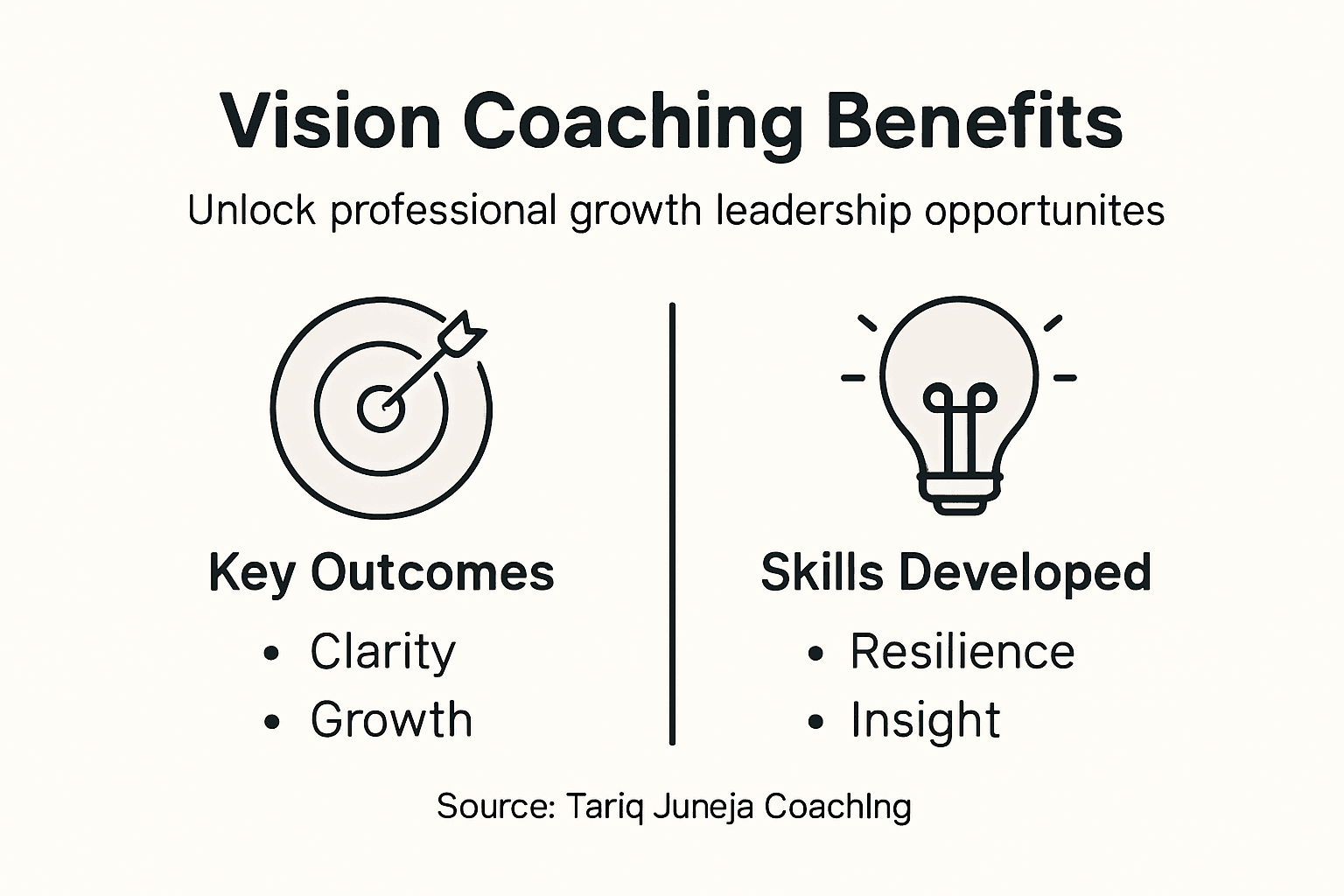
By activating positive emotional states and improving cognitive openness, vision coaching supports sustained personal growth. This approach helps IT leaders develop critical competencies such as innovation capability, emotional resilience, and adaptive decision-making—essential skills in rapidly evolving technological landscapes.
Pro tip: Invest 30 minutes weekly in reflective practice to continuously challenge your current leadership perspective and stimulate professional growth.
Common Pitfalls and How to Avoid Them
Coaching practice challenges are complex and multifaceted, requiring strategic awareness and proactive management. Understanding these potential obstacles is crucial for professionals seeking meaningful personal vision coaching experiences that drive authentic transformation.
Key pitfalls in personal vision coaching include:
- Lack of Evidence-Based Practice: Relying on unvalidated frameworks
- Insufficient Client-Coach Chemistry: Poor alignment and trust dynamics
- Unclear Coaching Scope: Blurring boundaries between coaching types
- Resistance to Change: Client’s psychological barriers to personal growth
- Inadequate Goal Specification: Vague or poorly defined coaching objectives
Strategic Avoidance Techniques
Successful vision coaches recognize that preventing these pitfalls requires continuous learning and adaptive methodologies. Rigorous research, clear goal understanding, and flexible approach customization are essential for maintaining high-quality coaching interactions.
Professional Integrity Considerations
Coaches must differentiate between various coaching modalities and cultivate specialized niches. Coaching pitfalls require systematic prevention through transparent communication, realistic expectation setting, and ongoing performance evaluation.
Effective coaching transcends technique—it’s about creating transformative human connections.
Multidisciplinary Approach
Addressing coaching challenges demands a holistic perspective that integrates psychological insights, professional development strategies, and individual client needs. Coaches must remain adaptable, continuously update their methodologies, and maintain a commitment to ethical, client-centered practice.
Below is a summary of common pitfalls in personal vision coaching and targeted avoidance strategies:
| Pitfall | Potential Consequence | How to Avoid |
|---|---|---|
| Lack of evidence-based practice | Ineffective coaching outcomes | Use validated, research-backed methods |
| Poor client-coach chemistry | Low engagement, mistrust | Prioritize relationship building |
| Unclear coaching scope | Confusion, unmet expectations | Set clear goals and boundaries |
| Client resistance to change | Stalled personal development | Address fears, build motivation |
| Vague goals | Unmeasurable progress | Define specific, trackable objectives |
Pro tip: Conduct quarterly self-assessments of your coaching approach to identify potential blind spots and areas for professional growth.
Unlock Your Professional Potential with Personal Vision Coaching
Are you ready to move beyond professional stagnation and unlock a clear, actionable vision for your leadership journey? Personal vision coaching addresses common challenges like limited motivation, unclear goals, and navigating complex organizational changes by expanding cognitive flexibility and emotional resilience. If you seek transformational growth that aligns your aspirations with your professional role, embracing tailored coaching strategies can ignite this change.

Discover how expert guidance from Tariq Juneja can help you achieve profound personal and professional breakthroughs. Explore proven approaches at Life Coaching Archives – Tariq Juneja and understand how aligning your vision drives sustainable growth. Don’t wait to overcome resistance to change and vague goal setting. Visit https://tariqjuneja.com today to book your free consultation and start transforming your professional path. Learn also about complementary methods from Agile Coaching Archives – Tariq Juneja that ensure adaptability in today’s fast-paced environments.
Frequently Asked Questions
What is personal vision coaching?
Personal vision coaching is a transformative approach aimed at helping IT managers and business leaders unlock their potential and achieve strategic personal growth by developing a clear, actionable vision that aligns personal aspirations with organizational goals.
What are the key benefits of personal vision coaching for leaders?
Key benefits include improved emotional intelligence, enhanced cognitive flexibility, better decision-making skills, increased organizational resilience, and the ability to navigate complex challenges more effectively.
How does personal vision coaching differ from traditional training programs?
Unlike traditional training programs that focus on correcting weaknesses, personal vision coaching emphasizes personal strengths, positive emotions, and motivational resources to foster long-term professional and personal growth.
What techniques are commonly used in personal vision coaching?
Common techniques include ideal self visualization, identity expansion, establishing positive relationships, activating learning goals, and motivational alignment tailored to individual needs.
Recommended
- What is Visionary Coaching? Understanding Its Impact – Tariq Juneja
- 7 Key Personal Development Goals for Leaders and Professionals – Tariq Juneja
- Understanding What is Self-Coaching for Personal Growth – Tariq Juneja
- Personal Evolution Coaching: Unlocking Leadership Growth – Tariq Juneja
- 7 Key Player Development Tips for Coaches – Hoop Mentality
- Coachingreis Met Willem van ‘t Zelfde | Mi Cuento Reizen