

Most American agile teams discover that tracking the right performance metrics can reveal surprising gaps in productivity and team effectiveness. This matters for business leaders aiming to drive real transformation, whether managing multicultural teams in Canada, Europe, or South America. Drawing on best practices, you will find out how selecting focused metrics drives transparency and continuous improvement. Expect actionable insights that help agile organizations elevate coaching and deliver measurable impact.
Table of Contents
- What Are Performance Metrics In Agile Teams
- Types Of Metrics For Measuring Performance
- How Core Metrics Drive Agile Transformation
- Aligning Metrics With Business Outcomes
- Best Practices And Common Pitfalls
Key Takeaways
| Point | Details |
|---|---|
| Focus on Agile Performance Metrics | Agile metrics should be selected to drive productivity, quality, and continuous improvement within teams. |
| Diverse Metric Categories | Employ a range of metrics including productivity, quality, process, and team dynamics to achieve a holistic evaluation of performance. |
| Align Metrics With Business Outcomes | Performance metrics must be connected to strategic organizational objectives for maximum impact and relevance. |
| Avoid Common Pitfalls | Organizations should be mindful of relying on vanity metrics and ensure measurements support genuine performance improvement rather than superficial compliance. |
What Are Performance Metrics in Agile Teams
Performance metrics in Agile teams represent systematic measurements designed to track team effectiveness, productivity, and value delivery within iterative development environments. These metrics go beyond traditional performance tracking by focusing on dynamic, collaborative progress measuring team adaptability and incremental delivery. Unlike static performance indicators, Agile metrics provide real-time insights into team capabilities and project progression.
Agile performance metrics typically include key indicators such as velocity, story points, sprint burndown charts, and cycle time. These measurements help teams understand their current performance, identify potential bottlenecks, and make data-driven improvements. Performance tracking in Agile methodologies emphasizes transparency and continuous adaptation, enabling teams to respond quickly to changing project requirements and maintain high-quality output.
The primary goals of Agile performance metrics are multifaceted: they help teams measure productivity, assess quality, track progress, and support continuous improvement. By providing objective data about team performance, these metrics enable managers and team members to make informed decisions, optimize workflows, and enhance overall project delivery. Each metric offers a unique perspective on team effectiveness, from individual task completion rates to broader project momentum and quality indicators.
Pro Tip: Choose 3-5 performance metrics that directly align with your team’s specific goals and project requirements, rather than tracking every possible metric.
Types of Metrics for Measuring Performance
Agile performance metrics encompass a diverse range of measurements designed to capture team effectiveness and project progress. These metrics can be strategically categorized into multiple dimensions of team performance, enabling organizations to gain comprehensive insights into their Agile workflows. The most critical performance metrics typically fall into several key categories that provide holistic views of team capabilities and project health.
The primary types of performance metrics include productivity metrics, quality metrics, process metrics, and team dynamics metrics. Productivity metrics like velocity and throughput measure how much work teams complete in a given timeframe. Quality metrics, such as defect rates and change failure rates, assess the reliability and precision of team outputs. Process metrics help organizations understand workflow efficiency by tracking cycle time, lead time, and other critical process indicators, while team dynamics metrics evaluate collaboration, communication, and overall team engagement.

Each category of performance metrics serves a unique purpose in understanding team performance. Productivity metrics reveal how quickly teams deliver value, quality metrics ensure consistent output standards, process metrics identify potential bottlenecks, and team dynamics metrics help managers understand interpersonal interactions and team cohesion. By employing a balanced approach that incorporates multiple metric types, Agile teams can create a comprehensive performance evaluation framework that goes beyond simple numeric measurements and provides meaningful insights into team effectiveness.
Pro Tip: Rotate your performance metric focus every quarter to prevent metric fatigue and maintain a fresh, objective perspective on team performance.
Here’s a summary of major Agile performance metric types and their primary business impact:
| Metric Category | Typical Metrics | Business Impact |
|---|---|---|
| Productivity | Velocity, Throughput | Faster delivery, predicts team capacity |
| Quality | Defect Rate, Failure Rate | Higher product reliability and customer trust |
| Process | Cycle Time, Lead Time | Smoother workflows, identifies bottlenecks |
| Team Dynamics | Engagement, Collaboration | Improved morale, better cross-team alignment |
How Core Metrics Drive Agile Transformation
Core performance metrics are fundamental catalysts that transform traditional organizational approaches into dynamic, responsive Agile ecosystems. Measuring performance across multiple strategic perspectives enables organizations to create powerful feedback loops that drive continuous improvement. These metrics act as navigational instruments, guiding teams from rigid, linear project management toward more adaptive and value-driven methodologies.
The strategic alignment of core metrics with organizational objectives represents a critical mechanism for Agile transformation. Metrics like velocity, cycle time, and key result indicators help teams synchronize their work with broader strategic goals, creating transparency and enabling data-driven decision making. By tracking key performance indicators across financial, customer, process, and learning perspectives, organizations can systematically reduce risks, accelerate innovation, and maintain competitive agility.
Transformational metrics go beyond simple numerical tracking, serving as powerful change management tools. They create visibility into team performance, highlight improvement opportunities, and foster a culture of continuous learning and adaptation. By consistently measuring and reflecting on these metrics, organizations can incrementally enhance their Agile maturity, build more responsive teams, and develop a more flexible, customer-centric approach to delivering business value.
Pro Tip: Implement a quarterly metric review process that allows teams to recalibrate their performance indicators and ensure ongoing alignment with evolving organizational strategies.
Aligning Metrics With Business Outcomes
Aligning performance metrics with strategic business outcomes is a critical practice that transforms Agile teams from tactical executors to strategic value generators. Performance metrics must be deliberately designed to quantify how team activities directly contribute to organizational objectives. This alignment ensures that every sprint, every story, and every task can be traced back to meaningful business impact.
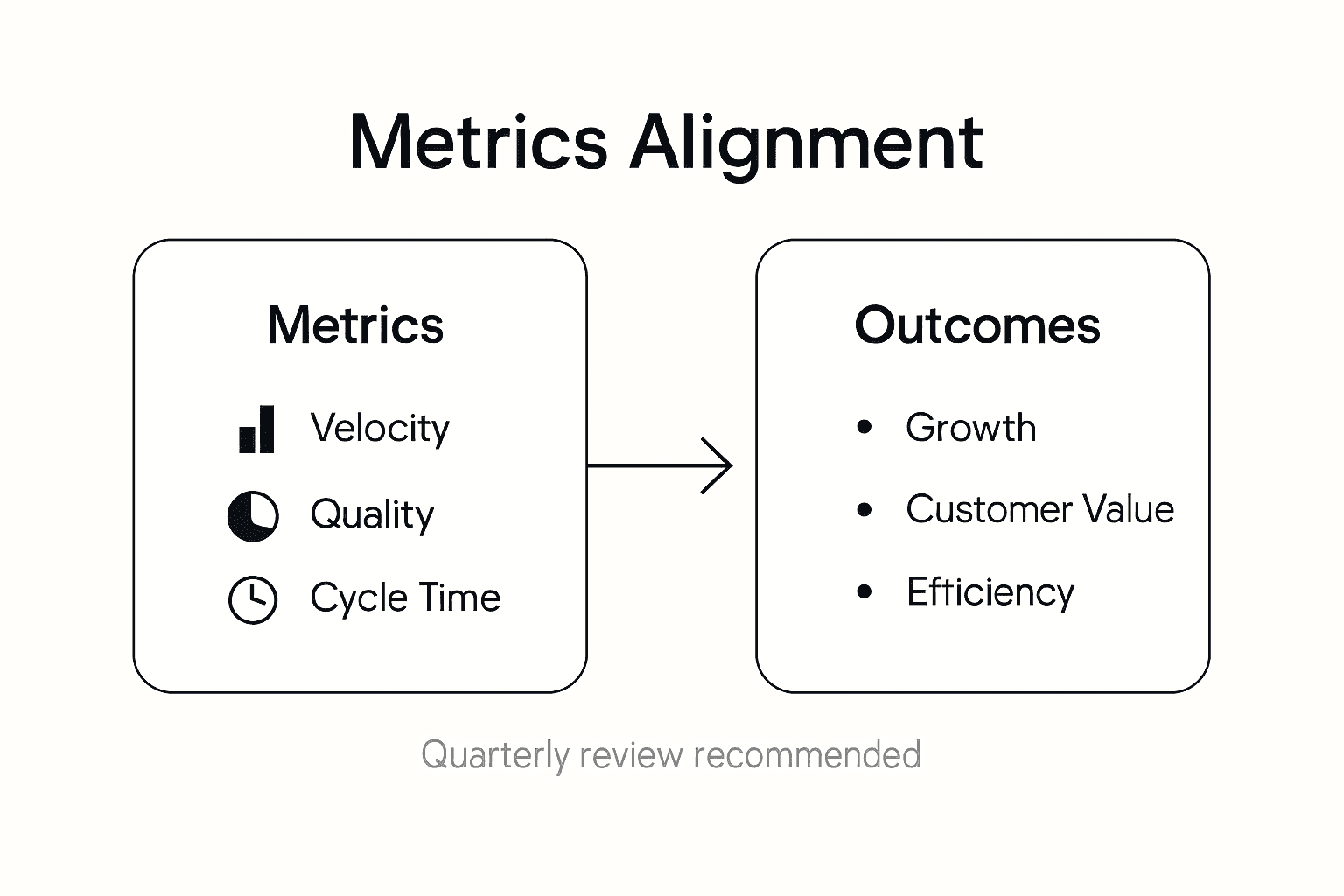
The most effective alignment strategies involve integrating key performance indicators that bridge tactical team performance with strategic organizational goals. Metrics such as customer satisfaction scores, cycle time, and defect rates provide comprehensive insights into how Agile initiatives translate into tangible business value. By selecting metrics that reflect both operational efficiency and strategic progress, organizations create a powerful framework for continuous improvement and goal-oriented performance management.
Successful metric alignment requires a dynamic approach that adapts to changing business landscapes. Organizations must develop a flexible measurement system that can evolve with strategic priorities, ensuring that performance metrics remain relevant and actionable. This means regularly reviewing and recalibrating metrics to maintain their alignment with shifting business objectives, technological advancements, and market conditions.
Pro Tip: Conduct quarterly metric alignment workshops that bring together team leaders, strategic planners, and business stakeholders to ensure performance indicators remain synchronized with organizational goals.
This table compares Agile metric alignment strategies for connecting team metrics with organizational goals:
| Strategy | Key Benefit | Recommended Practice |
|---|---|---|
| Regular KPI Review | Ensures ongoing relevance | Quarterly review meetings |
| Cross-Department Workshops | Improves goal alignment | Include diverse stakeholder input |
| Metric Customization | Increases strategic impact | Adjust metrics for current priorities |
Best Practices and Common Pitfalls
Performance metrics in Agile environments require strategic implementation to drive meaningful insights. Best practices emphasize creating a balanced approach that captures both quantitative and qualitative dimensions of team performance. Organizations must design metrics that provide transparent, actionable information without creating unintended behavioral consequences that might compromise team collaboration and innovation.
Effective metric implementation demands careful consideration of potential pitfalls and systemic challenges. Common mistakes include over-relying on vanity metrics that look impressive but provide little substantive insight, implementing metrics without proper context, and creating measurement systems that inadvertently incentivize counterproductive behaviors. Teams must develop a nuanced understanding of how different metrics interact and potentially distort team dynamics, ensuring that measurement strategies support genuine performance improvement rather than generating superficial compliance.
Successful Agile metric strategies require ongoing refinement and a holistic perspective. This means regularly reviewing metric effectiveness, maintaining flexibility in measurement approaches, and creating feedback mechanisms that allow teams to understand and respond to performance data constructively. Organizations should prioritize metrics that encourage learning, collaboration, and continuous improvement, rather than those that create artificial competition or punitive performance tracking.
Pro Tip: Create a metric review committee that includes team members from different roles to ensure balanced, context-aware performance measurement strategies.
Unlock Agile Team Success with Expert Coaching
Struggling to translate your Agile performance metrics into real business value? Measuring velocity, cycle time, and team dynamics is only the first step. Without clear alignment to strategic goals and continuous adaptation, Agile teams risk missing their true potential. Common challenges like metric fatigue, misaligned KPIs, and lack of actionable insights can cause frustration and stall transformation efforts.
At Tariq Juneja, we specialize in helping organizations harness the power of Agile performance metrics through transformational coaching and tailored Agile strategies. Whether you want to rotate your metrics for fresh insights or establish clear connections between KPIs and business outcomes, our proven approach drives measurable productivity increases and fosters a culture of continuous improvement. Experience how deep expertise in Agile coaching can elevate your team dynamics, enhance collaboration, and accelerate your business transformation journey.

Take control of your Agile transformation today by booking a free consultation or exploring actionable resources on Tariq Juneja’s coaching platform. Empower your teams with the right metrics and expert guidance to achieve truly impactful performance improvements.
Frequently Asked Questions
What are Agile performance metrics?
Agile performance metrics are systematic measurements designed to track team effectiveness, productivity, and value delivery within iterative development environments, emphasizing adaptability and incremental delivery.
What types of metrics are used to measure performance in Agile teams?
Common types of metrics include productivity metrics (like velocity and throughput), quality metrics (such as defect rates), process metrics (including cycle time), and team dynamics metrics (like engagement and collaboration).
How can core metrics drive Agile transformation?
Core metrics facilitate Agile transformation by creating feedback loops that align team performance with organizational goals, fostering transparency, and enabling data-driven decision-making.
What are some best practices for implementing performance metrics in Agile environments?
Best practices include creating a balanced approach that integrates both quantitative and qualitative measurements, regularly reviewing metric effectiveness, and ensuring that metrics encourage collaboration and continuous improvement.
Recommended
- How to Increase Employee Productivity for Business Growth – Tariq Juneja
- Team Building and Collaboration: Driving Agile Success – Tariq Juneja
- How to Improve Team Productivity for Lasting Results – Tariq Juneja
- How to Increase Team Productivity in Remote IT Teams – Tariq Juneja
- Digital Transformation Consulting for Measurable Business Growth | J&F Consulting