

Did you know that organizations using management coaching report a six-fold return on investment compared to traditional training? As leadership demands grow, professionals at every level face tougher expectations and more complex challenges. The right coaching empowers managers to sharpen decision-making, build stronger teams, and create lasting impact. Understanding management coaching means unlocking new ways to achieve real progress for individuals and entire organizations.
Key Takeaways
| Point | Details |
|---|---|
| Management Coaching Defined | Management coaching is a tailored intervention aimed at enhancing the leadership skills of managers and executives by focusing on personal growth and organizational effectiveness. |
| Coaching Approaches | Effective management coaching employs diverse methodologies, including executive, integrated, team, and virtual coaching, tailored to specific needs and dynamics. |
| Benefits of Coaching | Clients experience significant improvements in decision-making, emotional intelligence, and team performance, often resulting in high ROI on coaching investments. |
| Selecting a Coach | Choosing a management coach should prioritize proven expertise, adaptability, and cultural fit to ensure effective and sustainable coaching outcomes. |
Table of Contents
- Defining Management Coaching Services
- Types of Management Coaching Approaches
- Key Benefits And Outcomes For Clients
- Essential Processes And Techniques Used
- Selecting The Right Coaching Provider
- Common Challenges And Success Factors
Defining Management Coaching Services
Management coaching is a strategic professional development approach designed to unlock the potential of managers, leaders, and executives by providing personalized guidance and transformative support. According to research from Wikipedia, this specialized form of coaching focuses on behavioral change and skill enhancement across critical leadership domains such as decision-making, strategic thinking, communication, and team leadership.
At its core, management coaching represents a confidential, tailored intervention where an experienced professional works closely with senior managers to help them navigate complex organizational challenges. Understanding the Role of Coaching in Business Growth reveals that these coaching relationships are built on identifying blind spots, strengthening critical leadership competencies, and developing actionable strategies for personal and professional growth.
Key characteristics of effective management coaching include:
- Customized support aligned with individual leadership styles
- Structured yet flexible approach to skill development
- Confidential environment promoting honest self-reflection
- Data-driven insights using tools like psychometric assessments
- Focus on measurable performance and leadership improvement
The ultimate goal of management coaching transcends traditional training methods. It’s about empowering leaders to unlock their intrinsic potential, build resilience, and create sustainable strategies that drive both individual and organizational success. By providing a supportive, non-judgmental partnership, management coaches help professionals transform challenges into opportunities for meaningful growth and enhanced leadership effectiveness.
Types of Management Coaching Approaches
Management coaching encompasses diverse approaches tailored to meet specific organizational and individual development needs. According to research from workplace development experts, these approaches can be broadly categorized into multiple styles that address different leadership and team dynamics. Coaching Techniques Explained highlights the importance of selecting the right coaching methodology to maximize professional growth and organizational effectiveness.
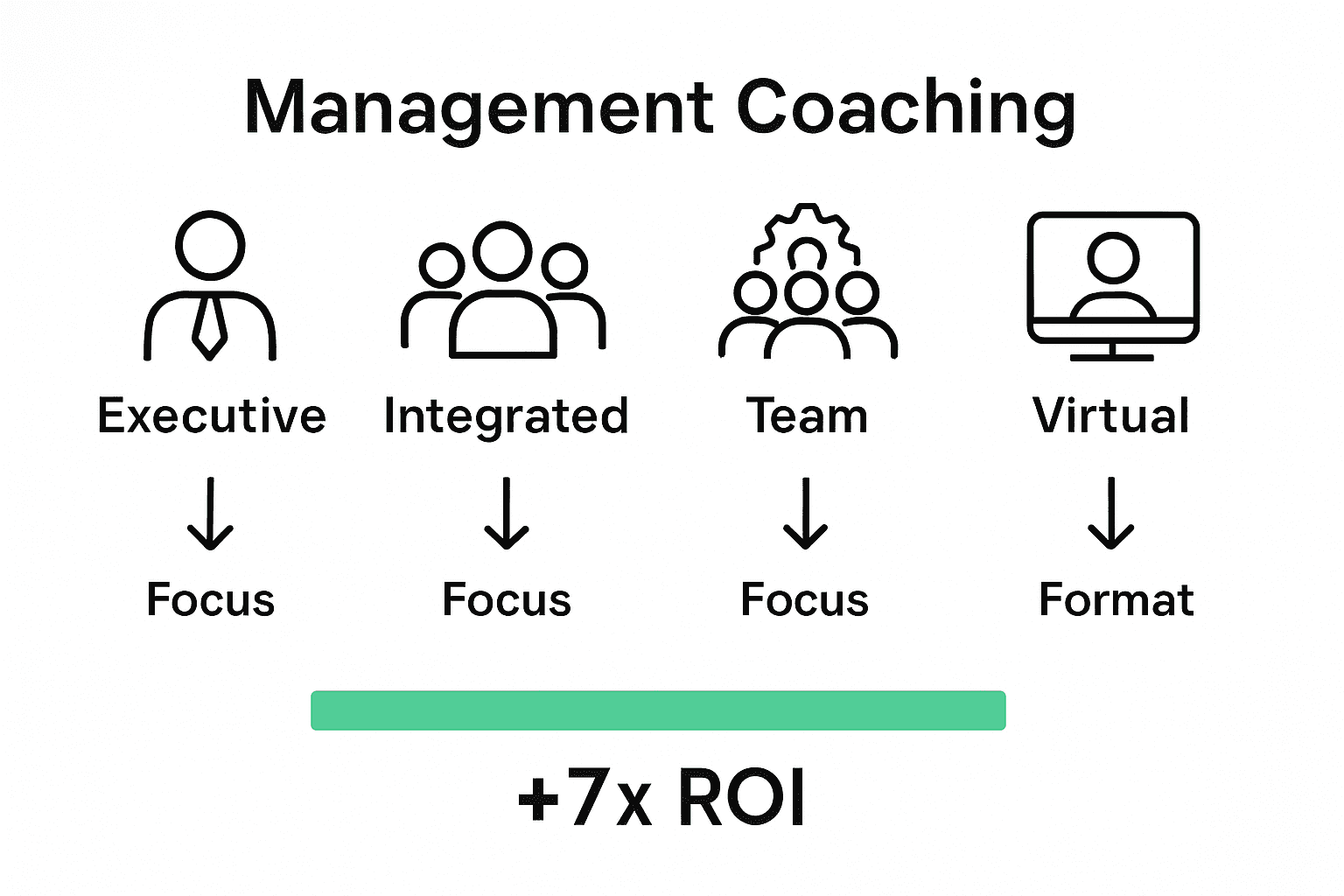
Research identifies four primary workplace coaching approaches that represent different scopes and delivery methods:
Here’s a comparison of the four primary management coaching approaches:
| Coaching Approach | Focus Area | Typical Format | Ideal For |
|---|---|---|---|
| Executive Coaching | Individual leadership roles | One-on-one sessions | Senior managers & executives |
| Integrated Coaching | Organization-wide abilities | Blended/group settings | Change initiatives, leaders at all levels |
| Team Coaching | Team performance | Group/team interventions | Cross-functional or project teams |
| Virtual Coaching | Flexible remote engagement | Online/video calls | Remote leaders or global teams |
- Executive Coaching: Personalized one-on-one interventions focused on individual leadership development
- Integrated Coaching: Embedded within broader organizational development programs
- Team Coaching: Supporting collective team interactions and performance optimization
- Virtual Coaching: Remote coaching delivery leveraging digital platforms and technologies
Additionally, management coaching styles can be further classified into foundational approaches like autocratic, democratic, and laissez-faire models. Each style offers unique advantages depending on team maturity, organizational culture, and specific developmental objectives. The most effective coaches understand how to adapt their approach dynamically, blending techniques to create transformative learning experiences that drive personal and professional growth. By leveraging these varied coaching approaches, organizations can develop more resilient, adaptable, and high-performing leadership teams.
Key Benefits and Outcomes for Clients
Management coaching delivers substantial transformative benefits that extend far beyond traditional professional development approaches. Understanding Why Coaching Works reveals that executive coaching provides an impressive return on investment, with studies demonstrating an average ROI nearly six times the initial coaching expenditure. These outcomes manifest through enhanced productivity, strategic thinking, communication skills, and overall leadership effectiveness.
Key measurable benefits for clients include:
- Improved decision-making capabilities
- Enhanced emotional intelligence
- Increased team performance and collaboration
- Better workplace communication
- Higher employee retention rates
- Personalized professional development
- Strengthened leadership presence
Research demonstrates that line-manager coaching fundamentally transforms workplace dynamics by creating environments of trust, continuous feedback, and personalized growth. The most significant outcomes emerge when coaching approaches are tailored to individual strengths, organizational culture, and specific developmental objectives. By providing targeted, strength-based support, management coaches help clients unlock their intrinsic potential, navigate complex professional challenges, and create sustainable pathways for personal and organizational success. This holistic approach not only benefits individual professionals but also contributes to broader organizational resilience and adaptability.

Essential Processes and Techniques Used
Management coaching leverages a sophisticated array of structured techniques designed to unlock individual and organizational potential. 7 Essential Time Management Techniques and Tools highlights the critical importance of selecting and implementing targeted coaching methodologies that drive meaningful performance improvements. The most effective approaches are rooted in systematic, research-driven processes that address both professional skills and personal development.
Core coaching techniques encompass a comprehensive range of transformative strategies:
- Active Listening: Deep, empathetic engagement with client experiences
- Emotional Intelligence Development: Enhancing self-awareness and interpersonal dynamics
- SMART Goal Setting: Creating precise, measurable, achievable objectives
- Constructive Feedback: Providing actionable, growth-oriented insights
- Self-Reflection Tools: Promoting deep personal and professional awareness
- Accountability Frameworks: Establishing clear performance expectations
- Behavioral Coaching: Identifying and transforming limiting professional patterns
The most successful management coaching processes begin with establishing clear, measurable objectives directly tied to specific organizational challenges. Coaches carefully select intervention strategies that align with individual client needs, organizational culture, and desired outcomes. By integrating real-time experiments, continuous reflection, and targeted skill development, management coaches create powerful pathways for personal growth and professional transformation. This holistic approach ensures that coaching becomes more than a temporary intervention—it becomes a sustainable strategy for ongoing personal and organizational excellence.
Selecting the Right Coaching Provider
Choosing the right management coach is a critical decision that can significantly impact professional growth and organizational performance. Understanding the Coaching Process Overview emphasizes the importance of a strategic, comprehensive approach to selecting a coaching partner who can truly drive transformative change. The ideal coaching provider goes far beyond traditional credentials, offering a nuanced blend of expertise, experience, and adaptive methodological skills.
Key criteria for selecting an exceptional management coach include:
- Proven Track Record: Documented success with senior professionals
- Relevant Expertise: Deep understanding of management dynamics
- Adaptability: Ability to customize coaching approaches
- Strategic Questioning: Skill in challenging existing perspectives
- Neutral Perspective: Unbiased, objective professional stance
- Measurable Outcome Focus: Commitment to delivering tangible results
- Cultural Compatibility: Alignment with organizational values and dynamics
The most effective coaching relationships emerge when there’s a genuine fit between the coach’s methodology and the client’s specific needs. This means looking beyond surface-level certifications to evaluate a coach’s hands-on management experience, emotional intelligence, and capacity to drive meaningful behavioral change. Potential clients should conduct thorough interviews, request detailed case studies, and seek references that demonstrate the coach’s ability to create sustainable professional transformation. The right coaching provider will not just offer temporary solutions, but serve as a long-term strategic thought partner committed to unlocking individual and organizational potential.
Common Challenges and Success Factors
Implementing management coaching requires navigating complex organizational dynamics and overcoming significant potential barriers. Create an Effective Coaching Session Plan highlights the critical importance of strategic planning and proactive approach to addressing challenges that can derail coaching initiatives. Successful implementation demands a holistic understanding of both potential obstacles and key success drivers.
Common challenges in management coaching include:
- Leadership Resistance: Lack of top-level commitment
- Cultural Misalignment: Organizational structures blocking change
- Communication Gaps: Ineffective knowledge transfer
- Measurement Difficulties: Challenges in quantifying coaching outcomes
- Participation Reluctance: Individual hesitation to engage fully
- Resource Constraints: Limited time and financial investment
- Performance Integration: Connecting coaching to broader organizational goals
Research indicates that the most successful coaching interventions are those seamlessly anchored in daily business routines, with sessions directly linked to practical experiments and measurable organizational objectives. This approach transforms coaching from a theoretical exercise into a dynamic, action-oriented process. By focusing on immediate context, creating clear accountability mechanisms, and maintaining alignment with strategic organizational goals, management coaching can overcome typical implementation challenges and drive meaningful, sustainable performance improvements.
Unlock Your Leadership Potential With Expert Management Coaching
Are you struggling to move beyond traditional training and genuinely transform your management style? The biggest challenges highlighted in our Complete Guide to Management Coaching Services—such as leadership resistance, measurement difficulties, and cultural misalignment—are exactly what prevent managers from reaching their full potential. Many professionals feel stuck with generic advice, outdated approaches, and little support navigating real organizational change. You deserve proven coaching solutions focused on your unique needs.
Explore Practical Change Management Solutions
Now is the right time to take decisive action. Backed by Tariq Juneja’s deep expertise and measurable results, our coaching programs at https://tariqjuneja.com offer confidential, personalized support that drives true transformation. Experience the difference of data-driven guidance, flexible delivery, and winning strategies. Contact us today to book your free consultation or discover how our structured techniques empower high-performing leaders. Don’t wait—achieve higher productivity and confident leadership starting now.
Frequently Asked Questions
What is management coaching?
Management coaching is a strategic professional development approach that provides personalized guidance to help managers and leaders enhance their skills and navigate organizational challenges effectively.
What are the types of management coaching approaches?
The primary management coaching approaches include Executive Coaching, Integrated Coaching, Team Coaching, and Virtual Coaching, each tailored to different leadership and team dynamics.
What are the key benefits of management coaching?
Management coaching offers numerous benefits such as improved decision-making capabilities, enhanced emotional intelligence, increased team performance, better workplace communication, and higher employee retention rates.
How do organizations select the right management coach?
Organizations should look for coaches with a proven track record, relevant expertise, adaptability in their approaches, and a focus on achieving measurable outcomes to ensure a good fit for their needs.