

Most American professionals believe management coaching is just a modern trend, yet studies show it can increase individual productivity by up to 88 percent. In an era where success means adapting quickly to constant change, understanding the true impact of management coaching is more important than ever. This guide demystifies core coaching concepts and reveals practical approaches every American leader can use to elevate both personal and organizational performance.
Table of Contents
- Defining Management Coaching and Core Functions
- Types of Management Coaches and Services Offered
- Essential Skills and Methodologies for Success
- Benefits for It, Business, and Telecom Leaders
- Common Misconceptions and Mistakes to Avoid
Key Takeaways
| Point | Details |
|---|---|
| Management Coaching Definition | Management coaching is a strategic partnership aimed at enhancing professional performance and leadership capabilities through targeted guidance and skill development. |
| Coaching Approaches | There are three primary types of management coaching: directive, facilitative, and transformational, each suited for different professional development needs. |
| Essential Skills | Successful management coaches need strong active listening, emotional intelligence, and strategic communication skills to foster effective coaching relationships. |
| Misconceptions to Avoid | Common misconceptions include the belief that coaching provides instant results or that it is suitable only for underperforming individuals, highlighting the need for tailored approaches to maximize effectiveness. |
Defining Management Coaching and Core Functions
Management coaching represents a strategic partnership designed to enhance professional performance and leadership capabilities through targeted guidance and skill development. At its core, management coaching involves a purposeful relationship between a coach and a professional aimed at unlocking individual potential and organizational effectiveness.
Managerial coaching is fundamentally a dyadic relationship where managers work directly with staff members to improve job performance skills and knowledge. A comprehensive concept analysis reveals that this approach goes beyond traditional supervision, focusing on collaborative learning, personal growth, and professional development.
The core functions of management coaching typically include several critical elements:
- Performance Enhancement: Identifying individual strengths and areas for improvement
- Skill Development: Providing targeted training and mentorship
- Goal Alignment: Connecting individual objectives with organizational strategies
- Continuous Feedback: Creating transparent communication channels
- Emotional Intelligence: Supporting professional emotional and interpersonal growth
Successful management coaching requires coaches to possess strong communication skills, deep organizational understanding, and the ability to motivate and inspire professionals toward meaningful transformation.
Pro Tip: Practice Active Listening: Develop your coaching effectiveness by dedicating 70% of interactions to listening and understanding your team members’ perspectives, challenges, and aspirations.
Types of Management Coaches and Services Offered
Management coaching encompasses diverse approaches designed to address unique organizational and individual professional development needs. Research exploring coaching models reveals three primary types of coaching that provide comprehensive support: directive, facilitative, and transformational coaching.

Directive Coaching focuses on providing specific guidance and direct instructions. Coaches using this approach actively offer targeted recommendations, share expert knowledge, and create structured pathways for skill improvement. This method works exceptionally well for professionals requiring clear, actionable strategies and explicit performance expectations.
The three primary types of management coaches include:
- Performance Coaches: Specializing in improving workplace productivity and operational effectiveness
- Leadership Development Coaches: Focusing on strategic leadership skill enhancement
- Career Transition Coaches: Supporting professionals navigating significant career changes
Facilitative Coaching adopts a more collaborative methodology, emphasizing self-discovery and personal insight. Comprehensive coaching research indicates this approach helps professionals develop problem-solving skills by asking probing questions and encouraging independent thinking. Coaches create supportive environments that enable individuals to identify their own solutions and growth strategies.
Transformational Coaching represents the most holistic approach, addressing personal development alongside professional growth. This model goes beyond immediate skill acquisition, focusing on fundamental mindset shifts, emotional intelligence, and long-term personal transformation.
Pro Tip: Strategic Coach Selection: Always align your coaching approach with specific organizational goals and individual development needs, ensuring the chosen coaching style matches the desired outcomes.
Here’s a comparison of the three main management coaching approaches and their typical best-use scenarios:
| Coaching Approach | Core Focus Area | Best For |
|---|---|---|
| Directive Coaching | Structured guidance, skill gaps | Rapid performance improvement |
| Facilitative Coaching | Self-discovery, problem solving | Developing independent leaders |
| Transformational Coaching | Mindset shift, holistic growth | Long-term personal transformation |
Essential Skills and Methodologies for Success
Management coaching demands a sophisticated skill set that combines interpersonal acumen, strategic thinking, and continuous learning. A comprehensive model of managerial coach development highlights critical competencies that distinguish exceptional coaches from average practitioners, emphasizing the importance of deliberate skill cultivation.
The core essential skills for successful management coaches include:
- Active Listening: Deeply understanding client perspectives without immediate judgment
- Emotional Intelligence: Recognizing and navigating complex interpersonal dynamics
- Strategic Communication: Articulating insights clearly and constructively
- Adaptive Problem-Solving: Developing flexible approaches to unique challenges
Effective coaching methodologies require coaches to master both technical and interpersonal capabilities. Reflective practice emerges as a fundamental approach, enabling coaches to continuously evaluate their interactions, refine their techniques, and adapt their strategies based on real-world feedback and outcomes.
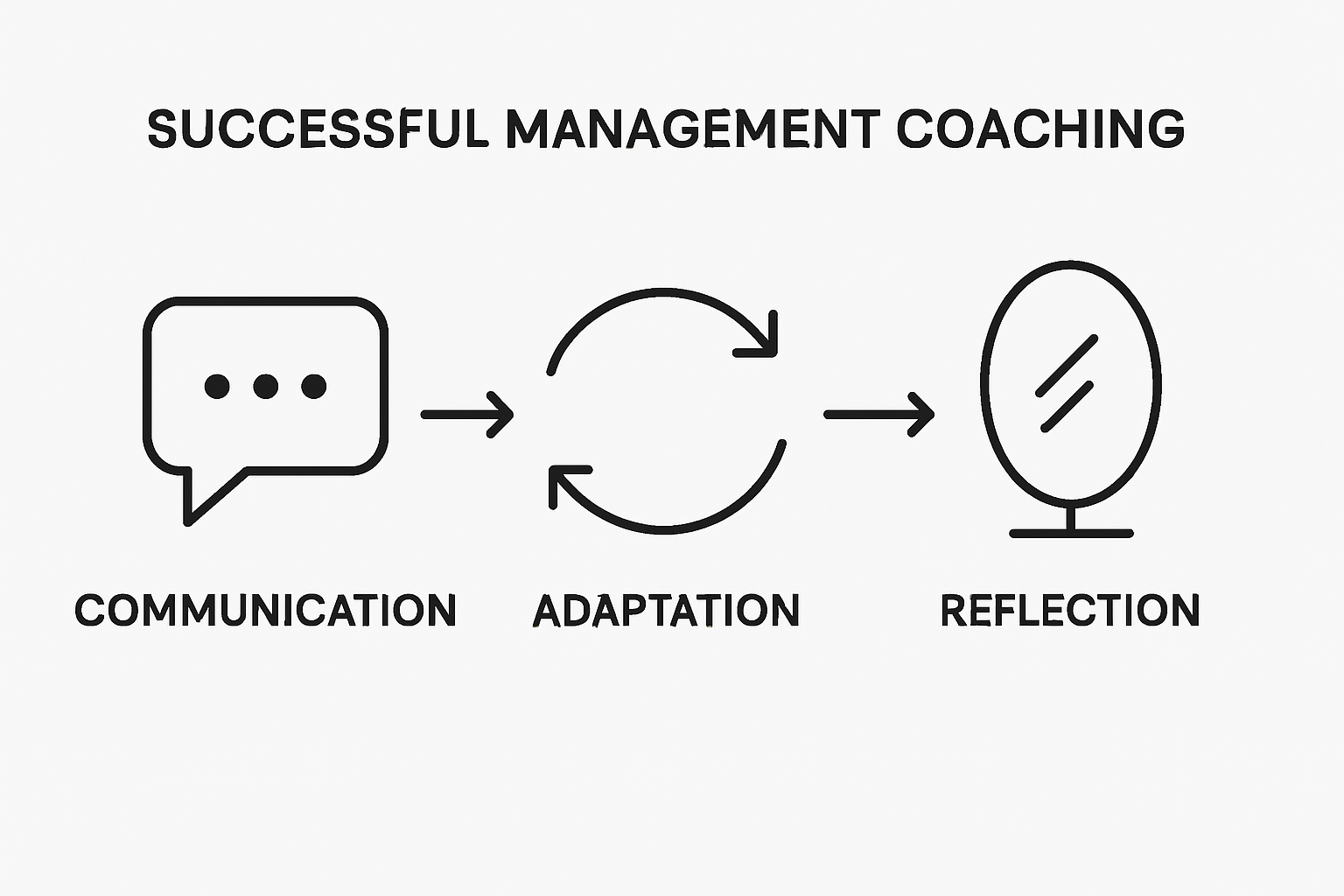
Emerging research on technological integration suggests that modern coaches must also develop technological proficiency, particularly in leveraging artificial intelligence tools to personalize learning experiences and enhance coaching effectiveness. This requires coaches to remain agile, embracing new technologies while maintaining the human-centered essence of their work.
Successful coaches recognize that their methodology is not static but a dynamic process of continuous learning, adaptation, and personal growth. They invest in their own development, seeking opportunities to expand their skills, challenge their assumptions, and remain at the forefront of coaching innovation.
Pro Tip: Continuous Learning Strategy: Allocate at least 10% of your professional time to skill development, including workshops, advanced training, and reflective practice sessions to stay ahead in the evolving coaching landscape.
Benefits for IT, Business, and Telecom Leaders
Management coaching offers transformative advantages for leaders across technology, business, and telecommunications sectors, addressing complex organizational challenges with targeted strategic interventions. Advanced frameworks for executive coaching demonstrate significant potential for enhancing leadership performance through objective behavioral analysis and personalized developmental approaches.
Key benefits for IT, Business, and Telecom Leaders include:
- Enhanced Decision-Making: Developing more nuanced and strategic thinking capabilities
- Organizational Performance Optimization: Improving team productivity and operational efficiency
- Leadership Skill Development: Building advanced interpersonal and strategic management competencies
- Stress Management: Creating resilient leadership frameworks
- Innovation Acceleration: Fostering creative problem-solving and adaptive thinking
Strategic Self-Awareness emerges as a critical outcome of targeted management coaching. Leaders gain deeper insights into their behavioral patterns, communication styles, and potential blind spots, enabling more intentional and effective leadership approaches.
Intelligent management control research reveals that coaching helps leaders in complex organizations implement more sophisticated performance monitoring systems. This approach enables executives to develop more agile, data-driven strategies that respond quickly to rapidly changing technological and business landscapes.
For technology and telecommunications leaders, management coaching provides a unique opportunity to bridge technical expertise with advanced leadership capabilities. By focusing on holistic development, coaches help these professionals transform technical knowledge into strategic organizational vision.
Pro Tip: Personalized Growth Mapping: Develop a quarterly self-assessment framework that tracks your leadership development progress, identifying specific skills to enhance and measuring tangible improvements in your organizational impact.
The table below summarizes how management coaching benefits IT, business, and telecom leaders in measurable ways:
| Leadership Benefit | Measurable Outcome | Long-Term Value |
|---|---|---|
| Enhanced Decision-Making | Faster, more accurate choices | Greater competitive agility |
| Organizational Optimization | Higher team productivity | Sustainable business growth |
| Innovation Acceleration | Faster solution development | Ongoing adaptability in markets |
| Strategic Self-Awareness | Improved leadership feedback usage | Reduced leadership blind spots |
Common Misconceptions and Mistakes to Avoid
Management coaching is a nuanced professional practice frequently misunderstood by leaders and organizations alike. Research exploring coaching misconceptions reveals that many professionals hold oversimplified or incorrect assumptions about the coaching process, which can significantly undermine its potential effectiveness.
Common misconceptions include:
- One-Size-Fits-All Approach: Believing the same coaching method works for every individual
- Instant Results Expectation: Assuming transformational change happens overnight
- Coaching Equals Mentoring: Conflating two fundamentally different professional development strategies
- Passive Participation: Thinking coaches will solve problems without active client engagement
- Technical Skills Override: Neglecting emotional and interpersonal development
Directive Coaching Fallacy represents a significant mistake many leaders make. Comprehensive coaching research demonstrates that overly prescriptive approaches can diminish a coachee’s autonomy and intrinsic motivation, ultimately reducing the coaching’s long-term impact.
Another critical misconception involves viewing coaching as a remedial intervention only for underperforming professionals. In reality, coaching is a proactive development strategy for high-potential leaders seeking continuous personal and professional growth. Successful coaching requires a collaborative, personalized approach that respects individual learning styles, professional contexts, and unique developmental trajectories.
Leaders must recognize that effective coaching is not about providing answers but facilitating self-discovery, creating environments where professionals can unlock their intrinsic potential, challenge existing assumptions, and develop more sophisticated problem-solving capabilities.
Pro Tip: Expectation Calibration: Before starting any coaching engagement, conduct a comprehensive initial assessment to align expectations, define clear objectives, and establish realistic timelines for personal and professional development.
Unlock Leadership Growth with Expert Management Coaching
If you are striving to overcome common leadership challenges like ineffective decision-making, lack of strategic self-awareness, or slow innovation, management coaching can unlock your true potential. This article highlights how targeted coaching approaches such as transformational and facilitative coaching help leaders develop essential skills including active listening and emotional intelligence to drive long-term growth. Whether you want to enhance your leadership presence or improve organizational performance, personalized coaching can guide you toward meaningful transformation.
For professionals seeking continuous development and agile leadership strategies, explore our tailored coaching solutions in Agile Coaching Archives – Tariq Juneja.
Experience the power of transformational change with personalized guidance from Tariq Juneja. Visit https://tariqjuneja.com to discover how you can increase productivity, reduce stress, and embrace change effectively. Explore insights from Change Management Archives – Tariq Juneja to complement your leadership journey. Take the next step and book your free consultation today to start unlocking your leadership growth potential.
Frequently Asked Questions
What is management coaching?
Management coaching is a strategic partnership aimed at enhancing professional performance and leadership capabilities through targeted guidance and skill development, focusing on unlocking individual potential and organizational effectiveness.
What are the core functions of management coaching?
The core functions of management coaching include performance enhancement, skill development, goal alignment, continuous feedback, and fostering emotional intelligence in professionals.
What are the different types of management coaching approaches?
The three primary types of management coaching are directive coaching (providing specific guidance), facilitative coaching (encouraging self-discovery), and transformational coaching (focusing on holistic personal development).
How can management coaching benefit leaders in business and technology?
Management coaching can enhance decision-making, optimize organizational performance, develop leadership skills, improve stress management, and accelerate innovation for leaders in business and technology.