

Over 86 percent of American businesses now invest in leadership coaching to accelerate growth and adapt to rapid change. With advancement hinging on strong leaders, understanding what truly sets effective coaching apart has never mattered more. This guide explains how modern coaching reshapes professional development, highlights proven methods, and shows what American organizations need to know to get real, lasting results.
Table of Contents
- Defining Leadership Coaching Services Today
- Types of Leadership Coaching and Distinctions
- How Coaching Drives Individual and Organizational Growth
- Essential Qualifications and Coaching Methods
- Costs, ROI, and Common Pitfalls to Avoid
Key Takeaways
| Point | Details |
|---|---|
| Leadership Coaching Evolves | Modern leadership coaching transcends traditional mentorship, focusing on personal development and strategic capabilities. |
| Diverse Coaching Styles | Coaches utilize various styles, such as transformational and executive coaching, tailored to the unique challenges of each leader and organization. |
| Transformational Impact | Effective coaching enhances individual skills and aligns personal goals with organizational objectives, fostering a culture of continuous learning. |
| Invest Wisely in Coaching | Organizations must view coaching as a strategic investment, addressing potential pitfalls and ensuring alignment with long-term development goals. |
Defining Leadership Coaching Services Today
Leadership coaching represents a strategic approach to professional development that transforms individuals and organizations through personalized guidance and targeted skill enhancement. Modern leadership coaching goes far beyond traditional mentorship, focusing on creating environments that enable leaders to thrive and develop critical skills.
At its core, leadership coaching involves working with experienced professionals who help leaders navigate complex challenges, unlock their potential, and cultivate strategic capabilities. These services typically include one-on-one sessions, assessments, skill-building exercises, and personalized development plans designed to address specific leadership goals. Coaching supports clients in gaining clarity about their leadership vision and acquiring the mindset needed to accelerate organizational impact.
Key components of contemporary leadership coaching services often encompass:
- Performance optimization strategies
- Emotional intelligence development
- Communication skill enhancement
- Strategic thinking and decision-making training
- Personal leadership brand cultivation
The most effective leadership coaching recognizes that true transformation happens through a collaborative, introspective process. Coaches act as strategic partners, challenging leaders to examine their assumptions, overcome limiting beliefs, and develop more adaptive leadership approaches. This individualized methodology allows professionals to not just improve their skills, but fundamentally reimagine their potential as transformative organizational leaders.
Types of Leadership Coaching and Distinctions
Leadership coaching is a sophisticated discipline encompassing multiple approaches tailored to specific organizational and individual needs. Leadership coaching styles range from transformational methods focused on values-based leadership to more targeted individual development strategies, creating a nuanced landscape of professional development techniques.
Contemporary leadership coaching encompasses diverse styles that address different organizational contexts. Influential leaders often integrate multiple leadership approaches, selecting methods that align with team dynamics, organizational culture, and specific strategic objectives. These styles can include:
- Transformational Coaching: Emphasizes personal growth, inspiring leaders to transcend traditional performance boundaries
- Situational Coaching: Adapts guidance based on specific challenges and context
- Performance Coaching: Concentrates on achieving measurable professional outcomes
- Developmental Coaching: Focuses on long-term skill acquisition and personal evolution
- Executive Coaching: Targets senior leaders and high-potential professionals
Successful leadership coaching recognizes that no single approach fits all scenarios. Skilled coaches assess individual leadership potential, organizational needs, and contextual challenges to design personalized development strategies. By understanding each leader’s unique strengths and growth opportunities, coaching creates a dynamic pathway for professional transformation, enabling individuals to unlock their maximum leadership potential and drive meaningful organizational change.
How Coaching Drives Individual and Organizational Growth
Leadership coaching represents a powerful mechanism for catalyzing both personal and organizational transformation. Effective leadership coaching helps leaders align personal goals with organizational objectives, build self-confidence, and develop collaborative leadership approaches, creating a dynamic pathway for comprehensive professional development.

The impact of coaching extends far beyond individual skill enhancement, fundamentally reshaping how organizations approach talent development and strategic leadership. Research demonstrates that diverse leadership approaches, particularly those involving collaborative interactions between leaders of different career stages, can significantly enhance team performance and innovation. This nuanced approach enables organizations to create more adaptive, resilient leadership ecosystems.
Key mechanisms through which coaching drives growth include:
- Enhancing emotional intelligence and self-awareness
- Developing strategic communication skills
- Improving decision-making capabilities
- Building resilience and adaptive thinking
- Fostering a culture of continuous learning
Successful leadership coaching recognizes that individual growth is intrinsically linked to organizational success. By providing personalized development strategies, coaches help leaders transform potential obstacles into opportunities for innovation, collaboration, and sustainable growth. This holistic approach ensures that leadership development becomes a dynamic, iterative process that continuously evolves to meet changing organizational challenges and individual aspirations.
Essential Qualifications and Coaching Methods
Leadership coaching requires a sophisticated blend of professional expertise, psychological insight, and strategic understanding. Effective coaches draw from multiple leadership theories, integrating approaches ranging from trait and situational to transformational and adaptive leadership methodologies, creating a comprehensive framework for professional development.
The emergence of generative AI tools is increasingly transforming professional coaching workflows, offering innovative support for research, administrative tasks, and content creation. However, the core of coaching remains fundamentally human-driven, emphasizing relational skills, emotional intelligence, and personalized guidance that technology cannot fully replicate.
Essential qualifications for leadership coaches typically include:
- Advanced academic credentials in psychology, organizational behavior, or related fields
- Professional certifications from recognized coaching institutions
- Extensive leadership experience across multiple industries
- Demonstrated track record of successful client transformations
- Advanced interpersonal and communication skills
- Deep understanding of organizational dynamics
- Continuous professional development and learning
Successful leadership coaches combine rigorous theoretical knowledge with practical expertise, creating a dynamic approach that adapts to each client’s unique context. By integrating sophisticated analytical skills, emotional intelligence, and strategic thinking, coaches design personalized development pathways that unlock individual potential and drive meaningful organizational transformation.
Costs, ROI, and Common Pitfalls to Avoid
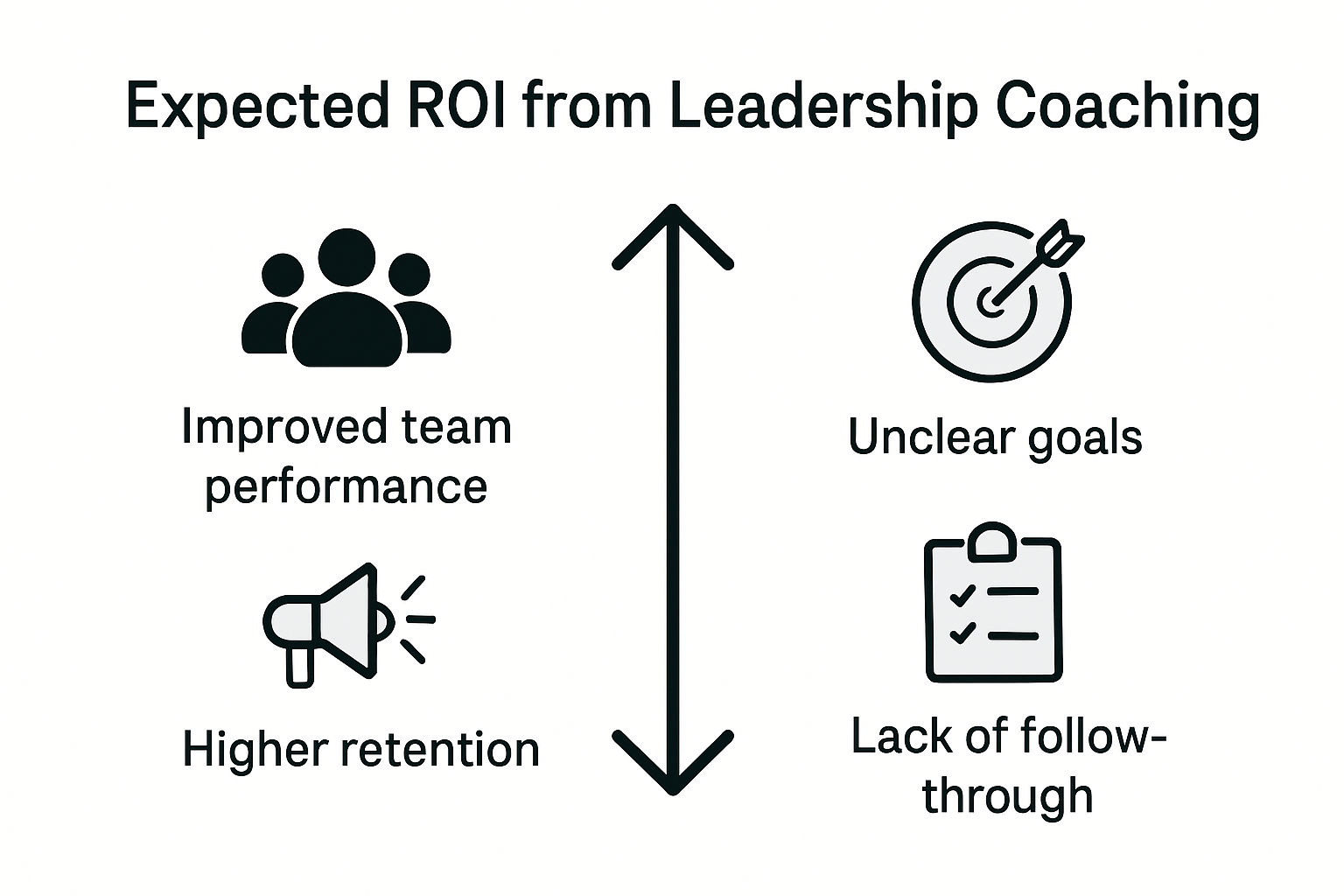
Leadership coaching investments require careful consideration of potential returns and strategic implementation. Leadership coaching leads to tangible organizational benefits, including creating flexible, resilient organizations capable of attracting and retaining top talent while reducing overall turnover, making it a strategic long-term investment for progressive organizations.
Emerging technologies like generative AI present both opportunities and challenges for coaching professionals, with critical considerations around ethical implementation, data privacy, and maintaining human-centric oversight. Sophisticated organizations recognize that technological augmentation must complement, not replace, the core relational aspects of professional coaching.
Common pitfalls to avoid in leadership coaching include:
- Misalignment between coaching objectives and organizational goals
- Insufficient commitment from leadership
- Unrealistic expectations about transformation timelines
- Lack of clear performance metrics
- Inadequate coach-client compatibility
- Overlooking individual learning styles
- Minimal post-coaching support and integration
Successful leadership coaching requires a holistic approach that balances financial investment with measurable outcomes. Organizations should view coaching as a strategic development tool, not a transactional expense, focusing on long-term cultural transformation, individual growth, and systemic performance improvement. By carefully selecting coaches, establishing clear expectations, and maintaining ongoing evaluation, companies can maximize their return on investment and create sustainable leadership development ecosystems.
Unlock Your Leadership Potential with Expert Coaching
Leadership coaching is essential for navigating complex challenges, enhancing emotional intelligence, and driving transformational impact within organizations. If you are seeking to overcome limiting beliefs, build resilience, and foster a culture of continuous learning, leadership coaching can provide the personalized strategies necessary for lasting change. Recognizing that no single approach fits all, expert guidance tailors development to your unique strengths and organizational context, helping you accelerate your leadership growth and achieve meaningful outcomes.
Discover how Agile Coaching Archives – Tariq Juneja integrates adaptive leadership practices that complement transformational coaching styles. Take advantage of proven methods that streamline decision-making and boost team performance while embracing change effectively.

Ready to elevate your leadership capabilities and transform organizational impact? Visit Tariq Juneja to explore coaching programs, seminars, and workshops designed to help you increase productivity, reduce stress, and master change. Learn more about personalized approaches in the Change Management Archives – Tariq Juneja and experience coaching that drives real results. Book your free consultation today and start your transformational journey.
Frequently Asked Questions
What is leadership coaching?
Leadership coaching is a personalized development process that helps individuals in leadership roles enhance their strategic capabilities, emotional intelligence, and overall effectiveness through guidance and skill-building exercises.
How does leadership coaching drive organizational growth?
Leadership coaching aligns personal leadership goals with organizational objectives, enhancing emotional intelligence, decision-making skills, and fostering a culture of continuous learning, which ultimately leads to improved team performance and innovation.
What qualifications should I look for in a leadership coach?
Look for coaches with advanced degrees in psychology or organizational behavior, professional coaching certifications, extensive leadership experience, and a demonstrated track record of successful transformations in clients. Strong interpersonal skills and a deep understanding of organizational dynamics are also essential.
What are common pitfalls to avoid in leadership coaching?
Common pitfalls include misalignment between coaching objectives and organizational goals, insufficient commitment from leadership, unrealistic expectations for transformation timelines, and inadequate post-coaching support. Ensuring coach-client compatibility and understanding individual learning styles is equally important.