

More than half of American professionals say they would leave their current roles if offered better opportunities for growth and team cohesion. For mid-career IT experts and team leaders facing constant change in multinational environments, this truth highlights the urgent need for transformative leadership. This guide demystifies the journey from corporate IT to impactful coaching helping you assess your readiness, define your niche, and shape a method that sparks true organizational change.
Table of Contents
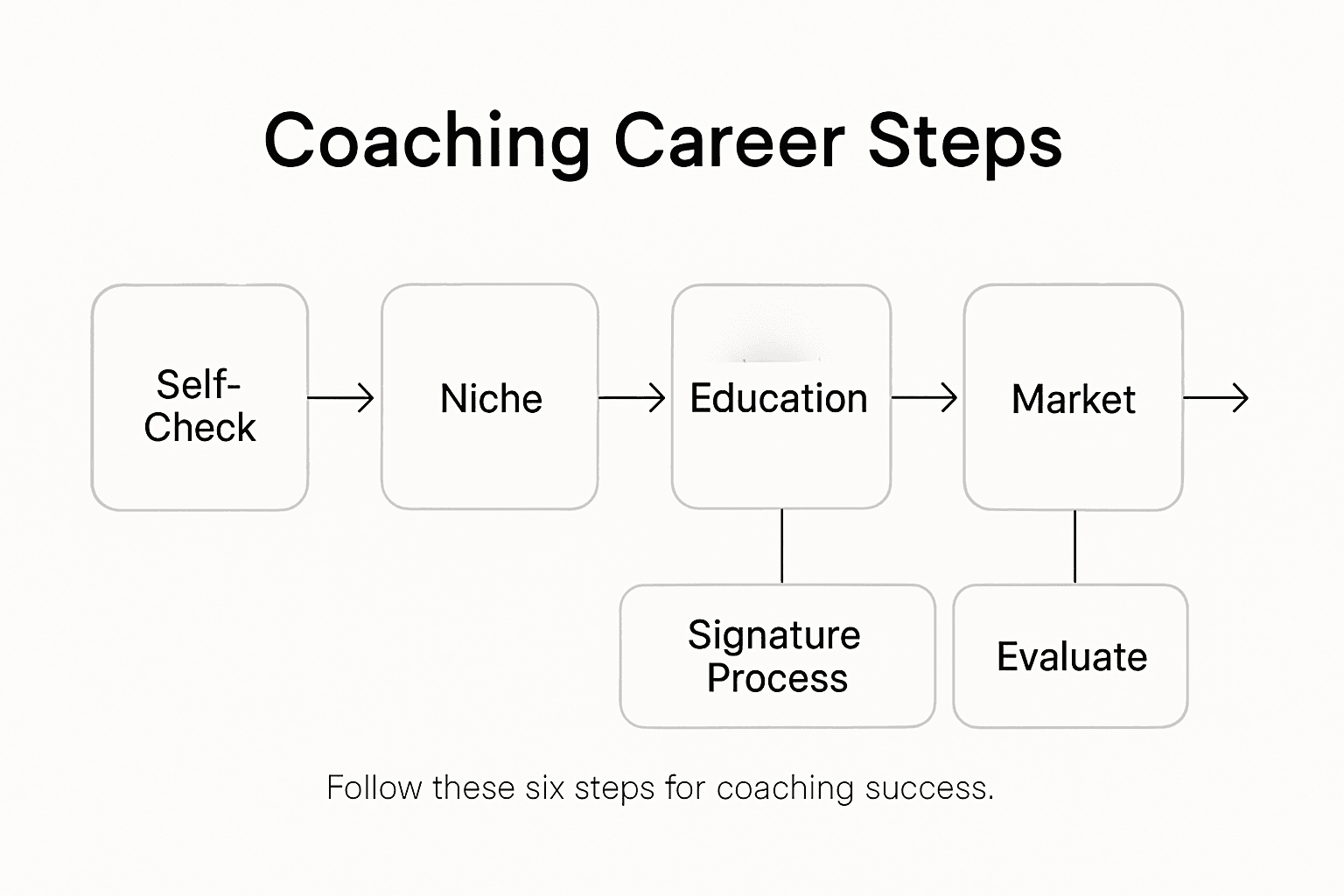
- Step 1: Assess Your Coaching Aptitude and Motivation
- Step 2: Select a Transformational Coaching Niche
- Step 3: Obtain Formal Coaching Education and Credentials
- Step 4: Develop Your Signature Coaching Process
- Step 5: Market Yourself and Attract Initial Clients
- Step 6: Evaluate Results and Refine Your Coaching Approach
Quick Summary
| Key Point | Explanation |
|---|---|
| 1. Assess Your Coaching Aptitude | Conduct an honest self-evaluation of your emotional intelligence, communication skills, and desire to help others to gauge your coaching readiness. |
| 2. Choose a Transformational Niche | Identify a coaching niche that aligns with your professional skills and personal passions while also considering market demand for effective positioning. |
| 3. Obtain Formal Credentials | Enroll in accredited coaching programs to gain essential knowledge and skills, ensuring your practice is recognized and credible to clients. |
| 4. Develop a Unique Coaching Process | Create a structured yet personalized coaching methodology that reflects your style and effectively meets client needs for significant results. |
| 5. Market Yourself Effectively | Build a strong online presence and engage in networking to showcase your expertise and attract potential clients by highlighting your unique value. |
Step 1: Assess Your Coaching Aptitude and Motivation
Successfully launching a coaching career requires honest self reflection and a clear understanding of your intrinsic motivations. Your journey begins with an authentic assessment of whether you possess the psychological and professional attributes necessary for transformative coaching.
Starting your coaching assessment involves exploring multiple dimensions of your professional capabilities. Psychological research highlights that motivation plays a crucial role in determining success and engagement across professional domains. This means you will need to conduct a comprehensive self evaluation focusing on key attributes like emotional intelligence, communication skills, empathy, active listening capabilities, and your genuine desire to support others through meaningful professional development.
Personal coaching readiness demands rigorous introspection. Consider creating a structured self assessment framework that examines your current skill set, professional experiences, interpersonal strengths, and areas requiring further development. Reflect on situations where you have successfully guided colleagues, resolved complex interpersonal challenges, or demonstrated leadership through mentorship. These real world experiences will provide concrete evidence of your coaching potential.
Pro tip: Schedule a series of informational interviews with established coaches in your industry to gain deeper insights into the practical requirements and personal attributes needed for successful coaching practice.
Here is a summary of key attributes assessed when considering a coaching career:
| Attribute | Description | Importance for Coaches |
|---|---|---|
| Emotional Intelligence | Recognizing and managing one’s own and others’ emotions | Facilitates deep client rapport |
| Communication Skills | Conveying ideas clearly and listening actively | Essential for client progress |
| Empathy | Understanding and relating to client experiences | Builds trust and engagement |
| Professional Experience | Prior mentorship, leadership, or guidance roles | Validates coaching capabilities |
| Motivation to Support | Genuine desire to empower others | Drives meaningful client outcomes |
Step 2: Select a Transformational Coaching Niche
Selecting your coaching niche represents a critical strategic decision that will define your professional trajectory and potential impact. Understanding the nuanced landscape of transformational coaching requires deep introspection and strategic alignment with your unique professional strengths.
Navigating niche selection demands a comprehensive approach that integrates your existing professional expertise, personal passion, and market demand. Start by conducting a thorough self assessment that explores your professional background, specialized knowledge, and areas where you have demonstrated exceptional leadership or problem solving skills. Consider industries where you have accumulated significant experience such as technology, healthcare, corporate leadership, entrepreneurship, or organizational development.
Your niche selection process should balance personal authenticity with market viability. Research potential target markets by analyzing industry trends, organizational challenges, and emerging professional development needs. Evaluate your potential impact by identifying specific client segments that would benefit most from your unique combination of skills, professional background, and coaching philosophy. Pay attention to areas where you can provide distinctive value through your lived experiences and professional insights.
Pro tip: Create a comprehensive mind map connecting your professional experiences, personal strengths, and potential coaching niches to visualize your most promising opportunities for transformational coaching practice.
The table below compares common transformational coaching niches:
| Niche | Ideal Background | Typical Clients |
|---|---|---|
| Executive Coaching | Corporate leadership, management | Senior managers, executives |
| Career Coaching | HR, talent management | Career changers, professionals |
| Health Coaching | Healthcare, wellness expertise | Individuals seeking lifestyle change |
| Entrepreneur Coaching | Startup or business experience | Entrepreneurs, founders |
| Organizational Development | Change management, consulting | Teams, organizations undergoing transition |
Step 3: Obtain Formal Coaching Education and Credentials
Securing professional coaching credentials represents a foundational milestone in your transformative career journey. Understanding the comprehensive coaching process requires strategic investment in formal education and recognized certification programs that validate your professional expertise.
Your credential acquisition strategy should encompass multiple dimensions of professional development. Begin by researching accredited coaching programs offered through recognized institutions like the International Coach Federation (ICF), Center for Credentialing and Education, or specialized coaching academies. Evaluate programs that align with your chosen niche and provide comprehensive training in core competencies such as active listening, powerful questioning, goal setting, and transformational communication techniques. Look for programs that offer a blend of theoretical knowledge and practical application including supervised coaching hours, peer evaluation, and mentorship opportunities.
Carefully assess different credential levels and pathways available in professional coaching. Some programs offer associate level certifications for emerging coaches while advanced credentials like Professional Certified Coach (PCC) or Master Certified Coach (MCC) require substantial documented coaching experience and rigorous assessment. Consider your current professional background and long term career objectives when selecting an educational pathway that provides both immediate credibility and future growth potential.
Pro tip: Invest in a comprehensive portfolio documenting your coaching practice including session recordings, client testimonials, and detailed reflective journals to strengthen your credential application and demonstrate professional competence.
Step 4: Develop Your Signature Coaching Process
Developing a distinctive coaching process transforms you from a generic practitioner into a recognized expert in your field. Emerging research in applied positive psychology highlights the importance of creating a structured yet personalized approach that combines scientific methodology with individual creativity.

Your signature coaching process should integrate multiple strategic components that differentiate your approach. Begin by mapping out a consistent framework that includes initial client assessment, goal identification, intervention strategies, progress tracking, and reflection techniques. Design a methodology that reflects your unique professional background and coaching philosophy while maintaining a clear structure that clients can understand and trust. Consider developing proprietary assessment tools, communication protocols, or visualization techniques that become hallmarks of your coaching style.
Successful coaching processes require continuous refinement and evidence based adaptation. Document each client interaction meticulously to identify patterns, evaluate intervention effectiveness, and incrementally improve your approach. Develop a systematic method for collecting client feedback, tracking performance metrics, and integrating new coaching techniques that emerge from your practical experience. Your goal is to create a dynamic process that remains flexible enough to meet individual client needs while maintaining a consistent underlying methodology.
Pro tip: Create a comprehensive coaching process blueprint that outlines your unique methodology step by step, enabling potential clients to understand your approach and differentiate you from other coaches in the market.
Step 5: Market Yourself and Attract Initial Clients
Transforming your coaching expertise into a thriving practice requires strategic self marketing and targeted client engagement. Evidence-based marketing research from the International Coaching Federation demonstrates that coaches who effectively communicate their unique value proposition attract clients more successfully.
Your marketing strategy should focus on building credibility and demonstrating tangible client value. Develop a comprehensive digital presence that showcases your expertise through multiple channels professional websites, targeted LinkedIn content, thought leadership articles, and strategic social media positioning. Create compelling case studies and testimonials that highlight specific client transformations and quantifiable outcomes. Focus on developing content that speaks directly to your target niche audience addressing their specific professional challenges and showcasing how your unique coaching methodology provides concrete solutions.
Navigate client attraction by implementing a multi-dimensional approach to visibility and engagement. Leverage professional networking events, industry conferences, and speaking opportunities to establish yourself as an authoritative voice in your coaching specialty. Offer free initial consultation sessions that allow potential clients to experience your coaching style and understand the immediate value you provide. Develop a systematic referral network by cultivating relationships with professionals in complementary fields who can recommend your services to potential clients who match your target demographic.
Pro tip: Create a compelling one page coaching value proposition document that clearly articulates your unique methodology, target audience, and specific client transformation promises to use in networking and marketing materials.
Step 6: Evaluate Results and Refine Your Coaching Approach
Continuous improvement defines exceptional coaching practices. Academic research on coaching effectiveness emphasizes the critical importance of systematic evaluation to enhance client outcomes and professional development.
Implement a robust results tracking framework that combines quantitative and qualitative assessment methods. Design comprehensive client progress metrics that capture both tangible performance indicators and subjective growth experiences. Utilize standardized assessment tools such as pre and post coaching surveys, goal achievement tracking, and periodic performance reviews. Create a structured feedback mechanism that allows clients to provide detailed insights into their coaching experience including specific areas of transformation personal growth and measurable professional advancements.
Develop a data driven approach to coaching refinement by analyzing client feedback performance data and individual session outcomes. Establish a quarterly review process where you critically examine your coaching methodology identifying patterns of success challenges and potential areas for skill enhancement. This reflective practice enables you to continuously adapt your coaching techniques ensuring they remain relevant responsive and aligned with evolving client needs. Consider engaging in peer supervision or seeking mentorship from experienced coaches to gain external perspectives on your professional development and methodological improvements.
Pro tip: Maintain a professional development journal documenting client successes methodological innovations and personal reflections to track your coaching evolution and demonstrate continuous learning.
Begin Your Transformational Coaching Journey with Expert Guidance
Starting a coaching career requires more than passion it demands clear direction and proven strategies to build your unique coaching process and attract your ideal clients. If you identify with the challenges of selecting the right coaching niche, developing your signature method, and marketing yourself authentically this is your moment to take decisive action. At Tariq Juneja’s Life Coaching Archives you will find practical insights that complement your ambition to transform your career path and empower others effectively.
Take the next step now by exploring tailored coaching programs that emphasize real transformational change. Visit https://tariqjuneja.com for access to coaching workshops and seminars led by a seasoned transformational coach. Discover how to increase your coaching impact, reduce stress in your practice, and embrace agile principles with support from Agile Coaching Archives – Tariq Juneja. Book your free consultation today to start crafting a coaching career that not only changes lives but transforms your own professional future.
Frequently Asked Questions
How can I assess my coaching aptitude before starting my career?
To assess your coaching aptitude, conduct a honest self-evaluation of your emotional intelligence, communication skills, empathy, and active listening capabilities. Create a list of your strengths and areas for improvement, and reflect on past experiences where you’ve guided or mentored others.
What are key factors to consider when selecting my coaching niche?
When selecting a coaching niche, evaluate your professional background, personal passions, and market demand. Research various industries such as technology or healthcare to identify where your skills can make a significant impact and align with your interests.
What formal education or credentials do I need to become a coach?
You should consider enrolling in an accredited coaching program that offers training in core competencies like goal setting and transformational communication. Aim to obtain recognized credentials, which can boost your credibility and provide a solid foundation for your coaching practice.
How can I develop my signature coaching process?
Start by creating a structured framework for your coaching process that includes client assessment, goal identification, and progress tracking. Document your approach and refine it through client feedback to ensure it meets individual client needs while maintaining a consistent methodology.
What are effective marketing strategies to attract my first clients?
To attract your first clients, build a strong online presence through a professional website and social media. Offer free consultations and showcase client testimonials to demonstrate the value of your coaching, aiming for engagement with multiple channels to broaden your outreach.
How can I evaluate my coaching effectiveness and improve my approach?
Establish a results tracking framework that includes both quantitative metrics and qualitative feedback from clients. Review client progress periodically, ideally every quarter, to identify patterns of success and areas that need refinement, ensuring continuous improvement in your coaching practice.