

Building a coaching business for young entrepreneurs sounds exciting and full of promise. Yet nearly 70 percent of new coaching businesses struggle to attract the right clients because their niche is too broad or unclear. Most people focus on marketing and branding first, expecting instant traction, but the real breakthrough happens when you define exactly who you serve and what unique value you bring. That precise alignment is what sets thriving coaches apart from the pack.
Table of Contents
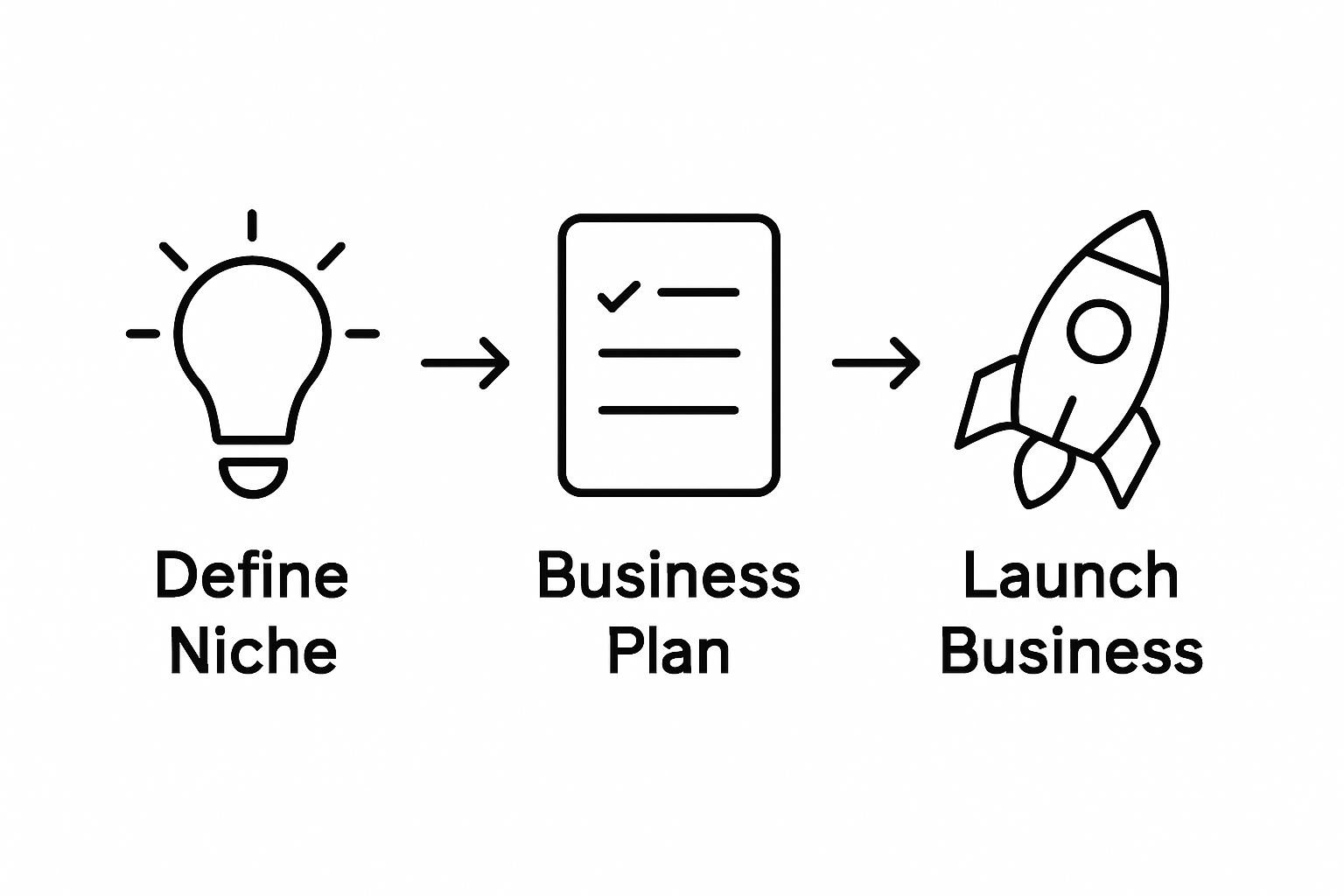
- Step 1: Define Your Niche And Target Audience
- Step 2: Create A Business Plan With Clear Goals
- Step 3: Establish Your Brand Identity And Online Presence
- Step 4: Develop Coaching Packages And Pricing Strategies
- Step 5: Market Your Coaching Services Effectively
- Step 6: Launch Your Business And Gather Feedback For Improvement
Quick Summary
| Key Point | Explanation |
|---|---|
| 1. Define your niche precisely | Identify a unique intersection of your expertise and target audience’s needs to provide specialized coaching services. |
| 2. Create a detailed business plan | Use a strategic blueprint to outline your mission, goals, financial projections, and client acquisition strategies. |
| 3. Build a strong brand identity | Craft a narrative that reflects your coaching philosophy and resonates with your target audience to attract clients. |
| 4. Design tiered coaching packages | Offer distinct coaching options that cater to different entrepreneurial stages, demonstrating your unique value proposition. |
| 5. Implement a robust marketing strategy | Use content marketing, social media, and networking to showcase your expertise and attract potential clients effectively. |
Step 1: Define Your Niche and Target Audience
Successful coaching businesses start with a crystal clear understanding of who you serve and what specific problems you solve. Defining your niche and target audience is more than just selecting a broad category—it’s about pinpointing the precise intersection between your expertise and your potential clients’ most pressing needs.
Starting your coaching journey requires deep self reflection about your unique strengths and the specific group of entrepreneurs who will benefit most from your guidance. Your niche represents the specialized segment of the market where you can deliver extraordinary value. This means moving beyond generic business advice and identifying a specific subset of young entrepreneurs with distinct challenges.
To effectively define your niche, begin by analyzing your professional background, personal experiences, and the specific skills that set you apart. Are you particularly skilled at helping tech startup founders navigate early-stage funding? Do you have expertise in helping digital marketers scale their personal brands? Perhaps you excel at coaching social media entrepreneurs in developing sustainable business models.
Research plays a critical role in this process. According to Walden University, understanding your target audience involves identifying specific demographic profiles including age, income level, professional background, and cultural context. For young entrepreneur coaches, this might mean focusing on individuals between 22-35 years old, working in digital industries, with annual revenues under $250,000, and seeking scalable growth strategies.
Verify your niche selection by asking yourself these key questions: Can I consistently solve problems in this specific market? Do I feel passionate about supporting these entrepreneurs? Is there sufficient demand for my specialized coaching services? A well defined niche allows you to become a recognized expert rather than a generalist competing with hundreds of other coaches.
Once you’ve identified your target audience, develop detailed client personas that go beyond basic demographics. Understand their motivations, obstacles, communication preferences, and long term aspirations. This depth of understanding will enable you to craft coaching programs and marketing messages that resonate deeply and attract ideal clients who recognize your unique value proposition.
Step 2: Create a Business Plan with Clear Goals
Transforming your coaching vision into a tangible reality requires a strategic business plan that serves as your roadmap and accountability document. A comprehensive business plan is not just a financial formality—it’s your blueprint for sustainable entrepreneurial success. This critical step moves you from passionate idea to structured professional coaching enterprise.
Begin by clearly articulating your coaching business’s mission and core objectives. Your plan should answer fundamental questions about your unique value proposition: What specific problems will you solve for young entrepreneurs? What makes your coaching approach distinctive? How will you measure success and impact? These questions form the foundation of a plan that goes beyond mere financial projections.
Financial planning becomes crucial in this stage. Break down your revenue streams into realistic, measurable components. This might include one-on-one coaching rates, group workshop pricing, potential online course offerings, and potential consulting fees. Develop a pricing strategy that reflects your expertise while remaining competitive in the market. Consider creating tiered service packages that provide flexibility for different client budgets and needs.
According to the U.S. Small Business Administration, a robust business plan should include detailed sections on market analysis, marketing strategies, operational logistics, and financial projections. For young entrepreneur coaches, this means researching your target market’s specific challenges, understanding competitive landscapes, and outlining precise strategies for client acquisition and retention.
Your business plan should also include realistic personal goal-setting strategies to maintain momentum and track your professional development. Set specific, measurable goals for client interactions, revenue targets, and personal skill enhancement. These goals will serve as ongoing motivation and provide clear benchmarks for evaluating your coaching business’s growth.
Verify your business plan’s effectiveness by sharing it with a trusted mentor or business advisor who can provide objective feedback. A well-constructed plan is a living document that should be reviewed and updated quarterly, allowing you to adapt to market changes and refine your coaching approach continuously.
Step 3: Establish Your Brand Identity and Online Presence
Building a compelling brand identity is more than creating a logo or selecting color schemes—it’s about crafting a powerful narrative that communicates your unique coaching philosophy and attracts your ideal clients. Your brand represents the emotional and professional promise you make to young entrepreneurs seeking transformative guidance.
Start by developing a clear brand narrative that articulates your professional journey, core values, and the specific transformation you offer young entrepreneurs. This narrative should resonate authentically with your target audience, highlighting your expertise, personal experiences, and the distinct approach that separates you from other coaching professionals. Think deeply about the stories and insights you can share that demonstrate your understanding of young entrepreneurs’ challenges and aspirations.
Digital platforms become your primary storytelling and connection mechanism. Invest time in creating a professional website that serves as your digital headquarters. This platform should feature a clean, modern design that reflects your coaching brand’s energy and professionalism. Include comprehensive sections about your coaching methodology, client testimonials, background credentials, and clear pathways for potential clients to engage with your services.
According to the U.S. Small Business Administration, establishing a strong online presence requires strategic market positioning and consistent digital communication. Develop professional social media profiles on platforms where your target audience is most active—typically LinkedIn, Instagram, and Twitter for young entrepreneurs. Create content that demonstrates your expertise through short videos, insightful posts, and engaging storytelling that provides genuine value.
Your personal brand should communicate expertise, approachability, and proven results. Professional headshots, consistent visual branding, and a unified messaging approach across all platforms will help build credibility and trust. Consider developing a signature coaching framework or methodology that becomes part of your unique brand identity, something potential clients can immediately recognize and associate with your services.
Verify your brand’s effectiveness by seeking feedback from peers, potential clients, and perhaps even conducting a small focus group of young entrepreneurs. Your brand should feel authentic, distinctive, and compelling—a true reflection of your professional capabilities and passionate commitment to supporting entrepreneurial growth.

Step 4: Develop Coaching Packages and Pricing Strategies
Designing compelling coaching packages requires a strategic approach that balances your expertise, market demands, and the specific needs of young entrepreneurs. Your pricing strategy is more than a financial calculation—it’s a reflection of the transformative value you provide. This step transforms your coaching vision into concrete, marketable services that attract and retain ambitious clients.
Begin by segmenting your coaching offerings into clear, distinct packages that address different stages of entrepreneurial development. Consider creating tiered options that provide flexibility and accessibility. A typical structure might include an introductory package for startup founders, an intermediate package for entrepreneurs seeking scale, and a premium package for high-growth business owners. Each package should outline specific deliverables, session frequencies, and unique support mechanisms.
Pricing requires careful consideration of both your expertise and market expectations. Research comparable coaching services in your niche, but avoid simply matching competitor rates. Your pricing should communicate the unique value and potential return on investment for your clients.
Young entrepreneurs are often looking for coaches who can demonstrate tangible business growth potential, so structure your packages to highlight measurable outcomes.
According to research from dynamic pricing models, personalization can significantly enhance perceived value. Consider offering customizable elements within your packages, such as additional email support, emergency strategy sessions, or exclusive networking introductions. These value-added features can justify premium pricing and differentiate your services in a competitive market.
To enhance your package design, explore effective coaching session planning techniques that provide structured yet adaptable support. Your packages should balance structured methodologies with the flexibility to address each client’s unique entrepreneurial journey. Include clear expectations about communication channels, session formats (whether in-person, virtual, or hybrid), and the specific transformational outcomes clients can anticipate.
Verify your package effectiveness by conducting initial consultations with potential clients, gathering feedback, and remaining open to iterative improvements. The most successful coaching packages evolve based on real-world client experiences and emerging market needs.
The table below offers a comparative overview of typical coaching package options, organizing their main features, target audience, and possible value-added elements for young entrepreneurs.
| Package Level | Target Audience | Main Features | Value-Added Elements |
|---|---|---|---|
| Introductory | Startup founders | Foundational business coaching, goal setting, accountability sessions | Basic email support, access to templates |
| Intermediate | Entrepreneurs seeking scale | In-depth strategy sessions, scaling guidance, industry insights | Emergency strategy sessions, group Q&A |
| Premium | High-growth business owners | Custom business development, advanced leadership coaching | Networking intros, exclusive workshops |
| Customizable Add-ons | All stages | Personalized coaching elements, flexible extra sessions | Specialized tools, bonus material |
Step 5: Market Your Coaching Services Effectively
Marketing your coaching services requires a strategic approach that goes beyond traditional advertising—it’s about creating meaningful connections and demonstrating genuine value to young entrepreneurs. Your marketing strategy should be an authentic extension of your coaching philosophy, showcasing your unique ability to transform entrepreneurial potential.
Content marketing becomes your primary tool for attracting and engaging potential clients. Develop a robust content strategy that provides real, actionable insights for young entrepreneurs. This might include creating weekly LinkedIn posts about startup challenges, producing short YouTube videos explaining business scaling techniques, or writing in-depth blog articles that address specific entrepreneurial pain points. The goal is to position yourself as a thought leader who offers practical, transformative guidance.
Social media platforms offer powerful opportunities to demonstrate your expertise. According to the International Coaching Federation, offering valuable free content is crucial for attracting potential clients. Create lead magnets such as downloadable business strategy templates, short webinars on entrepreneurial growth, or comprehensive checklists that provide immediate value. These resources not only showcase your knowledge but also build trust with potential clients who are evaluating coaching services.
Networking remains a critical component of marketing your coaching business. Attend startup events, entrepreneurship conferences, and digital networking platforms where young business owners congregate. Understand the deeper role of coaching in business growth to articulate your value proposition more effectively. Develop a compelling elevator pitch that quickly communicates the transformative potential of your coaching services, focusing on the tangible outcomes and personal growth entrepreneurs can expect.
Your marketing approach should be as dynamic and innovative as the entrepreneurs you aim to serve. Implement a multi-channel strategy that includes email marketing, targeted social media advertising, podcast guest appearances, and strategic partnerships with startup accelerators or business networking groups. Create a referral program that incentivizes existing clients to recommend your services, leveraging the powerful word-of-mouth marketing within entrepreneurial communities.
Verify your marketing effectiveness by tracking key metrics: website traffic, engagement rates on social platforms, consultation request volumes, and conversion rates from initial contact to paid coaching clients. Remember that effective marketing is an iterative process—continuously refine your approach based on real-world feedback and emerging market trends.
Step 6: Launch Your Business and Gather Feedback for Improvement
Launching your coaching business marks the transition from strategic planning to real-world implementation. This crucial phase transforms your carefully crafted plans into tangible entrepreneurial experiences, requiring a blend of confidence, adaptability, and systematic feedback collection. Your initial launch is not about achieving perfection, but about creating a responsive, dynamic coaching practice that evolves with your clients’ needs.
Begin by hosting a series of introductory sessions or workshops that provide potential clients with a low-risk opportunity to experience your coaching methodology. These initial interactions serve multiple purposes: they demonstrate your expertise, allow you to refine your approach, and generate authentic testimonials from early participants. Consider offering discounted rates or complimentary strategy sessions to attract your first cohort of clients and generate genuine momentum.
Feedback becomes your most valuable strategic asset during this launch phase. According to the U.S. Small Business Administration, developing robust feedback mechanisms is critical for iterative business improvement. Design comprehensive yet concise feedback surveys that capture both quantitative metrics and qualitative insights. Ask specific questions about session impact, coaching effectiveness, and areas for potential enhancement. Learn from expert questioning techniques to extract meaningful, actionable feedback from your clients.
Your willingness to listen and adapt will distinguish you in the competitive coaching landscape. Create multiple feedback channels—post-session surveys, quarterly review meetings, anonymous feedback forms, and direct conversations—to ensure you capture comprehensive perspectives. This multi-dimensional approach demonstrates your commitment to continuous improvement and client-centered service.
Technological tools can streamline your feedback and business management processes. Utilize customer relationship management (CRM) platforms to track client interactions, progress, and satisfaction levels. Implement scheduling software that allows seamless booking and provides automated follow-up mechanisms. These technologies not only professional your operations but also create a smoother experience for your entrepreneurial clients.
Verify your launch’s effectiveness by establishing clear key performance indicators (KPIs) before your first client engagement. Track metrics such as client retention rates, session satisfaction scores, and the number of client referrals generated. Remember that your first year is fundamentally about building credibility, refining your approach, and establishing a reputation as a transformative coach who genuinely understands and supports young entrepreneurs’ unique challenges.
Turn Your Coaching Vision Into Reality With Personalized Guidance
Ready to launch your coaching business for young entrepreneurs but unsure how to connect with your niche or package your expertise for real results? Many first-time coaches face challenges with defining their unique value and building a strong brand presence. Our Agile Coaching resources can help you master goal setting, package design, and agile client engagement—key elements highlighted throughout your journey.

Take the guesswork out of establishing your brand and attracting the right clients. Book a discovery session now, where you will receive actionable insights tailored to your situation. If you want more inspiration, explore in-depth strategies in our Life Coaching section. Start building the coaching practice young entrepreneurs are searching for—visit TariqJuneja.com today and bring your business vision to life.
Frequently Asked Questions
How can I define my coaching niche?
To define your coaching niche, start by reflecting on your unique strengths and the specific challenges faced by young entrepreneurs. Research your professional background and identify the intersection between your expertise and your potential clients’ needs to determine a specialized segment of the market.
What should be included in my coaching business plan?
Your business plan should include your mission statement, core objectives, market analysis, marketing strategies, operational logistics, and financial projections. Additionally, set realistic personal goals for client interactions and revenue targets to ensure ongoing motivation and accountability.
How do I develop my coaching packages and pricing strategies?
Segment your coaching offerings into distinct packages that address various stages of entrepreneurial development. Research the market to determine competitive pricing but focus on communicating the unique value you provide. Consider customizable elements to enhance perceived value and differentiate your services.
What marketing strategies are effective for a coaching business?
Effective marketing strategies include content marketing, social media engagement, networking, and offering lead magnets that showcase your expertise. Create a multi-channel approach that includes email marketing, targeted advertising, and referral programs to attract and engage potential clients.