

Over 80 percent of american adults say they set personal or professional goals each year, but only a small fraction actually reach them. Setting clear steps and tracking your progress turns aspirations into reality instead of frustration. Whether you want to launch a business, change careers, or just improve a skill, learning how to break down goals and tackle challenges head-on gives you the structure and tools to succeed.
Table of Contents
- Step 1: Define Clear and Measurable Goals
- Step 2: Identify Essential Resources and Obstacles
- Step 3: Develop an Actionable Execution Plan
- Step 4: Track Progress and Adjust Tactics
- Step 5: Celebrate Achievements and Reflect on Growth
Quick Summary
| Main Insight | Clarification |
|---|---|
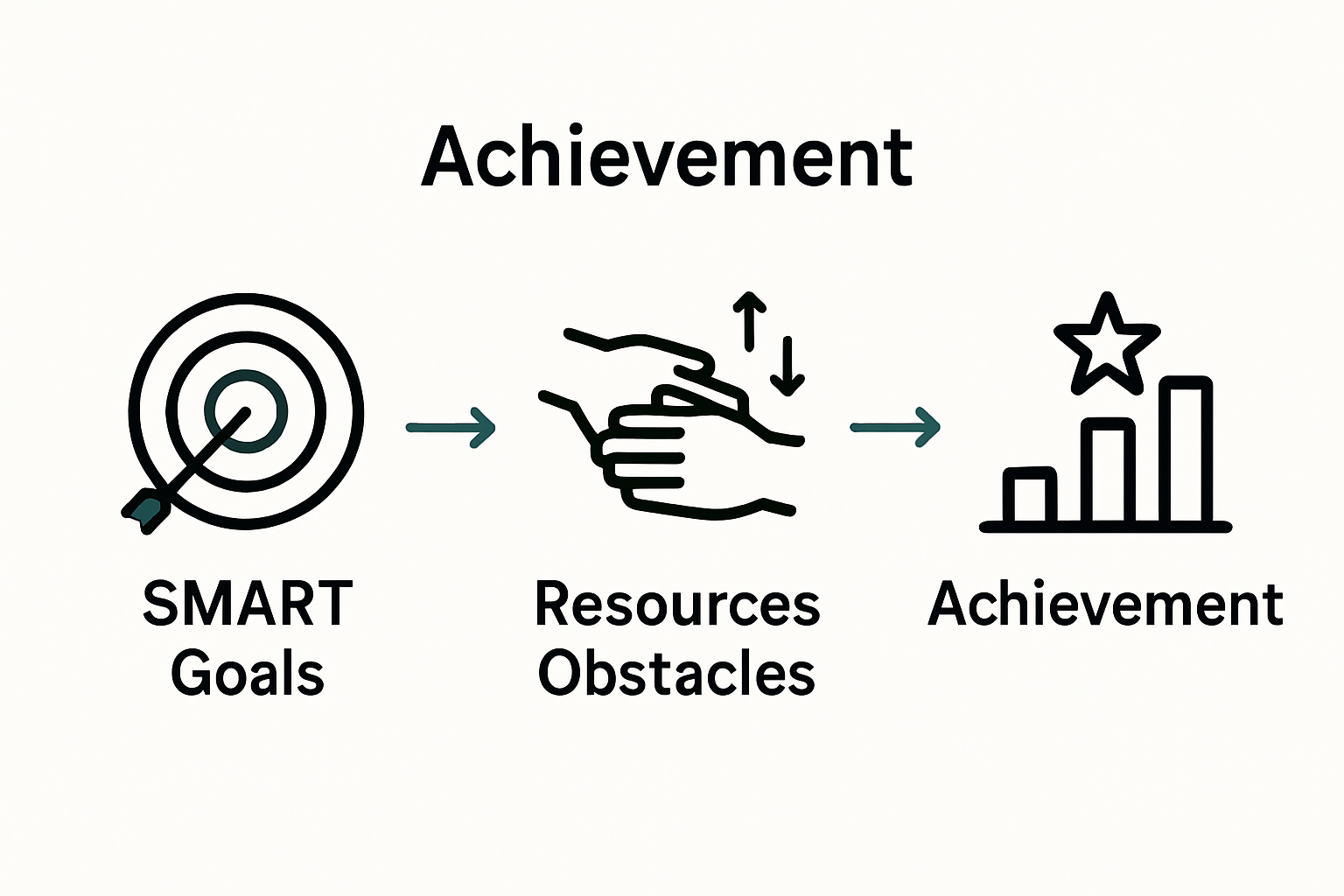
| 1. Define SMART Goals | Use Specific, Measurable, Achievable, Relevant, and Time-bound criteria to ensure clarity and direction in your goals. |
| 2. Identify Resources and Obstacles | Conduct a thorough inventory of available resources and potential challenges to create a comprehensive plan for success. |
| 3. Create Actionable Plans | Develop detailed action items with specific timelines and responsible parties, transforming goals into actionable steps. |
| 4. Monitor Progress Regularly | Implement a tracking system to maintain visibility on your progress and adjust strategies as needed for effective goal achievement. |
| 5. Celebrate and Reflect | Acknowledge achievements and evaluate the journey to foster motivation and continuous learning for future goals. |
Step 1: Define Clear and Measurable Goals
Defining clear and measurable goals is the cornerstone of successful achievement. This critical first step transforms vague aspirations into actionable blueprints that guide your journey from where you are to where you want to be.
To craft effective goals, utilize the SMART framework: Specific, Measurable, Achievable, Relevant, and Time bound. Specificity matters immensely. Instead of saying “I want to get better at my job,” articulate a precise objective like “I will increase my quarterly sales performance by 22% within the next six months.” This approach provides concrete metrics and a defined timeline for tracking progress.
Break down your larger goals into smaller milestones that create momentum and provide regular opportunities for assessment. Each milestone should have quantifiable indicators that demonstrate progress. For instance, if your ultimate goal involves launching a new business, intermediate milestones might include completing your business plan, securing initial funding, or developing a prototype. Goal Setting Guide can help you refine this process and understand deeper strategic planning techniques.
Remember that goal setting is an iterative process. Stay flexible and willing to adjust your approach as you gain insights and encounter real world challenges. Your goals are living documents that should evolve with your growth and changing circumstances.
Step 2: Identify Essential Resources and Obstacles
Identifying the resources and potential obstacles that might impact your goal achievement is a crucial step in strategic planning. National Student Support Accelerator emphasizes that understanding both your available assets and potential challenges provides a comprehensive roadmap for success.
Start by conducting a thorough inventory of resources. This includes financial capital, time, skills, technology, networks, and support systems. According to SAMHSA, recognizing the specific behaviors or conditions that might hinder progress allows you to develop proactive strategies. Consider potential obstacles like skill gaps, financial constraints, time limitations, or external market conditions that could impact your goal progression.
Create a detailed resource map and obstacle assessment worksheet. List each resource you currently possess and identify any gaps that need addressing. For obstacles, develop mitigation strategies that transform potential roadblocks into actionable steps. 7 Actionable Steps to Define and Achieve Personal Career Goals offers additional insights into navigating complex goal achievement landscapes.
Remember that resource identification is not a one time event but an ongoing process. Regularly reassess your resources and potential obstacles as your goals evolve and your environment changes. Flexibility and continuous learning are key to turning potential challenges into opportunities for growth and success.

Step 3: Develop an Actionable Execution Plan
Developing an actionable execution plan transforms your goals from abstract concepts into concrete, achievable milestones. Northern Illinois University emphasizes the critical difference between broad goals and specific, measurable objectives that drive real progress.
According to Kent ISD the SMART framework provides a robust structure for creating your execution plan. Break down your overarching goal into granular, specific actions with clear timelines. Each action item should be precise and include key details like responsible parties, required resources, and specific deadlines. 7 Steps to Achieve Smart Business Goals for Leaders can provide additional strategic insights into translating plans into meaningful action.
Implement a tracking mechanism to monitor progress and maintain accountability. Create visual dashboards or use project management tools that allow you to see your advancement in real time. Schedule regular review points to assess progress, adjust strategies, and recalibrate your approach as needed. Remain flexible while staying committed to your core objectives.
Remember that an execution plan is a living document. Continuous refinement and adaptability are key to navigating the complex landscape of goal achievement. Your plan should be resilient enough to accommodate unexpected challenges while keeping you focused on your ultimate destination.
Step 4: Track Progress and Adjust Tactics
Tracking progress and adjusting tactics are essential for transforming goals from static plans into dynamic achievements. UMass Amherst emphasizes the importance of creating specific, measurable goals that allow for continuous monitoring and strategic refinement.
Establish a consistent tracking system that provides clear visibility into your progress. This might include weekly check ins, digital dashboards, or detailed journals that capture both quantitative metrics and qualitative insights. 7 Essential Time Management Techniques and Tools can help you develop robust tracking mechanisms that turn data into actionable intelligence.
Develop a flexible mindset that views tactical adjustments not as failures but as intelligent course corrections. When you encounter obstacles or discover that your original approach needs modification, treat these moments as opportunities for learning and strategic recalibration. Create a monthly or quarterly review process where you systematically assess your progress, identify potential bottlenecks, and proactively redesign your approach.
Remember that successful goal achievement is not about rigid adherence to an initial plan but about maintaining unwavering commitment to your ultimate objective while remaining adaptable in your strategies. Your willingness to learn, pivot, and persist will ultimately determine your success.
Step 5: Celebrate Achievements and Reflect on Growth
Celebrating achievements and reflecting on growth are crucial components of sustained personal development. LifeHack emphasizes that recognizing progress is a powerful motivational tool that fuels continued learning and success.
Design intentional celebration rituals that acknowledge both major milestones and incremental progress. This might involve creating a personal achievement journal, hosting a small gathering with supportive friends, or rewarding yourself with a meaningful experience that commemorates your hard work. How to Achieve Your Dreams provides additional insights into transforming achievements into meaningful personal growth experiences.
According to UMass Dartmouth, reflection is not just about celebrating successes but understanding the journey that led you there. Conduct structured review sessions where you analyze not just what you accomplished but how you accomplished it. Examine the strategies that worked, the challenges you overcame, and the personal skills you developed along the way.
Remember that growth is a continuous journey. Each achievement is not an endpoint but a stepping stone to your next challenge.
 Embrace your successes with humility, learn from your experiences, and maintain the curiosity and enthusiasm that propelled you forward.
Transform Your Goals into Lasting Success Starting Today
Are you struggling to break down your big goals into actionable steps while feeling overwhelmed by obstacles and shifting priorities? The challenge of setting clear, measurable goals and maintaining momentum is real for many who seek meaningful transformation. This article highlights how defining SMART goals, carefully mapping resources, and tracking progress with flexibility are essential to overcoming these common roadblocks and achieving success.
At Tariq Juneja, we know that embracing change and developing strategic execution plans take more than motivation — they need expert guidance and tailored coaching. Explore our insights on Change Management Archives to understand how to navigate challenges and stay adaptable. For professionals ready to boost productivity and master agile principles for faster progress, our Agile Coaching Archives offer powerful tools and methods.

Take action now to turn your aspirations into real achievements by partnering with a coach who walks with you through every step of your transformational journey. Visit Tariq Juneja to book your free consultation and access resources that help you reduce stress, sharpen focus, and embrace change for sustained personal and professional growth.
Frequently Asked Questions
How can I set clear and measurable goals?
To set clear and measurable goals, utilize the SMART framework: specific, measurable, achievable, relevant, and time-bound. For example, instead of saying, “I want to improve my skills,” state, “I will complete an online course in my field within three months.”
What resources should I identify when planning my goals?
Identify essential resources such as time, financial capital, skills, and support systems. Make a list of what you currently have and any gaps you need to address, ensuring you have what you need to progress effectively.
How do I create an actionable execution plan for my goals?
An actionable execution plan should break down your goals into specific tasks with clear deadlines and responsible parties. Start by listing actions, such as completing a key project by the end of the month, to ensure you have a clear direction.
How often should I track my progress toward my goals?
You should track your progress regularly, ideally weekly or monthly, to maintain visibility and accountability. Establish a routine for reviewing your progress, which can help you make necessary adjustments to stay on track.
Why is it important to celebrate achievements when reaching goals?
Celebrating achievements is important as it boosts motivation and reinforces positive behavior. Create a simple ritual, like writing down successes in a journal, to acknowledge progress and maintain enthusiasm for future challenges.
How can I adjust my tactics when facing obstacles?
When encountering obstacles, assess what isn’t working and view adjustments as opportunities for growth. Develop a monthly review process to identify challenges, allowing you to pivot your strategies as needed and stay focused on your ultimate goals.