

Most American IT managers find that remote team productivity drops without clear workflow assessments. When teams spread across Canada, Germany, India, or other countries lose touch, simple roadblocks can become overwhelming. For mid-level managers aiming to lead global teams, understanding where time is lost and communication stalls is a vital first step. This article outlines practical ways to evaluate current workflows, set clear goals, and use modern tools, so your team collaborates smoothly—even across continents.
Table of Contents
- Step 1: Assess Current Workflows And Challenges
- Step 2: Set Clear Goals And Performance Metrics
- Step 3: Implement Agile Collaboration Practices
- Step 4: Leverage Digital Tools For Efficiency
- Step 5: Review Progress And Optimize Strategies
Quick Summary
| Key Insight | Explanation |
|---|---|
| 1. Assess workflows thoroughly | Conduct a detailed evaluation of existing workflows to identify bottlenecks affecting team productivity. |
| 2. Set measurable performance goals | Establish clear performance metrics for accountability, focusing on outcomes rather than hours worked. |
| 3. Implement Agile collaboration practices | Adapt Agile methodologies to facilitate remote interactions, enhancing communication and workflow efficiency. |
| 4. Leverage integrated digital tools | Choose digital tools that combine functionalities for seamless collaboration and create a supportive tech ecosystem. |
| 5. Regularly review and optimize strategies | Establish a system for continuous performance evaluation and feedback to drive sustained productivity improvements. |
Step 1: Assess Current Workflows and Challenges
To increase team productivity in remote IT teams, start by conducting a comprehensive assessment of existing workflows and identifying critical challenges. This systematic evaluation will help you pinpoint specific bottlenecks and inefficiencies that may be hindering your team’s performance.
Begin by mapping out your current remote work processes through detailed documentation and team interviews. Pay close attention to communication patterns, task allocation methods, and collaboration tools. Research indicates that virtual agile teams often experience significant workflow disruptions, particularly in remote team interaction models during distributed work environments. Key areas to examine include communication frequency, project management approaches, individual productivity metrics, and technology integration.
Collect quantitative and qualitative data through structured surveys, one-on-one discussions, and performance tracking tools. Look for recurring themes such as communication gaps, technological limitations, or time management challenges. Your goal is to create a holistic view of your team’s current operational landscape, enabling targeted interventions for improved productivity.
Here’s a summary of common challenges in remote IT team workflows and the corresponding optimization opportunity:
| Workflow Challenge | Optimization Opportunity |
|---|---|
| Unclear task allocation | Define explicit assignment protocols |
| Communication gaps | Set regular, structured check-ins |
| Tool fragmentation | Consolidate into integrated platforms |
| Untracked performance data | Implement real-time productivity dashboards |
| Time zone misalignment | Use asynchronous collaboration tools |
Pro Tip: Create a visual workflow diagram that highlights current processes, bottlenecks, and potential improvement areas to help your team understand the assessment results more intuitively.
Step 2: Set Clear Goals and Performance Metrics
Establishing clear goals and performance metrics is fundamental to driving productivity in remote IT teams. This critical step transforms abstract expectations into concrete, measurable outcomes that align individual efforts with broader organizational objectives.
Start by developing explicit performance metrics that drive team accountability. Research emphasizes the importance of creating transparent indicators that evaluate productivity in decentralized work environments. Focus on developing outcome-oriented key performance indicators (KPIs) that measure actual results rather than input hours. According to Gartner’s analysis, traditional time-based metrics are less effective in remote settings. Instead, design metrics specific to each team member’s role that capture tangible contributions and project achievements.

Align individual goals with team and organizational objectives to create a cohesive performance framework. Break down larger organizational goals into specific measurable targets for each team member. This approach ensures that every remote worker understands their specific responsibilities and how their work contributes to the team’s overall success. Regularly review and adjust these metrics to maintain relevance and motivate continuous improvement.
Pro Tip: Implement quarterly goal setting sessions where team members actively participate in defining their own performance metrics to increase engagement and ownership.
Step 3: Implement Agile Collaboration Practices
Implementing effective Agile collaboration practices is essential for maintaining team productivity and cohesion in remote IT environments. This step focuses on transforming traditional team interactions into dynamic and responsive workflows that support distributed work models.
Begin by redesigning Agile practices for remote team effectiveness. Research indicates that remote teams require strategic modifications to traditional Agile methodologies. Adapt your daily stand-ups to be more structured and purposeful. Replace lengthy meetings with concise video check-ins that focus on progress updates, blockers, and immediate action items. Leverage digital collaboration tools that provide real time transparency and enable team members to track progress seamlessly. Emphasize asynchronous communication techniques that accommodate different time zones and individual work rhythms while maintaining consistent team momentum.
Create a digital infrastructure that supports continuous feedback and transparent collaboration. Implement collaborative platforms that allow real-time document sharing, task tracking, and instant communication. Establish clear communication protocols that define response times, preferred communication channels, and expectations for virtual interactions. Regularly rotate facilitation responsibilities during team meetings to maintain engagement and distribute leadership opportunities across the team.
Pro Tip: Conduct monthly retrospectives to continuously refine your remote Agile practices and address emerging collaboration challenges.
Step 4: Leverage Digital Tools for Efficiency
Properly selecting and implementing digital tools can dramatically transform remote IT team productivity. This step focuses on creating a comprehensive technological ecosystem that supports seamless collaboration and efficient workflow management.
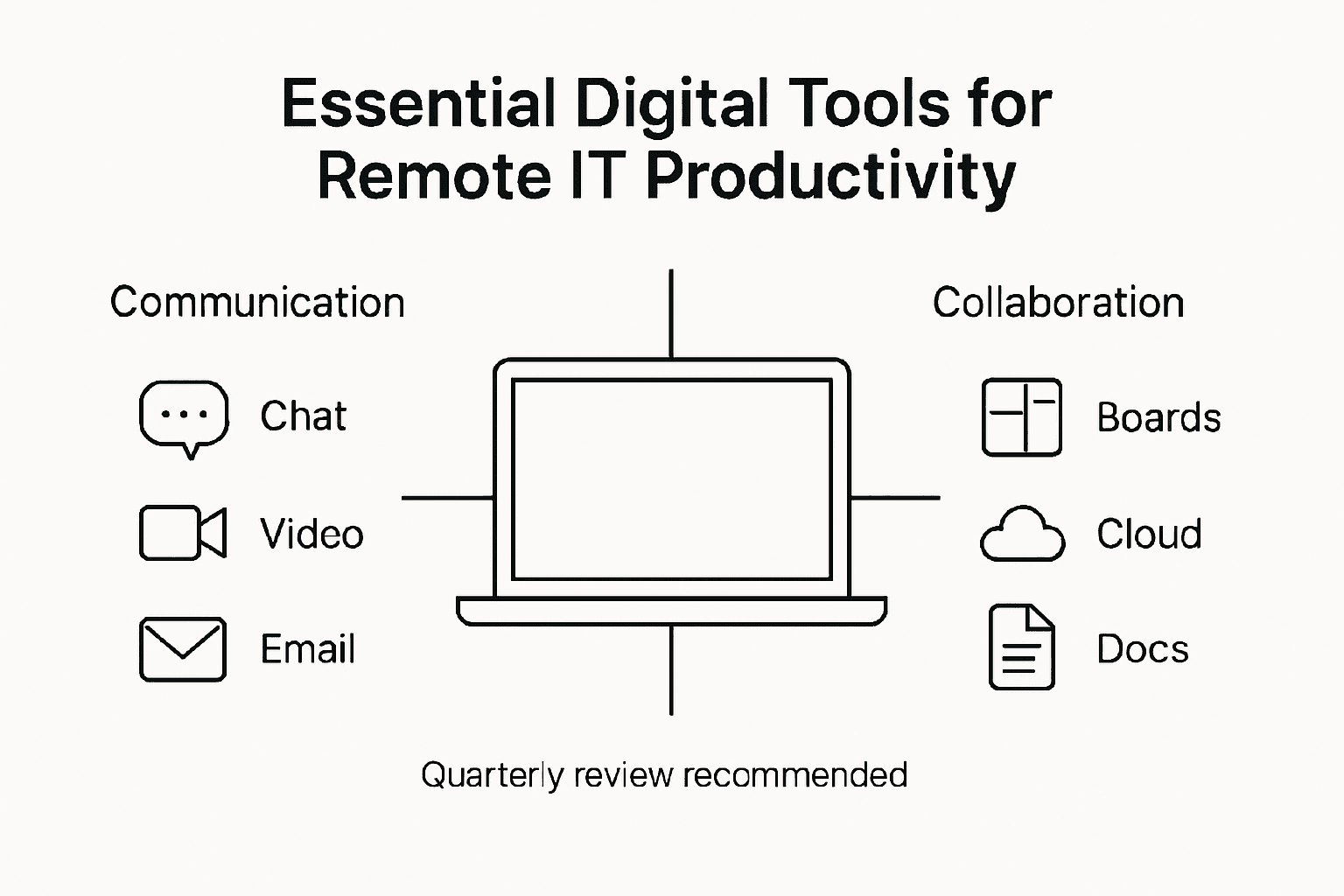
Start by creating a supportive technology infrastructure for remote teams. Research highlights that successful digital tool implementation requires a holistic approach addressing technological equipment, software capabilities, team training, and physical work environment adaptations. Select integrated platforms that combine communication, project management, and knowledge sharing functionalities. Prioritize tools that offer robust features such as real time collaborative editing, task tracking, instant messaging, and video conferencing capabilities. Ensure these platforms provide secure access across multiple devices and support different work styles while maintaining data privacy and team connectivity.
Develop a strategic onboarding process for digital tools that includes comprehensive training and continuous support. Conduct regular workshops to help team members understand advanced features and best practices for each platform. Create standardized guidelines for tool usage that establish clear expectations around communication protocols, response times, and collaborative workflows. Monitor tool adoption and gather ongoing feedback to refine your digital ecosystem and address any emerging technological barriers.
Below is a comparison of key features to look for when selecting digital tools for remote IT teams:
| Feature | Why It Matters | Example Platform |
|---|---|---|
| Real-time editing | Enables instant team collaboration | Google Workspace |
| Task tracking | Keeps projects on schedule | Asana |
| Secure access | Protects sensitive information | Microsoft Teams |
| Cross-device support | Improves workflow flexibility | Slack |
| Integrated messaging | Enhances quick team decisions | Zoom |
Pro Tip: Implement a quarterly technology review to assess and update your digital tools based on team feedback and evolving technological capabilities.
Step 5: Review Progress and Optimize Strategies
Continuous evaluation and strategic optimization are fundamental to maintaining high performance in remote IT teams. This critical step transforms data insights into actionable improvements that drive sustained productivity and team effectiveness.
Implement a systematic approach to tracking and analyzing remote team performance trends. Develop comprehensive performance dashboards that capture key productivity metrics such as project completion rates, individual contribution levels, collaboration efficiency, and quality of deliverables. Utilize data analytics tools to generate objective insights that move beyond subjective assessments. Schedule regular review meetings where team members can transparently discuss their progress, challenges, and potential improvement strategies. These sessions should focus on constructive feedback and collaborative problem solving rather than punitive performance evaluations.
Create an adaptive feedback mechanism that allows continuous learning and strategy refinement. Collect qualitative and quantitative data through periodic surveys, one-on-one discussions, and anonymous feedback channels. Pay special attention to emerging patterns that indicate systemic challenges or opportunities for process improvements. Be prepared to quickly adjust workflows, reallocate resources, or introduce new training interventions based on empirical evidence. The goal is to build a responsive and agile team culture that can rapidly evolve in response to changing technological and organizational demands.
Pro Tip: Implement a quarterly performance benchmark that compares your team’s productivity metrics against industry standards to identify potential optimization opportunities.
Boost Your Remote IT Team’s Productivity with Expert Agile Coaching
Struggling with communication gaps or unclear task allocation in your remote IT team? The challenges outlined in the article show how critical it is to implement targeted strategies like clear performance metrics and tailored agile collaboration practices. At Tariq Juneja, we specialize in helping teams transform their workflows and embrace change through proven methods in Agile Coaching Archives – Tariq Juneja and Change Management Archives – Tariq Juneja. Our holistic coaching approach addresses the specific pain points of remote work including tool integration, goal setting, and continuous improvement.
Take the next step toward a more productive and engaged remote IT team by connecting with a transformational coach who understands your unique challenges. Visit Tariq Juneja now to explore coaching programs, download free resources, and book a free consultation. Don’t wait to create lasting change that drives real results.
Frequently Asked Questions
How can I assess my team’s current workflows in a remote IT setting?
To assess your team’s current workflows, start by mapping out existing processes through detailed documentation and team interviews. Focus on communication patterns, task allocation methods, and collaboration tools within 30 days.
What are effective ways to establish clear goals for remote IT teams?
Establish clear goals by developing explicit performance metrics that align individual efforts with team objectives. Break down larger goals into specific, measurable targets for each team member to ensure clarity and accountability.
How can I implement Agile collaboration practices for my remote team?
Implement Agile collaboration practices by redesigning daily stand-ups to be concise and purpose-driven. Use video check-ins that focus on progress updates, blockers, and action items to maintain team momentum and engagement.
What digital tools should I consider for improving productivity in remote IT teams?
Consider selecting integrated digital platforms that combine communication, project management, and knowledge sharing. Ensure these tools support real-time collaboration and provide secure access across multiple devices to enhance your team’s efficiency.
How do I review progress and optimize strategies for my remote IT team?
Review progress by developing performance dashboards that capture key productivity metrics. Conduct regular review meetings to discuss progress and challenges, allowing for continuous adjustment of workflows and strategies based on data insights.