

Almost half of American organizations report that productivity drops during major transformation initiatives. Pressure to deliver results faster often leads teams to exhaustion and declining morale. For business leaders in agile environments, understanding the root causes of these setbacks matters more than ever. This guide reveals actionable steps to diagnose and overcome common barriers, helping you improve team efficiency and reduce burnout without sacrificing performance.
Table of Contents
- Step 1: Assess Current Productivity Barriers
- Step 2: Set Clear Priorities And Measurable Objectives
- Step 3: Implement Agile Practices For Workflow Optimization
- Step 4: Leverage Technology To Automate And Streamline Tasks
- Step 5: Review Outcomes To Measure And Sustain Progress
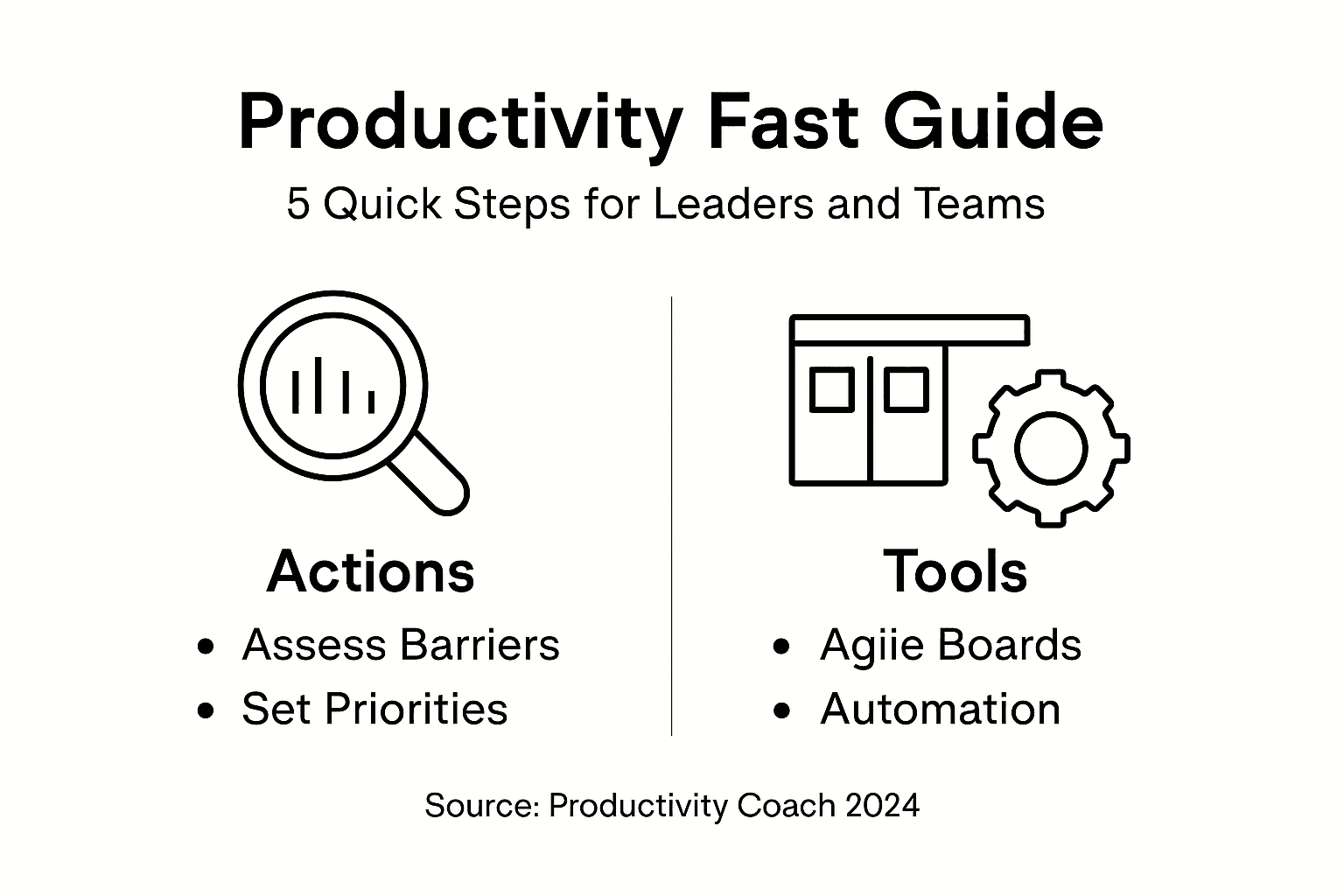
Quick Summary
| Key Insight | Explanation |
|---|---|
| 1. Identify Productivity Barriers | Conduct audits to find obstacles like communication issues and unclear roles affecting performance. |
| 2. Set SMART Objectives | Establish specific, measurable, achievable, relevant, and time-bound goals to align team efforts with success. |
| 3. Adopt Agile Practices | Implement agile methodologies to enhance flexibility, collaboration, and workflow optimization among team members. |
| 4. Leverage Automation Tools | Use technology to automate repetitive tasks, reducing manual workload and improving team efficiency. |
| 5. Regularly Review Outcomes | Track performance through quantitative and qualitative measures to ensure continuous improvement and alignment with goals. |
Step 1: Assess current productivity barriers
Successfully improving team productivity requires a systematic approach to understanding existing obstacles. In this step, you will strategically diagnose the specific challenges preventing your team from achieving peak performance.
Begin by conducting a comprehensive organizational audit that examines multiple productivity dimensions. This involves collecting data through anonymous surveys, individual interviews, and performance metrics. Productivity research indicates that barriers often stem from complex factors like insufficient resources, communication breakdowns, and individual work constraints.
Your assessment should focus on key areas including workload distribution, communication channels, technology infrastructure, and individual team member challenges. Pay special attention to hidden productivity drains such as unnecessary meetings, unclear role responsibilities, and inefficient workflow processes. Use quantitative metrics like time tracking data and qualitative feedback to create a holistic picture of existing barriers.
Professional Advice: Create a structured matrix mapping productivity barriers across individual, team, and organizational levels to develop targeted intervention strategies.
Here is a quick comparison of productivity barriers and targeted interventions at different organizational levels:
| Level | Common Barriers | Targeted Intervention Example |
|---|---|---|
| Individual | Lack of clarity, skill gaps | Personalized training or coaching |
| Team | Poor communication, uneven workload | Regular stand-ups, workload balancing |
| Organizational | Outdated tools, unclear priorities | Technology upgrades, clear goal setting |
Step 2: Set clear priorities and measurable objectives
Establishing precise priorities and objectives is critical for transforming team potential into tangible performance. Your goal in this step is to create a strategic roadmap that aligns individual efforts with organizational success.
Goal alignment strategies demonstrate that clear priorities reduce wasted effort and accelerate decision making. Implement the SMART framework to design objectives that are Specific, Measurable, Achievable, Relevant, and Time-bound. This approach ensures your team understands exactly what success looks like and how their individual contributions matter.
Start by conducting a collaborative session where team members help define key priorities. Break down larger organizational goals into specific, actionable targets for each team member. Utilize performance tracking tools that provide real-time visibility into progress, allowing for rapid adjustments and maintaining motivation. Regularly review and recalibrate objectives to ensure continued relevance and alignment with changing business needs.

Professional Advice: Create visual dashboards that map individual objectives to broader team and organizational goals, making connections transparent and motivating.
Step 3: Implement agile practices for workflow optimization
Transforming your team’s workflow requires strategic adoption of agile methodologies that promote flexibility, collaboration, and continuous improvement. Your objective is to create a dynamic work environment that responds quickly to changing priorities and maximizes team productivity.
Agile management frameworks emphasize iterative progress and adaptability, enabling teams to navigate complex projects with greater efficiency. Begin by introducing key agile practices such as daily stand-up meetings, sprint planning, and retrospective sessions. These structured yet flexible interactions help team members communicate effectively, identify potential roadblocks, and continuously refine their workflow.
Implement tools that support agile principles like Kanban boards or digital project management platforms that visualize work progress. Break larger projects into smaller, manageable tasks with clear ownership and realistic timelines. Encourage a culture of transparency where team members can openly discuss challenges, share insights, and collaborate on solutions. Regularly assess and adjust your agile approach to ensure it remains aligned with your team’s evolving needs and organizational goals.
Professional Advice: Rotate team roles during sprint retrospectives to encourage empathy, cross-functional understanding, and diverse problem solving perspectives.
Step 4: Leverage technology to automate and streamline tasks
Technology offers powerful solutions for reducing manual work and boosting team efficiency. Your mission is to identify and implement digital tools that eliminate repetitive tasks and create smoother workflows across your organization.
Advanced workflow automation tools can transform how your team operates by systematically mapping and optimizing processes. Start by conducting a comprehensive audit of current workflows to identify time-consuming manual activities ripe for digital intervention. Focus on repetitive tasks like data entry, reporting, scheduling, and communication that can be automated using cloud-based platforms, artificial intelligence, and integration software.
Prioritize technologies that seamlessly connect different work systems and provide real-time collaboration capabilities. Implement project management software that offers automated task assignment, progress tracking, and performance analytics. Train your team on new technologies and establish clear guidelines for their implementation. Create a feedback loop that allows team members to continuously suggest improvements and refinements to your technological ecosystem.
Professional Advice: Select automation technologies that integrate easily with your existing tools and provide robust training to ensure smooth team adoption.
Below is a summary of automation benefits and key technology features for streamlining team tasks:
| Benefit | Example Technology Feature | Business Impact |
|---|---|---|
| Reduced manual workload | Automated data entry | Frees team for strategic projects |
| Faster decision making | Real-time dashboards | Accelerates project timelines |
| Improved collaboration | Integrated communication platforms | Smoother information sharing |
Step 5: Review outcomes to measure and sustain progress
Tracking and analyzing team performance is critical for maintaining momentum and ensuring continuous improvement. Your goal is to create a systematic approach that transforms data into actionable insights that drive ongoing productivity.
Organizational goal tracking enables precise alignment between team efforts and strategic objectives. Implement a robust performance measurement framework that combines quantitative metrics with qualitative assessments. Schedule regular review sessions where team members collectively analyze progress, discuss challenges, and recalibrate strategies. Use balanced key performance indicators that capture not just output volume, but also quality, collaboration, and individual contributions.
Establish transparent reporting mechanisms that make progress visible and understandable. Create visual dashboards that showcase team achievements, highlight areas for improvement, and celebrate milestones. Encourage a culture of continuous feedback where team members feel empowered to share insights and propose refinements. Build flexibility into your review process, allowing for rapid adjustments when performance metrics indicate the need for strategic changes.
Professional Advice: Develop a quarterly review rhythm that balances data driven analysis with collaborative reflection to maintain team motivation and alignment.
Unlock Your Team’s Full Potential with Proven Agile Strategies
Struggling to break through productivity barriers like unclear priorities or inefficient workflows? This article highlights how setting clear goals, embracing agile practices, and leveraging technology can transform your team’s performance fast. If you want to move beyond common challenges such as uneven workload or poor communication and create a culture of continuous improvement, expert guidance can make all the difference.
Discover how focused Agile Coaching can help your team adopt flexible workflows and overcome hidden productivity drains. Tariq Juneja’s transformational coaching empowers leaders and teams to align efforts with strategic objectives, reduce stress, and embrace change confidently.

Ready to accelerate your team’s growth with personalized coaching and proven tools? Visit https://tariqjuneja.com today to explore coaching programs designed to boost productivity and schedule your free consultation. Take the next step toward mastering team performance and sustaining lasting success.
Frequently Asked Questions
How can I quickly identify productivity barriers in my team?
To quickly identify productivity barriers, conduct a comprehensive organizational audit. Use anonymous surveys and individual interviews to gather insights from team members about their challenges.
What are some effective ways to set measurable objectives for my team?
Utilize the SMART framework to set measurable objectives that are Specific, Measurable, Achievable, Relevant, and Time-bound. Break down larger goals into specific targets for each team member to ensure clarity and alignment.
How can agile practices improve my team’s workflow?
Adopting agile practices can enhance your team’s workflow by promoting flexibility and collaboration. Introduce daily stand-up meetings and sprint planning sessions to encourage regular communication and quick adjustments to tasks.
What types of technology should I implement to streamline tasks?
Implement automation technologies that can reduce manual workloads, such as project management software or cloud-based platforms. Focus on features that provide automated task assignment and real-time collaboration to boost efficiency.
How do I measure and sustain progress in my team’s productivity?
Establish a performance measurement framework that tracks both quantitative and qualitative metrics. Schedule regular review sessions to analyze progress, celebrate achievements, and discuss adjustments needed to remain aligned with goals.
How often should I review my team’s objectives and practices?
Aim to review your team’s objectives and practices quarterly to ensure they remain relevant and effective. This allows for timely adjustments based on performance data and feedback from team members.