

Every leader wants a team that gets more done in less time. Research shows that systematic barrier identification leads to major productivity gains compared to surface-level quick fixes. So why do so many organizations still struggle to see real improvement? Most miss one crucial factor. The most effective performance strategies are actually built on empathy and flexibility, not just numbers.
Table of Contents
- Step 1: Assess Current Employee Productivity Levels
- Step 2: Identify Key Productivity Barriers
- Step 3: Implement Targeted Training And Tools
- Step 4: Set Clear Goals And Performance Metrics
- Step 5: Foster A Positive Work Environment
- Step 6: Monitor Progress And Adjust Strategies
Quick Summary
| Key Point | Explanation |
|---|---|
| 1. Assess employee productivity levels initially | Start by establishing a baseline through both quantitative and qualitative assessments to identify areas needing improvement. |
| 2. Identify key productivity barriers | Conduct interviews and discussions to uncover specific challenges affecting performance, ensuring a safe environment for sharing. |
| 3. Implement targeted training and tools | Customize training programs and introduce technology that addresses identified barriers, fostering skill development and workflow efficiency. |
| 4. Set clear goals using SMART criteria | Establish transparent, achievable goals that align with organizational objectives and motivate employees through co-creation. |
| 5. Foster a positive work environment | Create a supportive culture emphasizing well-being, open communication, and professional growth to enhance employee motivation and productivity. |
Step 1: Assess Current Employee Productivity Levels
Assessing your organization’s current employee productivity levels is a critical first step in developing a comprehensive performance improvement strategy. This initial evaluation provides a clear baseline understanding of where your team currently stands and identifies specific areas that require targeted intervention. By systematically examining productivity metrics, you’ll create a foundation for meaningful and sustainable performance enhancements.
Begin by collecting comprehensive performance data through multiple measurement approaches. Utilize quantitative performance tracking systems that capture objective metrics such as completed tasks, project timelines, output volume, and quality indicators. These numerical assessments offer concrete insights into individual and team productivity. Simultaneously, implement qualitative evaluation methods like structured performance reviews, employee self-assessments, and manager observations to capture nuanced aspects of workplace effectiveness that pure numerical data might miss.
Explore our guide on productivity tracking strategies to develop a robust assessment framework. Key indicators to monitor include task completion rates, project delivery timelines, individual contribution levels, collaborative effectiveness, and overall work quality. Look beyond raw output numbers and consider the efficiency and innovation demonstrated by team members.
Effective productivity assessment requires a holistic approach that balances statistical measurement with human-centered evaluation. Recognize that productivity is not just about speed or volume but about creating meaningful, high-quality work. Design assessment protocols that provide transparent, constructive feedback mechanisms. Engage employees directly in the assessment process, encouraging open dialogue about challenges, potential improvements, and individual work preferences.
Consider implementing standardized assessment tools and surveys that help capture comprehensive performance insights. These might include:
- 360-degree feedback mechanisms
- Performance management software
- Periodic skill and productivity competency evaluations
- Anonymous employee satisfaction surveys
Remember that the goal of this initial assessment is not to criticize or punish but to understand current performance dynamics and create targeted improvement strategies. By approaching productivity measurement with empathy, transparency, and a commitment to continuous improvement, you’ll lay the groundwork for a more engaged and high-performing workforce.
Step 2: Identify Key Productivity Barriers
Identifying the root causes of productivity barriers is a nuanced process that demands strategic analysis and empathetic understanding of workplace dynamics. This critical step transforms your initial assessment into actionable insights by pinpointing specific obstacles preventing optimal team performance. Systematic barrier identification allows organizations to design targeted interventions that address underlying challenges rather than applying superficial solutions.
Begin by conducting comprehensive interviews and focus group discussions with employees across different organizational levels. Create a safe, non-threatening environment where team members can candidly share their professional challenges without fear of repercussions. During these conversations, probe deeper than surface-level complaints by asking specific questions about workflow interruptions, communication bottlenecks, resource constraints, and personal motivation levels.
Learn more about advanced productivity coaching techniques that can help uncover hidden workplace barriers. According to recent workplace research, common productivity barriers often stem from complex interconnected factors such as:
- Unclear role expectations
- Inadequate technological resources
- Poor communication infrastructure
- Excessive administrative overhead
- Insufficient professional development opportunities
Carefully document and categorize the barriers you discover, distinguishing between systemic organizational issues and individual performance challenges. Recognize that productivity barriers are rarely uniform across an organization and may vary significantly between departments, teams, and individual roles.
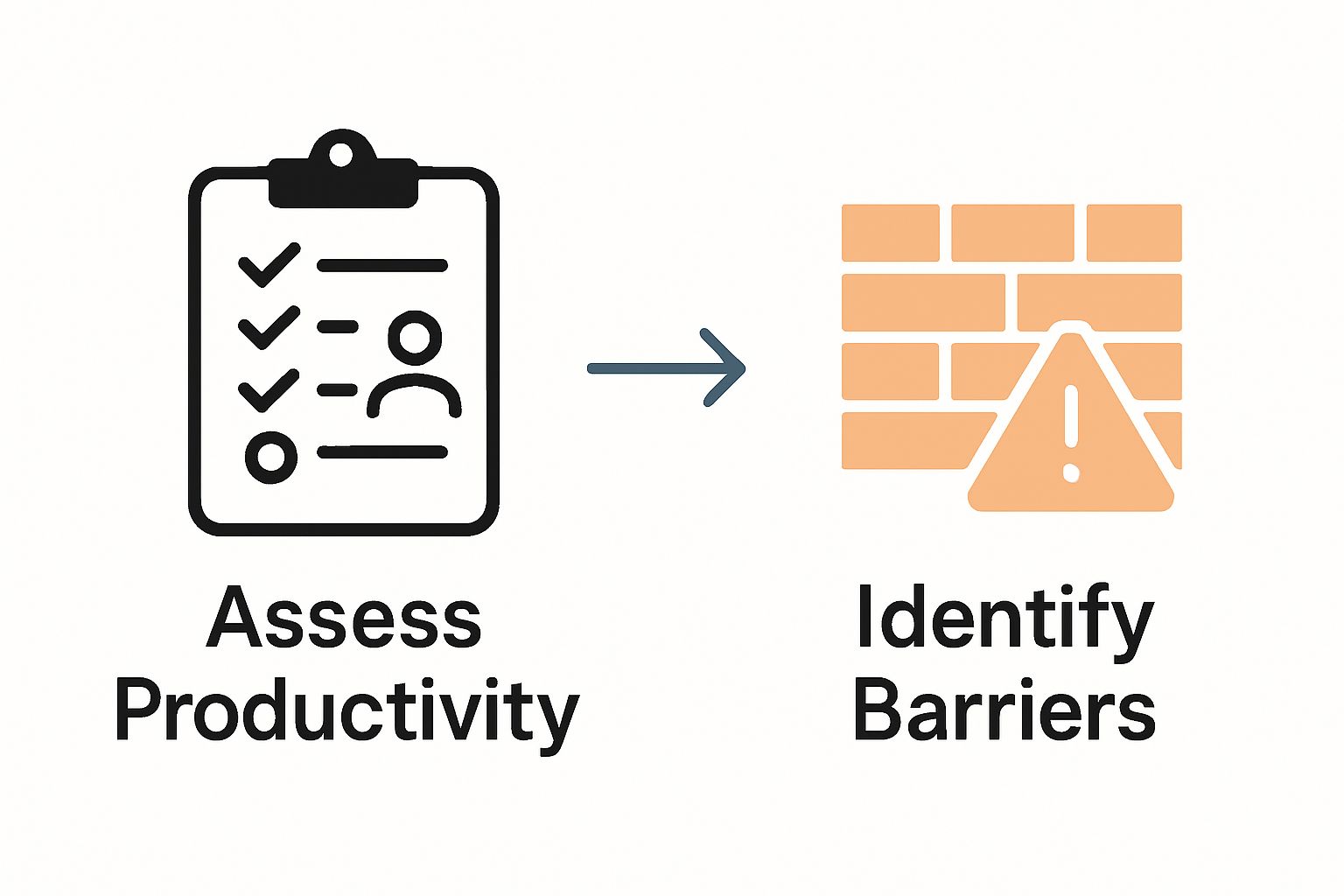 This nuanced understanding requires a flexible, adaptive approach to barrier identification.
Validate your findings through multiple verification methods. Cross-reference individual feedback with performance data, conduct anonymous surveys, and engage external organizational psychology consultants if necessary.
Below is a table organizing common productivity barriers identified in the article along with associated causes and suggested solutions.
| Productivity Barrier | Possible Causes | Suggested Solutions |
|---|---|---|
| Unclear role expectations | Lack of defined responsibilities | Clarify job descriptions and set performance expectations |
| Inadequate technological resources | Outdated or insufficient tools | Invest in updated technology and provide training |
| Poor communication infrastructure | Ineffective channels or unclear messaging | Establish clear communication protocols and tools |
| Excessive administrative overhead | Bureaucratic processes | Streamline workflows and reduce unnecessary tasks |
| Insufficient professional development opportunities | Limited training or growth paths | Implement targeted training programs and mentorship |
| Workflow interruptions | Frequent distractions or unclear priorities | Structure schedules and set clear objectives |
| Personal motivation issues | Lack of recognition or engagement | Foster positive work environment and recognize achievements |
By approaching barrier identification with empathy, thoroughness, and a commitment to constructive change, you create a solid foundation for developing targeted performance improvement strategies.
Step 3: Implement Targeted Training and Tools
Implementing targeted training and tools is a strategic process that transforms identified productivity barriers into actionable development opportunities. This crucial step bridges the gap between understanding performance challenges and creating meaningful organizational improvements. Successful implementation requires a personalized, thoughtful approach that recognizes each team member’s unique learning style and professional development needs.
Design comprehensive training programs that directly address the specific productivity barriers uncovered in previous assessment stages. Customize learning experiences to match individual and team skill gaps, incorporating a mix of theoretical knowledge and practical skill-building exercises. Explore our guide on developing effective coaching strategies that can help you create impactful learning interventions. Focus on developing both hard skills related to job-specific technical competencies and soft skills like communication, time management, and collaborative problem-solving.
Select and integrate technological tools that streamline workflow and support enhanced productivity. Choose solutions that are intuitive, user-friendly, and compatible with existing organizational systems. Consider implementing:
- Project management platforms
- Communication and collaboration software
- Time tracking and productivity monitoring tools
- Learning management systems
- Performance analytics dashboards
Create a supportive implementation environment that encourages continuous learning and tool adoption. Provide comprehensive onboarding for new technologies, offer ongoing training sessions, and establish mentorship programs that help employees navigate new systems and skills. Recognize that tool implementation is not just about introducing technology but about creating a culture of adaptive learning and continuous improvement.
Monitor the effectiveness of training programs and tools through regular performance reviews, employee feedback surveys, and quantitative productivity metrics. Be prepared to iterate and adjust your approach based on real-world results.
This table summarizes key tools and training resources discussed in the guide, along with their primary purposes in improving employee productivity.
| Tool or Training Resource | Main Purpose |
|---|---|
| Project management platforms | Streamline project tracking and coordination |
| Communication and collaboration software | Enhance team connectivity and information sharing |
| Time tracking and productivity monitoring tools | Measure and analyze employee output and efficiency |
| Learning management systems | Support ongoing skills training and development |
| Performance analytics dashboards | Provide data-driven insights on team performance |
| 360-degree feedback mechanisms | Offer comprehensive performance reviews |
| Ongoing mentoring programs | Guide professional growth and tool adoption |
Step 4: Set Clear Goals and Performance Metrics
Setting clear goals and performance metrics transforms abstract productivity intentions into concrete, measurable outcomes. This critical step provides a strategic roadmap that aligns individual employee efforts with organizational objectives, creating a shared understanding of expected performance standards. Effective goal setting is not about creating rigid constraints but about establishing meaningful, motivational targets that inspire and guide professional growth.
Develop goals using the SMART framework – Specific, Measurable, Achievable, Relevant, and Time-bound. This approach ensures that performance expectations are transparent, realistic, and directly connected to broader organizational strategies. Explore our comprehensive guide on goal-setting techniques to refine your approach. Collaborate directly with individual team members to co-create goals that feel personally meaningful and professionally challenging, fostering a sense of ownership and intrinsic motivation.
Establish a comprehensive set of performance metrics that capture both quantitative and qualitative aspects of employee contributions. These metrics should extend beyond traditional productivity measurements to include:
- Quality of work output
- Collaborative effectiveness
- Innovation and problem-solving capabilities
- Professional development progression
- Client or stakeholder satisfaction ratings
Implement a dynamic performance tracking system that provides regular, transparent feedback. Schedule frequent check-ins that allow for goal adjustment, recognize achievements, and address potential obstacles. Approach these conversations as collaborative dialogues rather than judgmental evaluations. Use performance data to identify opportunities for additional training, support, and professional development, demonstrating a commitment to continuous improvement.
Verify the effectiveness of your goal-setting process by monitoring employee engagement, tracking performance trend lines, and gathering qualitative feedback. Remain flexible and willing to recalibrate goals as organizational needs evolve. The most successful performance management systems are adaptive, empathetic frameworks that balance organizational objectives with individual professional aspirations.
Step 5: Foster a Positive Work Environment
Fostering a positive work environment is fundamental to sustainable employee productivity, transforming workplace culture from a mere operational necessity into a strategic performance catalyst. This step goes beyond superficial team-building exercises, focusing on creating a genuine, supportive ecosystem where employees feel valued, respected, and intrinsically motivated to excel. A truly positive work environment becomes a powerful productivity multiplier that drives engagement, creativity, and collective organizational success.
Learn more about creating transformative workplace cultures that inspire exceptional performance. According to research from organizational psychology experts, positive workplace climates dramatically enhance employee motivation and productivity. Create intentional strategies that communicate organizational commitment to employee well-being, starting with transparent communication, genuine recognition, and meaningful personal development opportunities.
Design comprehensive engagement initiatives that address multiple dimensions of workplace satisfaction. This includes implementing flexible work arrangements, promoting work life balance, and establishing clear channels for constructive feedback. Recognize that employees are multifaceted individuals with diverse needs, motivations, and professional aspirations. Develop support mechanisms that demonstrate authentic care for their holistic professional experience.
Prioritize psychological safety as a cornerstone of your positive work environment. Cultivate a culture where employees feel empowered to share ideas, acknowledge mistakes, and collaborate without fear of punitive responses. Key strategies include:
- Encouraging open, non-judgmental communication
- Celebrating innovative thinking and calculated risk-taking
- Providing constructive, growth-oriented performance feedback
- Supporting professional development and continuous learning
- Demonstrating organizational values through consistent leadership actions
Verify the effectiveness of your positive work environment through regular employee engagement surveys, retention rates, and qualitative feedback mechanisms. Monitor not just quantitative performance metrics but also subtle indicators of workplace morale, such as interdepartmental collaboration, voluntary knowledge sharing, and proactive problem-solving. Remember that creating a positive work environment is an ongoing, dynamic process requiring continuous adaptation and genuine organizational commitment.
Step 6: Monitor Progress and Adjust Strategies
Monitoring progress and adjusting strategies is the critical refinement phase that transforms initial productivity improvement efforts into a dynamic, responsive performance management system. This step is not about rigid enforcement but about creating an agile, adaptive approach that continuously evolves to meet changing organizational and individual needs. Effective progress monitoring requires a balanced combination of quantitative data analysis and qualitative performance insights.
Explore our comprehensive guide on achieving transformative goals to understand the nuanced approach to performance tracking. Establish a comprehensive monitoring framework that captures multiple dimensions of productivity and performance. Implement advanced analytics tools that provide real-time insights, allowing for immediate identification of potential bottlenecks, emerging strengths, and areas requiring targeted intervention.
Develop a robust feedback mechanism that goes beyond traditional performance reviews. Create multiple channels for continuous dialogue, including regular one-on-one meetings, anonymous survey platforms, and collaborative performance assessment sessions. These interactions should feel like constructive conversations rather than judgmental evaluations, emphasizing personal growth and organizational support.
Establish key performance indicators that capture both individual and collective productivity metrics. These should include:
- Quantitative output measurements
- Quality of work assessments
- Team collaboration effectiveness
- Innovation and problem-solving indicators
- Professional development progression
- Employee engagement and satisfaction levels
Be prepared to make strategic adjustments based on collected data. Recognize that productivity improvement is an iterative process requiring flexibility and nuanced understanding. When performance gaps emerge, approach them as opportunities for targeted coaching, additional training, or systemic process improvements. Avoid punitive measures that might demotivate employees, instead focusing on constructive support and collaborative problem-solving.
Verify the effectiveness of your monitoring and adjustment strategies through comprehensive performance trend analysis, employee feedback, and ongoing organizational goal alignment. Maintain a forward-looking perspective that views productivity enhancement as a continuous journey of growth, learning, and collective improvement.

Ready to Eliminate Productivity Barriers and Transform Your Team?
Are you frustrated by persistent obstacles limiting your employees’ productivity, despite your best efforts? If challenges like lack of clarity, low engagement, or ineffective processes sound familiar, you are not alone. Our latest article uncovers step-by-step strategies to assess performance, overcome barriers, and foster a positive work environment. But implementing these changes on your own can be overwhelming. That’s where the targeted support and agile frameworks offered by real experts can make all the difference. For organizations seeking proven methods that drive sustainable results, our Agile Coaching Archives provide a deeper dive into practical solutions.
Take the next step toward higher performance and stronger teamwork. Visit https://tariqjuneja.com to discover how Tariq Juneja’s coaching programs help you cut through complexity, adopt agile practices, and achieve measurable productivity gains. Book your introductory consultation today and start building your organization’s success story.
Frequently Asked Questions
How can I assess current employee productivity levels effectively?
Assess current employee productivity levels by collecting both quantitative and qualitative data. Start by tracking metrics such as task completion rates and project timelines, and complement this with employee self-assessments and manager observations.
What are some common productivity barriers in the workplace?
Common productivity barriers include unclear role expectations, poor communication, and inadequate resources. Identify these by conducting interviews and focus group discussions with employees, and ensure to foster an open environment for honest feedback.
How can I set clear goals for improving employee productivity?
Set clear goals using the SMART framework: Specific, Measurable, Achievable, Relevant, and Time-bound. Collaborate with team members to co-create these goals, ensuring they feel meaningful and directly linked to organizational objectives.
What training methods can I implement to improve productivity?
Implement targeted training programs tailored to the specific productivity barriers you’ve identified. Focus on both hard skills for job-specific tasks and soft skills like communication and time management to address any gaps effectively.
How can I monitor progress and adjust strategies for productivity improvement?
Monitor progress by establishing key performance indicators and maintaining regular check-ins with employees. Be prepared to adjust strategies based on feedback and performance trends, creating a dynamic approach to enhance productivity continually.
What strategies can I use to foster a positive work environment?
Foster a positive work environment by prioritizing transparent communication and recognizing employee efforts. Implement initiatives that promote work-life balance and psychological safety, allowing team members to feel valued and motivated.