

Workplace change is becoming the norm, not the exception. Studies reveal that nearly 65 percent of professionals say adapting to new demands is one of their biggest career challenges. Understanding your own readiness for change can make the difference between thriving and feeling left behind. This guide walks you through practical steps to assess your current mindset, target key development areas, and build habits that help you grow stronger through every stage of professional transformation.
Table of Contents
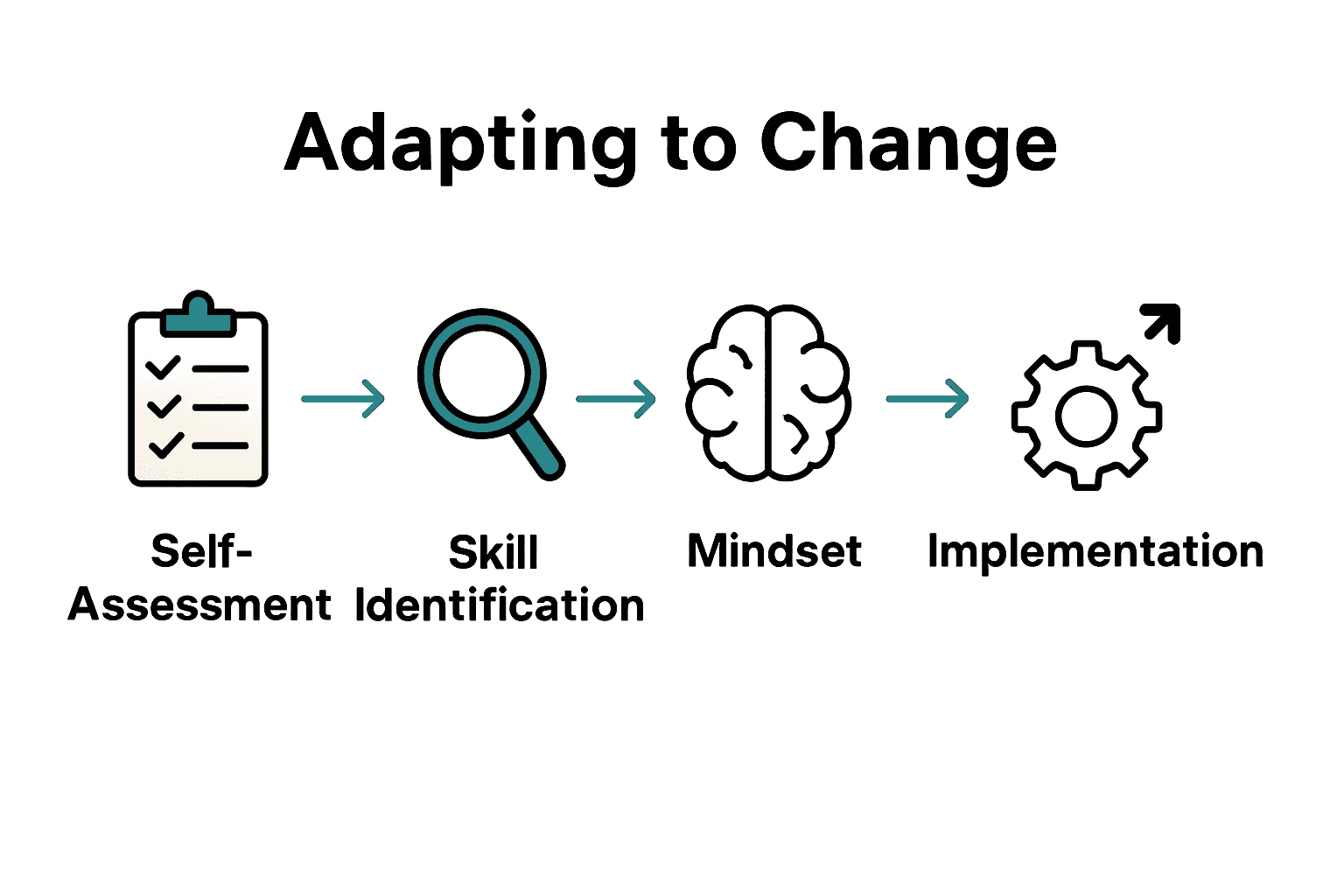
- Step 1: Assess Current Willingness To Embrace Change
- Step 2: Identify Key Areas Requiring Adaptation
- Step 3: Develop Actionable Mindset Shifts And Habits
- Step 4: Implement Strategies In Daily Routines
- Step 5: Monitor Progress And Refine Adaptation Approaches
Quick Summary
| Key Point | Explanation |
|---|---|
| 1. Assess Your Readiness for Change | Conduct a self-assessment to evaluate your willingness to embrace professional transformation based on psychological attributes. |
| 2. Identify Areas for Adaptation | Pinpoint specific skills and competencies that need improvement to successfully navigate workplace changes and development. |
| 3. Develop Adaptive Mindset Strategies | Cultivate a positive mindset that views challenges as learning opportunities to enhance professional growth. |
| 4. Integrate Strategies into Daily Routines | Make intentional adjustments to your daily workflow that promote continuous learning and skill enhancement. |
| 5. Monitor and Refine Your Progress | Establish a system for regularly evaluating your adaptation efforts to ensure ongoing professional development and resilience. |
Step 1: Assess Current Willingness to Embrace Change
Your ability to adapt professionally starts with honest self reflection about your readiness for transformation. This step helps you understand your current psychological state and willingness to move through change stages.
According to the Transtheoretical Model, individuals progress through distinct stages of change readiness: precontemplation, contemplation, preparation, action, and maintenance. To assess your personal change willingness, conduct a comprehensive self evaluation across these key dimensions.
Start by creating a structured self assessment using the Psychological Capital Questionnaire framework. This approach measures critical psychological attributes like hope, efficacy, resilience, and optimism that directly influence your capacity to embrace professional transformation. Rate yourself honestly on each dimension using a 1 to 5 scale.
Keystone areas to evaluate include:
- Your emotional response to unexpected workplace changes
- Comfort level with learning new skills
- Ability to recover from professional setbacks
- Openness to alternative approaches and perspectives
- Confidence in adapting to emerging workplace technologies
Remember that change readiness is not a fixed state but a dynamic capability you can develop and strengthen over time. Your honest self assessment provides the foundation for strategic personal growth and professional development.
In the next step, we will translate these insights into actionable strategies for cultivating a more adaptable mindset.
Step 2: Identify Key Areas Requiring Adaptation
Successfully navigating professional change demands a strategic approach to identifying the specific domains where adaptation is most critical. Your goal in this step is to pinpoint precise areas that will require focused transformation and skill development.
According to Adaptive Performance research, understanding workplace changes involves systematically examining multiple organizational and personal dimensions. This requires a comprehensive evaluation of your current professional landscape, looking beyond surface level observations to uncover deeper adaptation needs.
Consider a multifaceted assessment across these strategic domains:
- Technical skill competencies
- Digital technology proficiency
- Communication and collaboration approaches
- Leadership and interpersonal dynamics
- Strategic thinking and problem solving capabilities
The Later Life Workplace Index suggests that adaptation strategies should be holistic, considering not just immediate skill requirements but long term professional resilience. This means looking at both current job demands and emerging industry trends that might reshape your professional trajectory.
Pro Tip: Create a personal adaptation matrix. Draw a grid with current skills on one axis and future requirements on another. Color code each intersection to visually represent your readiness and growth potential across different professional competencies.
By methodically identifying these key adaptation areas, you transform potential challenges into strategic opportunities for professional growth and development.

Step 3: Develop Actionable Mindset Shifts and Habits
Transforming your professional trajectory requires intentional cultivation of adaptive thinking patterns and proactive behaviors. This step focuses on developing concrete strategies that will rewire your approach to workplace challenges and personal growth.
Research on Work Self Efficacy highlights the critical importance of building confidence in your ability to successfully navigate professional challenges. This means developing a mindset that views obstacles as opportunities for learning and growth, rather than insurmountable barriers.
Key strategies for mindset transformation include:
- Reframing negative experiences as learning opportunities
- Practicing daily reflective thinking
- Setting incremental personal development goals
- Cultivating a growth oriented perspective
- Embracing continuous learning
According to Harwood Research, successful mindset shifts emerge through participatory approaches that engage individuals actively in their own transformation. This means taking deliberate, structured actions to challenge existing thought patterns and build more adaptive mental frameworks.
Pro Tip: Create a daily “mindset journal” where you document your thought patterns, challenge limiting beliefs, and track your progress in developing more flexible and resilient professional thinking.
The Role of Mindset Shifts: Complete Transformational Guide can provide additional insights into developing a more adaptive professional perspective. By consistently applying these strategies, you will build the mental agility necessary for sustained professional growth and success.
Step 4: Implement Strategies in Daily Routines
Transforming professional growth requires more than just understanding change principles you must systematically integrate these insights into your everyday workflow. This step focuses on creating sustainable habits that will naturally support your adaptation and development.
According to Adaptive Performance research, implementing change strategies demands intentional behavioral adjustments that respond effectively to workplace dynamics. This means designing daily routines that consistently challenge your existing comfort zones and promote continuous learning.
Key implementation approaches include:
- Scheduling dedicated skill development time
- Creating accountability mechanisms
- Tracking personal progress systematically
- Breaking larger goals into micro habits
- Establishing regular reflection periods
The Transtheoretical Model provides a powerful framework for integrating new behaviors by guiding individuals through progressive stages of change. This approach emphasizes moving from contemplation to active implementation and ultimately to habit maintenance.
Pro Tip: Design a morning routine that includes 15 minutes of deliberate skill practice or learning, ensuring you start each day with intentional personal development.
For professionals seeking structured guidance, the 7 Proven Time Management Hacks for Busy Professionals can offer additional strategies for effectively embedding new habits into your daily workflow. By consistently applying these techniques, you will transform theoretical knowledge into practical professional growth.
Step 5: Monitor Progress and Refine Adaptation Approaches
Sustaining professional growth requires more than initial effort it demands consistent evaluation and strategic refinement of your adaptation strategies. This step focuses on developing a robust system for tracking your progress and making intelligent adjustments along your transformation journey.
According to Transtheoretical Model research, monitoring progress is crucial for preventing relapse and ensuring sustained behavior change. This involves creating systematic checkpoints that allow you to objectively assess your development and identify areas requiring additional attention or modification.
Key monitoring strategies include:
- Establishing clear performance metrics
- Conducting monthly self assessment reviews
- Documenting specific behavioral and skill changes
- Identifying potential obstacles or resistance points
- Creating feedback loops with trusted mentors or colleagues
Research on Adaptive Performance highlights the importance of continually assessing how effectively you adjust to workplace changes. This means developing a dynamic approach that allows for real time course correction and strategic refinement.
Pro Tip: Create a quarterly personal development dashboard where you visually map your progress, challenges, and growth trajectory. This provides a comprehensive snapshot of your professional transformation.
For professionals seeking structured guidance on enhancing performance, the How to Improve Employee Productivity resource offers additional insights into tracking and optimizing personal development strategies. By maintaining a disciplined approach to monitoring and refining your adaptation methods, you will ensure sustained professional growth and resilience.
Take Control of Your Professional Growth Through Change
Adapting to change in your career can feel overwhelming and uncertain. This article highlights critical challenges like building resilience, embracing new skills, and shifting your mindset to maintain lasting professional growth. If you find yourself struggling to navigate these transformations or want to strengthen your adaptive abilities, you are not alone. Developing emotional readiness and actionable habits is essential for turning change into opportunity.
Ready to move beyond theory and start making real progress? Explore expert strategies and personalized coaching designed to boost your confidence and productivity on Change Management Archives – Tariq Juneja.
Don’t wait for change to disrupt your career growth. Visit https://tariqjuneja.com now to discover coaching programs, workshops, and resources tailored to help you embrace change with clarity and strength. Transform your professional journey today with proven guidance that empowers you to thrive in any evolving landscape.
Frequently Asked Questions
How can I assess my current willingness to adapt to change?
To assess your current willingness to adapt to change, conduct a self-evaluation using a structured framework that focuses on key dimensions like emotional response, skill acquisition, and resilience. Rate yourself on a scale of 1 to 5 for each area, aiming to complete this evaluation within a week.
What key areas should I identify for adaptation in my professional growth?
Identify key areas for adaptation by evaluating your technical skills, digital proficiency, and interpersonal dynamics. Create a list of these areas and prioritize them based on immediate job demands and future industry trends, aiming to complete this within 14 days.
What actionable mindset shifts can I implement for better adaptability?
Implement actionable mindset shifts by reframing setbacks as learning opportunities, setting incremental goals, and adopting a continuous learning approach. Start by journaling daily reflections on your thought patterns and challenges, dedicating 10-15 minutes each day for this activity.
How can I integrate new adaptation strategies into my daily routines?
Integrate new adaptation strategies by establishing dedicated time for skill development and tracking your progress regularly. Set aside at least 15 minutes each morning for practice and create accountability measures, like sharing your goals with a trusted colleague.
How should I monitor my progress in professional adaptation?
Monitor your progress by setting clear performance metrics and conducting monthly self-assessment reviews to evaluate your skills and behaviors. Create a simple tracking system that highlights your achievements and challenges, reviewing it every month to identify areas for improvement.
What is a personal development dashboard, and how can I create one?
A personal development dashboard is a visual tool to track your professional growth, showcasing your progress, challenges, and skills developed over time. You can create one by mapping your key performance indicators on a single page, updating it quarterly to reflect your journey.