

Every project starts with ambitious goals, but turning those goals into measurable results often feels challenging for professionals in global companies like Canadian or American telecommunications firms. Clarity in objectives impacts long term outcomes and daily priorities, especially when organizational shifts make focus harder to maintain. This guide delivers practical steps for defining and executing clear objectives, identifying barriers, crafting adaptable plans, and celebrating progress, giving you a blueprint to achieve meaningful advancement in fast changing environments.
Table of Contents
- Step 1: Define Clear and Meaningful Objectives
- Step 2: Identify and Remove Limiting Barriers
- Step 3: Develop Actionable and Flexible Plans
- Step 4: Implement Consistent Progress Tracking
- Step 5: Celebrate Milestones and Refine Strategies
Quick Summary
| Key Point | Explanation |
|---|---|
| 1. Define SMART objectives | Use the SMART criteria to create specific and measurable goals that can guide your progress effectively. |
| 2. Identify and eliminate barriers | Assess both tangible and intangible barriers that impede your growth and create specific strategies to overcome them. |
| 3. Create flexible action plans | Develop adaptable plans that break down your goals into manageable steps, allowing for adjustments as needed. |
| 4. Track progress consistently | Implement a progress tracking system to assess your achievements regularly and make informed adjustments to your plans. |
| 5. Celebrate milestones strategically | Acknowledge your achievements to maintain motivation, while also analyzing what worked and where improvements can be made. |
Step 1: Define Clear and Meaningful Objectives
Defining clear and meaningful objectives is your foundational strategy for transforming aspirational goals into tangible achievements. This critical step provides strategic direction, ensuring your efforts remain focused and purposeful.
Successful objective setting starts with understanding the difference between broad goals and specific, actionable targets. Your objectives should follow the SMART criteria framework, which means they must be Specific, Measurable, Achievable, Relevant, and Time-bound. This approach transforms vague intentions into concrete milestones you can systematically track and accomplish.
To craft meaningful objectives, begin by asking yourself precise questions: What exact outcome do I want? How will I know when I’ve achieved it? What specific metrics demonstrate progress? For instance, instead of saying “I want to improve my professional skills,” a SMART objective might be “Complete two advanced certification courses in project management by December 31st, increasing my professional credentials and earning potential.”
Pro tip: Write your objectives down and place them somewhere visible to maintain consistent motivation and accountability.
Step 2: Identify and Remove Limiting Barriers
Removing barriers that block your progress is crucial for transforming goals from wishful thinking into achievable realities. This step requires honest self reflection and strategic planning to recognize and systematically dismantle obstacles standing between you and success.
Start by conducting a comprehensive assessment of institutional barriers that might impede your personal and professional growth. These barriers can be external challenges like resource limitations or internal psychological blocks such as self doubt and fear of failure. Map out each potential obstacle by categorizing them into tangible and intangible types. Tangible barriers might include lack of specific skills, financial constraints, or time limitations. Intangible barriers often involve mindset challenges like imposter syndrome, negative self talk, or deeply ingrained limiting beliefs.
To effectively remove these barriers, develop a targeted approach for each identified obstacle. For tangible barriers, create specific action plans that address skill gaps through training, financial constraints through budgeting, or time limitations through strategic scheduling. For intangible barriers, consider techniques like cognitive reframing, positive affirmations, and seeking mentorship or professional coaching to transform limiting beliefs into empowering perspectives.
Here’s a quick comparison of tangible versus intangible barriers and strategies to address each:
| Barrier Type | Common Examples | Impact on Progress | Strategies to Overcome |
|---|---|---|---|
| Tangible Barriers | Lack of skills, limited budget | Slow or halt goal advancement | Skill training, careful budgeting |
| Intangible Barriers | Self-doubt, limiting beliefs | Undermines confidence and focus | Mindset coaching, positive affirmations |
Pro tip: Regularly review and update your barrier assessment to ensure you are continuously adapting and growing.
Step 3: Develop Actionable and Flexible Plans
Transforming your goals from abstract concepts into tangible achievements requires creating strategic, adaptable plans that provide clear direction while remaining responsive to changing circumstances. This step is about building a roadmap that guides your progress without becoming a rigid constraint.

Begin by developing comprehensive action plans that break down your overarching goals into specific, manageable steps. Each action plan should clearly outline precise activities, assign responsible parties, establish realistic timelines, identify necessary resources, and create mechanisms for tracking progress. Your plan needs to be detailed enough to provide meaningful guidance but flexible enough to accommodate unexpected challenges or emerging opportunities.
The key to creating an effective plan is implementing the SMART framework. This means ensuring each planned action is Specific, Measurable, Achievable, Relevant, and Time-bound. Build in regular review points where you can assess progress, adjust strategies, and realign your approach based on real world feedback. Consider creating contingency strategies for potential obstacles, which allows you to pivot quickly without losing momentum toward your ultimate objectives.
Pro tip: Create a digital or physical tracking system that allows you to visualize progress and quickly identify areas requiring immediate attention or modification.
Step 4: Implement Consistent Progress Tracking
Tracking your progress is the critical mechanism that transforms abstract goals into measurable achievements. This step ensures you remain accountable, motivated, and strategically aligned with your ultimate objectives.
Implement a robust progress tracking system that provides real-time insights into your advancement. Choose a tracking method that matches your personal style whether that involves digital apps, spreadsheets, physical journals, or visual dashboards. Your tracking system should capture key milestones, document completed tasks, highlight areas needing attention, and create clear visibility into your overall progress.
Below is a summary of effective progress tracking methods and when each is most beneficial:
| Tracking Method | Best For | Key Benefit |
|---|---|---|
| Apps/Spreadsheets | Detailed, dynamic tracking | Real-time data, easy updates |
| Physical Journals | Personal reflection | Deeper insight, tactile feedback |
| Visual Dashboards | Fast status overview | Quickly highlights progress and issues |
Establish a consistent rhythm for monitoring and evaluating your goals. Schedule weekly or biweekly review sessions where you comprehensively assess your progress, analyze challenges, celebrate achievements, and recalibrate strategies as needed. During these reviews, be honest about your performance, identify potential barriers, and proactively adjust your approach. Consider using color coded tracking methods color green for completed tasks, yellow for in progress items, and red for tasks requiring immediate intervention.
Pro tip: Integrate visual tracking elements like progress bars or milestone charts to transform data tracking from a mundane task into an engaging and motivational experience.
Step 5: Celebrate Milestones and Refine Strategies
Celebrating your achievements is not just about feeling good its a strategic approach to maintaining motivation and momentum toward your ultimate goals. This step transforms your progress tracking from a mechanical process into a powerful psychological tool for sustained success.
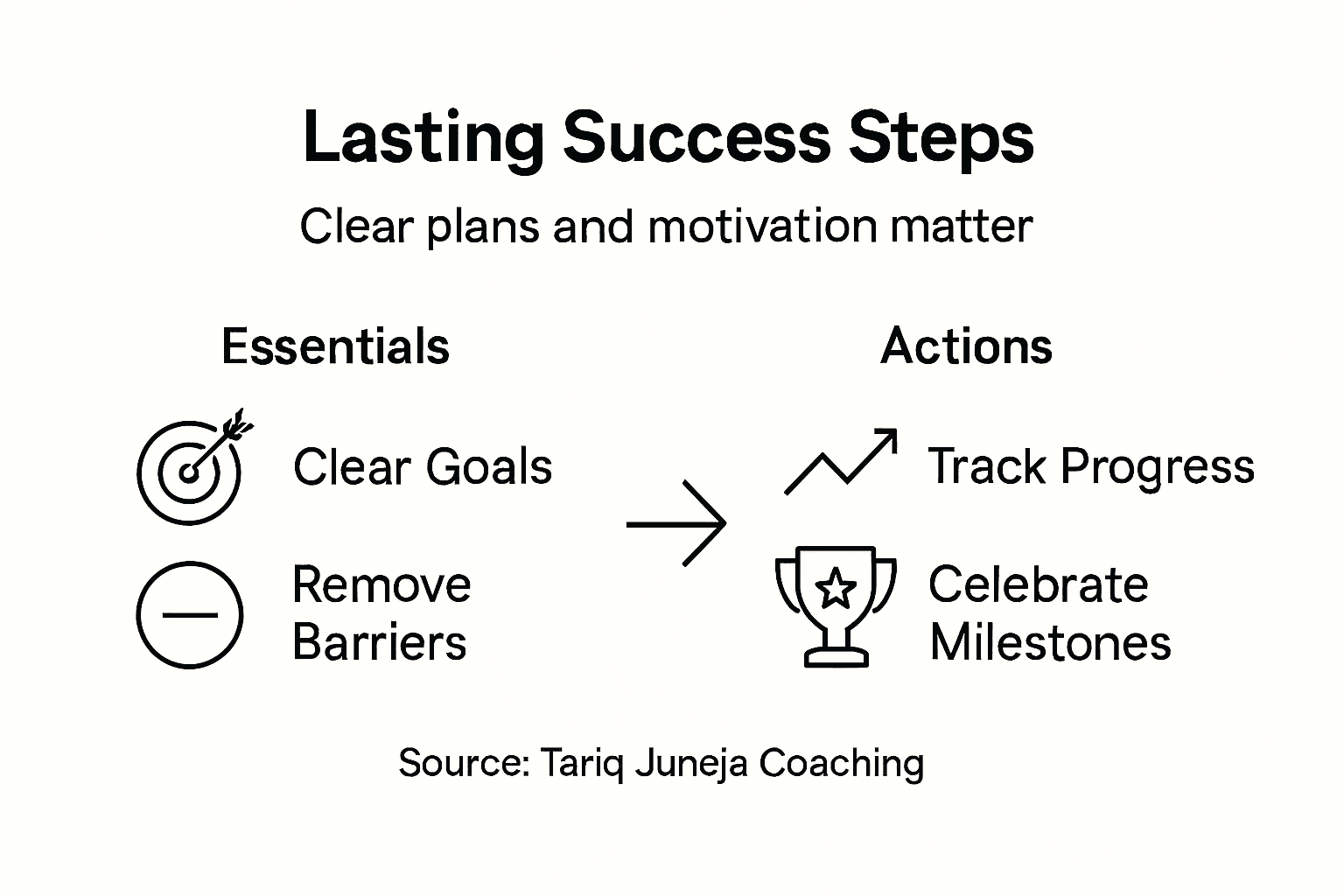
Learn to celebrate achievement milestones that mark significant progress in your journey. Create a personal recognition system that acknowledges both major breakthroughs and incremental gains. This might involve treating yourself to a special meal, sharing your accomplishments with supportive friends, or creating a visual representation of your progress like a success journal or digital dashboard. The key is to make celebration meaningful and personally motivating.
During your milestone celebrations, conduct a strategic review of your journey. Analyze what worked well, identify strategies that accelerated your progress, and candidly assess areas needing improvement. This reflective process transforms celebrations from mere moments of joy into opportunities for strategic refinement. Use these insights to adjust your approach, realign your tactics, and set even more ambitious goals for your next phase of achievement.
Pro tip: Document your milestone celebrations with photos or journal entries to create a powerful visual and emotional record of your growth journey.
Unlock Lasting Success by Removing Barriers and Taking Action
Achieving your goals and dreams requires more than just setting SMART objectives. It means identifying and overcoming the limiting barriers that hold you back and crafting flexible, actionable plans you can follow step by step. If you find yourself struggling with self-doubt or tangible obstacles like limited resources or time constraints, you are not alone. Many face these challenges but the key is consistent progress tracking and celebrating every milestone to maintain motivation.
Life Coaching Archives – Tariq Juneja offers proven strategies to break through these psychological and practical blocks so you can confidently transform your aspirations into reality.

Take control of your journey now with expert guidance from Tariq Juneja. Visit https://tariqjuneja.com and explore how personalized coaching and transformational change programs can empower you to increase your productivity, reduce stress, and embrace change with lasting impact. Don’t wait to start achieving your dreams. Book a free consultation and take the first step toward real success today.
Frequently Asked Questions
How can I define meaningful objectives for my goals?
To define meaningful objectives, start by using the SMART criteria—make them Specific, Measurable, Achievable, Relevant, and Time-bound. For example, instead of saying “I want to get fit,” a SMART objective could be “Exercise for at least 30 minutes, five days a week for three months.”
What are some common barriers to achieving my goals?
Common barriers include both tangible issues like lack of skills or financial constraints and intangible ones like self-doubt or limiting beliefs. Identify these barriers by conducting an assessment and then create targeted plans to overcome each obstacle.
How should I develop an action plan for my objectives?
To develop an action plan, break down your objectives into specific, manageable steps with clear timelines and responsible parties. For example, if your goal is to learn a new skill, outline the courses you’ll take, when you’ll start, and how often you’ll practice each week.
How can I effectively track my progress?
Implement a tracking system that matches your style, whether it’s a digital app, spreadsheet, or journal. Schedule regular review sessions, ideally weekly, to evaluate your progress, make adjustments, and celebrate small wins along the way.
Why is celebrating milestones important in achieving my goals?
Celebrating milestones boosts motivation and reinforces positive behaviors, helping you stay committed to your goals. Make it a habit to acknowledge achievements—big or small—by treating yourself or sharing with friends, which can further energize your journey.
How often should I review and adjust my goals?
Aim to review and adjust your goals at least once a month, or more frequently if significant changes occur. Regularly assess what’s working and what needs improvement, and pivot your strategies as necessary to maintain progress toward your ultimate objectives.