

Executives often feel like every minute of the workday slips through their fingers. Yet most leaders underestimate how much time gets lost to low value tasks without even realizing it. The real surprise is that tracking your time for just one week can reveal hidden patterns that are quietly sabotaging your productivity and stress levels.
Table of Contents
- Step 1: Analyze Your Current Time Utilization
- Step 2: Prioritize Tasks Based On Impact
- Step 3: Implement Scheduled Time Blocks
- Step 4: Utilize Productivity Tools And Techniques
- Step 5: Review And Adjust Your Time Management Approach
Quick Summary
| Key Point | Explanation |
|---|---|
| 1. Track your time accurately. | Use tools or journaling to document your daily activities for an entire week. |
| 2. Categorize tasks by value. | Classify tasks into high, moderate, and low value to identify misuse of time. |
| 3. Prioritize high impact tasks. | Use the Eisenhower Matrix to focus on initiatives that contribute most to your goals. |
| 4. Implement time blocking. | Allocate specific time periods for focused work to enhance productivity and reduce distractions. |
| 5. Regularly review and adjust. | Conduct weekly and monthly reviews to refine your time management strategies effectively. |
Step 1: Analyze your current time utilization
Understanding how you currently spend your time is the foundational step in transforming your productivity as an executive. This initial assessment provides a clear snapshot of your daily workflow, revealing hidden inefficiencies and opportunities for strategic improvement. Most professionals dramatically underestimate how their time is actually allocated across different tasks and responsibilities.
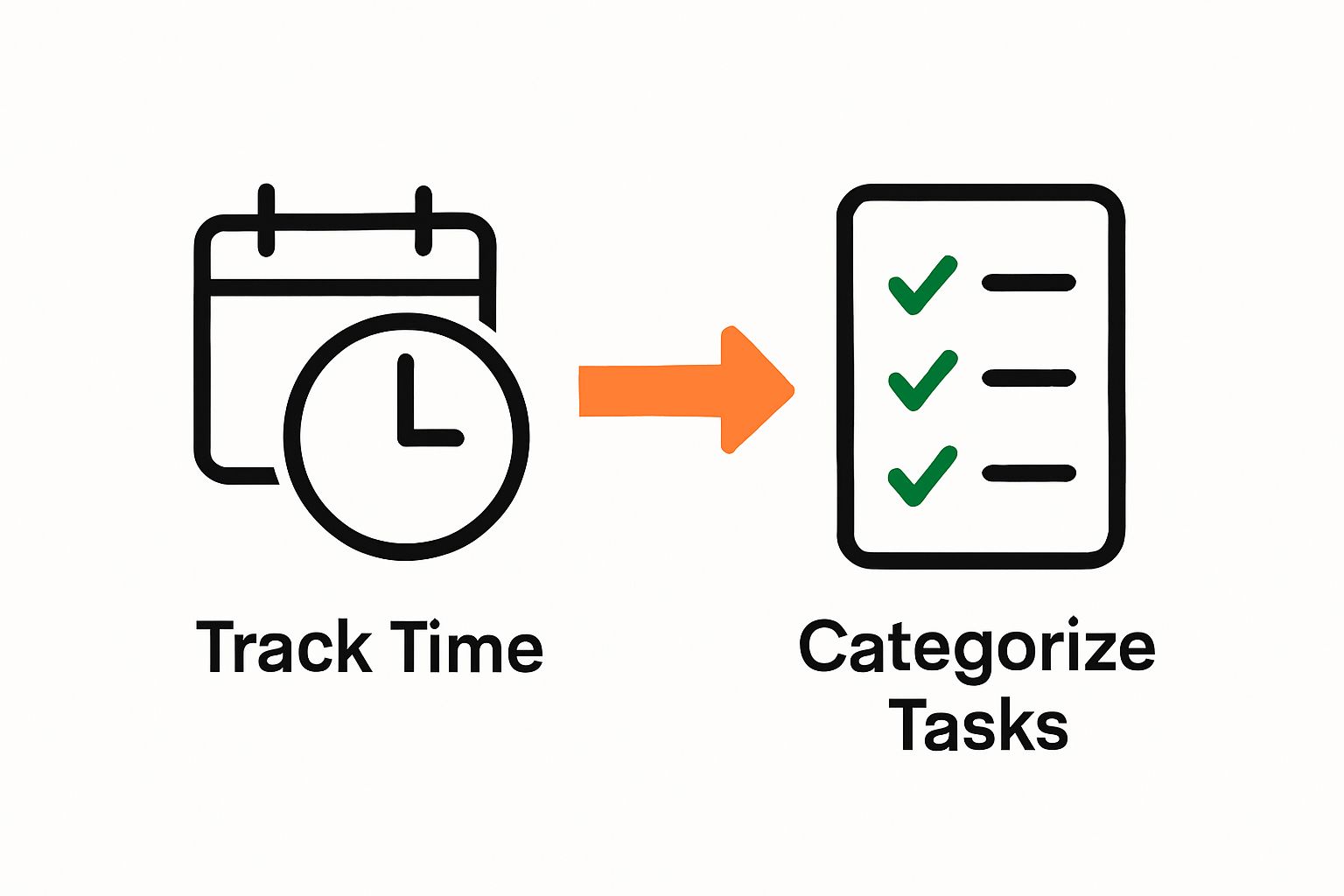
To begin this critical analysis, start by tracking your time meticulously for one full week. Utilize digital time tracking tools like RescueTime or manual journaling methods to record every professional activity in precise detail. Document the duration and nature of each task, including meetings, email management, strategic planning, and collaborative work. Be brutally honest and comprehensive in your documentation.
After completing your time log, perform a strategic review by categorizing activities into three primary classifications: high value, moderate value, and low value. High value activities directly contribute to organizational goals, strategic initiatives, and critical decision making. Moderate value tasks support operational requirements but do not necessarily drive significant outcomes. Low value activities represent time spent on interruptions, inefficient processes, or tasks that could be delegated or eliminated.
Carefully analyze the percentage of time allocated to each category. Most executives discover they spend significantly more time on low and moderate value activities than they initially believed. Explore our comprehensive guide on time management techniques to help you refine your approach.
Key verification criteria for successfully completing this step include:
- Accurate time tracking across an entire work week
- Detailed documentation of all professional activities
- Clear categorization of tasks by value contribution
- Identification of potential time waste areas
- Preliminary insights into workflow optimization opportunities
Remember that this initial analysis is not about judgment but strategic awareness. The goal is to create a realistic foundation for developing a more intentional and productive time management approach. Your willingness to examine your current time utilization with objectivity is the first powerful step toward meaningful professional transformation.
Below is a checklist summarizing the key verification criteria for each major step in executive time management, allowing you to track your progress and stay accountable.
| Step | Verification Criteria |
|---|---|
| Analyze Current Time Utilization | Accurate weekly time tracking, detailed documentation, clear task categorization by value, identification of time waste, initial workflow insights |
| Prioritize Tasks Based on Impact | Identification of top 3 high impact tasks each week, documented priority scores, reduced low value time, alignment with objectives, measurable progress |
| Implement Scheduled Time Blocks | Consistent deep work during peak hours, minimal interruptions, visual calendar blocks, improved task efficiency, reduced stress levels |
| Utilize Productivity Tools and Techniques | Regular use of digital platforms, measurable admin time decrease, improved collaboration, better project tracking, reduced task management stress |
| Review and Adjust Time Management Approach | Consistent review sessions, documented insights, measurable progress on high impact tasks, reduced friction, adaptability in managing time |
Step 2: Prioritize tasks based on impact
After completing your time analysis, the next crucial step is transforming your understanding into strategic action through intelligent task prioritization. This process moves beyond simple task listing and focuses on aligning your professional activities with maximum organizational and personal impact. The goal is to create a purposeful workflow that concentrates your energy on activities generating the most significant results.
Implement the Eisenhower Priority Matrix as your primary decision making framework. This approach divides tasks into four critical quadrants based on urgency and importance. High impact tasks become your primary focus, representing strategic initiatives that directly contribute to long term organizational goals. These are typically complex projects requiring deep thinking, strategic planning, and creative problem solving. According to Carnegie Mellon University’s prioritization research, executives who consistently prioritize high impact work demonstrate substantially higher productivity and organizational influence.
To effectively prioritize, develop a systematic scoring mechanism for each task. Evaluate potential activities through multiple lenses: strategic alignment, potential return on investment, resource requirements, and immediate versus long term consequences. Assign a numerical value between 1 and 10 for each criterion, creating a comprehensive prioritization score. This approach transforms subjective decision making into a more objective, measurable process.
Key verification criteria for successfully completing this step include:
- Clear identification of top 3 high impact tasks for each week
- Documented prioritization scores for major professional activities
- Reduced time spent on low value interruptions and reactive work
- Alignment of daily tasks with strategic organizational objectives
- Measurable progress on critical long term initiatives
Remember that prioritization is not a one time activity but an ongoing process of continuous refinement. Review our comprehensive time management practices to further enhance your strategic approach. Consistently reassess and adjust your priorities as organizational landscapes and personal capabilities evolve, maintaining flexibility while staying committed to your core strategic objectives.
Step 3: Implement scheduled time blocks
Time blocking transforms your previously analyzed and prioritized workflow into a structured, intentional system of productivity. By strategically allocating specific time segments to different types of work, you create a powerful framework that minimizes distractions and maximizes focused performance. This method turns your calendar into a precision instrument of professional execution.
Begin by dividing your workday into distinct blocks of 60 to 90 minutes, dedicating each segment to a specific category of work. Deep work blocks should target your most complex, high impact strategic tasks when your mental energy is at its peak. Typically, these concentrated periods work best during your personal productivity window – for most executives, this is early morning or after a brief midday reset. According to research from the American Psychological Association, consistent time blocking significantly reduces cognitive fatigue and enhances overall work quality.
Create buffer zones between these focused work blocks to manage unexpected interruptions, respond to communications, and perform administrative tasks. Rigorous discipline is critical – treat these time blocks as non negotiable appointments with yourself. Use digital tools like Google Calendar or specialized productivity applications to visually map and color code your time blocks. Integrate brief transition periods between blocks to reset your mental state, hydrate, and prepare for the next focused session. Check out our comprehensive time management checklist for additional strategic insights.
Key verification criteria for successfully implementing time blocking include:
- Consistent allocation of deep work blocks during peak personal productivity hours
- Minimal interruptions during designated focus periods
- Clear visual representation of time blocks in your professional calendar
- Measurable increase in task completion efficiency
- Reduced feelings of work related stress and overwhelm
Remember that time blocking is a skill requiring continuous refinement. Be patient with yourself as you adapt to this new approach. Your initial attempts may feel rigid, but over time, you will develop a personalized system that transforms how you engage with professional responsibilities. The goal is not perfect execution but progressive improvement in your time management capabilities.

Step 4: Utilize productivity tools and techniques
Productivity tools are not simply technological accessories but strategic instruments that can dramatically transform how executives manage their professional workflow. The right combination of digital and analog tools creates a seamless system that amplifies your time management capabilities, reducing cognitive load and increasing overall operational efficiency.
Digital task management platforms serve as the cornerstone of modern executive productivity. Applications like Asana, Trello, and Monday.com enable comprehensive project tracking, collaboration, and progress monitoring. Select a platform that integrates smoothly with your existing communication systems and offers robust reporting features. Customize these tools to reflect your specific workflow, creating dashboards that provide immediate visibility into project status, individual responsibilities, and potential bottlenecks. Learn more about improving workplace productivity through strategic tool implementation.
Beyond digital platforms, incorporate focused productivity techniques that complement your technological infrastructure. The Pomodoro Technique, which breaks work into 25 minute concentrated intervals followed by short breaks, can significantly enhance mental stamina and task completion rates. Implement noise cancelling headphones, digital focus modes, and strategic notification management to create an environment conducive to deep work. Automation tools like Zapier can further streamline repetitive administrative tasks, allowing you to redirect energy toward high impact strategic activities.
Key verification criteria for successfully utilizing productivity tools include:
- Consistent and intentional use of chosen digital task management platform
- Measurable reduction in time spent on administrative tasks
- Improved team collaboration and communication efficiency
- Enhanced personal ability to track and complete complex projects
- Reduced stress related to task management and tracking
Remember that tool selection is highly personal. What works brilliantly for one executive might create friction for another. Experiment with different platforms, remain flexible, and continuously refine your approach. The goal is not to become a productivity tool expert, but to develop a personalized system that feels intuitive and supports your unique professional rhythm.
The table below compares popular productivity tools and techniques mentioned in the article, helping you evaluate each option based on its primary use and unique benefits.
| Tool/Technique | Primary Purpose | Key Benefits |
|---|---|---|
| Asana/Trello/Monday.com | Task and project management | Improves collaboration, tracks progress, enhances workflow visibility |
| Google Calendar | Scheduling and time blocking | Visualizes work blocks, sets reminders, supports discipline |
| Pomodoro Technique | Structured focus intervals | Boosts focus, prevents fatigue, encourages regular breaks |
| Noise Cancelling Headphones | Distraction reduction | Maintains focus, reduces environmental noise, supports deep work |
| Zapier (Automation) | Automates repetitive admin tasks | Saves time, minimizes manual work, reallocates energy to priority tasks |
Step 5: Review and adjust your time management approach
Successful time management is not a static achievement but a dynamic, evolving process requiring consistent reflection and strategic recalibration. This final step transforms your initial time management strategy from a rigid plan into a flexible, responsive system that adapts to changing professional landscapes and personal growth trajectories.
Implement a weekly and monthly review protocol that systematically examines your time utilization, productivity metrics, and overall workflow effectiveness. During these dedicated review sessions, critically analyze your time tracking data, comparing actual task completion against initial priorities and time block allocations. Look for patterns of resistance, unexpected time drains, and opportunities for optimization. Quantitative metrics are crucial – track the percentage of high impact tasks completed, average time spent on strategic versus administrative work, and your overall sense of professional satisfaction and energy levels.
Develop a structured approach to making adjustments. When you identify inefficiencies or bottlenecks, resist the impulse to make sweeping changes. Instead, implement incremental modifications, testing each adjustment’s impact before fully integrating it into your workflow. Your goal is to create a responsive time management system that evolves with your professional demands. Explore our comprehensive guide on effective time management practices to support your continuous improvement journey.
Key verification criteria for successfully reviewing and adjusting your time management approach include:
- Consistent weekly and monthly performance review sessions
- Documented insights and potential workflow improvements
- Measurable progress in high impact task completion rates
- Reduced friction and increased professional satisfaction
- Demonstrated ability to adapt time management strategies
Remember that personal time management is deeply individual. What works brilliantly in one professional context might require significant modification in another. Approach this review process with curiosity, compassion, and a commitment to continuous learning. Your time management skills will mature and refine over time, becoming increasingly nuanced and effective as you gain deeper self awareness and strategic insights.
Transform Your Executive Productivity With Proven Coaching Support
Are you stuck in a constant cycle of overwhelming tasks, lost priorities, and unfinished work? If you recognized your own challenges while reading about time analysis, prioritization, and advanced productivity tools, you are not alone. Many executives struggle to consistently align their daily actions with high-value results, risking burnout and missing out on real change. Our Life Coaching resources guide you through intentional strategies to reclaim your time, energize your workflow, and focus on what truly matters most.

Learn how Tariq Juneja’s professional coaching transforms the way you approach executive performance. Visit https://tariqjuneja.com now to access real client stories, explore coaching programs that fit your career needs, or schedule your free consultation today. Make the decision to break old habits and drive meaningful progress. Act today to begin your journey to greater productivity and lasting transformation.
Frequently Asked Questions
How can I effectively analyze my current time utilization?
To analyze your current time utilization, track your time meticulously for one full week, documenting every professional task in detail. Categorize these tasks into high value, moderate value, and low value to identify areas for improvement.
What is the Eisenhower Priority Matrix and how can I use it?
The Eisenhower Priority Matrix is a tool that categorizes tasks into four quadrants based on urgency and importance. It helps you prioritize high impact tasks that contribute directly to organizational goals, ensuring you focus your energy on what matters most.
How do I implement time blocking in my schedule?
To implement time blocking, divide your workday into focused segments of 60 to 90 minutes for different types of work. Schedule deep work blocks during your peak productivity periods, and include buffer zones to manage interruptions and administrative tasks effectively.
What types of productivity tools should I consider for time management?
Consider using digital task management platforms like Asana or Trello, which help track projects and collaborate efficiently. Additionally, adopt techniques like the Pomodoro Technique to enhance focus and productivity, and use automation tools to streamline repetitive tasks.