

Most American professionals find themselves wishing for extra hours in the day, yet only a small percentage feel truly in control of their schedules. Mastering efficient time management affects more than just productivity. It shapes job satisfaction, reduces stress, and drives lasting career success. Discover which time management practices stand out, which pitfalls to avoid, and how the right tools can help any American create focused, balanced, and productive routines.
Table of Contents
- Defining Efficient Time Management Practices
- Proven Techniques For Optimizing Your Day
- Balancing Priorities And Setting Boundaries
- Common Time Management Pitfalls To Avoid
- Leveraging Tools And Technology For Success
Key Takeaways
| Point | Details |
|---|---|
| Efficient Time Management | Involves prioritization, strategic planning, and execution to focus on impactful activities. |
| Key Techniques | Utilize methods like the Pomodoro Technique and the Two-Minute Rule to enhance productivity. |
| Balancing Priorities | Apply frameworks like the Eisenhower Matrix to distinguish between urgent and important tasks. |
| Leveraging Technology | Use digital tools to streamline workflows and track productivity effectively. |
Defining Efficient Time Management Practices
Time management represents a strategic approach to organizing and controlling how we allocate our most precious resource: time. At its core, efficient time management involves more than simply scheduling tasks—it requires a thoughtful process of prioritization, strategic planning, and purposeful execution. Setting clear priorities enables professionals to focus their energy on activities that generate maximum value and impact.
Effective time management practices are characterized by several key principles. First, professionals must learn to break complex projects into manageable segments, allowing for steady progress and reducing overwhelm. This approach transforms intimidating workloads into actionable steps. Tracking time spent on different activities helps identify potential inefficiencies and areas where productivity can be enhanced. Critically, the goal is not just completing tasks quickly, but completing the right tasks at the right time with optimal efficiency.
Successful time management also requires understanding personal energy rhythms and creating systems that align with individual work styles. Some individuals are most productive in the morning, while others hit their stride later in the day. By recognizing these patterns, professionals can schedule demanding tasks during their peak performance windows. Additionally, implementing techniques like the Pomodoro method—working in focused 25-minute intervals with short breaks—can dramatically improve concentration and reduce mental fatigue. Ultimately, time management strategies are not one-size-fits-all but require personalized approaches tailored to individual work habits and professional goals.
Proven Techniques for Optimizing Your Day
Supercharging daily productivity requires strategic techniques that transform how professionals approach work. Proven time management methods like time blocking and the Pomodoro Technique offer systematic approaches to maximizing efficiency. By breaking work into structured intervals, individuals can maintain high concentration levels while preventing burnout and mental exhaustion.
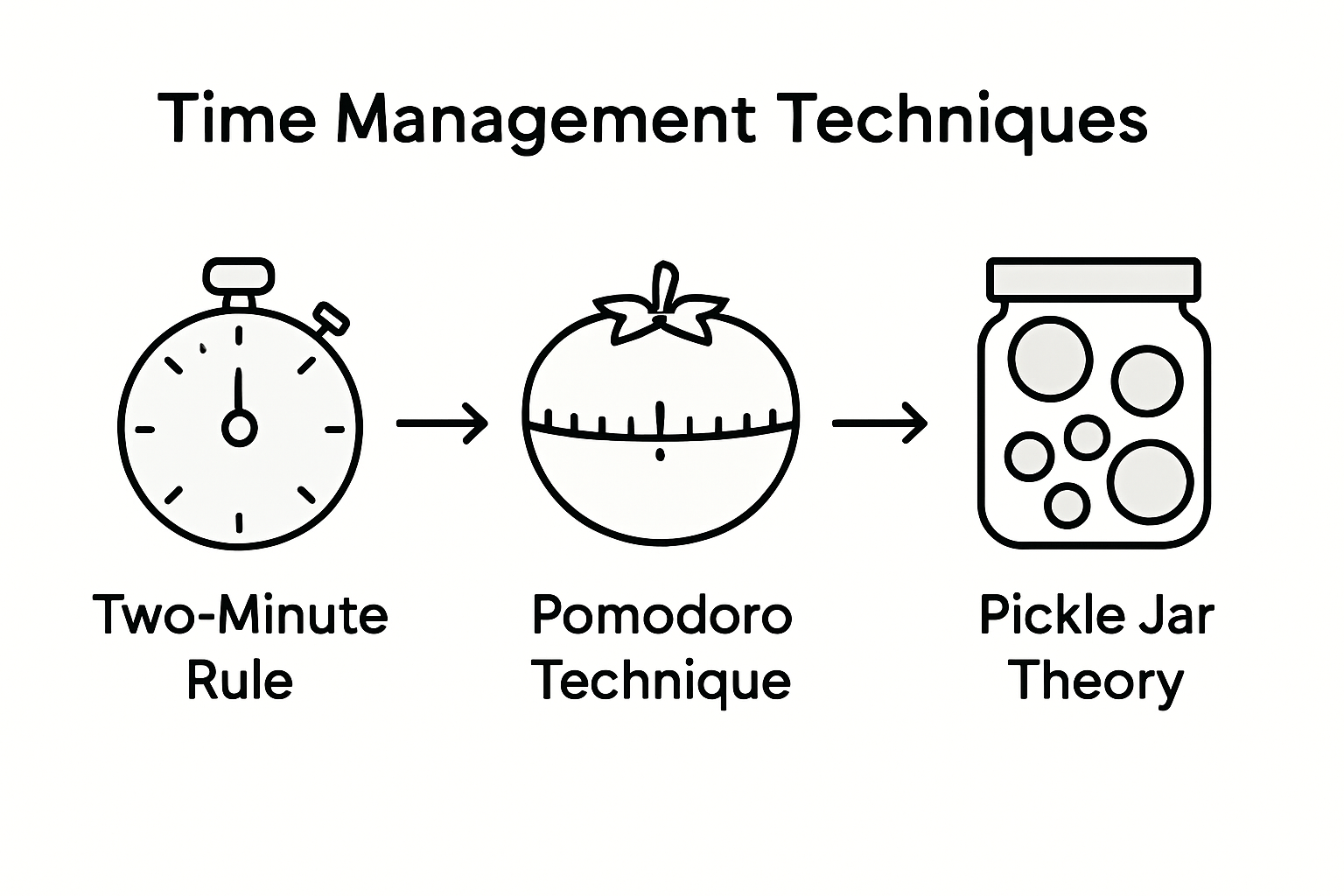
One powerful approach is the Two-Minute Rule, which suggests immediately completing any task that can be finished in two minutes or less. This technique prevents small tasks from accumulating and creating mental clutter. Another effective strategy involves prioritizing challenging tasks using techniques like the ‘Eat That Frog’ method, which encourages tackling the most difficult or significant task first thing in the morning when mental energy is typically at its peak.
Additionally, professionals can leverage advanced time management frameworks like the Pickle Jar Theory, which helps visualize task importance through a metaphorical jar representing available time. Important tasks are represented by large rocks, while less critical activities are smaller pebbles or sand. By strategically arranging these elements, individuals can ensure that significant goals receive adequate attention. Systematic time management techniques ultimately transform how professionals approach their workday, turning potential chaos into structured, intentional progress.

Balancing Priorities and Setting Boundaries
Balancing priorities demands a strategic approach to managing professional and personal responsibilities. Effective time management techniques require professionals to understand the critical principle of focusing on high-impact activities through methods like the 80/20 rule, which suggests that 20% of efforts typically generate 80% of meaningful results. This approach helps individuals concentrate their energy on tasks that deliver the most significant outcomes.
One powerful framework for prioritization is the Eisenhower Matrix, which categorizes tasks based on their urgency and importance. By conducting regular time audits, professionals can systematically evaluate how they allocate their time and identify areas for improvement. This matrix divides tasks into four quadrants: urgent and important, important but not urgent, urgent but not important, and neither urgent nor important. Learning to distinguish between these categories allows individuals to make more intentional decisions about task management and personal boundaries.
Setting clear boundaries is equally crucial in maintaining productivity and preventing burnout. This involves learning to delegate effectively, saying no to non-essential commitments, and creating structured work environments that minimize distractions. Productivity strategies for leaders emphasize the importance of creating intentional systems that protect personal energy and focus. By establishing consistent routines, utilizing strategic prioritization techniques, and maintaining disciplined boundaries, professionals can transform their approach to time management and achieve more meaningful progress in both professional and personal domains.
Common Time Management Pitfalls to Avoid
Time management challenges can derail even the most well-intentioned professionals, creating significant obstacles to productivity and personal effectiveness. Avoiding common time management mistakes requires a systematic approach to understanding and addressing recurring patterns that undermine efficient work processes. Overcommitment represents one of the most pervasive problems, where individuals consistently take on more responsibilities than they can realistically manage, leading to stress, burnout, and diminished overall performance.
The multitasking myth frequently undermines professional productivity. Contrary to popular belief, attempting to juggle multiple tasks simultaneously actually reduces efficiency and increases the likelihood of errors. Professionals who believe they are maximizing their time by switching rapidly between tasks are often experiencing a significant reduction in cognitive performance and quality of work. This fragmented approach prevents deep concentration and prevents individuals from achieving meaningful progress on complex projects.
Another critical pitfall involves poor time allocation and ineffective tracking of daily activities. Time management strategies for executives emphasize the importance of conducting regular time audits to identify productivity leaks and unnecessary time consumption. Successful professionals develop the discipline to ruthlessly eliminate low-value activities, protect their most productive hours, and create structured systems that align with their most important professional and personal goals. By recognizing and proactively addressing these common time management traps, individuals can transform their approach to work and unlock significantly higher levels of personal effectiveness.
Leveraging Tools and Technology for Success
Technology has revolutionized time management, offering professionals unprecedented opportunities to streamline workflows and maximize productivity. Innovative project management tools enable individuals to track tasks, collaborate effectively, and maintain organizational clarity with remarkable precision. By integrating digital solutions strategically, professionals can transform complex work processes into manageable, trackable systems that enhance overall efficiency.
The digital productivity ecosystem encompasses a wide range of specialized applications designed to address specific time management challenges. Professionals can leverage tools that provide comprehensive time tracking, automated scheduling, task prioritization, and performance analytics. These digital solutions go beyond simple calendar management, offering intelligent insights that help users understand their productivity patterns, identify time-wasting activities, and develop more strategic work approaches. Digital time management applications provide real-time feedback and actionable recommendations that enable continuous personal performance improvement.
Successful technology integration requires a thoughtful approach that aligns digital tools with individual work styles and organizational requirements. Digital transformation strategies emphasize the importance of selecting tools that complement existing workflows rather than disrupting them. Professionals should evaluate technology solutions based on their specific needs, considering factors like user interface, integration capabilities, customization options, and potential productivity gains. By adopting a strategic and intentional approach to technological tools, individuals can create more efficient, responsive, and adaptive work environments that support sustained professional growth.
Take Control of Your Time with Expert Agile Coaching
Struggling to apply efficient time management strategies like prioritization, the Eisenhower Matrix, or the Pomodoro Technique? You are not alone. Many professionals find it challenging to balance priorities, avoid common productivity pitfalls, and integrate sustainable habits into their busy lives. At Tariq Juneja, we understand that unlocking greater productivity requires more than just tips. It demands a personalized approach that aligns with your unique work style and professional goals.

Explore how professional agile coaching can transform your daily workflow by introducing proven systems that enhance focus, reduce stress, and help you embrace change. Don’t wait to reclaim your time. Visit https://tariqjuneja.com today to book a free consultation, access exclusive resources, and start your journey toward mastering time management with expert guidance.
Frequently Asked Questions
What are the key principles of efficient time management?
Effective time management involves prioritization, strategic planning, and purposeful execution. Key principles include breaking complex projects into manageable segments, tracking time to identify inefficiencies, and understanding personal energy rhythms.
How can I implement the Pomodoro Technique effectively?
The Pomodoro Technique involves working in focused 25-minute intervals followed by short breaks. To implement it effectively, choose a task, set a timer for 25 minutes, work on the task until the timer goes off, and take a 5-minute break before resuming the next Pomodoro cycle.
What is the Eisenhower Matrix and how does it help with prioritization?
The Eisenhower Matrix categorizes tasks based on urgency and importance. It divides tasks into four quadrants: urgent and important, important but not urgent, urgent but not important, and neither urgent nor important. This helps individuals focus on high-impact activities and manage their time more effectively.
What are common pitfalls in time management to avoid?
Common pitfalls include overcommitment, multitasking, and poor time allocation. Overcommitting leads to stress and burnout, multitasking reduces efficiency, and poor time allocation wastes valuable productive hours. Regular time audits can help address these issues.