

Over 86 percent of American professionals report that effective workplace coaching has improved their job performance. As demands rise in corporate environments, understanding the real impact of corporate life coaching becomes essential for companies aiming to stay competitive. This guide unpacks proven coaching methods and explains how American organizations can leverage personalized strategies to drive individual growth, elevate team success, and transform their overall workplace culture.
Table of Contents
- Defining Corporate Life Coaching Methods
- Types of Corporate Life Coaches Explained
- How Corporate Coaching Drives Results
- Core Responsibilities and Essential Skills
- Common Pitfalls and How to Avoid Them
Key Takeaways
| Point | Details |
|---|---|
| Corporate Life Coaching Enhances Performance | It empowers professionals through personalized guidance, targeting specific skill development and performance objectives. |
| Diverse Coaching Methods Exist | Key categories include one-on-one, group, performance, and transformational coaching, each addressing unique challenges. |
| Essential Skills for Coaches | Effective corporate life coaches must possess emotional intelligence, active listening, and adaptability to guide professionals successfully. |
| Avoid Common Pitfalls | Coaches should develop customized strategies, establish clear boundaries, and ensure robust communication to maintain effective coaching relationships. |
Defining Corporate Life Coaching Methods
Corporate life coaching represents a strategic approach to workplace performance enhancement that goes beyond traditional training methodologies. Workplace coaching focuses on empowering professionals to unlock their potential through personalized guidance and targeted skill development. Coaching techniques explained reveal a nuanced framework designed to address individual and organizational growth challenges.
At its core, corporate life coaching involves a structured process of professional development that targets specific performance objectives. Research indicates that effective coaching methodologies typically incorporate comprehensive executive coaching strategies which include diagnostic assessments, goal setting, behavioral analysis, and continuous feedback mechanisms. These methods aim to transform workplace dynamics by addressing both professional competencies and personal psychological barriers that might impede performance.
The primary coaching methods utilized in corporate settings generally fall into several key categories:
- One-on-One Coaching: Individualized sessions focusing on personal development
- Group Coaching: Collaborative learning environments targeting team performance
- Performance Coaching: Targeted interventions addressing specific skill gaps
- Transformational Coaching: Holistic approach exploring deeper motivational patterns
Psychological research demonstrates that corporate life coaching can yield significant organizational benefits, including enhanced employee engagement, improved communication skills, and increased productivity. By creating a supportive yet challenging environment, coaches help professionals develop critical self-awareness and strategic thinking capabilities that drive both individual and collective success.
Types of Corporate Life Coaches Explained
The landscape of corporate life coaching encompasses diverse specialized roles that address unique organizational and professional development needs. Corporate coaching strategies reveal a sophisticated ecosystem of coaching professionals dedicated to transforming workplace performance through targeted interventions.
Historical research traces the evolution of coaching specializations, highlighting several critical types of corporate life coaches:
- Executive Coaches: Work directly with senior leadership to enhance strategic thinking and organizational decision-making
- Performance Coaches: Focus on improving individual and team productivity through skill development
- Transitional Coaches: Support professionals navigating significant career changes or organizational shifts
- Leadership Development Coaches: Cultivate leadership potential and emotional intelligence among emerging managers
- Team Dynamics Coaches: Specialize in improving communication, collaboration, and interpersonal relationships within work groups
Each coaching type addresses specific organizational challenges by employing unique methodological approaches. Some coaches specialize in diagnostic assessments, while others concentrate on behavioral modification and personal growth strategies. Group coaching techniques demonstrate how these professionals create tailored interventions that align individual aspirations with broader organizational objectives.

The most effective corporate life coaches possess a multilayered skill set combining psychological insight, business acumen, and advanced communication techniques. They serve as strategic partners who help professionals navigate complex workplace environments, overcome performance barriers, and unlock their full potential through personalized development strategies.
How Corporate Coaching Drives Results
Corporate coaching delivers transformative outcomes by systematically addressing performance barriers and unlocking human potential. Workplace coaching research demonstrates that strategic interventions can dramatically enhance organizational effectiveness through targeted professional development approaches.
Research highlights several key mechanisms through which corporate coaching drives measurable results:
- Performance Enhancement: Directly improving individual productivity and skill competencies
- Leadership Development: Cultivating strategic thinking and emotional intelligence
- Organizational Alignment: Creating stronger connections between personal goals and corporate objectives
- Resilience Building: Helping professionals navigate complex workplace challenges
- Communication Improvement: Developing more effective interpersonal and team collaboration skills
Psychological studies reveal that comprehensive coaching strategies produce significant workplace transformations. Empirical evidence indicates that well-designed coaching interventions can lead to substantial improvements in employee engagement, with professionals experiencing enhanced motivation, clearer career trajectories, and more robust problem-solving capabilities.
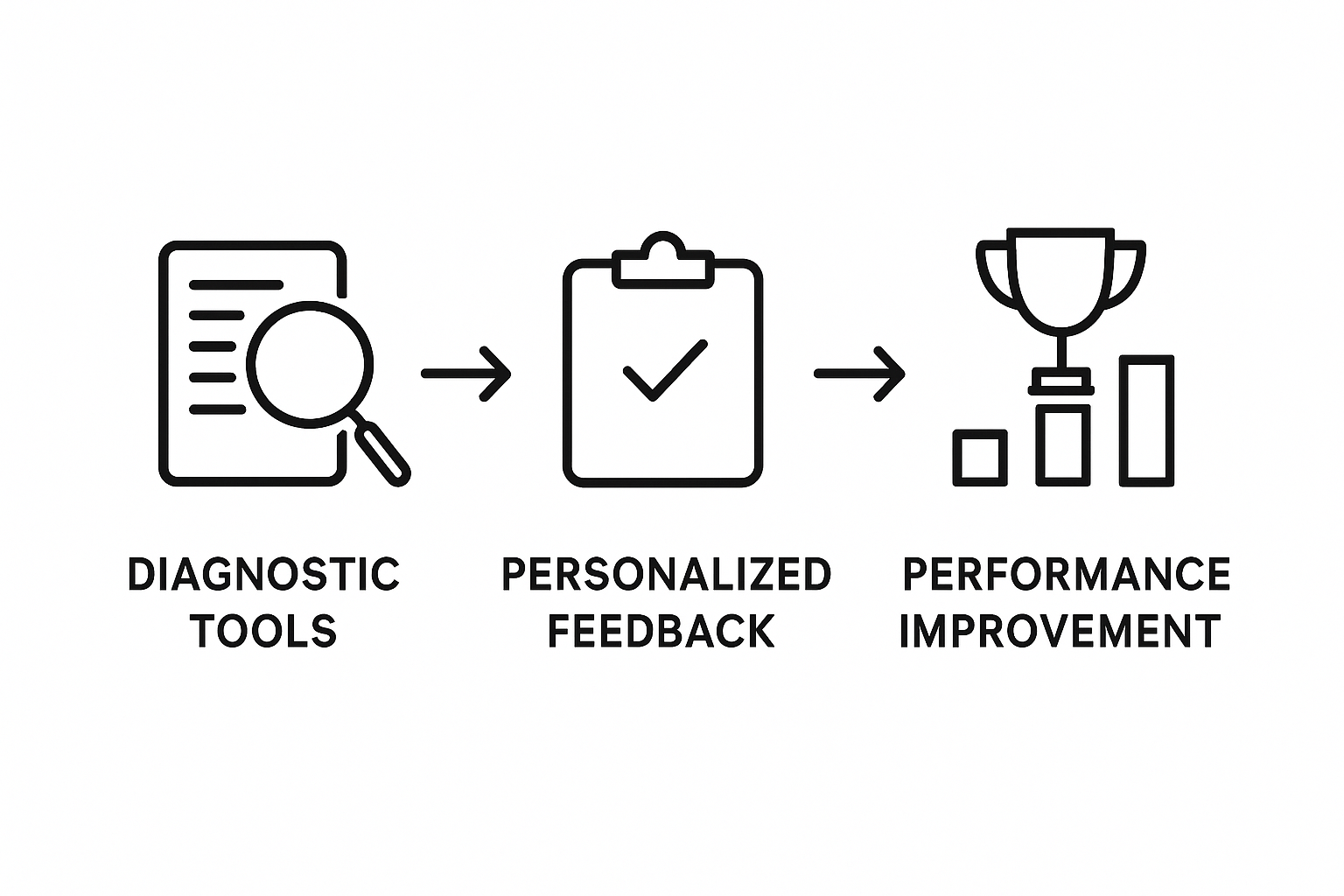
The most impactful corporate coaching approaches integrate sophisticated diagnostic tools, personalized feedback mechanisms, and continuous learning frameworks. By creating a supportive yet challenging environment, coaches help professionals transcend traditional performance limitations, fostering a culture of continuous improvement and adaptive thinking that directly translates into tangible organizational success.
Core Responsibilities and Essential Skills
Corporate life coaches play a pivotal role in organizational transformation, requiring a sophisticated blend of psychological insight, business acumen, and interpersonal expertise. Personal growth strategies underscore the critical nature of these professionals in helping individuals and organizations achieve breakthrough performance.
The core responsibilities of corporate life coaches encompass several key dimensions:
- Diagnostic Assessment: Conducting comprehensive evaluations of individual and team performance capabilities
- Strategic Goal Setting: Collaboratively developing targeted professional development roadmaps
- Performance Intervention: Designing and implementing customized coaching strategies
- Behavioral Modification: Identifying and addressing psychological barriers to professional growth
- Organizational Alignment: Bridging individual potential with broader corporate objectives
Essential skills for effective corporate life coaches include:
- Emotional Intelligence: Deep understanding of human motivation and interpersonal dynamics
- Active Listening: Ability to extract nuanced insights through precise communication
- Analytical Thinking: Capability to diagnose complex performance challenges
- Adaptability: Flexibility in approaching diverse professional contexts
- Strategic Communication: Crafting compelling narratives of personal and professional transformation
Successful corporate life coaches integrate powerful personal growth techniques with advanced psychological frameworks. They serve as transformative partners, helping professionals navigate complex workplace challenges, unlock their inherent potential, and create sustainable pathways to personal and organizational excellence.
Common Pitfalls and How to Avoid Them
Workplace coaching research reveals that corporate life coaches frequently encounter predictable challenges that can undermine their effectiveness. Understanding these potential obstacles is crucial for maintaining high-performance coaching relationships and delivering transformative results.
Common pitfalls in corporate coaching include:
- Over-Reliance on Generic Strategies: Applying one-size-fits-all approaches instead of personalized interventions
- Lack of Clear Boundaries: Blurring professional lines between coaching and therapy
- Insufficient Performance Tracking: Neglecting measurable outcome metrics
- Premature Solution Deployment: Offering solutions before thoroughly understanding context
- Communication Disconnects: Failing to establish robust rapport and trust
Strategies to mitigate these challenges involve:
- Developing highly customized coaching frameworks
- Establishing clear professional engagement protocols
- Implementing rigorous performance measurement systems
- Practicing deep listening and contextual understanding
- Creating transparent communication channels
Successful coaches recognize that avoiding common coaching mistakes requires continuous learning, emotional intelligence, and a commitment to adaptive methodologies. By maintaining professional integrity, remaining analytically flexible, and prioritizing client-specific outcomes, corporate life coaches can successfully navigate potential performance barriers and drive meaningful organizational transformation.
Unlock Your Team’s True Potential with Expert Corporate Life Coaching
Struggling with limited employee engagement or unclear leadership pathways in your organization The insights from this article highlight the critical need to deploy personalized coaching methods that address both skill development and psychological barriers. Whether you face challenges in aligning individual goals with corporate objectives or want to build resilience and enhance communication, a specialized approach is essential for meaningful transformation.
Harness proven strategies from Life Coaching Archives – Tariq Juneja and complementary expertise in Change Management Archives – Tariq Juneja to create lasting workplace performance improvements.
Take the next step to elevate your organizational effectiveness by working with a seasoned transformational coach. Visit https://tariqjuneja.com now to discover tailored coaching programs and book your free consultation. Start unlocking your workforce’s full potential today.
Frequently Asked Questions
What is corporate life coaching?
Corporate life coaching is a strategic approach focused on enhancing workplace performance through personalized guidance and targeted skill development. It aims to empower individuals to unlock their potential and address both professional competencies and personal barriers.
What are the different types of corporate life coaches?
There are several types of corporate life coaches, including executive coaches, performance coaches, transitional coaches, leadership development coaches, and team dynamics coaches. Each specializes in addressing specific organizational challenges and employing unique methodologies.
How does corporate coaching drive results?
Corporate coaching drives measurable results by enhancing individual productivity, developing leadership traits, improving organizational alignment, building resilience, and fostering effective communication. These methods create a supportive environment that leads to significant workplace transformations.
What skills should a corporate life coach possess?
A corporate life coach should possess essential skills such as emotional intelligence, active listening, analytical thinking, adaptability, and strategic communication. These skills enable coaches to effectively navigate complex workplace challenges and support professional growth.
Recommended
- Corporate Coaching Explained: Strategies, Types, Impact – Tariq Juneja
- What is Transformative Coaching? Understanding Its Impact – Tariq Juneja
- What Is a Transformational Coach? Complete Overview – Tariq Juneja
- Management Coaching: Everything You Need to Know – Tariq Juneja
- Complete Guide to Corporate Wellness Programmes – team I
- Outdoor Group Games For Adults Perfect for Team Building