

Strong communication skills are often the key differentiator between career growth and missed opportunities. Studies reveal that professionals who invest in specialized coaching can improve their workplace performance by over 40 percent. In a world where first impressions and clear messaging matter more than ever, sharpening how you express ideas and connect with others is a real advantage. This guide unpacks what communication skills coaching actually involves, reveals popular approaches, and shows how targeted support leads to measurable results.
Table of Contents
- Defining Communication Skills Coaching
- Types of Communication Coaching Approaches
- Core Elements and Techniques Explained
- Real-World Applications for Professionals
- Common Pitfalls and How to Avoid Them
- Measuring Success and Sustainable Growth
Key Takeaways
| Point | Details |
|---|---|
| Targeted Coaching Approach | Communication skills coaching focuses on personalized strategies to overcome specific communication challenges, unlike generic training programs. |
| Core Techniques | Essential techniques include diagnostic assessments, active listening, and behavioral modification to create transformative communication experiences. |
| Diverse Applications | This coaching method applies to various professions, enhancing leadership communication, team dynamics, and client relations across industries. |
| Measuring Success | Progress can be tracked through behavioral change assessments, stakeholder feedback, and self-reported confidence levels for continuous improvement. |
Defining Communication Skills Coaching
Communication skills coaching is a targeted professional development approach designed to enhance an individual’s ability to communicate effectively across personal and professional contexts. Unlike generic communication training, this specialized coaching focuses on identifying specific communication challenges and developing personalized strategies to overcome them.
At its core, communication skills coaching involves a systematic process of assessment, skill development, and practical implementation. Coaches work closely with clients to diagnose communication barriers, which might include challenges like public speaking anxiety, difficulty expressing complex ideas, ineffective listening techniques, or misaligned nonverbal communication. Understanding the Coaching Process Overview reveals that this approach is highly individualized, recognizing that communication skills are not one-size-fits-all.
The primary objectives of communication skills coaching typically include:
- Improving verbal and nonverbal communication clarity
- Developing active listening capabilities
- Enhancing professional presentation skills
- Building confidence in interpersonal interactions
- Learning strategies for effective workplace communication
Professionals across industries benefit from this specialized coaching, as strong communication skills are fundamental to leadership, teamwork, client relations, and personal branding. Whether you’re an executive seeking to refine your leadership communication, a professional wanting to advance your career, or an individual looking to improve personal interactions, communication skills coaching offers a structured pathway to meaningful communication transformation.
Types of Communication Coaching Approaches
Communication coaching encompasses several distinct approaches, each tailored to address specific professional and personal communication needs. Corporate Coaching Explained: Strategies, Types, Impact highlights the nuanced nature of these specialized coaching methodologies, demonstrating how communication skills development can be strategically targeted.
According to MDPI research, coaching is a sophisticated communication method in management that provides individuals with necessary support to foster creativity, decision-making, and responsibility. The primary types of communication coaching approaches include:
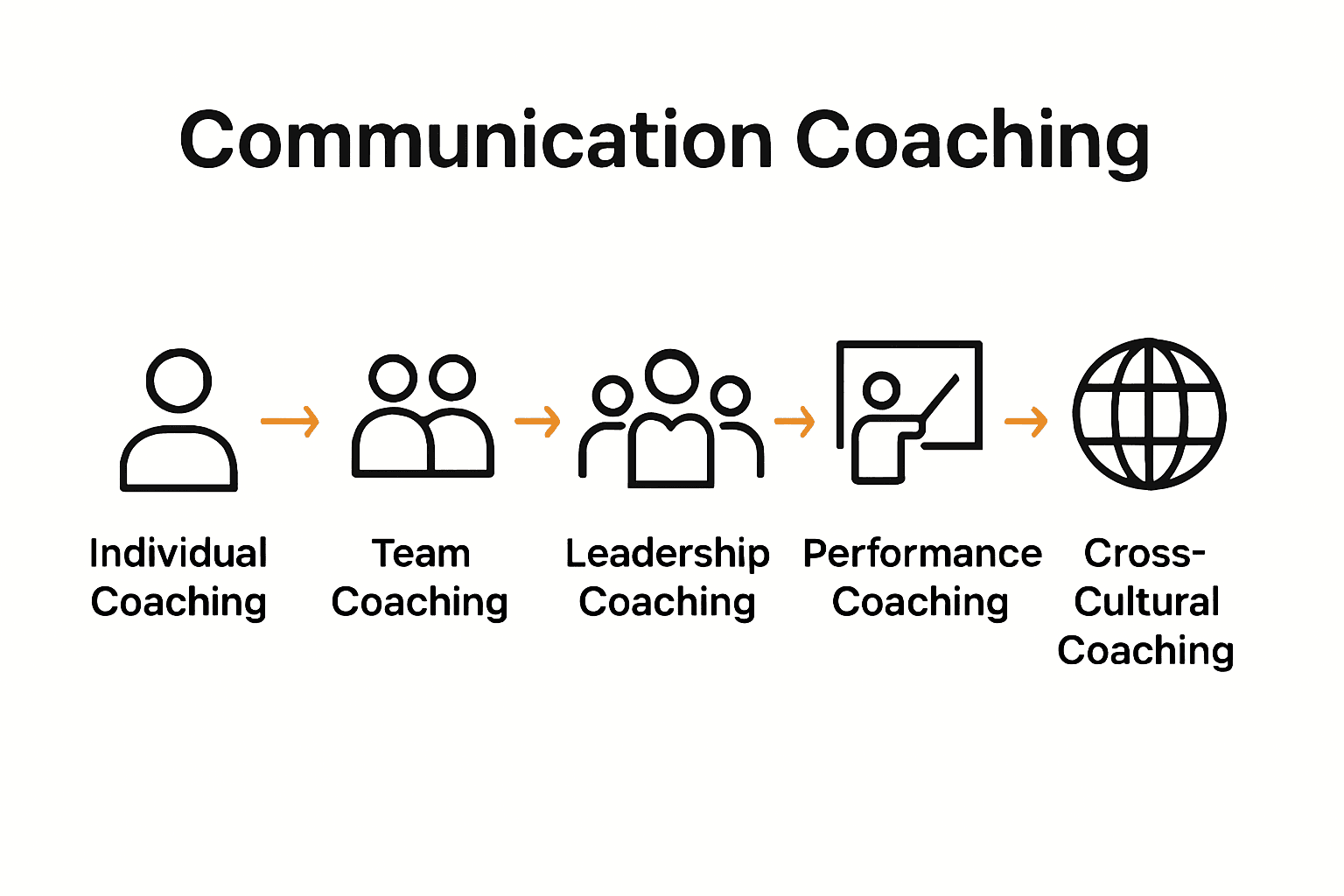
- Individual Communication Coaching: Focuses on personal communication skill enhancement
- Team Communication Coaching: Addresses group dynamics and collective communication strategies
- Leadership Communication Coaching: Develops executive-level communication capabilities
- Professional Performance Communication Coaching: Targets workplace interaction and presentation skills
- Cross-Cultural Communication Coaching: Helps professionals navigate diverse communication environments
Systemic Team Coaching (STC) represents an advanced approach that views communication within a broader organizational context. According to Wikipedia, this methodology aims to improve internal team dynamics and enhance the team’s capacity for leadership and stakeholder engagement. By understanding communication as an interconnected system, coaches can develop more holistic and impactful communication strategies that transcend individual skill development and address broader organizational communication challenges.
Core Elements and Techniques Explained
Communication skills coaching relies on a sophisticated set of core techniques designed to transform how individuals interact and communicate. Coaching Techniques Explained: Understanding Their Impact provides insight into the foundational approaches that make communication coaching effective and transformative.
According to Wikipedia’s research on active listening, a critical core technique involves preparing to listen, carefully observing both verbal and non-verbal communication cues, and providing meaningful feedback. This approach aims to eliminate misunderstandings and establish crystal-clear communication pathways between coach and client.
The primary core elements of communication skills coaching typically include:
- Diagnostic Assessment: Identifying individual communication strengths and weaknesses
- Active Listening Techniques: Developing deep comprehension and empathetic understanding
- Feedback Mechanisms: Constructive and precise communication improvement strategies
- Behavioral Modification: Implementing practical techniques to transform communication patterns
- Confidence Building: Developing psychological tools to overcome communication anxiety
According to Brian Mac’s research, effective communication coaching requires ensuring complete client attention, providing clear explanations, and continuously verifying understanding. Non-verbal communication plays an equally crucial role in conveying information, making it essential for coaches to understand and interpret subtle communication signals. By integrating these core elements, communication skills coaching becomes a powerful transformative process that helps individuals unlock their full communicative potential across personal and professional domains.

Real-World Applications for Professionals
Communication skills coaching transforms professional performance by addressing critical communication challenges across diverse industries. 7 Key Personal Development Goals for Leaders and Professionals highlights the essential role of targeted communication strategies in career advancement and organizational success.
According to recent ArXiv research, innovative approaches are emerging that integrate advanced technologies like LLM-powered chatbots with human coaching to support leadership growth and self-reflection. This technological integration represents a significant leap in professional communication development, offering personalized and adaptive learning experiences.
Professional communication coaching finds practical applications across multiple domains:
- Corporate Leadership: Enhancing executive communication and strategic messaging
- Sales and Client Relations: Improving negotiation and relationship-building skills
- Technical Professions: Developing clear, precise communication in complex environments
- Healthcare: Facilitating empathetic and effective patient interactions
- Engineering and Technology: Bridging communication gaps in collaborative projects
Another fascinating study from ArXiv demonstrates how advanced communication techniques can transform team dynamics, particularly in high-stakes environments like team sports, where strategic communication can make the difference between success and failure. By understanding and implementing sophisticated communication coaching techniques, professionals can dramatically improve their interpersonal effectiveness, leadership capabilities, and overall organizational impact.
Common Pitfalls and How to Avoid Them
Communication skills coaching requires careful navigation through potential challenges that can derail personal and professional growth. How to Improve Productivity at Work emphasizes the critical importance of recognizing and addressing communication barriers before they become significant obstacles.
According to ArXiv research on conversational coaching agents, users consistently value core functionality over stylistic components. This insight reveals a crucial pitfall: coaches must prioritize substantive communication improvement over superficial techniques. The study highlights the importance of aligning user feedback with expert evaluations, ensuring that coaching strategies remain both practical and impactful.
Common communication coaching pitfalls typically include:
- Overemphasis on Theory: Getting trapped in abstract concepts instead of practical application
- One-Size-Fits-All Approach: Failing to customize strategies to individual communication styles
- Neglecting Non-Verbal Communication: Focusing exclusively on verbal skills
- Insufficient Feedback Mechanisms: Not providing continuous, constructive evaluation
- Psychological Resistance: Not addressing underlying emotional barriers to communication
Research from another ArXiv study suggests that simple, direct communication protocols are often more reliable for effective coordination than complex, experience-based training. This finding underscores the importance of developing clear, straightforward communication strategies that cut through complexity and focus on genuine understanding. By recognizing these potential pitfalls and implementing targeted intervention strategies, communication skills coaching can transform potential obstacles into opportunities for meaningful personal and professional growth.
Measuring Success and Sustainable Growth
Communication skills coaching requires a systematic approach to tracking progress and ensuring continuous improvement. Understanding the Types of Performance Metrics provides critical insights into developing meaningful evaluation strategies for communication development.
According to Wikipedia’s research on communication quotient, measuring communication effectiveness is a behavior-based skill that can be systematically assessed and developed over time. The communication quotient (CQ) offers a quantifiable method for tracking an individual’s communication capabilities, moving beyond subjective assessments.
Key metrics for measuring communication skills coaching success include:
- Behavioral Change Assessments: Tracking observable communication improvements
- Stakeholder Feedback: Collecting 360-degree perspectives on communication effectiveness
- Self-Reported Confidence Levels: Monitoring personal perception of communication skills
- Performance Outcome Metrics: Measuring professional impact of enhanced communication
- Longitudinal Skill Progression: Tracking long-term communication development
Research from Old Dominion University highlights a four-step coaching process critical to sustainable growth: observation, discussion, active coaching, and follow-up. This structured approach ensures that communication skill development is not a one-time event but a continuous, iterative journey of personal and professional transformation. By implementing robust measurement techniques and maintaining a commitment to ongoing improvement, individuals can achieve meaningful and lasting communication skill enhancements.
Unlock Your Full Communication Potential with Expert Coaching
Are you ready to overcome communication barriers like anxiety, unclear messaging, or ineffective listening? This expert guide highlights how tailored communication skills coaching can help you build confidence, boost clarity, and master both verbal and nonverbal techniques. At Tariq Juneja’s Life Coaching Archives, we understand the emotional challenges and goal-driven needs you face when striving for effective communication in your personal and professional life.

Discover personalized coaching programs that dive deep into your unique communication style and unlock transformational growth. Whether you want to enhance leadership presence through Agile Coaching Archives or support your journey through sustained change with Change Management Archives, Tariq Juneja offers proven strategies that elevate your skills and career impact. Visit https://tariqjuneja.com today to book a free consultation and start your path to clear, confident communication now.
Frequently Asked Questions
What is communication skills coaching?
Communication skills coaching is a specialized professional development approach aimed at enhancing an individual’s ability to communicate effectively in various contexts. It focuses on identifying specific communication challenges and developing personalized strategies to overcome them.
What are the primary goals of communication skills coaching?
The primary goals of communication skills coaching include improving verbal and nonverbal communication clarity, developing active listening capabilities, enhancing presentation skills, building confidence in interpersonal interactions, and learning strategies for effective workplace communication.
What types of communication coaching approaches are there?
Communication coaching approaches include individual communication coaching, team communication coaching, leadership communication coaching, professional performance communication coaching, and cross-cultural communication coaching. Each approach targets specific communication needs and challenges.
How can I measure the success of communication skills coaching?
Success in communication skills coaching can be measured using several key metrics, including behavioral change assessments, stakeholder feedback, self-reported confidence levels, performance outcome metrics, and tracking long-term skill progression.