

Fast-paced tech workplaces often leave even experienced Agile coaches and organizational leaders searching for ways to drive real progress without adding to daily pressure. Clarity and focus get lost when conversations lack guidance, causing frustration for both leaders and their teams. A well-defined coaching session structure is the backbone of effective growth, offering a safe space for open reflection and purposeful goal setting that fuels productivity and reduces stress.
Table of Contents
- Defining Coaching Session Structure And Purpose
- Essential Elements Of Effective Sessions
- Session Formats And Agenda Examples
- Role Of Coach And Coachee Responsibilities
- Common Pitfalls And How To Avoid Them
Key Takeaways
| Point | Details |
|---|---|
| Coaching Session Structure | A systematic framework is vital for transforming professional development with goal-oriented interactions that focus on measurable outcomes. |
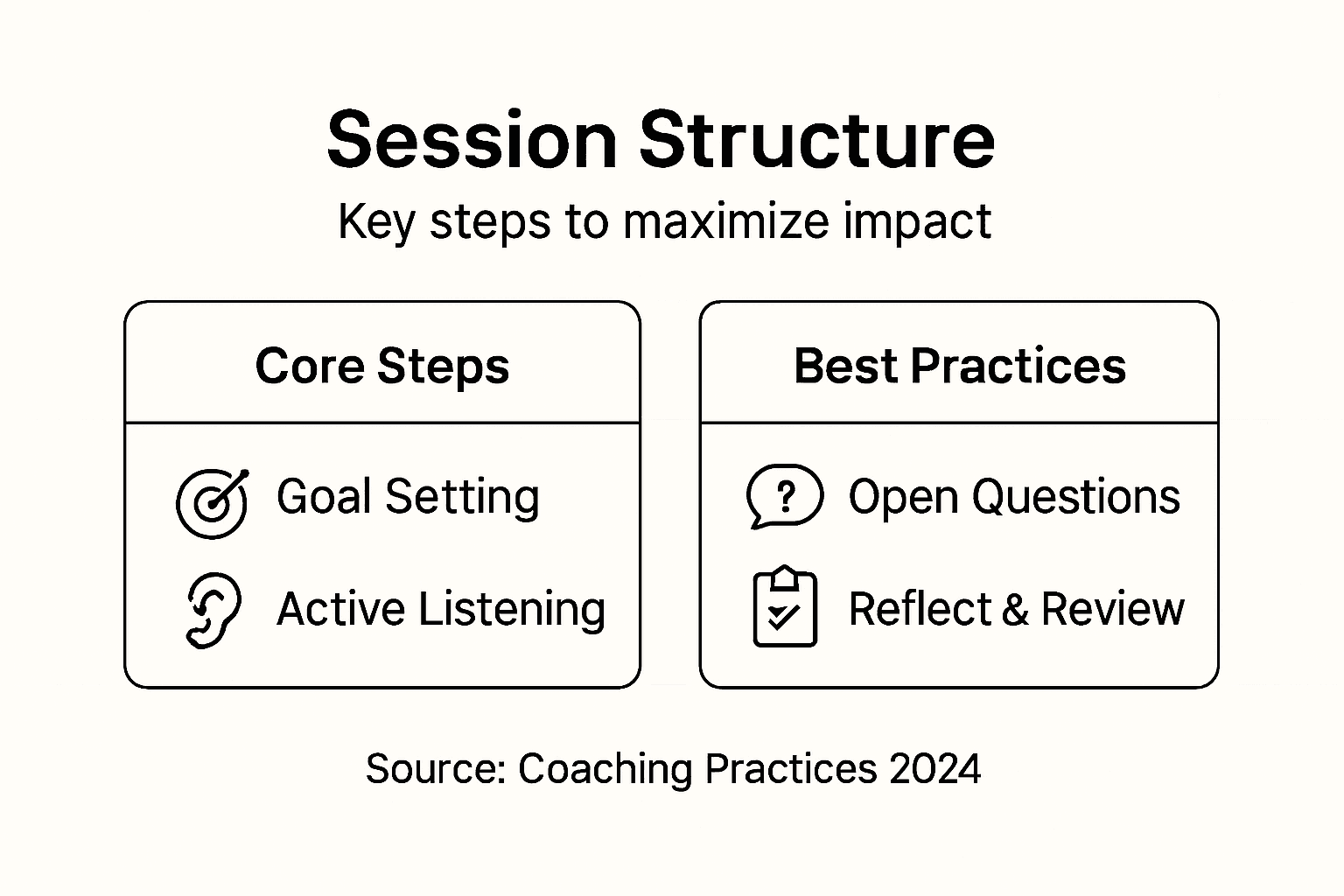
| Essential Session Elements | Core components like clear goal setting, active listening, and powerful questioning create impactful coaching experiences. |
| Roles of Coach and Coachee | Both parties share responsibilities for growth; coaches facilitate while coachees drive their own progress. |
| Avoiding Common Pitfalls | Establishing clear expectations and accountability helps mitigate challenges, ensuring a productive coaching relationship. |
Defining Coaching Session Structure and Purpose
A coaching session structure is a systematic framework designed to transform professional development through intentional, goal-oriented interactions. Effective coaching practices emphasize creating a collaborative environment where learning and growth can flourish. This structured approach ensures that both coach and client maximize their time together, focusing on clear objectives and measurable outcomes.
At its core, a coaching session structure provides a deliberate pathway for personal and professional transformation. The framework typically includes critical components such as goal setting, reflective dialogue, strategy development, and accountability mechanisms. Coaching session preparation involves creating a safe, trusting environment where participants can openly explore challenges, identify opportunities, and develop actionable strategies for improvement.
The primary purposes of a well-designed coaching session structure include:
- Establishing clear expectations
- Creating a supportive and non-judgmental space
- Facilitating deep self-reflection
- Developing targeted action plans
- Tracking measurable progress towards personal and professional goals
Successful coaching sessions are not about prescribing solutions but empowering individuals to discover their own pathways to growth. The structure serves as a flexible guide, adaptable to each client’s unique needs and circumstances, ensuring that every interaction drives meaningful change.
Pro tip: Before each coaching session, spend 10 minutes reviewing your client’s previous goals and preparing targeted questions that will help them unlock their own insights and potential.
Essential Elements of Effective Sessions
Creating an impactful coaching session requires careful attention to several core elements that transform conversations into powerful growth opportunities. Coaching techniques provide a strategic framework for guiding clients toward meaningful personal and professional development. These essential elements act as foundational pillars that support a transformative coaching experience, ensuring each interaction moves clients closer to their desired outcomes.
The key components of an effective coaching session include:
- Clear Goal Setting: Establishing specific, measurable objectives at the beginning of each session
- Active Listening: Demonstrating deep engagement and understanding of the client’s perspective
- Powerful Questioning: Using strategic inquiries that provoke reflection and insight
- Constructive Feedback: Providing balanced, actionable observations that support growth
- Accountability Mechanisms: Creating structured follow-up processes to track progress
Successful coaches understand that each session is a dynamic interaction requiring flexibility and precision. The EQ coaching approach emphasizes emotional intelligence as a critical component, enabling coaches to adapt their communication style and techniques to each client’s unique needs. This personalized strategy ensures that coaching transcends generic advice, instead delivering targeted, meaningful support that resonates with the individual’s specific challenges and aspirations.

Ultimately, effective coaching sessions are not about providing immediate solutions but about empowering clients to discover their own pathways to growth. By maintaining a structured yet flexible approach, coaches create a supportive environment that encourages self-discovery, personal accountability, and sustainable transformation.
Pro tip: Develop a pre-session ritual that helps you reset and focus your energy, ensuring you approach each coaching interaction with complete presence and intentionality.
Session Formats and Agenda Examples
Coaching sessions are not one-size-fits-all experiences, but require strategic coaching session planning that adapts to individual client needs and objectives. Different formats offer unique approaches to facilitating personal and professional growth, each designed to address specific developmental goals and learning styles.
Common coaching session formats include:
- One-on-One Individual Sessions: Personalized, deep-dive conversations focusing on individual challenges and aspirations
- Group Coaching Workshops: Collaborative environments enabling peer learning and collective problem-solving
- Virtual/Online Coaching: Digital sessions leveraging technology for flexible, global interaction
- Walk-and-Talk Coaching: Dynamic, movement-based sessions combining physical activity with strategic dialogue
- Performance Improvement Intensive: Concentrated sessions targeting specific skill development or career transitions
A typical coaching session agenda might follow this structured approach:
- Welcome and Check-in (5-10 minutes)
- Review Previous Session’s Action Items
- Current Goal or Challenge Exploration
- Deep Coaching Conversation
- Action Planning
- Session Wrap-up and Commitment Setting
Successful coaches understand that while structure provides a framework, true transformation happens through genuine connection and personalized support. The agenda serves as a flexible guide, not a rigid script, allowing for organic exploration and meaningful insights.
Here’s a summary comparing different coaching session formats and their best use cases:
| Format Type | Most Suitable For | Typical Session Length | Key Benefit |
|---|---|---|---|
| Individual One-on-One | Personalized goal setting | 45-60 minutes | Deep transformation |
| Group Coaching Workshops | Team building and peer input | 60-90 minutes | Shared learning |
| Virtual/Online Coaching | Busy professionals, remote | 30-60 minutes | Geographic flexibility |
| Walk-and-Talk Coaching | Creative problem solving | 45-60 minutes | Stimulates new thinking |
| Performance Improvement Intensive | Career transitions | 90-120 minutes | Rapid skill growth |
Pro tip: Create a flexible session template that allows for spontaneity while maintaining a clear strategic direction, ensuring each coaching interaction remains purposeful and dynamic.
Role of Coach and Coachee Responsibilities
Coaching is a collaborative partnership where specific role responsibilities create a powerful framework for personal and professional transformation. Unlike traditional hierarchical relationships, coaching demands active engagement and shared accountability from both the coach and coachee, with each party playing a distinct yet interconnected role in the growth process.
The coach’s core responsibilities include:
- Creating a safe, non-judgmental learning environment
- Using powerful questioning techniques
- Providing objective feedback
- Challenging limiting beliefs
- Supporting the coachee’s self-discovery
- Maintaining professional boundaries
Corresponding coachee responsibilities encompass:
- Setting clear, meaningful goals
- Being open to feedback
- Taking ownership of personal development
- Practicing self-reflection
- Implementing agreed-upon action steps
- Maintaining accountability for progress
Effective coaching requires mutual commitment and skill-based interaction, where the coach facilitates growth and the coachee drives the transformation. This dynamic ensures that coaching remains a proactive, results-oriented process focused on unlocking individual potential and creating sustainable personal and professional change.
The table below clarifies key differences in coach and coachee responsibilities:
| Role | Primary Focus | Required Mindset | Accountability Type |
|---|---|---|---|
| Coach | Facilitate growth | Empathetic, observant | Feedback and guidance |
| Coachee | Drive change | Open, proactive | Progress tracking, reflection |
Pro tip: Schedule a mutual expectations discussion at the start of your coaching relationship to explicitly define roles, communication preferences, and shared goals.
Common Pitfalls and How to Avoid Them
Coaching relationships can quickly derail when personal coaching challenges emerge unexpectedly. Understanding and anticipating these potential obstacles is crucial for maintaining a productive and transformative coaching experience that delivers genuine value and sustainable growth.
Common coaching pitfalls include:
- Unclear Expectations: Failing to establish clear goals and boundaries at the outset
- Dependency Syndrome: Creating an unhealthy reliance instead of fostering independence
- Over-Advising: Providing solutions instead of facilitating self-discovery
- Lack of Accountability: Not establishing concrete follow-up mechanisms
- Emotional Disconnection: Maintaining a purely transactional relationship
- Resistance to Feedback: Avoiding difficult conversations or challenging limiting beliefs
Strategies to mitigate these challenges require proactive communication and a commitment to maintaining professional coaching integrity. Coaches must consistently balance supportive guidance with challenging perspectives, creating a safe yet dynamic environment that encourages personal responsibility and authentic growth. This approach transforms potential obstacles into opportunities for deeper learning and meaningful development.
Successful coaches recognize that avoiding pitfalls is not about perfect execution but about maintaining genuine curiosity, adaptability, and a deep commitment to the client’s potential. By staying alert to these common challenges, coaches can create more impactful, transformative relationships that empower clients to unlock their true capabilities.
Pro tip: Develop a personal coaching self-assessment checklist to regularly evaluate your approach and identify potential blind spots before they become significant issues.
Transform Your Coaching Sessions for Lasting Impact
Struggling to create coaching sessions that deliver clear results and meaningful growth is a common challenge faced by many professionals. This article highlights how a purposeful coaching session structure with well-defined goals, active listening, and accountability mechanisms can overcome these obstacles and empower clients to unlock their true potential. If you seek to deepen your coaching effectiveness and build transformational relationships, these principles are essential.
Discover proven strategies and personalized support through Life Coaching Archives – Tariq Juneja and expand your skillset with insights from Agile Coaching Archives – Tariq Juneja. At https://tariqjuneja.com, Tariq Juneja brings expert guidance that helps individuals and organizations increase productivity, embrace change, and foster sustainable growth.
Ready to maximize the impact and clarity of your coaching sessions? Visit https://tariqjuneja.com today to book your free consultation and start transforming your coaching approach into a powerful catalyst for change.
Frequently Asked Questions
What is the purpose of a coaching session structure?
A coaching session structure provides a systematic framework that ensures intentional, goal-oriented interactions, helping both coach and client maximize their time together and focus on clear objectives and measurable outcomes.
What are the essential elements of an effective coaching session?
Key components include clear goal setting, active listening, powerful questioning, constructive feedback, and accountability mechanisms that work together to create a transformative coaching experience.
How can I prepare for a successful coaching session?
Preparation involves creating a safe and trusting environment, reviewing previous goals, and preparing targeted questions to guide the session and help clients unlock their own insights and potential.
What are some common coaching session formats?
Common formats include one-on-one individual sessions, group coaching workshops, virtual coaching, walk-and-talk sessions, and performance improvement intensives, each tailored to meet specific developmental goals and client needs.