
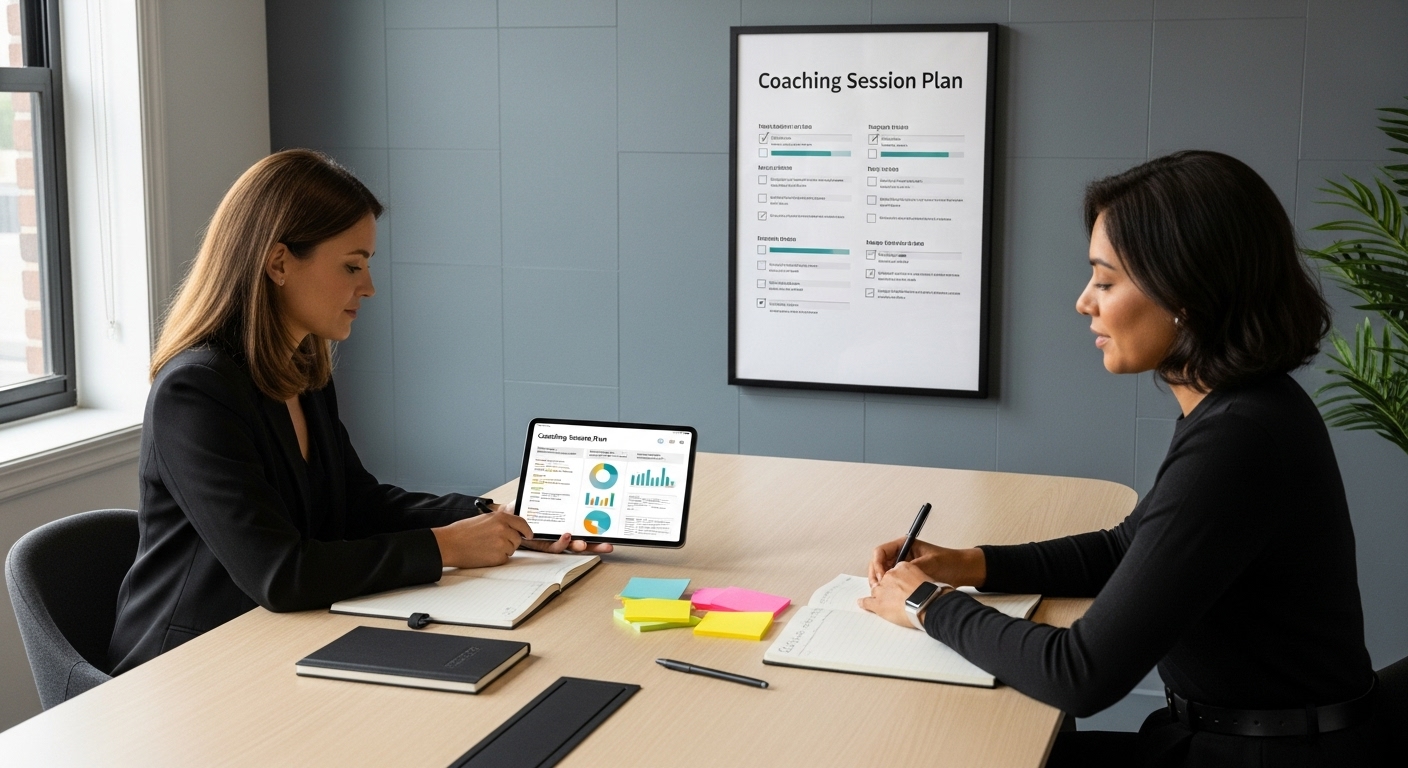
Building a coaching session plan sounds simple. Just jot down a few goals and show up, right? Not even close. One study found that coaching objectives using SMART criteria made professional growth up to 30 percent more likely to succeed. Most people skip the smallest details that actually unlock transformation. The real breakthrough comes from tiny tweaks in planning that almost nobody thinks about.
Table of Contents
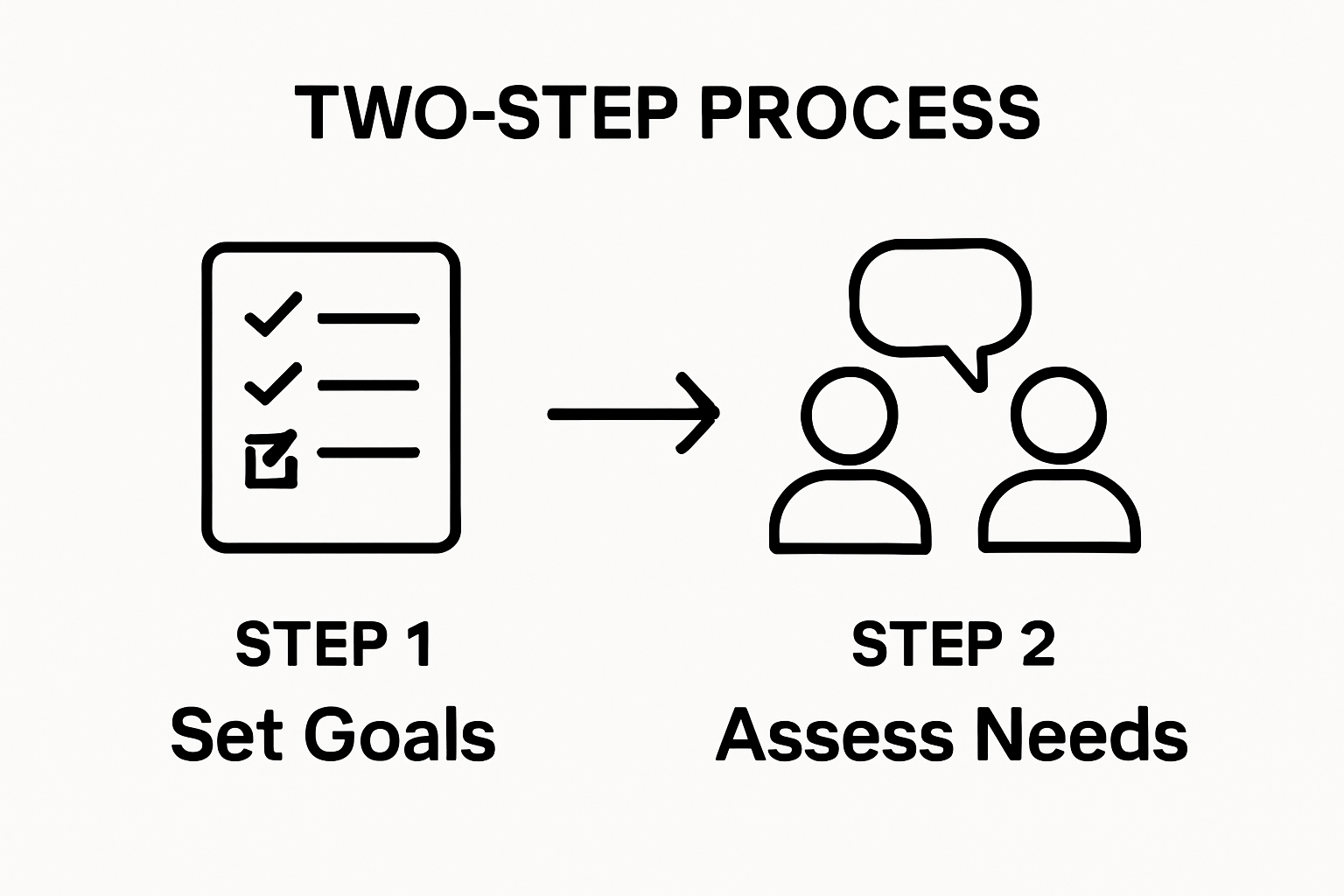
- Step 1: Define Your Coaching Objectives
- Step 2: Identify Participant Needs And Goals
- Step 3: Structure The Session Agenda
- Step 4: Prepare Engaging Content And Activities
- Step 5: Execute The Session With Confidence
- Step 6: Evaluate Effectiveness And Gather Feedback
Quick Summary
| Key Point | Explanation |
|---|---|
| 1. Set Clear Coaching Objectives | Define SMART objectives to create a focused coaching plan that drives progress and growth. |
| 2. Understand Participant Needs | Conduct deep conversations to identify unique goals, motivations, and challenges for personalized coaching. |
| 3. Structure a Flexible Session Agenda | Create a detailed agenda that accommodates participant needs while ensuring productive learning experiences. |
| 4. Prepare Engaging Content | Use diverse activities and modalities to enhance learning and connect theoretical concepts with practical application. |
| 5. Evaluate and Gather Feedback | Implement a comprehensive evaluation process post-session to capture qualitative feedback and measure impact. |
Step 1: Define Your Coaching Objectives
Crafting a successful coaching session begins with crystal clear objectives that transform potential into tangible progress. Your coaching session plan serves as a strategic roadmap, guiding both coach and client toward meaningful outcomes. The initial step requires deep introspection and precise goal setting that goes beyond surface level aspirations.
Defining your coaching objectives demands a comprehensive approach that balances professional ambition with personal growth. Start by conducting an honest assessment of your current professional landscape. What specific skills need development? What performance gaps exist in your current capabilities? These questions help establish a foundation for targeted coaching objectives.
A powerful objective moves beyond generic statements. Effective coaching objectives are specific, measurable, achievable, relevant, and time bound (SMART). For instance, instead of saying “I want to improve leadership skills,” a refined objective might read “Develop confident public speaking abilities by delivering three successful team presentations within the next quarter.”
To construct meaningful objectives, engage in a thorough self evaluation process. Consider utilizing assessment tools like personality inventories, 360 degree feedback mechanisms, or professional skills audits. These resources provide objective insights into your strengths and potential areas for improvement. Documentation becomes crucial here document your current performance baseline, aspirational goals, and specific metrics you aim to transform.
Remember that objectives are not static declarations but dynamic frameworks for growth. They should remain flexible enough to accommodate unexpected challenges while maintaining a clear direction. Your coaching session plan will evolve as you progress, with objectives serving as navigational markers guiding your professional development journey.
Successful objective setting requires commitment, honesty, and strategic thinking. By investing time in this foundational step, you create a robust coaching session plan that maximizes your potential and accelerates your professional growth.
Use this checklist to ensure your coaching objectives are clearly set and aligned for success.
| Objective Checklist Item | Description |
|---|---|
| Objectives are explicitly stated in writing | All goals are documented clearly for easy reference |
| Includes specific, measurable outcomes | Each objective has defined metrics and targets |
| Aligns with broader professional goals | Objectives support long-term career or personal development |
| Obstacles and mitigation strategies identified | Anticipated barriers and solutions are noted |
| Timeline for achieving each objective defined | Specific deadlines or timeframes are established for each objective |
Verification Checklist for Coaching Objectives:
- Objectives are explicitly stated in writing
- Each objective includes specific, measurable outcomes
- Objectives align with broader professional development goals
- Potential obstacles and mitigation strategies are identified
- Timeline for achieving each objective is clearly defined
Step 2: Identify Participant Needs and Goals
Understanding the unique landscape of participant needs forms the critical bridge between generic coaching approaches and transformative personalized experiences. This step transcends surface level conversations, requiring deep exploration and nuanced interpretation of individual motivations, challenges, and aspirational trajectories.
The process of identifying participant needs demands a multifaceted approach that combines strategic questioning, active listening, and empathetic analysis. Begin with comprehensive intake conversations that go beyond standard questionnaires. Engage participants through open ended dialogue that reveals their underlying professional and personal dynamics. These conversations should create a safe space where individuals feel comfortable expressing not just their stated goals, but their underlying fears, potential roadblocks, and genuine aspirations.
Effective needs identification requires sophisticated assessment techniques. Utilize validated assessment tools like personality inventories, skills gap analyses, and motivational profiling instruments. These resources provide objective insights that complement subjective discussions. For instance, a leadership potential assessment might reveal communication strengths or areas requiring targeted development that the participant themselves might not recognize.
Navigate potential challenges by maintaining a flexible, adaptive approach. Recognize that participant needs are dynamic and may shift throughout the coaching engagement. Develop a framework that allows periodic reassessment and goal refinement. This approach acknowledges that professional growth is not linear but an evolving journey with unexpected turns and emerging opportunities.
Translate identified needs into concrete, actionable goals that resonate with the participant’s intrinsic motivations. These goals should be specific enough to provide clear direction yet adaptable enough to accommodate unforeseen professional developments. The art of goal setting lies in striking a delicate balance between ambitious vision and pragmatic implementation.
Verification Checklist for Participant Needs Assessment:
- Comprehensive intake interview completed
- Standardized assessment tools administered
- Initial goal framework developed
- Potential obstacles and mitigation strategies identified
- Participant demonstrates clear understanding and commitment to proposed goals
By meticulously identifying participant needs, you transform coaching from a generic intervention into a personalized growth catalyst that speaks directly to individual potential.
Step 3: Structure the Session Agenda
Crafting a purposeful coaching session agenda transforms potential chaos into strategic, focused progress. The agenda serves as a navigational blueprint that guides both coach and participant through a structured yet dynamic learning experience. Effective session design requires precision, flexibility, and a deep understanding of participant needs.
Begin by establishing a clear time framework that respects both participant energy levels and learning objectives. Typical coaching sessions range between 60 to 90 minutes, but the ideal duration depends on individual participant capacity and specific goals. Design your agenda with intentional time blocks that allow for substantive exploration while preventing mental fatigue.
A robust session agenda typically incorporates several critical components. Start with a brief check in period that allows participants to transition mentally and emotionally into the coaching space. This initial segment provides an opportunity to review previous action items, assess current progress, and calibrate the session’s focus. Allocate approximately 10 to 15 minutes for this critical orientation phase.
The core learning segment should occupy the majority of your session time. Here, integrate interactive techniques that promote active engagement and deep reflection. This might include structured dialogue, reflective exercises, skill practice, or targeted problem solving activities. Vary your approaches to maintain participant interest and accommodate different learning styles. Incorporate moments of individual reflection and collaborative exploration to create a rich, multidimensional learning experience.
An often overlooked but crucial agenda component is the action planning and commitment segment. Dedicate the final portion of your session to synthesizing insights, developing concrete next steps, and establishing accountability mechanisms.
Review this session structure table to plan effective coaching sessions with clear focus, engagement, and measurable action steps.
| Session Component | Recommended Time | Purpose |
|---|---|---|
| Check-in/Orientation | 10-15 minutes | Transition to coaching space, review progress, set session focus |
| Core Learning Activities | 40-60 minutes | Active engagement, skill building, and problem solving |
| Action Planning | 10-15 minutes | Synthesize insights, define next steps, establish accountability |
Remain adaptable throughout the session. While a structured agenda provides direction, be prepared to pivot if unexpected insights or breakthrough moments emerge. The most powerful coaching conversations often arise from spontaneous exploration that cannot be entirely predicted.
Verification Checklist for Session Agenda:
- Agenda timeline is clearly defined
- Learning objectives are explicitly stated
- Specific activities and their intended outcomes are outlined
- Flexibility for organic exploration is built into the structure
- Mechanisms for accountability and follow up are established
- Participant has reviewed and agreed to the proposed agenda

Step 4: Prepare Engaging Content and Activities
Creating compelling coaching content transforms learning from passive consumption to active transformation. Engaging content serves as the catalyst that converts theoretical knowledge into practical skill development, bridging the gap between understanding and implementation. The art of preparing dynamic activities requires strategic creativity and a deep understanding of participant learning styles.
Design content that speaks directly to participant needs while challenging existing mental frameworks. This means moving beyond traditional lecture formats and embracing interactive learning experiences. Develop activities that encourage participants to explore concepts through personal reflection, peer interaction, and real world application. Role playing scenarios, interactive case studies, and experiential learning modules become powerful tools that bring theoretical concepts to life.
Consider implementing a diverse range of learning modalities to accommodate different cognitive preferences. Some participants thrive with visual representations, while others prefer hands on experiences or analytical discussions. Integrate multimedia resources like short video clips, interactive digital tools, reflective worksheets, and collaborative problem solving exercises. These varied approaches ensure that learning remains dynamic and accessible.
Preparing engaging content demands careful progression. Start with foundational concepts that build participant confidence, then gradually introduce more complex challenges that push participants beyond their comfort zones. Create a learning arc that feels both supportive and intellectually stimulating. Each activity should connect seamlessly with previous learning experiences while introducing new perspectives that expand participant understanding.
Address potential learning barriers proactively by designing activities with built in flexibility. Recognize that participants arrive with different skill levels, backgrounds, and learning preferences. Develop supplemental resources and alternative activity paths that allow individuals to engage with content at their own pace and comfort level. This approach demonstrates respect for individual learning journeys while maintaining overall session objectives.
Verification Checklist for Content Preparation:
- Activities directly align with session objectives
- Multiple learning modalities are incorporated
- Content challenges and supports participant growth
- Supplemental resources are available
- Activities can be adapted to individual participant needs
- Clear instructions and expected outcomes are defined for each activity
Ultimately, engaging content transforms coaching from a transactional interaction into a transformative learning experience that resonates long after the session concludes.
Step 5: Execute the Session with Confidence
Executing a coaching session demands more than technical preparation. Confidence emerges from a combination of thorough preparation, emotional intelligence, and authentic presence. The moment of session delivery represents the critical intersection where carefully crafted plans meet dynamic human interaction.
Begin by creating a welcoming environment that immediately establishes psychological safety. Your initial interactions set the tone for the entire coaching experience. Greet participants with genuine warmth, demonstrate active listening, and communicate clear expectations. Body language speaks volumes recognize that your physical presence communicates as powerfully as your verbal communication. Maintain an open posture, make appropriate eye contact, and project calm assurance.
Navigate the session with intentional flexibility. While your prepared agenda provides structure, remain adaptable to emerging participant needs and unexpected insights. True coaching mastery lies in balancing structured guidance with spontaneous exploration. Learn to read subtle emotional cues, knowing when to delve deeper into a topic or gently redirect conversation toward productive outcomes.
During the session, practice strategic questioning techniques that promote participant self reflection. Your role is not to provide direct solutions but to guide participants toward their own breakthrough insights. Ask open ended questions that challenge existing perspectives while maintaining a supportive tone. Encourage participants to explore their thoughts, uncover underlying motivations, and develop personal strategies for growth.
Manage potential challenges proactively by maintaining emotional neutrality and professional boundaries. When participants experience resistance or emotional complexity, respond with empathy and professional detachment. Create space for authentic emotional exploration without becoming entangled in personal narratives. Your confident, compassionate presence becomes the container that supports transformative learning.
Verification Checklist for Session Execution:
- Initial participant engagement feels warm and constructive
- Coaching objectives are periodically referenced
- Participant demonstrates increasing self awareness
- Challenging moments are navigated with professional composure
- Clear action steps are collaboratively developed
- Participant demonstrates commitment to forward movement
Confidence in coaching emerges not from perfection, but from genuine commitment to participant growth and continuous personal development.
Step 6: Evaluate Effectiveness and Gather Feedback
Evaluation transforms coaching from a subjective experience into a measurable, strategic intervention. Effective feedback mechanisms are the critical lens through which coaching impact becomes visible, providing insights that drive continuous improvement and demonstrate tangible value.
Begin the evaluation process immediately following the coaching session. Implement a comprehensive feedback strategy that captures both quantitative and qualitative data. Design assessment tools that go beyond surface level satisfaction surveys. Create nuanced questionnaires that explore not just participant reaction, but deeper learning transfer, behavioral changes, and potential skill development.
Immediate post session feedback should focus on participant immediate impressions and learning insights. Use a combination of structured surveys and open ended reflection prompts that encourage participants to articulate specific takeaways. Invite participants to share not just what they learned, but how they anticipate applying these insights in their professional context. This approach transforms feedback from a passive reporting mechanism into an active learning opportunity.
Extend your evaluation beyond the immediate session. Implement a multi stage feedback process that includes follow up assessments at predetermined intervals. These subsequent check ins allow you to track long term impact, observe skill implementation, and identify any challenges participants encounter while translating coaching insights into practical action. Such longitudinal evaluation provides a more comprehensive understanding of coaching effectiveness.
Navigate potential challenges by maintaining a non defensive, growth oriented approach to feedback. Create an environment where participants feel safe providing honest, constructive input. Recognize that critical feedback represents an opportunity for refinement rather than a personal critique. Develop the capacity to receive and integrate participant perspectives with professional objectivity.
Verification Checklist for Coaching Evaluation:
- Immediate post session feedback form completed
- Detailed reflection on learning and potential application documented
- Follow up assessment timeline established
- Mechanisms for tracking long term behavioral changes identified
- Participant feedback incorporated into future coaching design
- Continuous improvement strategy developed based on collected insights
Truly effective coaching evaluation transcends measurement. It becomes a collaborative process of ongoing growth and mutual learning.
Transform Your 2025 Coaching Results with Expert Guidance
Struggling to translate coaching objectives, needs assessments, and agenda structure into real-world results? Many leaders know the theories. But making sessions truly impactful can feel out of reach or overwhelming. Your ambition for personalized growth and measurable change does not have to end with just planning. Practical results come from strategies tested and refined at the highest levels, especially when change management and strategic coaching are needed most. For actionable resources and insights, explore our Change Management resources next.
Take action now and access exclusive, one-on-one support from one of the world’s top personal coaches. If you want to accelerate outcomes and overcome barriers to growth, a $3000USD/hour private session could be the turning point you need. See how Tariq Juneja’s tailored coaching can address your coaching plan from objective setting to advanced feedback cycles. Spaces are limited. Get started today for lasting 2025 success.
Frequently Asked Questions
What are the key components of an effective coaching session plan?
An effective coaching session plan includes clearly defined objectives, understanding participant needs, a structured agenda, engaging content and activities, confident execution, and thorough evaluation methods.
How can I ensure that my coaching objectives are measurable?
To ensure that your coaching objectives are measurable, use the SMART criteria: make them Specific, Measurable, Achievable, Relevant, and Time-bound. Document clear outcomes and metrics for success.
What techniques can I use to identify participant needs in coaching?
You can identify participant needs through comprehensive intake interviews, active listening, and utilizing validated assessment tools such as personality inventories and skills gap analyses to gain deeper insights into their motivations and challenges.
How should I gather feedback after a coaching session?
Gather feedback by implementing immediate post-session surveys that ask participants specific questions about their learning experiences and anticipated applications of insights. Also, include follow-up assessments over time to track long-term impact and skill implementation.
Recommended
- Change Management Archives – Tariq Juneja
- post 2 – Tariq Juneja
- A post – Tariq Juneja