

Over 80 percent of American managers report that employee development programs directly impact organizational success. When teams are given the right tools and support, their productivity and satisfaction increase dramatically. Knowing how to assess employee needs and design targeted coaching actions can set your company apart. In this article, you will discover practical approaches to build a results-driven coaching plan that addresses real workforce challenges and creates lasting value.
Table of Contents
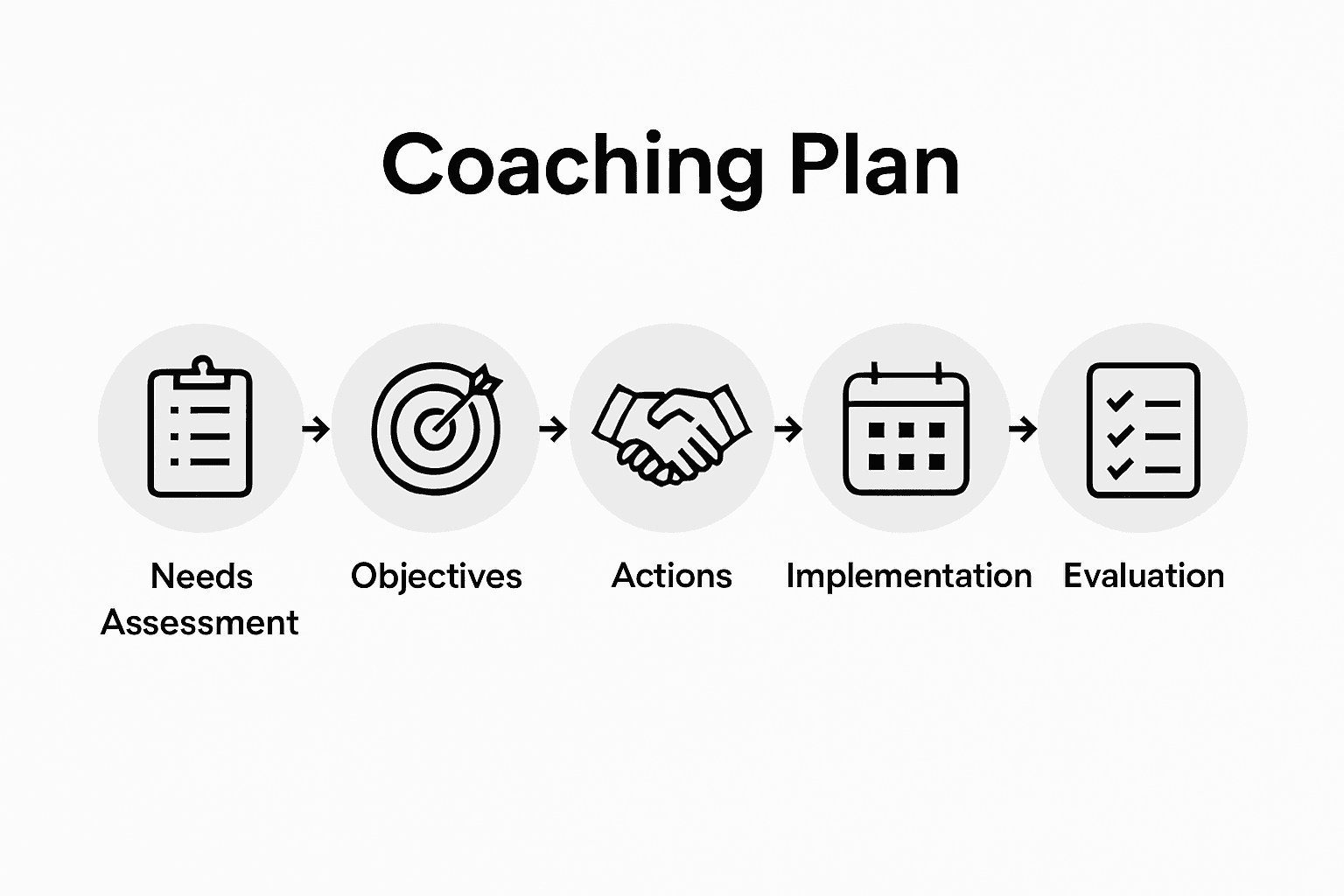
- Step 1: Assess Current Employee Needs
- Step 2: Set Clear Coaching Objectives
- Step 3: Design Individualized Coaching Actions
- Step 4: Implement Coaching Sessions Effectively
- Step 5: Evaluate Progress And Adjust Plans
Quick Summary
| Key Insight | Explanation |
|---|---|
| 1. Assess Employee Needs First | Start with a thorough assessment to identify skills and performance gaps in your workforce. This sets the stage for effective coaching. |
| 2. Set SMART Coaching Objectives | Define specific, measurable, attainable, relevant, and time-bound goals to guide coaching efforts and track progress. |
| 3. Design Personalized Coaching | Tailor coaching actions to individual employees’ strengths and growth opportunities for a more impactful development strategy. |
| 4. Implement Sessions Effectively | Create structured coaching sessions that foster open dialogue, encourage self-reflection, and focus on consistent progress. |
| 5. Regularly Evaluate and Adjust | Continuously assess progress and adjust coaching plans based on performance metrics and employee feedback to ensure ongoing development. |
Step 1: Assess Current Employee Needs
Assessing current employee needs represents the foundational first step in creating an effective coaching plan that drives organizational performance. This critical process helps you understand the existing skills, knowledge gaps, and performance challenges within your workforce.
To conduct a comprehensive needs assessment, start by gathering data through multiple channels. Systematic analysis of organizational performance involves collecting information through surveys, performance reviews, one-on-one interviews, and direct observation of employee work patterns. Focus on understanding not just individual skill levels, but also broader organizational objectives and potential barriers preventing optimal performance.
Your assessment should include quantitative metrics like productivity rates, error frequencies, and quality indicators, as well as qualitative insights about employee motivation, communication effectiveness, and team dynamics. Comprehensive training needs evaluation helps identify precise areas where targeted coaching interventions can create meaningful improvements.
Professional Tip: Design your assessment tools to be both comprehensive and concise, ensuring employees feel comfortable providing honest feedback without feeling overwhelmed by lengthy questionnaires.
Here is a summary of common data collection methods for employee needs assessment and their unique strengths:
| Method | Best For | Insight Provided |
|---|---|---|
| Surveys | Large groups | Quantitative trends |
| Performance Reviews | Recent performance history | Individual strengths and gaps |
| One-on-One Interviews | Deep exploration | Personal motivations |
| Direct Observation | Work behaviors in context | Real-time job challenges |
Step 2: Set Clear Coaching Objectives
Setting clear coaching objectives transforms your employee development strategy from a vague aspiration into a targeted performance improvement roadmap. This crucial step provides direction, focus, and measurable outcomes for your coaching intervention.

Defining precise planning objectives involves identifying specific performance gaps and creating measurable goals that align with both individual employee potential and organizational priorities. Break down your objectives into concrete, actionable components that are specific, measurable, achievable, relevant, and time-bound (SMART). Consider factors like current skill levels, performance metrics, career development aspirations, and strategic business needs when crafting these objectives.
Your coaching objectives should clearly articulate the desired transformation. Learning outcome frameworks suggest presenting clear questions and expected results to help participants understand precisely what they will achieve through the coaching process. This approach not only provides clarity but also motivates employees by making their development path transparent and meaningful.
Professional Tip: Collaborate directly with employees when finalizing coaching objectives to ensure their personal motivation and organizational goals are authentically aligned.
The following table highlights key types of coaching objectives and their measurable impacts:
| Objective Type | Example Goal | Potential Measurable Impact |
|---|---|---|
| Skill Improvement | Increase technical proficiency | Fewer errors, faster tasks |
| Behavioral Change | Enhance teamwork | Higher peer review scores |
| Career Development | Prepare for leadership | Promotion rate increases |
| Alignment with Business Needs | Improve customer satisfaction | Better client survey results |
Step 3: Design Individualized Coaching Actions
Designing individualized coaching actions transforms generic training into a powerful personalized development strategy that speaks directly to each employee’s unique strengths and growth opportunities. This critical step ensures that your coaching approach is precisely tailored to maximize individual potential and organizational performance.
Structuring effective one-on-one coaching sessions requires a nuanced approach that combines systematic planning with flexible execution. Begin by mapping out specific learning pathways that align with the individual employee’s current skills, career aspirations, and identified performance gaps. Consider creating a customized development matrix that outlines specific competencies to be addressed, realistic milestones, and measurable outcomes.
Effective individualization demands more than just identifying skill development areas. Collaborative coaching models emphasize the importance of active participation and mutual goal setting. Engage employees in designing their own development roadmap, which increases commitment and motivation. Use a combination of techniques like skill assessments, reflective exercises, peer learning opportunities, and targeted training interventions to create a comprehensive and dynamic coaching experience.
Professional Tip: Create flexibility within your individualized coaching plan by building in periodic review points that allow for real-time adjustments based on employee progress and evolving organizational needs.
Step 4: Implement Coaching Sessions Effectively
Implementing coaching sessions effectively transforms theoretical development strategies into tangible performance improvements. This critical step bridges the gap between planning and actual skill transformation through structured and purposeful interactions.
Executing successful one-on-one coaching techniques requires meticulous preparation and strategic engagement. Start by establishing a consistent session framework that includes clear agendas, focused discussion points, and dedicated time for reflective dialogue. Create an environment of psychological safety where employees feel comfortable exploring their challenges and potential growth areas. Develop a rhythm of communication that balances structured guidance with organic conversation allowing for genuine insights and personal breakthroughs.
Collaborative coaching models emphasize the importance of active participation and mutual learning. Design sessions that encourage employees to drive their own development by asking powerful questions, providing constructive feedback, and creating opportunities for self reflection. Integrate interactive techniques such as role playing scenario analysis and skill demonstration to make learning dynamic and engaging. Ensure each session builds upon previous conversations while maintaining a forward looking perspective that motivates continuous improvement.
Professional Tip: Record brief session summaries and action items immediately after each coaching meeting to maintain accountability and track incremental progress.
Step 5: Evaluate Progress and Adjust Plans
Evaluating progress and adjusting coaching plans is crucial for maintaining the momentum of employee development and ensuring sustained organizational growth. This step transforms your coaching strategy from a static program into a dynamic continuous improvement process.
Training program effectiveness assessment requires a systematic approach that combines quantitative performance metrics with qualitative feedback. Develop a comprehensive evaluation framework that tracks individual employee progress against established objectives. Use a combination of performance indicators such as skill improvement rates, productivity metrics, behavioral changes, and direct stakeholder feedback. Create structured review sessions where employees can transparently discuss their achievements challenges and areas requiring additional support.
Continuous organizational learning strategies emphasize the importance of adaptive coaching plans. Build flexibility into your evaluation process by establishing regular checkpoints for plan recalibration. This might involve quarterly performance reviews skill reassessments and collaborative goal refinement. Encourage a growth mindset that views adjustments not as failures but as opportunities for targeted development. Use data driven insights to personalize coaching interventions and address emerging skill gaps proactively.
Professional Tip: Implement a simple traffic light system during progress reviews green for on track yellow for potential improvements red for significant deviation to quickly visualize and communicate coaching effectiveness.
Unlock Your Team’s Full Potential with Expert Agile Coaching
If you found the step-by-step coaching plan insightful but struggle with designing tailored coaching actions or measuring progress effectively you are not alone. Many leaders face challenges in aligning employee development with organizational goals and maintaining momentum for lasting change. Key concerns often include setting clear coaching objectives, delivering individualized coaching experiences, and adapting plans based on real-time feedback.
This is where Agile Coaching Archives – Tariq Juneja can help. By embracing principles of agile coaching you gain strategies to continuously assess needs, adjust development plans flexibly, and foster a culture of ongoing growth. Practical coaching approaches combined with transformational leadership techniques transform your coaching process into a dynamic, results-driven pathway.
Take the next crucial step now to empower your workforce and ignite real performance improvements. Visit Tariq Juneja to explore coaching programs that align with your challenges and goals. Discover tailored solutions in Change Management Archives – Tariq Juneja and Life Coaching Archives – Tariq Juneja to enhance employee motivation and achieve transformational results. Don’t wait to transform your coaching plans into measurable achievements. Connect today to book your free consultation and start leading change with confidence.
Frequently Asked Questions
How can I assess current employee needs for a coaching plan?
Start by gathering data through surveys, performance reviews, one-on-one interviews, and observing work patterns. This approach helps identify skills, knowledge gaps, and performance challenges effectively.
What are some clear coaching objectives I should set for my employees?
Focus on creating SMART (Specific, Measurable, Achievable, Relevant, Time-bound) goals. For example, if an employee aims to enhance technical skills, set an objective like “increase proficiency by 20% within three months.”
How can I design individualized coaching actions for different employees?
Tailor the coaching plan to each employee’s strengths and career aspirations. Create a customized development matrix that addresses specific competencies, milestones, and measurable outcomes based on their performance gaps.
What should I include in effective coaching session implementation?
Establish a consistent framework with clear agendas and time for open discussion. Create a safe environment that encourages employees to share their challenges and actively engage in their own development process.
How can I evaluate the progress of my coaching plan?
Utilize both quantitative metrics and qualitative feedback to assess employee progress against established goals. Schedule regular review sessions to discuss achievements and adjust goals as necessary, maintaining flexibility in your coaching approach.