

More than 80 percent of american organizations now use business coaching to accelerate growth and develop stronger leaders. In today’s fast-changing market, businesses need more than just traditional management techniques to stay ahead. Understanding what coaching truly means in the business context can help professionals pinpoint proven methods that unlock real potential and lead to lasting improvements in both individual performance and overall company results.
Table of Contents
- Defining Coaching In The Business Context
- Types Of Business Coaching Approaches
- Core Principles And Key Characteristics
- Roles And Responsibilities Of Business Coaches
- Real-World Business Coaching Applications
- Risks, Limitations, And Misconceptions
Key Takeaways
| Point | Details |
|---|---|
| Coaching Enhances Performance | Business coaching focuses on unlocking potential through collaborative partnerships to improve individual and organizational performance. |
| Diverse Coaching Approaches | Various coaching methodologies, such as performance and leadership coaching, cater to different developmental needs and organizational objectives. |
| Core Principles Guide Coaching | Effective business coaching is client-centered, goal-oriented, and emphasizes continuous learning and personalized strategies. |
| Technological Integration Advances Coaching | The use of AI and data-driven tools enhances coaching effectiveness by providing real-time assessments and personalized pathways for growth. |
Defining Coaching in the Business Context
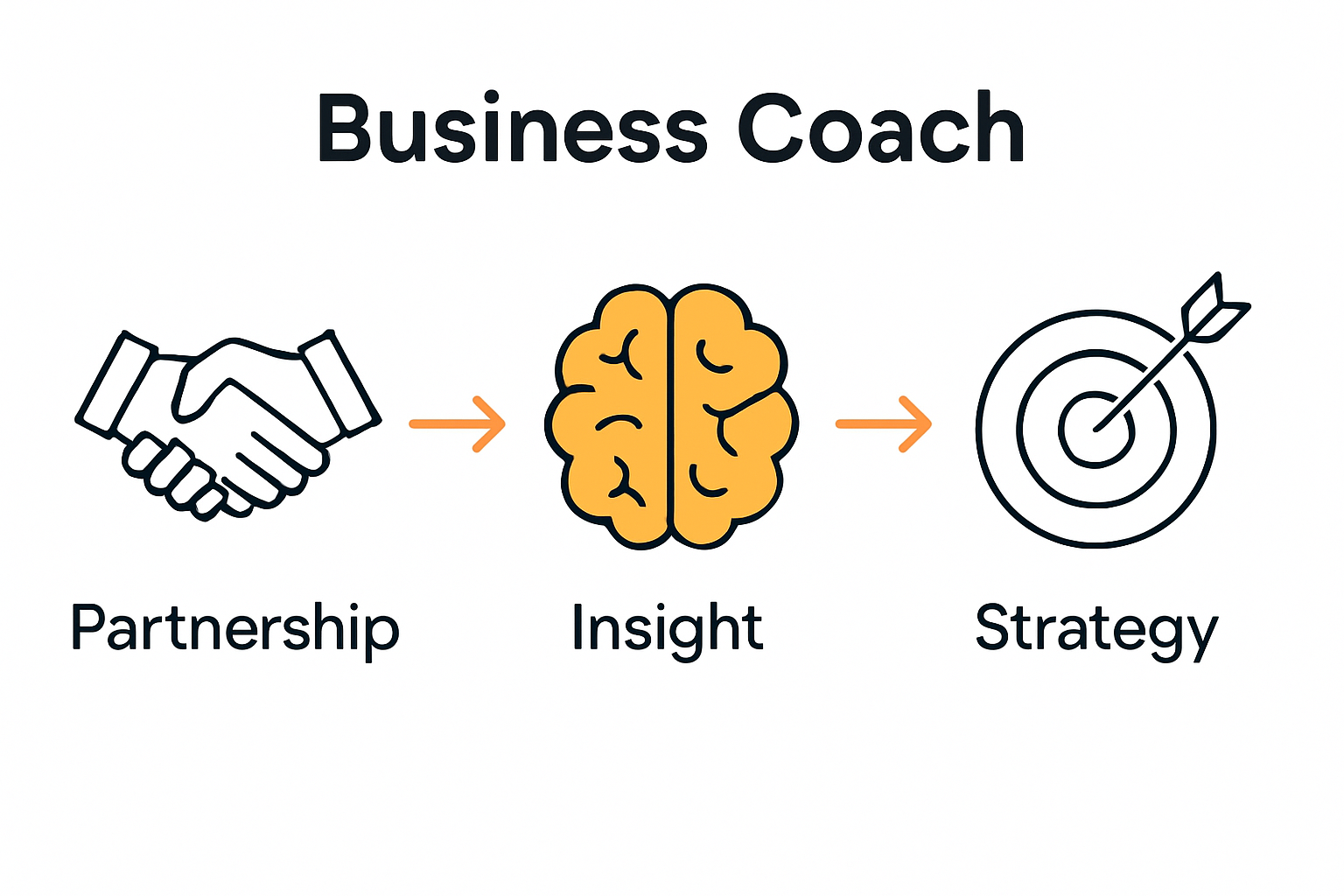
Business coaching represents a strategic intervention designed to enhance individual and organizational performance through a targeted, collaborative partnership. Unlike traditional management approaches, coaching focuses on unlocking potential, driving personal growth, and creating sustainable improvements in professional capabilities.
At its core, coaching in business is fundamentally about facilitating transformative learning and development. Research defines coaching as a synergetic, goal-oriented process that prioritizes facilitation and continuous improvement. The dynamic relationship between a coach and client aims to generate meaningful performance breakthroughs by identifying strengths, addressing limitations, and creating actionable strategies for professional advancement.
The primary objectives of business coaching encompass multiple critical dimensions:
- Developing leadership skills and emotional intelligence
- Enhancing individual and team performance
- Creating personalized growth strategies
- Addressing organizational challenges through targeted interventions
- Promoting a culture of continuous learning and adaptation
Business coaching operates through a structured yet flexible methodology that emphasizes mutual collaboration, open communication, and measurable outcomes. Coaching interventions are designed to provide professionals with the tools, perspectives, and support necessary to navigate complex business environments, overcome obstacles, and achieve strategic objectives with greater efficiency and confidence.
Types of Business Coaching Approaches
Business coaching encompasses multiple strategic approaches designed to address diverse organizational and individual development needs. Contemporary coaching methodologies integrate multiple theoretical perspectives, helping professionals navigate complex performance challenges and unlock their potential.
Several prominent business coaching approaches have emerged to support different organizational objectives:
1. Performance Coaching
- Focuses on improving specific work-related skills
- Targets individual and team productivity
- Uses measurable performance metrics
- Addresses skill gaps and performance limitations
2. Leadership Coaching
- Develops executive and managerial capabilities
- Enhances strategic thinking and decision making
- Builds emotional intelligence and communication skills
- Prepares emerging leaders for advanced organizational roles
3. Career Development Coaching
- Supports professional growth and career trajectory
- Helps individuals identify and pursue career objectives
- Provides strategic guidance for skill enhancement
- Facilitates professional networking and opportunity identification
The GROW model represents a structured approach widely used in business coaching, offering a systematic framework for goal setting and problem solving. This method breaks down coaching interactions into Goal, Reality, Options, and Will stages, enabling a comprehensive and actionable approach to professional development. By integrating cognitive-behavioral techniques and structured methodological frameworks, business coaching approaches continue to evolve, providing nuanced strategies for individual and organizational transformation.

Core Principles and Key Characteristics
Business coaching operates on a sophisticated framework of principles that distinguish it from traditional management approaches. Coaching fundamentally aims to facilitate personal and professional development through a structured, collaborative, and transformative process that empowers individuals to unlock their maximum potential.
Core Principles of Business Coaching:
- Client-Centered Approach
- Collaborative Partnership
- Goal-Oriented Methodology
- Continuous Learning and Growth
- Personalized Development Strategies
At its essence, coaching is a dynamic facilitation process that goes beyond simple instruction. Professional coaching supports learners in achieving specific personal and organizational objectives by providing targeted guidance, inspiring motivation, and creating actionable development pathways. The relationship between coach and client is built on mutual trust, open communication, and a commitment to measurable progress.
Key characteristics that define effective business coaching include:
- Profound respect for the client’s inherent capabilities
- Non-directive guidance emphasizing self-discovery
- Systematic approach to identifying and overcoming performance barriers
- Evidence-based techniques for skill enhancement
- Holistic perspective integrating personal and professional growth
Successful business coaching transcends traditional training models by creating a personalized, adaptive environment where professionals can explore their potential, challenge existing limitations, and develop sustainable strategies for continuous improvement. The ultimate goal remains empowering individuals to generate breakthrough performance and meaningful organizational transformation.
Roles and Responsibilities of Business Coaches
Business coaches play a critical role in driving organizational and individual performance by providing targeted guidance and strategic support. Coaches operate across multiple levels of professional development, designing interventions that address complex performance challenges and unlock potential.
Key Responsibilities of Business Coaches:
- Performance Assessment
- Goal Alignment
- Skill Development
- Behavioral Modification
- Strategic Problem Solving
- Organizational Transformation
Performance and Strategic Support
Agile coaches specifically impact team efforts, strategies, knowledge, and skills by creating adaptive frameworks that enhance organizational capabilities. They provide positive support, feedback, and advice designed to improve personal effectiveness and drive meaningful professional growth.
Core Coaching Competencies:
- Diagnostic Skills
- Interpersonal Communication
- Strategic Thinking
- Emotional Intelligence
- Change Management
- Performance Optimization
Successful business coaches function as strategic partners, combining psychological insight with professional expertise to help individuals and teams overcome performance barriers. Their responsibilities extend beyond traditional training, focusing on sustainable behavioral transformation and creating environments that foster continuous learning and professional excellence.
Real-World Business Coaching Applications
Coaching strategies have become critical in navigating complex business environments, particularly in rapidly changing organizational landscapes where adaptability is key to success. Businesses increasingly recognize coaching as a strategic tool for addressing performance challenges and driving sustainable growth.
Practical Coaching Application Areas:
- Leadership Development
- Performance Enhancement
- Change Management
- Strategic Planning
- Team Dynamics Optimization
- Innovation Acceleration
In today’s volatile business environments, coaching helps employees develop systematic thinking and innovative solutions, enabling organizations to respond effectively to unprecedented challenges. The approach goes beyond traditional training by creating adaptive frameworks that support continuous learning and strategic problem solving.
Technology-Enabled Coaching Innovations:
- AI-Powered Performance Analysis
- Virtual Coaching Platforms
- Real-Time Skill Assessment Tools
- Data-Driven Developmental Tracking
- Personalized Learning Algorithms
- Remote Coaching Interventions
Successful business coaching now integrates advanced technologies and psychological insights, transforming how professionals approach personal and organizational development. By combining human expertise with technological capabilities, coaches can deliver more precise, impactful, and scalable solutions that drive meaningful performance improvements across diverse business contexts.
Risks, Limitations, and Misconceptions
Business coaching, while powerful, is not a universal solution and comes with potential challenges that organizations must carefully navigate. Stereotypes and misunderstandings can significantly impact the effectiveness of coaching interventions, creating barriers to meaningful professional development.
Common Misconceptions About Business Coaching:
- Coaching is a quick fix for performance issues
- Only underperforming employees need coaching
- Coaching is identical to mentoring or consulting
- Results are guaranteed and instantaneous
- Coaches have all the answers
- Coaching works identically for every individual
Ethical considerations around technological integration pose significant challenges, particularly with the emergence of AI-assisted coaching platforms. Concerns include data privacy, potential algorithmic biases, and the risk of technological solutions replacing human connection and nuanced understanding.
Key Potential Risks in Business Coaching:
- Misalignment with organizational objectives
- Lack of systematic implementation
- Insufficient coach qualifications
- Potential client resistance
- Unrealistic expectations
- Inadequate performance measurement
Effective coaching requires a sophisticated, nuanced approach that acknowledges individual differences, organizational complexities, and the inherent limitations of standardized development strategies. Successful implementation demands careful selection of coaches, clear objective setting, and a commitment to ongoing evaluation and adaptation.
Unlock Your Business Potential with Expert Coaching Solutions
Struggling to translate coaching meaning into real business transformation There is a clear need for targeted strategies that boost leadership skills improve team performance and foster continuous growth Our expert guidance aligns perfectly with the challenges outlined in the Complete Guide to Coaching Meaning in Business Our approach focuses on personalized development plans that empower professionals to overcome limitations and achieve breakthrough results through proven methodologies like the GROW model
Discover how Agile Coaching Archives – Tariq Juneja can create adaptive frameworks for your business success and explore transformative strategies in Change Management Archives – Tariq Juneja that address organizational obstacles effectively
Take control of your professional growth today by partnering with a coach who understands your goals and challenges Visit https://tariqjuneja.com now to book a free consultation and start developing the skills that will drive lasting impact in your business and career
Frequently Asked Questions
What is the definition of coaching in a business context?
Coaching in business refers to a strategic partnership aimed at improving individual and organizational performance by unlocking potential and driving personal growth through collaborative support.
What are the primary objectives of business coaching?
The primary objectives of business coaching include developing leadership skills, enhancing performance, addressing organizational challenges, creating personalized growth strategies, and promoting a culture of continuous learning.
What types of coaching approaches are commonly used in business?
Common coaching approaches in business include performance coaching, leadership coaching, and career development coaching, each targeting specific development needs and skills for individuals and teams.
What are the key characteristics of effective business coaching?
Effective business coaching includes a client-centered approach, collaborative partnerships, goal-oriented methodologies, personalized development strategies, and a focus on continuous learning and growth.
Recommended
- Understanding the Role of Coaching in Business Growth – Tariq Juneja
- Understanding the Benefits of Business Coaching – Tariq Juneja
- Understanding the Coaching Process Overview for Growth – Tariq Juneja
- Management Coaching: Everything You Need to Know – Tariq Juneja
- How to Manage Marketing Team for B2B Growth Success – Kadima