

Balancing independence with ever-changing responsibilities can leave young professionals in cities like New York or Berlin feeling stuck or overwhelmed. The transition from teenage years to adulthood often brings significant emotional and career challenges, making it easy to lose focus or struggle with decision making. Professional coaching offers personalized support to help build resilience, clarify goals, and stay motivated, giving young adults the tools they need for personal growth and workplace success.
Table of Contents
- What Coaching for Young Adults Means
- Types of Coaching for Young Adults
- How Coaching Benefits Productivity and Well-Being
- Skills and Tools Used in Coaching Sessions
- Common Pitfalls and How to Avoid Them
Key Takeaways
| Point | Details |
|---|---|
| Coaching as a Partnership | Coaching for young adults involves a collaborative relationship that emphasizes personalized guidance and self-discovery during the transition to adulthood. |
| Diverse Coaching Types | Various coaching types, including academic, career, life, executive, and performance coaching, address specific needs of emerging professionals. |
| Focus on Productivity and Well-Being | Coaching significantly enhances clarity, motivation, and emotional regulation, directly affecting overall productivity and personal well-being. |
| Pitfalls to Avoid | Common pitfalls include unrealistic expectations and inconsistent commitment; maintaining transparency and active participation are crucial for success. |
What Coaching for Young Adults Means
Coaching for young adults represents a strategic partnership designed to navigate the complex transition from adolescence into independent adulthood. Unlike traditional mentorship, professional coaching provides personalized guidance specifically tailored to emerging adult challenges. Personalized coaching supports individuals in developing critical life skills during a pivotal developmental period.
The coaching process focuses on several key developmental domains that are essential for young adult success:
- Personal Identity Formation: Helping individuals understand their core values and strengths
- Career Exploration: Developing strategic pathways for professional growth
- Emotional Intelligence: Building resilience and self-management skills
- Decision-Making: Creating frameworks for effective personal and professional choices
At its core, coaching empowers young adults by creating a structured environment for self-discovery and intentional personal development. Life coaching helps individuals identify goals through a collaborative process that emphasizes accountability, motivation, and strategic planning. Unlike therapy, coaching remains forward-focused, concentrating on potential and future achievements rather than past challenges.
Professional coaching provides young adults with a unique opportunity to receive objective, non-judgmental support during a transformative life stage. Coaches serve as strategic partners who help clients overcome obstacles, challenge limiting beliefs, and unlock their inherent potential for growth and success.
Pro tip: Schedule regular reflection sessions with your coach to track personal growth and recalibrate your goals dynamically.
Types of Coaching for Young Adults
Coaching for young adults encompasses multiple specialized approaches designed to address the diverse developmental needs of emerging professionals. Academic coaching focuses on personalized support to help individuals navigate complex personal and professional transitions effectively.
The primary types of coaching for young adults include:
- Academic Coaching: Targeting student success through motivation, study skills, and well-being
- Career Coaching: Helping individuals explore professional pathways and develop career strategies
- Life Coaching: Supporting holistic personal development and goal achievement
- Executive Coaching: Preparing emerging leaders for professional challenges and leadership roles
- Performance Coaching: Enhancing individual potential and addressing specific skill development
Each coaching type offers unique benefits tailored to specific developmental stages and individual needs. Professional coaching provides a structured approach to personal growth, allowing young adults to receive targeted guidance that addresses their specific challenges and aspirations.
The delivery of coaching has also evolved, with options ranging from traditional in-person sessions to technology-enabled virtual coaching platforms. This flexibility allows young adults to access support that fits their lifestyle, schedule, and preferred learning method.
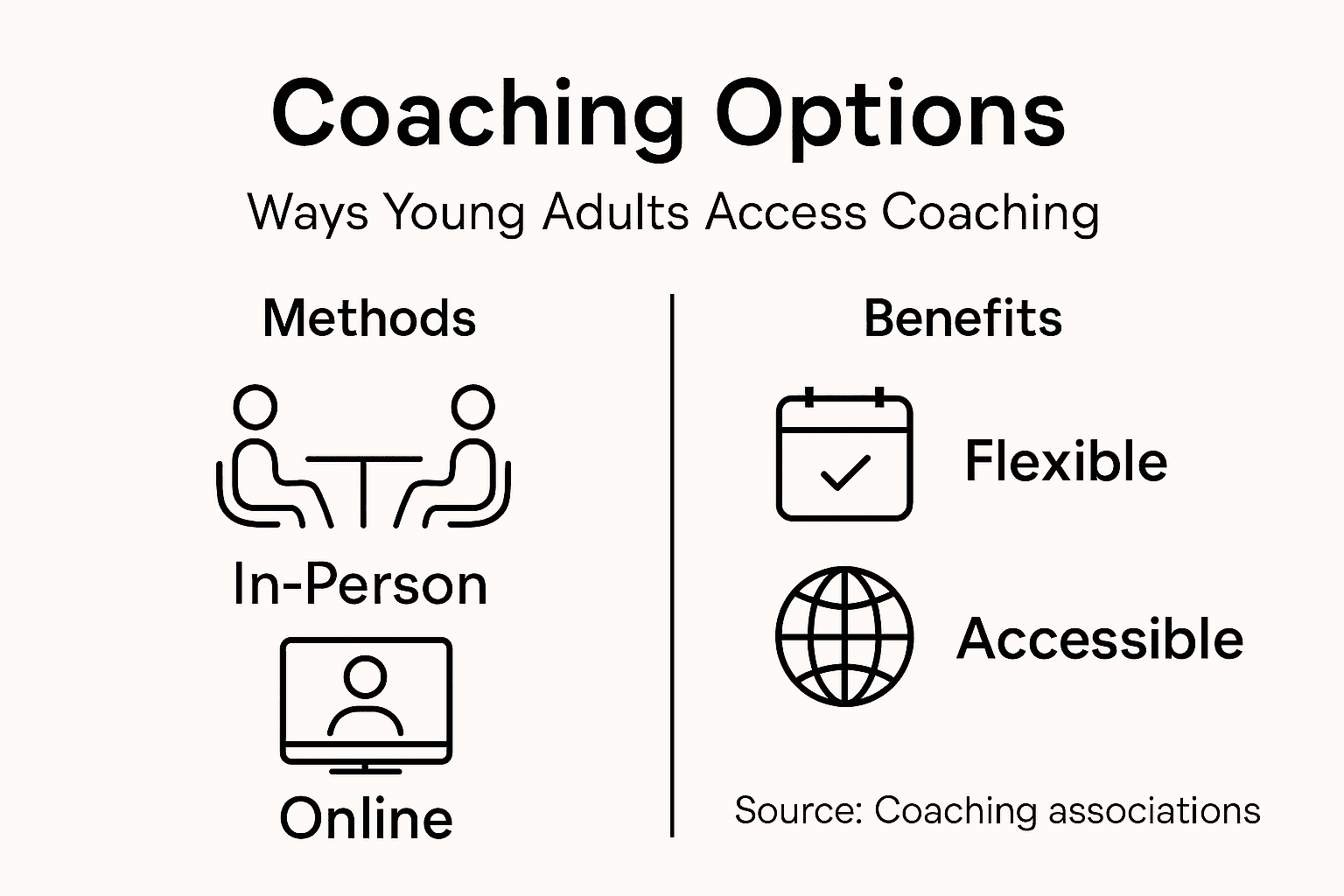
This comparison highlights traditional in-person vs. virtual coaching delivery:
| Delivery Method | Accessibility | Interaction Style | Typical Use Cases |
|---|---|---|---|
| In-Person Coaching | Location dependent | Face-to-face | Local professionals, students |
| Virtual Coaching | Available anywhere | Video/online sessions | Busy/remote young adults |
Here is a summary of coaching types and which young adult needs they address:
| Coaching Type | Main Focus Area | Ideal For |
|---|---|---|
| Academic Coaching | Improving study skills, well-being | Students in transition |
| Career Coaching | Exploring job paths, career growth | Early-career adults |
| Life Coaching | Personal development, goal setting | Young adults in change |
| Executive Coaching | Leadership, workplace strategies | Emerging professionals |
| Performance Coaching | Enhancing specific skill sets | Motivated individuals |
Pro tip: Choose a coaching approach that aligns with your specific personal and professional development goals, and remain open to exploring multiple coaching styles.
How Coaching Benefits Productivity and Well-Being
Coaching supports young adults in gaining clarity and maintaining motivation, which directly impacts their overall productivity and personal well-being. By providing targeted guidance, coaching helps individuals navigate complex personal and professional challenges more effectively.
The key benefits of coaching for productivity and well-being include:
- Emotional Regulation: Developing skills to manage stress and anxiety
- Strategic Planning: Creating clear, achievable goals and action plans
- Self-Awareness: Understanding personal strengths and potential limitations
- Confidence Building: Enhancing self-belief and professional capabilities
- Resilience Development: Learning to adapt and overcome workplace challenges
Career coaching offers particularly significant advantages for young professionals. Professional development becomes more structured and intentional, with individuals gaining insights into their career trajectories and personal potential. Career coaching enhances work well-being by addressing diverse personal and environmental factors that impact professional engagement and mental health.

By providing a supportive and objective perspective, coaching helps young adults transform potential obstacles into opportunities for growth. The process goes beyond traditional mentorship, offering personalized strategies that align with individual aspirations and professional goals.
Pro tip: Invest time in selecting a coach who understands your specific personal and professional context, and commit to regular, honest self-reflection during the coaching process.
Skills and Tools Used in Coaching Sessions
Coaching session strategies involve sophisticated tools and interpersonal skills designed to unlock individual potential and drive meaningful personal transformation. Professional coaches leverage a comprehensive toolkit that goes beyond traditional advice-giving, focusing instead on empowering clients through strategic conversations and targeted interventions.
The primary skills and tools used in coaching sessions include:
- Active Listening: Providing full, nonjudgmental attention to understand underlying motivations
- Powerful Questioning: Asking thought-provoking questions that challenge existing perspectives
- Goal-Setting Frameworks: Developing structured, actionable plans with measurable outcomes
- Personality Assessment Tools: Utilizing validated psychological instruments to understand individual strengths
- Emotional Intelligence Techniques: Helping clients develop self-awareness and emotional regulation
- Visualization Exercises: Creating mental strategies for overcoming obstacles and achieving objectives
Communication techniques play a critical role in effective coaching interactions. Reflective dialogue enables coaches to mirror client experiences, helping individuals gain deeper insights into their personal patterns and potential barriers to success. By creating a safe, supportive environment, coaches help young adults develop the confidence to explore and address complex personal and professional challenges.
Technology has also transformed coaching methodologies, introducing digital assessment tools, virtual meeting platforms, and data-tracking applications that enhance the coaching experience. These technological innovations allow for more personalized, responsive, and accessible coaching interventions.
Pro tip: Approach coaching sessions with an open mind and commitment to honest self-reflection, understanding that vulnerability is a strength, not a weakness.
Common Pitfalls and How to Avoid Them
Coaching pitfalls can derail personal growth if young adults and their coaches are not mindful of potential challenges. Recognizing and proactively addressing these obstacles is crucial for maintaining the effectiveness of the coaching relationship and ensuring meaningful personal development.
Common pitfalls in the coaching journey include:
- Unrealistic Expectations: Believing coaching is a magic solution rather than a collaborative process
- Resistance to Change: Avoiding uncomfortable personal insights or recommended actions
- Inconsistent Commitment: Failing to follow through on agreed-upon goals and strategies
- Over-Dependence: Becoming too reliant on the coach instead of developing self-management skills
- Lack of Transparency: Withholding critical information that could hinder personal growth
Professional coaching requires mutual accountability and active participation. Young adults must approach coaching as a partnership, bringing genuine openness and willingness to explore personal challenges. Coaches, in turn, must create a supportive environment that encourages honest self-reflection while maintaining professional boundaries.
Effective coaching involves continuous adaptation and honest communication. By understanding potential roadblocks and developing strategies to overcome them, young adults can maximize the transformative potential of their coaching experience and achieve sustainable personal growth.
Pro tip: Establish clear, measurable goals with your coach and maintain open dialogue about your progress, challenges, and evolving expectations.
Empower Growth and Resilience with Expert Coaching Support
Navigating the critical transition to adulthood can bring complex challenges like establishing identity, managing emotions, and building career confidence. If you are seeking tailored guidance that promotes self-discovery, goal-setting, and emotional resilience, our Life Coaching Archives can provide powerful strategies and personalized coaching approaches designed just for young adults. Tariq Juneja’s expertise in transformational life coaching empowers you to overcome obstacles and unlock your full potential with actionable tools and ongoing support.

Take the next step toward a confident, balanced future by exploring our coaching programs at Tariq Juneja. Discover practical insights on managing change through Change Management Archives or adapt effective methods from Agile Coaching Archives for personal growth. Contact us today for a free consultation and begin your journey to sustainable success.
Frequently Asked Questions
What is coaching for young adults?
Coaching for young adults is a strategic partnership that helps individuals navigate the transition from adolescence to adulthood, focusing on personal development, career exploration, and emotional intelligence.
How can coaching benefit a young adult’s productivity and well-being?
Coaching enhances productivity and well-being by promoting emotional regulation, self-awareness, and resilience, enabling young adults to manage stress and set achievable goals.
What types of coaching are available for young adults?
The main types of coaching include academic coaching, career coaching, life coaching, executive coaching, and performance coaching, each addressing specific needs of young adults based on their unique challenges and aspirations.
What skills and tools do coaches use during sessions?
Coaches utilize skills such as active listening and powerful questioning, along with tools like goal-setting frameworks, personality assessments, and emotional intelligence techniques to facilitate personal growth.
Recommended
- Understanding What is Self-Coaching for Personal Growth – Tariq Juneja
- Personal Evolution Coaching: Unlocking Leadership Growth – Tariq Juneja
- Understanding Why Coaching Works: Keys to Growth – Tariq Juneja
- How to Set Up a Coaching Business for Young Entrepreneurs – Tariq Juneja
- Therapy for Teens: Building Self-Growth and Resilience – ReviveHealthTherapy
- INUSUAL | El Rol del Coaching en Liderazgo: Guía Completa