

Over 60 percent of American professionals admit that inefficient time management hampers their ability to deliver consistent team results. For mid-level managers in fast-paced technology firms, poor productivity is rarely just an individual struggle—it often ripples across entire teams, causing unwanted stress and missed goals. By understanding how coaching can reframe daily workflows and decision-making, managers can discover practical new ways to reclaim their time, drive project success, and reduce pressure for their American and global teams alike.
Table of Contents
- Defining Coaching for Time Management Success
- Core Approaches and Techniques Used
- Common Myths and Reality Checks
- Benefits for Tech Managers and Teams
- Barriers, Costs, and Pitfalls to Avoid
Key Takeaways
| Point | Details |
|---|---|
| Personalized Coaching | Time management coaching focuses on developing customized systems that enhance individual productivity while mitigating stress. |
| Effective Techniques | Techniques like Timeblocking and the Pomodoro Technique help structure the workday, improve focus, and prevent burnout. |
| Myth Busting | Common myths, such as the effectiveness of multitasking or a one-size-fits-all approach to time management, must be challenged for successful productivity enhancements. |
| Identifying Barriers | Coaching helps professionals identify unconscious behaviors and frequent interruptions that hinder productivity, thereby enabling targeted improvements. |
Defining Coaching for Time Management Success
Time management coaching represents a strategic approach to transforming how professionals organize, prioritize, and execute their work responsibilities. At its core, this specialized form of coaching focuses on developing personalized systems that help individuals maximize productivity while reducing stress and workplace overwhelm. Time management strategies instruction plays a critical role in enhancing professionals’ self-efficacy and ability to navigate complex workloads.
The fundamental goal of time management coaching is to identify individual productivity barriers and create customized solutions that align with a person’s unique work style and organizational context. Professional coaches utilize diagnostic tools, behavioral assessments, and targeted interventions to help clients understand their current time allocation patterns, recognize inefficient habits, and implement more structured workflow approaches. By breaking down complex scheduling challenges into manageable strategies, coaches empower mid-level managers to reclaim control over their professional responsibilities.
Successful time management coaching goes beyond simple scheduling techniques. It involves a holistic approach that addresses psychological barriers, develops adaptive skills, and cultivates a proactive mindset toward professional productivity. Research on time management techniques for professionals consistently demonstrates that structured coaching can significantly improve work-life balance and overall job satisfaction.
Pro Tip: Personal Time Audit: Spend one week meticulously tracking how you actually spend your working hours, noting distractions, inefficient processes, and time-consuming activities. This baseline data becomes your roadmap for targeted time management improvement.
Core Approaches and Techniques Used
Time management coaching employs a range of sophisticated techniques designed to transform how professionals structure their work and optimize their productivity. Timeblocking stands out as a powerful approach where coaches guide clients to divide their workday into strategically allocated time slots, enabling laser-focused work and minimizing productivity-draining multitasking.
Another critical technique utilized in time management coaching is the systematic breakdown of complex tasks into manageable segments. Coaches help mid-level managers develop skill sets that include prioritization frameworks, workflow analysis, and strategic task decomposition. These methods enable professionals to approach overwhelming workloads with structured methodologies, reducing cognitive overload and increasing overall performance efficiency.

The Pomodoro Technique represents another essential approach in time management coaching, which involves working in concentrated intervals punctuated by short breaks. This method helps professionals maintain high levels of focus while preventing mental fatigue. By teaching clients how to alternate between intense work periods and strategic recovery time, coaches create sustainable productivity models that prevent burnout and maintain long-term performance.
Pro Tip: Technique Integration: Select two time management techniques and intentionally practice them for two consecutive weeks, carefully tracking your productivity and energy levels to determine which approach best suits your unique work style.
Here is a comparison of popular time management techniques mentioned in coaching:
| Technique | Main Focus | Typical Benefit | Best For |
|---|---|---|---|
| Timeblocking | Structured day divisions | Reduces multitasking | Managers coordinating projects |
| Task Decomposition | Breaking down complexity | Lowers overwhelm, clarity | Complex project workflows |
| Pomodoro Technique | Work/rest intervals | Sustains focus, prevents fatigue | Tasks needing deep attention |
Common Myths and Reality Checks
Time management coaching confronts numerous persistent myths that sabotage professional productivity. One of the most pervasive misconceptions is the belief in multitasking as an effective work strategy. Research on student interruptions and attention management reveals that multitasking actually fragments concentration and dramatically reduces overall performance efficiency, contrary to popular belief.
Another significant myth is the notion that time management is a one-size-fits-all approach. In reality, effective time management requires personalized strategies tailored to individual work styles, cognitive patterns, and professional contexts. Professionals often mistakenly believe that simply adopting a generic productivity technique will magically solve their time management challenges. However, successful coaching demonstrates that sustainable productivity emerges from understanding one’s unique behavioral patterns and developing customized interventions.
Behavioral feedback systems highlight another critical reality check: most professionals have limited self-awareness about their actual time usage. Many individuals overestimate their productivity and underestimate the time spent on non-essential activities. Time management coaching serves as a powerful tool for revealing these unconscious behavioral patterns, providing objective insights that challenge individual perceptions and create opportunities for meaningful productivity transformation.
Pro Tip: Myth Busting Exercise: Record your actual work activities for one week without changing your behavior, then analyze the data objectively. Compare your perceived productivity with your actual time allocation to uncover hidden inefficiencies and challenge your existing time management assumptions.
Benefits for Tech Managers and Teams
Time management coaching delivers transformative benefits specifically tailored to the unique challenges faced by technology managers and their teams. Research on work-life balance strategies reveals that structured time management interventions can dramatically improve role efficacy, reduce systemic workplace stress, and prevent professional burnout. For tech managers navigating complex project landscapes, these coaching techniques provide critical tools for maintaining team performance and individual well-being.
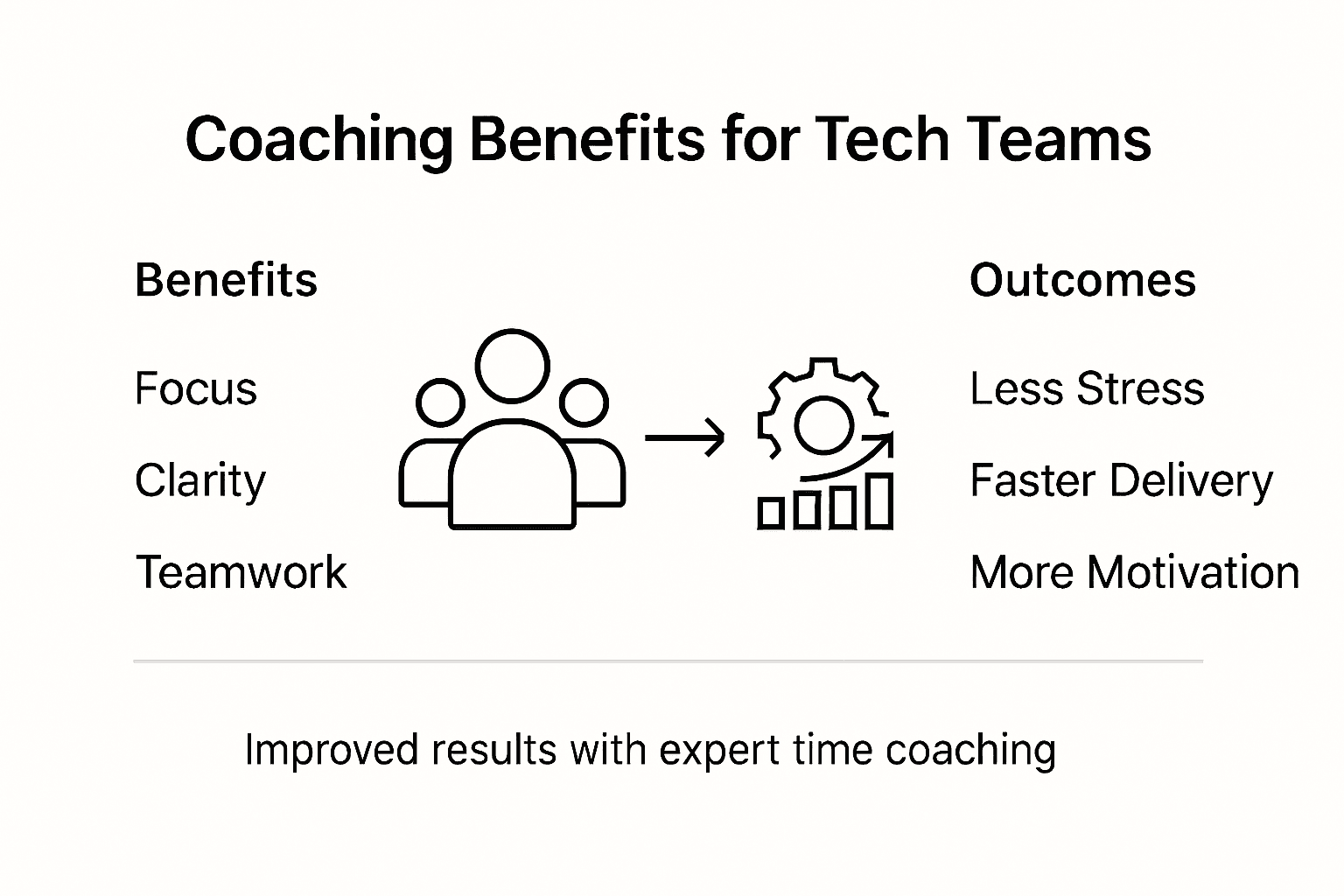
The strategic advantages extend beyond individual productivity. Time management coaching helps technology teams develop collective capabilities that enhance collaboration, reduce communication overhead, and create more predictable workflow patterns. By implementing systematic approaches to task prioritization, resource allocation, and focused work intervals, managers can transform fragmented team efforts into cohesive, high-performance units that consistently meet aggressive technological development timelines.
E-coaching stress monitoring techniques have become increasingly critical in technology environments characterized by rapid change and persistent digital interruptions. These coaching methodologies equip tech managers with sophisticated tools to recognize early signs of team fatigue, implement proactive recovery strategies, and maintain psychological safety within high-pressure technical ecosystems. The result is a more resilient, adaptive workforce capable of sustaining peak performance without succumbing to chronic stress and productivity decline.
Pro Tip: Team Calibration Exercise: Schedule a quarterly half-day workshop where team members collectively map their time allocation, identify systemic bottlenecks, and collaboratively design adaptive time management strategies unique to your team’s specific workflow and project demands.
Barriers, Costs, and Pitfalls to Avoid
Research on attention management reveals that professionals frequently encounter significant barriers to effective time management, with frequent interruptions and poor concentration being primary obstacles. These challenges can create substantial hidden costs, transforming seemingly minor disruptions into major productivity drains that compound over time, ultimately undermining professional performance and organizational efficiency.
One of the most insidious pitfalls in time management involves misunderstanding personal productivity patterns. Many professionals mistakenly believe they can maintain consistent high performance without strategic recovery periods. This misconception leads to gradual cognitive exhaustion, reduced decision-making capacity, and increased likelihood of burnout. Successful time management coaching addresses these risks by helping individuals develop nuanced, personalized strategies that respect individual energy cycles and cognitive limitations.
Behavioral feedback frameworks highlight another critical barrier: the prevalence of unconscious inefficient behaviors that professionals rarely recognize independently. These hidden productivity obstacles can include excessive digital notifications, ineffective meeting structures, unplanned task switching, and poor boundary management. By providing objective insights into these unconscious patterns, time management coaching helps professionals identify and systematically eliminate productivity impediments that would otherwise remain undetected.
The following table summarizes key barriers and their impacts in time management for professionals:
| Barrier Type | Typical Impact | Solution Provided by Coaching |
|---|---|---|
| Frequent interruptions | Lower sustained concentration | Develop boundary-setting skills |
| Unconscious behaviors | Hidden loss of productivity | Increase behavioral self-awareness |
| Skipping recovery | Increased risk of burnout | Plan for regular rest periods |
Pro Tip: Barrier Mapping Exercise: Create a detailed log tracking your daily interruptions, task switches, and productivity blockers for one full week. Analyze this data to identify your most significant time management barriers and develop targeted strategies to neutralize their impact.
Transform Your Time Management with Expert Coaching Today
Struggling with distractions and overwhelmed by complex workflows can drain your productivity and increase stress. This article highlights how tailored time management coaching addresses these challenges by uncovering hidden inefficiencies and implementing proven techniques like timeblocking and task decomposition. If you aim to take control of your workday while boosting focus and reducing burnout, consider how specialized strategies in Agile Coaching Archives – Tariq Juneja can provide the actionable solutions you need.

Ready to experience a transformation in your productivity and work-life balance? Visit Tariq Juneja’s professional coaching platform to explore personalized coaching programs designed to fit your unique style and organizational demands. Learn how to build resilience against common barriers like interruptions and unconscious behaviors by engaging with transformative coaching that empowers sustainable success. Start your journey now and unlock your highest potential with proven time management approaches that work for you.
Frequently Asked Questions
What is time management coaching?
Time management coaching is a strategic approach that helps individuals learn how to better organize, prioritize, and execute their work responsibilities, aiming to maximize productivity and reduce stress.
How can time management coaching improve my productivity?
Time management coaching identifies personal productivity barriers and creates customized solutions, allowing individuals to reclaim control over their responsibilities and enhance overall performance efficiency.
What techniques are commonly used in time management coaching?
Common techniques include timeblocking, task decomposition, and the Pomodoro Technique, all of which help structure work time, break down complex tasks, and maintain focus during work intervals.
Can time management coaching help reduce burnout?
Yes, time management coaching addresses cognitive exhaustion and promotes strategic recovery periods, thereby reducing the risk of burnout and supporting sustainable productivity.