

Everyone wants to get more done, but just working longer hours hardly fixes the real problem. Studies show that effective coaching can boost managerial capabilities and even lift overall productivity in ways that routine training never does. What surprises most people is that true productivity is not about hustling harder at all, it’s about changing the way you think and work from the ground up.
Table of Contents
- What Is Coaching For Productivity And Its Purpose?
- The Importance Of Coaching For Productivity In Business
- Key Concepts Behind Effective Coaching For Productivity
- The Role Of Mindset In Coaching For Productivity
- Real-World Applications Of Coaching For Productivity
Quick Summary
| Takeaway | Explanation |
|---|---|
| Personalized coaching enhances productivity. | Productivity coaching tailors support to individual needs, improving personal and organizational performance. |
| Mindset transformation is crucial. | Cultivating a growth mindset enables professionals to view challenges as opportunities, increasing resilience and productivity. |
| Coaching reduces performance barriers. | Targeted coaching addresses specific obstacles, helping individuals better navigate their professional challenges. |
| Structured support boosts managerial skills. | Effective coaching provides systematic guidance that enhances decision making, strategic thinking, and problem-solving abilities. |
| Investment in coaching yields high returns. | Organizations benefit greatly from employee development through coaching, leading to improved engagement and innovation. |
What is Coaching for Productivity and Its Purpose?
Coaching for productivity represents a strategic approach to enhancing individual and organizational performance through targeted professional guidance. At its core, this practice focuses on empowering professionals to maximize their potential, overcome obstacles, and achieve specific performance goals more efficiently.
Understanding the Core Concept
Productivity coaching is a specialized form of professional development that goes beyond traditional training methods. Unlike generic skill workshops, it provides personalized, one-on-one support designed to unlock an individual’s unique capabilities. Research from Emerald Insight reveals that effective coaching can significantly boost managerial capabilities by offering structured support through experience, knowledge, and motivation.
Key characteristics of productivity coaching include:
- Personalized strategy development
- Identifying and addressing performance barriers
- Creating actionable, measurable objectives
- Providing consistent accountability
The Purpose of Productivity Coaching
The fundamental purpose of productivity coaching extends beyond mere task completion. It aims to transform how professionals approach work, think about challenges, and optimize their personal and professional processes. Conversational interaction studies demonstrate that structured coaching can help individuals externalize complex plans and foster more focused, intentional action.
Professionals seek productivity coaching to:
- Develop more effective time management skills
- Overcome persistent productivity roadblocks
- Enhance strategic thinking and problem solving
- Build sustainable high-performance habits
By providing personalized strategies and continuous support, productivity coaching serves as a powerful tool for professional growth and organizational success. The approach recognizes that productivity is not just about working harder, but working smarter with clear direction and strategic support.
The Importance of Coaching for Productivity in Business
In today’s competitive business landscape, coaching for productivity has emerged as a critical strategy for organizations seeking sustainable growth and performance excellence. By investing in targeted professional development, businesses can unlock significant potential and create transformative workplace environments.
Strategic Performance Enhancement
Coaching for productivity goes beyond traditional training models by providing personalized, strategic interventions that directly impact business outcomes. Research from the National Institutes of Health demonstrates that workplace coaching interventions are directly linked to improvements in performance, productivity, and overall employee wellbeing.
Key strategic benefits include:

- Accelerated skill development
- Enhanced employee engagement
- Improved organizational adaptability
- More effective leadership pipeline
Addressing Organizational Challenges
Modern businesses face complex challenges that require nuanced solutions. Productivity coaching offers a targeted approach to addressing these challenges by helping professionals develop critical thinking skills, emotional intelligence, and adaptive strategies. Learn more about coaching strategies for business champions to understand how personalized guidance can transform professional capabilities.
Businesses implementing productivity coaching can expect significant advantages such as:
- Reduced performance bottlenecks
- Higher employee retention rates
- More innovative problem solving
- Stronger interpersonal communication
Ultimately, coaching for productivity represents an investment in human capital that yields substantial returns. By supporting individual growth and organizational objectives simultaneously, businesses can create resilient, high-performing teams capable of navigating complex professional landscapes with confidence and strategic insight.
Key Concepts Behind Effective Coaching for Productivity
Effective coaching for productivity is built on sophisticated psychological and professional development principles that transform individual performance. These concepts create a comprehensive framework for sustainable personal and professional growth beyond traditional training methodologies.
Foundational Psychological Principles
Research from generative AI studies reveals that effective productivity coaching integrates advanced understanding of human motivation, behavioral psychology, and strategic goal setting. The core objective is not merely task completion, but creating holistic transformation in professional capabilities.
Key psychological foundations include:
- Understanding individual cognitive patterns
- Recognizing intrinsic and extrinsic motivation triggers
- Developing personalized performance strategies
- Creating adaptive mental frameworks
Conversational and Interactive Methodologies
Modern productivity coaching emphasizes interactive approaches that engage professionals in dynamic, reflective dialogues. Explore our comprehensive life coaching resources to understand how targeted conversations can unlock potential. These methodologies focus on externalizing complex mental processes, helping individuals articulate and strategize their professional objectives with greater clarity.
Critical interactive coaching techniques involve:
- Active listening and empathetic dialogue
- Collaborative problem solving
- Continuous feedback mechanisms
- Strategic questioning techniques
Ultimately, effective productivity coaching transcends traditional instructional models by creating personalized, adaptive learning experiences. It recognizes that professional growth is a nuanced journey requiring sophisticated psychological understanding, targeted support, and a commitment to continuous personal development.
The following table presents key psychological principles and interactive methodologies that underpin effective productivity coaching, organizing their main components for easy comparison.
| Foundation | Description |
|---|---|
| Cognitive Pattern Recognition | Understanding individual thinking and behavior patterns |
| Motivation Triggers | Identifying intrinsic and extrinsic drivers |
| Performance Strategies | Designing tailored plans to enhance output |
| Adaptive Frameworks | Developing flexible mindsets and approaches |
| Active Listening | Engaging through empathetic and focused dialogue |
| Collaborative Problem Solving | Working together to resolve issues and generate ideas |
| Continuous Feedback | Providing regular, constructive input |
| Strategic Questioning | Using targeted questions to unlock potential |
The Role of Mindset in Coaching for Productivity
Mindset plays a transformative role in productivity coaching, serving as the fundamental psychological foundation that determines an individual’s approach to challenges, learning, and personal growth. Understanding and cultivating the right mindset can dramatically influence professional performance and potential.
Understanding Growth vs Fixed Mindset
Research from the American Psychological Association reveals that individuals with a growth mindset demonstrate significantly higher levels of productivity and resilience. A growth mindset represents the belief that abilities and intelligence can be developed through dedication, hard work, and continuous learning.
Key characteristics of a growth mindset include:
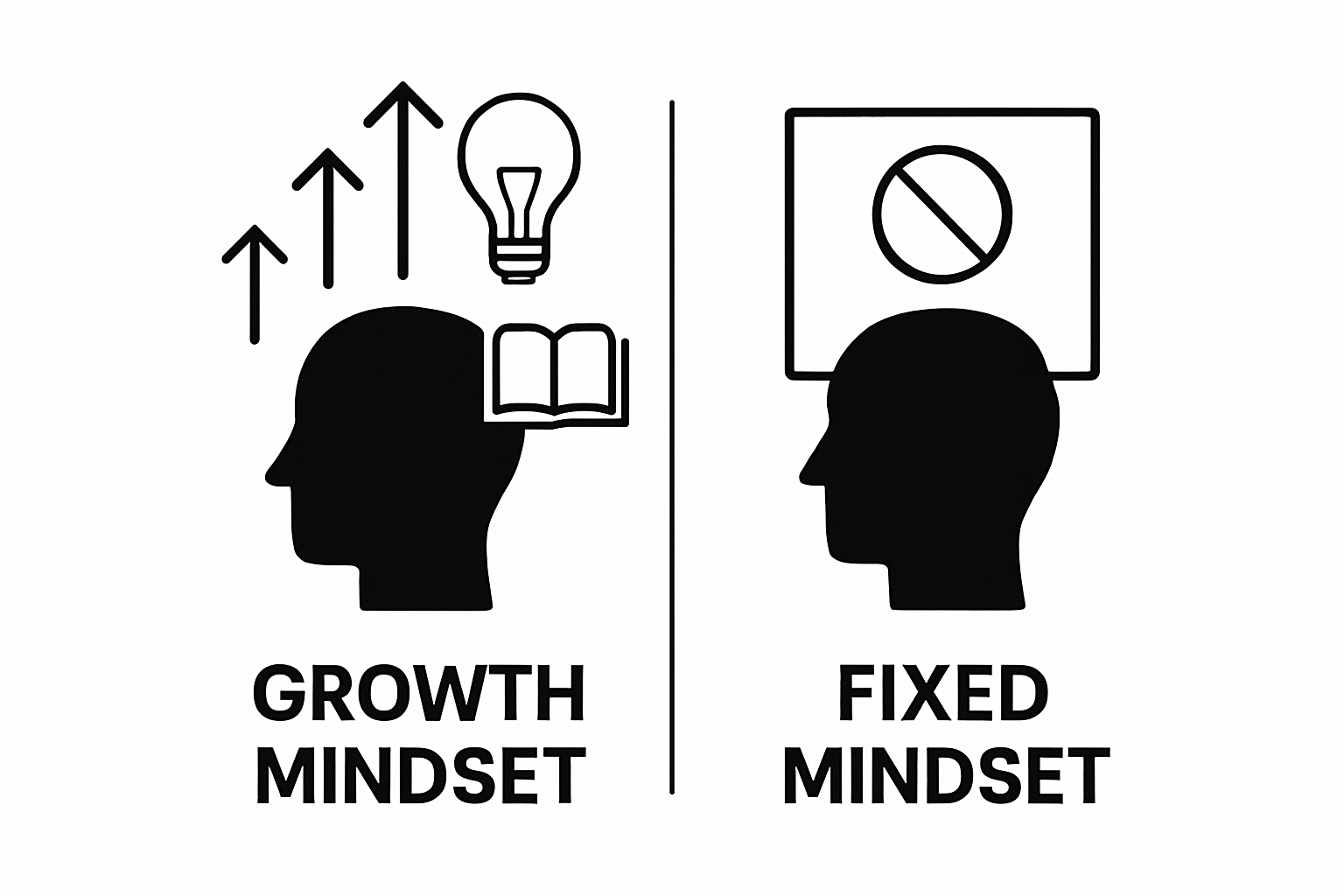
- Embracing challenges as opportunities
- Viewing failures as learning experiences
- Maintaining persistent effort despite obstacles
- Seeking feedback and continuous improvement
Transforming Performance Through Mindset Coaching
Productivity coaching focuses intensely on helping professionals transition from a fixed to a growth mindset. This transformation involves deep psychological work that goes beyond surface-level skill development. By understanding and reshaping internal belief systems, coaches can help individuals unlock extraordinary potential.
Critical mindset transformation strategies involve:
- Identifying and challenging limiting beliefs
- Developing positive self-narrative techniques
- Creating personalized motivation frameworks
- Building cognitive flexibility
Ultimately, mindset represents the critical lens through which professionals interpret challenges, opportunities, and personal potential. By investing in mindset coaching, individuals can fundamentally reshape their approach to productivity, turning potential barriers into pathways for extraordinary achievement and professional growth.
This table compares characteristics of growth and fixed mindsets as discussed in the coaching context to illustrate their impact on professional development.
| Mindset Type | Key Characteristics |
|---|---|
| Growth Mindset | Embraces challenges as opportunities |
| Views failures as learning experiences | |
| Maintains persistent effort despite obstacles | |
| Seeks feedback and continuous improvement | |
| Fixed Mindset | Avoids challenges |
| Sees failures as threats to self-worth | |
| Gives up easily in the face of setbacks | |
| Rejects feedback or sees it as criticism |
Real-World Applications of Coaching for Productivity
Coaching for productivity transcends theoretical concepts, finding powerful practical applications across diverse professional environments. Organizations increasingly recognize coaching as a strategic intervention for driving performance, developing talent, and creating sustainable workplace excellence.
Leadership and Performance Development
Research from the International Journal of Evidence Based Coaching demonstrates that professional coaching significantly enhances employees’ self-efficacy, goal setting, and overall work performance. These interventions are particularly impactful in leadership development contexts, where targeted coaching can transform management approaches and organizational culture.
Key leadership coaching applications include:
- Executive skill enhancement
- Strategic decision making support
- Emotional intelligence development
- Organizational change management
Organizational Transformation Strategies
Productivity coaching serves as a critical tool for organizational transformation, addressing complex performance challenges through personalized, strategic interventions. Coaches work closely with teams and individuals to identify performance barriers, develop adaptive strategies, and create sustainable improvement frameworks.
Primary organizational productivity coaching strategies involve:
- Team performance optimization
- Cross-functional communication improvement
- Individual and collective goal alignment
- Resilience and adaptability training
By integrating coaching methodologies into professional development programs, organizations can create dynamic, responsive environments that continuously evolve and improve. The real-world impact of productivity coaching extends far beyond individual skill enhancement, ultimately reshaping how businesses approach performance, learning, and professional growth.
Ready to Turn Productivity Obstacles Into Your Competitive Edge?
Struggling with performance barriers, time management challenges, or a lack of clear direction? The article highlights how mindset, accountability, and strategic support form the backbone of effective productivity. But understanding these concepts is just the first step. With high-level coaching, you can break through personal and professional limitations and see real, measurable results. To explore more about building the right habits and mindset, visit our Life Coaching resources.
Get expert, personalized solutions now. Discover how a 3000USD an hour personal coaching session can help you master proven productivity strategies and drive extraordinary growth. Don’t let another day of missed opportunities sabotage your potential. Take your mindset and performance to the next level by starting your journey with us today.
Frequently Asked Questions
What is coaching for productivity?
Coaching for productivity is a personalized approach aimed at enhancing individual and organizational performance by identifying obstacles, maximizing potential, and setting measurable goals through professional guidance.
How does coaching for productivity differ from traditional training?
Unlike traditional training, productivity coaching offers one-on-one support and customized strategies, focusing on personal development rather than generic skills, thus addressing unique challenges faced by professionals.
Below is a table summarizing the key differences between coaching for productivity and traditional training, highlighting their core focus and outcomes.
| Aspect | Coaching for Productivity | Traditional Training |
|---|---|---|
| Approach | Personalized, one-on-one guidance | Group-oriented, generic instruction |
| Focus | Individual goals and unique challenges | General skills and knowledge |
| Strategy | Adaptive, continuous support | Standardized, fixed curriculum |
| Outcomes | Enhanced personal/professional effectiveness | Broad skill acquisition |
| Accountability | High, ongoing feedback and check-ins | Minimal, typically ends with session |
| Application | Professional growth, mindset transformation | Skills transfer, compliance |
What are the benefits of productivity coaching for businesses?
Productivity coaching helps businesses improve performance, enhance leadership, boost employee engagement, reduce performance bottlenecks, and foster innovation by equipping individuals with critical thinking and adaptive strategies.
How important is mindset in coaching for productivity?
Mindset plays a crucial role as it influences how professionals approach challenges. A growth mindset, which embraces challenges and views failures as learning opportunities, can significantly enhance productivity and resilience.
Recommended
- How to coach yourself to be a Champion in business and life. – Tariq Juneja
- Life Coaching Archives – Tariq Juneja
- Agile Coaching – Tariq Juneja
- Change Management Archives – Tariq Juneja