

Nearly 70 percent of business transformation efforts fall short of their goals, according to global consulting studies. Companies facing rapid shifts in markets or technology cannot afford to rely on outdated practices. Business transformation now defines how organizations leap ahead, reinvent operations, and overcome disruption so they can thrive where others struggle to keep up.
Key Takeaways
| Point | Details |
|---|---|
| Comprehensive Approach | Business transformation necessitates a holistic reimagining of operations and capabilities to ensure competitiveness. |
| Types of Transformation | Understanding the distinct types of transformation—digital, organizational, process, management, and IT—is crucial for tailored strategies. |
| Strategic Execution | A structured approach involving assessment, planning, and execution stages enhances the likelihood of successful transformation. |
| Cultural and Leadership Focus | Success hinges on fostering an innovative culture and strong leadership, emphasizing human-centered leadership for increased effectiveness. |
Table of Contents
- What Business Transformation Means
- Types Of Business Transformation
- How Business Transformation Happens
- Key Success Factors And Roles
- Risks And Common Pitfalls
What Business Transformation Means
Business transformation represents a comprehensive strategic approach where organizations fundamentally reimagine and restructure their core operations, processes, and capabilities to achieve significant performance improvements and remain competitive in rapidly evolving markets. According to research from a recent academic study, these initiatives typically involve adopting new technologies, entering emerging markets, and realigning organizational structures to drive meaningful change.
At its core, business transformation goes far beyond simple incremental improvements. It involves a holistic redesign of how a company operates, thinking critically about everything from technological infrastructure to workforce skills. Learn more about embracing organizational change, which is often a critical component of successful transformation strategies. The process encompasses multiple dimensions, including:
- Technological innovation and digital integration
- Cultural and organizational restructuring
- Process optimization and workflow redesign
- Strategic repositioning in competitive markets
As digital technologies continue reshaping business landscapes, transformation has become less of an option and more of a survival imperative. According to authoritative sources, digital business transformation specifically focuses on leveraging technology to enhance operational efficiency, create new business models, and improve transparency. Key benefits include more adaptable remote working environments, streamlined communication channels, and the ability to quickly respond to market disruptions. However, successful transformation isn’t without challenges – organizations must navigate complex change management processes and often need to integrate or replace legacy systems that can resist modernization efforts.
Types Of Business Transformation
Business transformation is not a one-size-fits-all approach, but rather a nuanced strategy with multiple distinct types tailored to organizational needs. Explore our insights on digital transformation to understand the evolving landscape of organizational change. These transformation types represent strategic pathways organizations can leverage to drive meaningful performance improvements.
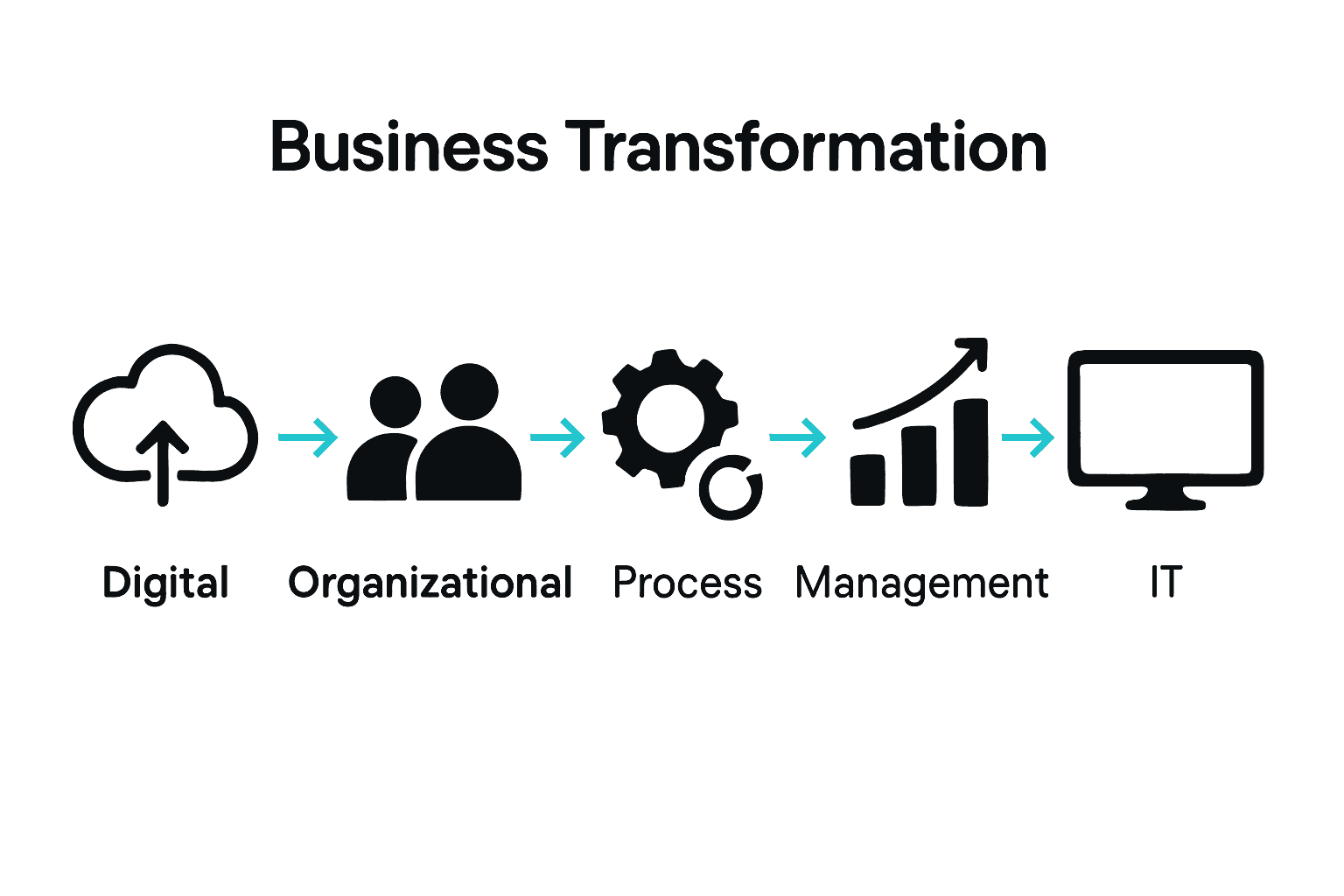
The primary types of business transformation include:
Here’s a comparison of the primary types of business transformation:
| Transformation Type | Key Focus | Typical Outcome |
|---|---|---|
| Digital Transformation | Integrating digital technologies | Enhanced efficiency New business models |
| Organizational Transformation | Restructuring culture and leadership | Agile workforce Strong leadership |
| Process Transformation | Optimizing business processes | Streamlined workflows Cost reduction |
| Management Transformation | Modernizing decision-making approaches | Faster decisions Improved accountability |
| IT Transformation | Upgrading technological infrastructure | Modern systems Increased scalability |
- Digital Transformation: Integrating digital technologies to fundamentally change business operations and value delivery
- Organizational Transformation: Restructuring company culture, leadership models, and operational workflows
- Process Transformation: Redesigning core business processes for improved efficiency and effectiveness
- Management Transformation: Reimagining leadership approaches and decision-making frameworks
- Information Technology (IT) Transformation: Modernizing technological infrastructure and systems
Intelligent transformation represents an advanced approach in this landscape. According to research, this sophisticated model utilizes smart technologies like big data, artificial intelligence, and cloud platforms to create interactive, value-driven organizational models that transcend traditional operational boundaries. Unlike conventional transformation strategies, intelligent transformation focuses on creating adaptive, technology-enabled ecosystems that continuously evolve and respond to dynamic market conditions.
Each transformation type requires careful strategic planning, robust change management, and a commitment to continuous learning.
 Organizations must assess their unique challenges, technological readiness, and strategic objectives to select the most appropriate transformation pathway. Success hinges not just on implementing new technologies or processes, but on cultivating an organizational culture that embraces innovation, agility, and continuous improvement.
How Business Transformation Happens
Business transformation is a deliberate, strategic journey that requires meticulous planning, organizational commitment, and systematic execution. Learn more about transformative coaching approaches that can support this critical organizational change process. The journey typically unfolds through a structured series of interconnected stages designed to drive meaningful and sustainable organizational evolution.
The transformation process generally follows these key stages:
- Strategic Assessment
- Analyzing current organizational capabilities
- Identifying performance gaps and improvement opportunities
- Defining clear transformation objectives
- Design and Planning
- Developing comprehensive transformation roadmaps
- Aligning technological and human resource strategies
- Creating detailed implementation frameworks
- Execution and Implementation
- Phased rollout of transformation initiatives
- Continuous monitoring and adaptive management
- Iterative refinement of transformation strategies
According to cutting-edge academic research, digital business transformation can be particularly effective when organizations integrate DataOps with advanced analytics. This approach, grounded in information processing theory, provides a disciplined methodology for improving operational efficiency and enabling innovative business models. By systematically collecting, analyzing, and leveraging data, companies can make more informed decisions and create more responsive, agile organizational structures.
Successful transformation requires more than just technological implementation. It demands a holistic approach that encompasses cultural change, leadership commitment, and a willingness to challenge existing paradigms.
 Organizations must create environments that support continuous learning, experimentation, and adaptive strategies. This means breaking down traditional silos, encouraging cross-functional collaboration, and developing workforce capabilities that align with emerging technological and market demands.
Key Success Factors And Roles
Business transformation requires a strategic approach with clearly defined success factors and critical organizational roles. Explore strategies for achieving transformational goals to understand the deeper dynamics of organizational change. The journey demands comprehensive planning, leadership commitment, and a holistic approach to organizational evolution.
Key success factors for effective business transformation include:
- Cultural Innovation: Creating an environment that encourages creativity and adaptive thinking
- Strategic Leadership: Establishing clear vision and committed executive sponsorship
- Change Management: Developing robust programs for managing organizational transitions
- Long-Term Perspective: Maintaining focus beyond immediate financial metrics
- Boundary Scanning: Looking beyond internal constraints for transformative insights
According to research from leading consulting firms, successful transformations typically involve ten critical success factors. These include fostering a creative culture, appointing dedicated transformation leadership like a Chief Transformation Officer, implementing formal change programs, maintaining a long-term strategic mindset, and consistently investing in innovation.
Human-centered leadership emerges as a game-changing factor in transformation success. Groundbreaking studies reveal that leaders who prioritize emotional intelligence and behavioral navigation can increase transformation success rates by up to 12 times. This approach involves three critical leadership capabilities: sensing organizational dynamics, sense-making to interpret complex challenges, and purposeful acting to drive meaningful change. Successful transformation is not just about technological implementation, but about creating an adaptive organizational ecosystem where people feel empowered, understood, and aligned with the strategic vision.
Risks And Common Pitfalls
Business transformation is a complex journey fraught with potential challenges that can derail even the most well-intentioned initiatives. Learn more about effective risk assessment strategies to proactively manage potential obstacles in your transformation process. Understanding these risks is crucial for developing robust mitigation strategies.
Common pitfalls in business transformation include:
- Lack of Clear Vision: Unclear or poorly communicated transformation objectives
- Change Management Failures: Underestimating organizational resistance
- Resource Inadequacy: Insufficient budget, time, or skilled personnel
- Technology Misalignment: Implementing solutions without strategic coherence
- Cultural Disconnection: Failing to address underlying organizational culture
Digital transformation presents unique risks that organizations must carefully navigate. According to research, these risks include:
- Ambiguous project requirements leading to potential failure
- Digitizing inefficient processes without comprehensive value-chain analysis
- Uncontrolled project scope expansion
- Vendor lock-in challenges
- Organizational unreadiness in skills, mindset, and data standardization
Successful transformation demands a holistic approach to risk management. Organizations must develop comprehensive strategies that address both technical and human elements of change. This involves creating detailed transformation roadmaps, establishing robust monitoring mechanisms, maintaining flexibility, and fostering a culture of continuous learning and adaptation. The most successful transformations are those that anticipate challenges, remain agile, and view risks as opportunities for strategic refinement rather than insurmountable obstacles.
Ready to Lead Your Business Transformation with Lasting Impact?
Many organizations struggle with complexity, lack of clear vision, or resistance to change during business transformation. The risk of stalled progress is real, but you do not have to face it alone. At Tariq Juneja’s Agile Coaching hub, you gain access to professional support for successful strategic transformation, digital integration, and adaptive leadership. Our expertise helps clients overcome the exact obstacles discussed in this article, including change management, organizational culture challenges, and leveraging smart technology for competitive growth.

If you want concrete results in your transformation journey, take the next step now. Visit Tariq Juneja’s main site to explore tailored programs that focus on agile coaching, business optimization, and leadership development. Book a free consultation today to unlock practical strategies that turn complexity into opportunity. Don’t let uncertainty hold you back—partner with Tariq and build an organization ready for the future. Discover more proven approaches for lasting change in our Agile Coaching resources.
Frequently Asked Questions
What is business transformation?
Business transformation is a strategic approach where organizations fundamentally redesign and restructure their operations and processes to achieve significant performance improvements and remain competitive in rapidly evolving markets.
What are the different types of business transformation?
The primary types of business transformation include Digital Transformation, Organizational Transformation, Process Transformation, Management Transformation, and IT Transformation, each focusing on different aspects of an organization’s evolution.
What are the key success factors for effective business transformation?
Key success factors include cultural innovation, strategic leadership, effective change management, maintaining a long-term perspective, and boundary scanning for transformative insights beyond internal constraints.
What are common pitfalls in business transformation?
Common pitfalls include lack of clear vision, change management failures, resource inadequacy, technology misalignment, and cultural disconnection, which can hinder successful transformation initiatives.
Recommended
- Digital Transformation: How Software-Defined Processes Are Disrupting Every Industry – Tariq Juneja
- Understanding Why Embrace Change for Business Growth – Tariq Juneja
- What is Transformative Coaching? Understanding Its Impact – Tariq Juneja
- How Can a Business Increase Productivity: Proven Steps – Tariq Juneja