

Over 80 percent of american executives say leadership coaching improved their job performance and increased their impact at work. Whether leading a team or guiding an entire organization, many american professionals recognize how vital strong leadership skills have become in today’s fast-changing business environment. By understanding how business leadership coaching works and what sets it apart, you can discover practical ways to strengthen your own leadership abilities and drive better results.
Table of Contents
- Defining Business Leadership Coaching
- Types of Leadership Coaching Programs
- Key Principles And Coaching Methodology
- Essential Skills For Effective Leadership
- Challenges, Pitfalls, And Success Factors
Key Takeaways
| Point | Details |
|---|---|
| Business leadership coaching enhances organizational effectiveness | It empowers leaders through personalized guidance to improve performance and emotional intelligence. |
| Diverse coaching programs address unique needs | Different types of coaching programs like executive, group, and performance coaching cater to specific developmental goals in varying professional contexts. |
| Holistic principles guide coaching methodologies | Effective coaching focuses on tailored strategies, continuous feedback, and collaborative goal setting to align individual and organizational objectives. |
| Key skills are essential for effective leadership | Leaders must develop emotional intelligence, strategic communication, and self-awareness to successfully navigate complex organizational landscapes. |
Defining Business Leadership Coaching
Business leadership coaching represents a strategic professional development approach designed to enhance leaders’ performance, emotional intelligence, and organizational effectiveness. At its core, this specialized form of coaching focuses on empowering executives and managers to unlock their full potential through personalized guidance and transformative learning experiences.
Research indicates that effective leadership coaching involves intricate learning pathways for organizational leaders, encompassing motivational, cognitive, and affective dimensions. These pathways help leaders develop critical skills like self-awareness, adaptive thinking, and emotional regulation. Specifically, leadership coaching models emphasize individual readiness and systematic personal growth strategies that enable professionals to navigate complex workplace challenges.
The scope of business leadership coaching extends beyond traditional training methods. It involves a collaborative process where coaches work closely with leaders to identify strengths, address performance gaps, and create actionable development plans. Unlike generic management training, leadership coaching provides personalized interventions tailored to an individual’s unique leadership style, organizational context, and professional goals. By focusing on holistic personal and professional growth, leadership coaches help executives enhance their decision-making capabilities, improve team dynamics, and drive sustainable organizational transformation.
Key components of business leadership coaching typically include:
- Personalized assessment of leadership capabilities
- One-on-one strategic mentoring sessions
- Performance feedback and skill development frameworks
- Emotional intelligence enhancement techniques
- Goal setting and accountability mechanisms
Types of Leadership Coaching Programs
Leadership coaching programs encompass a diverse range of specialized approaches designed to address unique organizational and individual developmental needs. These programs are strategically crafted to enhance leadership capabilities across different professional contexts, providing targeted interventions that support personal and organizational growth.
Research exploring organizational leadership methodologies reveals multiple distinct coaching program types. Executive coaching programs typically focus on senior-level leaders, helping them refine strategic thinking, improve decision-making skills, and navigate complex organizational challenges. These programs often involve one-on-one interactions, in-depth assessments, and personalized development strategies tailored to high-potential executives.

The landscape of leadership coaching programs includes several nuanced approaches, each addressing specific developmental objectives. Group coaching programs create collaborative learning environments where leaders can share experiences, gain collective insights, and develop interpersonal skills simultaneously. Team-based coaching focuses on enhancing collective leadership capabilities, improving communication, and aligning organizational goals. Performance coaching targets specific skill gaps, providing structured interventions to help leaders overcome professional obstacles and maximize their potential.
Key types of leadership coaching programs include:
- Executive Coaching: Individualized development for senior leaders
- Group Coaching: Collaborative learning with peer insights
- Team Coaching: Enhancing collective leadership capabilities
- Performance Coaching: Targeted skill development
- Transformational Coaching: Holistic personal and professional growth
- Succession Planning Coaching: Preparing future organizational leaders
Key Principles and Coaching Methodology
Business leadership coaching operates on a sophisticated framework of principles designed to facilitate transformational professional development. At its core, the methodology centers on creating a collaborative partnership between coach and client, emphasizing personalized growth strategies that align individual potential with organizational objectives.
Effective coaching methodologies incorporate strategic communication techniques that enable leaders to develop nuanced interpersonal skills. These techniques include understanding comprehensive coaching processes that systematically address professional challenges. The approach integrates multiple communication dimensions, including direction-giving language, emotional intelligence, and meaning-making communication strategies that help leaders effectively motivate and guide their teams.
The principles of leadership coaching methodology are grounded in a holistic approach to professional development. Coaches utilize systematic assessment tools, personalized feedback mechanisms, and structured interventions to help leaders identify and overcome performance barriers. The methodology emphasizes continuous learning, self-reflection, and adaptive skill development. By creating a supportive yet challenging environment, coaches help leaders expand their capabilities, challenge existing assumptions, and develop more sophisticated leadership approaches.
Key principles of leadership coaching methodology include:
- Client-Centered Approach: Tailoring strategies to individual needs
- Holistic Assessment: Evaluating personal and professional dimensions
- Collaborative Goal Setting: Aligning individual and organizational objectives
- Continuous Feedback: Providing real-time performance insights
- Reflective Practice: Encouraging self-awareness and personal growth
- Adaptive Learning: Developing flexible leadership capabilities
Essential Skills for Effective Leadership
Leadership effectiveness demands a sophisticated blend of interpersonal, strategic, and emotional capabilities that extend far beyond traditional management techniques. Modern leaders must navigate complex organizational landscapes with agility, emotional intelligence, and a deep understanding of human dynamics.
Research exploring leadership personality traits reveals critical competencies that distinguish exceptional leaders. Collaboration skills play a pivotal role in creating high-performing teams, emphasizing the importance of communication, mutual respect, and shared vision. Effective leaders demonstrate an ability to align individual talents with organizational objectives, creating environments that foster innovation, trust, and continuous growth.
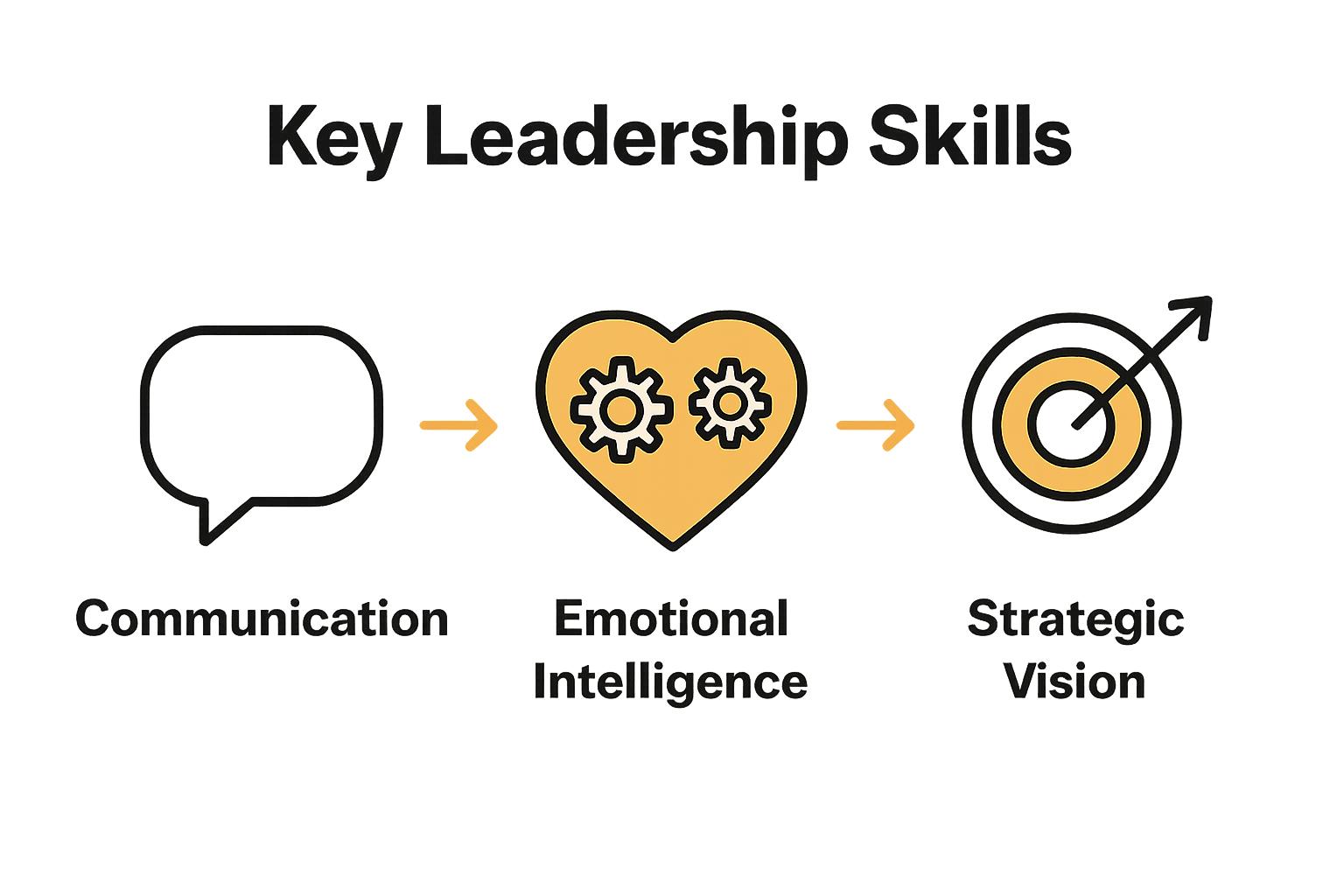
The most successful leaders develop a multifaceted skill set that combines strategic thinking, emotional intelligence, and adaptable communication. They excel at reading organizational dynamics, anticipating challenges, and inspiring teams through clear, compelling communication. By cultivating deep self-awareness and maintaining a growth mindset, leaders can transform potential obstacles into opportunities for team development and organizational advancement.
Key essential skills for effective leadership include:
- Emotional Intelligence: Understanding and managing personal and team emotions
- Strategic Communication: Articulating vision and goals with clarity
- Adaptive Thinking: Responding flexibly to complex challenges
- Collaborative Problem-Solving: Engaging team members in constructive dialogue
- Self-Awareness: Recognizing personal strengths and developmental areas
- Empathetic Listening: Creating psychological safety within teams
Challenges, Pitfalls, and Success Factors
Business leadership coaching confronts numerous complex challenges that require sophisticated strategies and nuanced understanding. Despite its transformative potential, coaching interventions frequently encounter significant barriers that can undermine their effectiveness and organizational impact.
Research exploring goal achievement methodologies reveals critical insights into coaching challenges. Organizations often struggle with resistance to change, misalignment between individual and organizational objectives, and inadequate measurement of coaching outcomes. Risk assessment frameworks demonstrate that successful leadership coaching requires comprehensive evaluation of potential barriers, including psychological resistance, communication gaps, and systemic organizational constraints.
The most successful leadership coaching interventions integrate multiple strategies to address potential pitfalls. Coaches must develop exceptional diagnostic skills, create psychologically safe environments, and design flexible approaches that can adapt to unique organizational contexts. This requires deep emotional intelligence, strategic thinking, and the ability to navigate complex interpersonal dynamics. Coaches must balance supportive guidance with challenging perspectives, helping leaders confront uncomfortable truths while maintaining motivation and professional dignity.
Key challenges and success factors in leadership coaching include:
- Resistance to Change: Overcoming psychological barriers
- Alignment Challenges: Matching individual and organizational goals
- Measurement Complexity: Developing robust coaching outcome metrics
- Communication Barriers: Bridging interpersonal understanding gaps
- Systemic Constraints: Navigating organizational cultural limitations
- Psychological Safety: Creating environments conducive to genuine growth
Unlock Your True Leadership Potential with Expert Coaching
Struggling to overcome resistance to change or align your leadership goals with your organization’s vision can leave you feeling stuck. This guide to business leadership coaching highlights how personalized strategies and emotional intelligence can become your most valuable tools. If you want to build adaptive thinking skills, enhance communication, and create lasting transformation within your team, embracing proven coaching methodologies is essential.
Explore how Agile Coaching Archives – Tariq Juneja approaches leadership development with dynamic strategies tailored to your unique challenges.
Take the next step in your leadership journey today at https://tariqjuneja.com. Benefit from transformative coaching programs designed to unlock your emotional intelligence and strategic communication abilities. Visit our Change Management Archives – Tariq Juneja for insights on navigating organizational shifts. Book a free consultation now and build the confidence and skills necessary to lead with clarity and impact.
Frequently Asked Questions
What is business leadership coaching?
Business leadership coaching is a professional development approach that enhances leaders’ performance, emotional intelligence, and organizational effectiveness through personalized guidance and transformative learning experiences.
What are the key components of business leadership coaching?
Key components include personalized assessment of leadership capabilities, one-on-one mentoring sessions, performance feedback, emotional intelligence enhancements, goal setting, and accountability mechanisms.
What types of leadership coaching programs are available?
Leadership coaching programs include executive coaching, group coaching, team coaching, performance coaching, transformational coaching, and succession planning coaching, each designed to meet specific developmental needs.
What essential skills are necessary for effective leadership?
Essential skills include emotional intelligence, strategic communication, adaptive thinking, collaborative problem-solving, self-awareness, and empathetic listening, all crucial for navigating complex organizational challenges.
Recommended
- Complete Guide to Coaching Meaning in Business – Tariq Juneja
- Understanding the Role of Coaching in Business Growth – Tariq Juneja
- What Is Leadership Coaching? Complete Overview – Tariq Juneja
- Understanding the Benefits of Business Coaching – Tariq Juneja
- Master the Succession Planning Workflow for Family Offices – Future Family Office