

More than half of American tech firms struggle to set clear team goals that actually drive measurable success. For Agile project managers in fast-paced global environments, the right goal-setting process can mean the difference between stalled initiatives and true organizational transformation. Understanding how to assess business context, define strategic objectives, and align measurable targets is essential for creating empowered, high-performing teams ready to face industry challenges.
Table of Contents
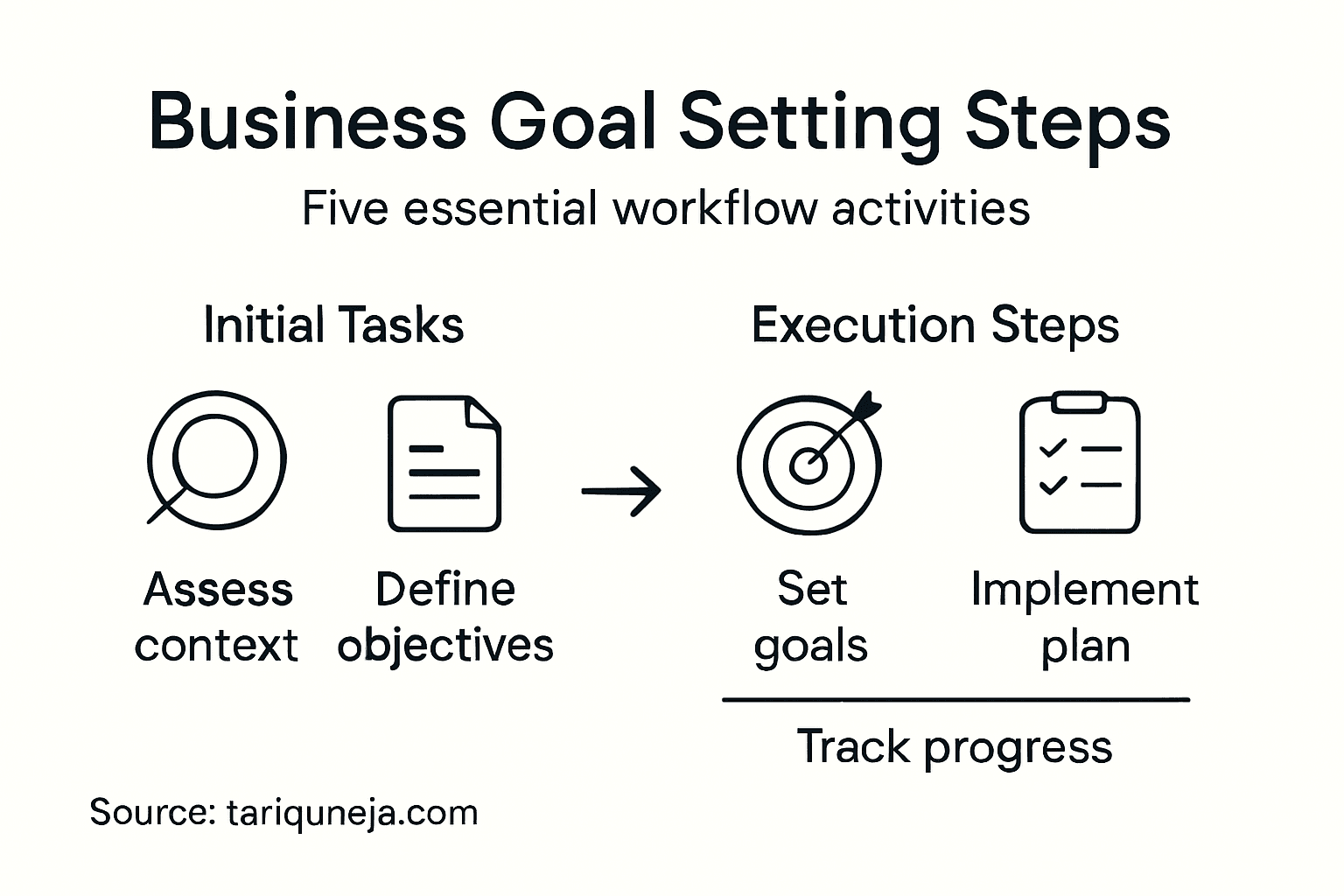
- Step 1: Assess Current Business Context
- Step 2: Define Strategic Objectives with Teams
- Step 3: Set Measurable and Aligned Goals
- Step 4: Implement Action Plans for Execution
- Step 5: Track Progress and Refine Goals
Quick Summary
| Key Insight | Explanation |
|---|---|
| 1. Conduct Comprehensive Assessments | Evaluate both internal capabilities and external market conditions to identify strengths, weaknesses, opportunities, and threats for informed strategic planning. |
| 2. Engage Teams in Objective Setting | Involve team members in defining strategic objectives through collaborative workshops to ensure alignment and relevance to the organization’s vision. |
| 3. Utilize SMART Framework for Goals | Apply SMART criteria to create specific, measurable, achievable, relevant, and time-bound goals that directly connect to organizational strategies. |
| 4. Develop Detailed Action Plans | Break down objectives into actionable tasks with defined responsibilities and timelines to ensure systematic execution and accountability. |
| 5. Maintain Ongoing Progress Tracking | Implement a robust monitoring system for continuous evaluation of goal performance, allowing for timely adjustments and refinements based on data insights. |
Step 1: Assess Current Business Context
Getting an accurate picture of your current business landscape is crucial for setting meaningful goals. By systematically evaluating your organization’s existing capabilities, market position, and performance metrics, you can develop targeted strategies that drive real results.
Start by conducting a comprehensive internal assessment. Gather key financial data such as revenue streams, profit margins, and operational expenses. The Small Business Economic Profile provides excellent benchmarks for comparing your business against national trends. Review historical performance reports, customer feedback, and existing strategic documents. Map out current strengths, weaknesses, market opportunities, and potential threats using a structured framework like SWOT analysis.
Analyze external factors influencing your business environment. Research industry trends, competitive landscape, technological disruptions, and regulatory changes that might impact your strategic direction. Pay special attention to emerging market dynamics that could create new opportunities or challenges for your organization.
Pro tip: Involve team members from different departments during your business context assessment to gain diverse perspectives and uncover insights that might be missed by leadership alone.
Step 2: Define Strategic Objectives with Teams
Defining strategic objectives is a critical process that transforms your business vision into actionable goals. This step involves collaborative planning that engages your entire team in creating meaningful, aligned priorities that drive organizational success.

Begin by facilitating a collaborative workshop where team members from different departments can contribute their insights. Strategic planning requires purpose-driven goals that are both measurable and actionable. Start by clearly articulating your organization’s overarching mission and long-term vision. Then, break down this vision into specific, achievable objectives that each team can understand and contribute toward. Use frameworks like SMART (Specific, Measurable, Achievable, Relevant, Time-bound) to ensure your objectives are concrete and meaningful.
Ensure that each strategic objective connects directly to your organization’s core capabilities and market opportunities. Encourage open dialogue where team members can provide candid feedback, share potential challenges, and propose innovative approaches. Document these objectives transparently, making sure every team member understands how their individual and collective efforts contribute to the broader organizational goals.
Pro tip: Schedule quarterly review sessions to reassess and recalibrate your strategic objectives, ensuring they remain relevant and adaptive to changing business landscapes.
Step 3: Set Measurable and Aligned Goals
Setting measurable and aligned goals transforms strategic vision into actionable outcomes that drive organizational success. This critical step ensures your team creates objectives that are meaningful, trackable, and directly connected to your broader business strategy.
Utilize the SMART framework to develop goals that are specific and measurably designed. Each goal should clearly articulate what success looks like, include quantifiable metrics, and specify precise timelines for achievement. Break down larger organizational objectives into granular team and individual goals that create a clear line of sight between daily activities and overarching strategic priorities. Ensure each goal has a concrete metric that allows you to track progress objectively a defined timeline for completion.
Align these goals vertically and horizontally across your organization. Vertical alignment means connecting individual team member goals to departmental objectives, which then connect to broader organizational strategies. Horizontal alignment involves ensuring goals across different departments are complementary and not conflicting. Create a visual goal mapping system that demonstrates how each team member’s objectives contribute to the larger organizational mission, fostering a sense of purpose and interconnectedness.
This table compares vertical and horizontal alignment in organizational goal setting:
| Alignment Type | Focus Area | Key Benefit |
|---|---|---|
| Vertical Alignment | Links individual to organizational goals | Ensures clear contribution to strategy |
| Horizontal Alignment | Coordinates goals across departments | Prevents conflicts, boosts collaboration |
Pro tip: Implement a quarterly goal review process where teams collaboratively reassess and adjust objectives based on evolving business conditions and performance insights.
Step 4: Implement Action Plans for Execution
Implementing action plans transforms strategic goals from conceptual ideas into tangible outcomes. This critical phase bridges the gap between planning and actual performance, ensuring your team can systematically execute objectives with precision and accountability.
Detailed roadmaps are essential for translating goals into actionable results. Create a comprehensive action plan that clearly defines specific tasks, assigns responsible team members, establishes precise deadlines, and identifies required resources for each objective. Break down larger goals into granular, manageable steps that provide clear direction and create a sense of momentum. Develop a centralized tracking system where team members can update progress, log challenges, and maintain transparency about their individual and collective contributions.
Establish a robust monitoring and feedback mechanism to track implementation effectiveness. Schedule regular check-ins to assess progress, identify potential roadblocks, and make real-time adjustments. Encourage open communication where team members can openly discuss challenges, share insights, and collaboratively problem solve. Implement key performance indicators that allow you to objectively measure progress and maintain alignment with your original strategic objectives.
Pro tip: Create a visual project dashboard that provides real-time updates on goal progress, making implementation transparent and motivating for all team members.
Step 5: Track Progress and Refine Goals
Tracking and refining goals is a critical process that transforms static objectives into dynamic, responsive strategies. This ongoing evaluation ensures your team remains agile and aligned with organizational priorities while maintaining momentum toward strategic outcomes.
Continuous monitoring enables precise goal adjustment and maintains organizational effectiveness. Establish a robust tracking system that includes quantitative metrics, regular performance reviews, and real-time data collection. Use visual dashboards, spreadsheets, or specialized software to document progress, highlighting achievements and identifying potential bottlenecks. Create a standardized reporting framework where team members can input their progress, challenges, and insights transparently.
Implement a structured review process that goes beyond simple progress tracking. Schedule quarterly strategic reviews where teams collaboratively assess goal performance, discuss obstacles, and make informed adjustments. Encourage an environment of psychological safety where team members can openly discuss challenges without fear of criticism. Use data-driven insights to recalibrate goals, redistribute resources, or modify strategies that are not delivering expected results. Remember that goal refinement is not about punishing underperformance but about creating adaptive, responsive organizational strategies.
Pro tip: Develop a color-coded progress tracking system that provides immediate visual feedback on goal achievement, making performance trends instantly comprehensible.
Here is a summary of key tasks and outcomes for each strategic step:
| Step | Core Activity | Main Outcome |
|---|---|---|
| Assess Business Context | Internal & external analysis | Informed strategy foundation |
| Define Strategic Objectives | Collaborative goal setting | Aligned priorities across teams |
| Set Measurable Goals | SMART framework application | Trackable, actionable targets |
| Implement Action Plans | Detailed task mapping | Effective goal execution |
| Track & Refine Goals | Ongoing monitoring | Adaptive strategies and results |
Transform Your Team’s Potential with Expert Goal Setting Support
Mastering business goal setting is key to turning your strategic vision into measurable, aligned results. This article highlights common challenges like breaking down strategic objectives using the SMART framework, ensuring vertical and horizontal goal alignment across teams, and effectively tracking progress toward actionable outcomes. Overcoming these pain points is essential to drive collaboration, clarity, and consistent performance.
If you want to accelerate your organization’s journey toward clearer priorities and smoother execution, explore how Agile Coaching Archives – Tariq Juneja can help you embed agile principles that improve adaptability while maintaining strong goal focus. Utilize powerful tools from Mind Mapping Archives – Tariq Juneja to visually organize your strategic objectives, making complex plans understandable and actionable for every team member.

Take the next step now by visiting https://tariqjuneja.com to access transformational coaching programs that increase productivity, reduce stress, and empower your teams to embrace change effectively. Don’t wait to turn your business goals into lasting success—reach out today and start your free consultation.
Frequently Asked Questions
How can I assess my current business context for goal setting?
To assess your current business context, conduct a comprehensive internal analysis that includes reviewing financial data, performance metrics, and customer feedback. Gather insights from various departments to identify strengths, weaknesses, opportunities, and threats over the next 30 days.
What is the best way to define strategic objectives with my team?
Facilitate a collaborative workshop with team members to articulate your organization’s mission and break it down into specific, measurable objectives. Ensure everyone understands their role within these objectives to foster alignment and engagement within a week.
How do I set measurable goals for my team?
Use the SMART framework to create specific, measurable, achievable, relevant, and time-bound goals. For example, break down an organizational objective into quarterly targets that can be tracked weekly to maintain focus on your team’s progress.
What should I include in an action plan for executing my goals?
An action plan should detail specific tasks, assign responsibilities, establish deadlines, and outline necessary resources for each objective. Set this up within the next two weeks to facilitate a smooth transition from planning to execution.
How can I effectively track progress and refine my goals?
Implement a tracking system that utilizes performance metrics and regular reviews to monitor progress. Schedule quarterly assessments with your team to discuss results and make necessary adjustments, ensuring your goals adapt to any changing business conditions.
What is the role of collaboration in setting business goals?
Collaboration allows team members to share insights and perspectives that enhance goal setting and increase alignment across departments. Engage all relevant stakeholders early in the process to create a sense of ownership and commitment to the collective goals.