

Over 80 percent of american companies believe business coaching can unlock hidden potential, yet many still misunderstand what it really involves. Misconceptions about coaching often limit its positive impact on both leaders and teams. Understanding the true nature of business coaching helps professionals access its full benefits, from boosting performance to developing future-ready leadership skills. This article unpacks what business coaching is, clears up common myths, and highlights how organizations and individuals can gain long-lasting value from expert guidance.
Table of Contents
- Defining Business Coaching And Core Misconceptions
- Key Types Of Business Coaching Services
- Essential Skills And Qualities Of Business Coaches
- How The Coaching Process Works Step-By-Step
- Benefits, Challenges, And Common Pitfalls
Key Takeaways
| Point | Details |
|---|---|
| Definition of Business Coaching | Business coaching is a strategic partnership aimed at enhancing performance through collaboration and targeted skill development. |
| Common Misconceptions | Many believe coaching is only for struggling teams, but it also serves high-performing organizations for continuous improvement. |
| Key Coaching Types | Major types include Executive, Performance, Career, and Leadership Coaching, each tailored to specific development needs. |
| Benefits and Challenges | Coaching can accelerate performance and enhance leadership, yet it faces challenges like difficulty in measuring impact and resource intensity. |
Defining Business Coaching and Core Misconceptions
Business coaching represents a strategic professional partnership focused on driving organizational and individual performance through targeted guidance and skill development. Unlike traditional consulting, business coaching is a collaborative process where coaches work directly with leaders and teams to unlock potential, overcome challenges, and create sustainable growth strategies.
At its core, business coaching involves a systematic approach to identifying performance gaps and implementing actionable solutions. Comprehensive research from academic sources reveals that effective coaching goes far beyond simplistic problem-solving, instead creating transformative environments where professionals can develop critical leadership competencies. Coaches utilize evidence-based methodologies to help clients recognize their strengths, address potential limitations, and design personalized development pathways.
Despite its proven effectiveness, business coaching suffers from several persistent misconceptions that can prevent organizations from leveraging its full potential. Common myths include the belief that coaching is exclusively for struggling professionals or underperforming teams. Insights from expert analysis consistently demonstrate that high-performing organizations actually use coaching as a proactive strategy for continuous improvement and talent optimization. Successful coaching is not about fixing problems, but about elevating performance, enhancing leadership capabilities, and creating sustainable organizational growth.
Key misconceptions about business coaching include:
- Coaching is only for remedial intervention
- Results are instantaneous or guaranteed
- Coaching replaces professional expertise
- Only struggling businesses require coaching
Ultimately, business coaching represents a sophisticated, data-driven approach to professional development that empowers individuals and organizations to reach their highest potential through strategic guidance, self-reflection, and intentional skill enhancement.
Key Types of Business Coaching Services
Business coaching encompasses a diverse range of specialized services designed to address unique organizational and individual development needs. These services are tailored to support professionals across different levels and contexts, helping them navigate complex business challenges and unlock their full potential.
Research on agile coaching methodologies reveals several critical approaches that define modern business coaching practices. The primary types of business coaching services include:
- Executive Coaching: Focused on senior leadership development, helping top-level executives enhance strategic thinking, decision-making skills, and organizational leadership capabilities
- Performance Coaching: Targeting individual and team performance optimization, addressing specific skill gaps and professional development objectives
- Career Coaching: Supporting professionals in career transition, career planning, and professional growth strategies
- Leadership Coaching: Developing critical leadership competencies, emotional intelligence, and transformational management skills
Systemic team coaching approaches represent an advanced methodology that goes beyond traditional coaching models. This approach emphasizes holistic team development by simultaneously addressing internal team dynamics and external stakeholder interactions. Unlike conventional coaching methods, systemic team coaching creates comprehensive intervention strategies that integrate individual growth with broader organizational objectives.
Each coaching type requires specialized skills, methodologies, and targeted interventions. Successful business coaches adapt their approach to meet specific client needs, combining psychological insights, professional expertise, and strategic frameworks to deliver meaningful, measurable professional development outcomes.

Essential Skills and Qualities of Business Coaches
Business coaches serve as transformative professionals who leverage a unique combination of interpersonal skills, strategic thinking, and psychological insight to drive organizational and individual performance. Their effectiveness depends not just on technical knowledge, but on a sophisticated set of personal and professional capabilities that enable meaningful professional development.
Research on coaching methodologies reveals critical skills that distinguish exceptional business coaches. These essential qualities include:
- Empathy: The ability to deeply understand client perspectives and emotional landscapes
- Active Listening: Practicing intentional, non-judgmental hearing that uncovers underlying challenges
- Strategic Thinking: Developing holistic perspectives that connect individual actions to broader organizational goals
- Communication Mastery: Articulating complex ideas clearly and constructively
- Emotional Intelligence: Navigating interpersonal dynamics with sensitivity and precision
Systematic review research highlights the critical importance of goal-setting techniques in effective coaching practices. Successful coaches demonstrate an extraordinary capacity to translate abstract aspirations into concrete, actionable strategies. They possess the nuanced skill of challenging clients while maintaining supportive, trust-based relationships that encourage genuine personal and professional growth.
Ultimately, top-tier business coaches are more than consultants or advisors. They are transformation catalysts who blend psychological insight, strategic acumen, and genuine human connection to help professionals unlock their most ambitious potential. Their toolkit extends beyond technical skills, encompassing the art of inspiration, accountability, and sustainable personal development.
How the Coaching Process Works Step-By-Step
Business coaching is a structured, intentional process designed to transform professional potential through systematic intervention and personalized development strategies. Unlike generic consulting, coaching represents a dynamic partnership that empowers individuals to unlock their most significant performance capabilities.
Empirical research on coaching methodologies reveals a comprehensive step-by-step framework for effective coaching engagement:
- Initial Assessment
- Conduct comprehensive client background evaluation
- Identify current performance levels and potential barriers
- Understand organizational and individual context
- Goal Alignment
- Collaboratively define clear, measurable objectives
- Establish specific performance targets
- Create mutually agreed strategic roadmap
- Intervention Strategy
- Design personalized coaching interventions
- Implement targeted development techniques
- Provide continuous feedback and support
- Performance Monitoring
- Track progress against established benchmarks
- Adjust strategies based on real-time insights
- Measure quantitative and qualitative outcomes
Advanced feedback frameworks demonstrate that effective coaching processes integrate multimodal behavioral data to enhance intervention precision. Successful coaching transcends traditional consulting by creating adaptive, responsive development strategies that evolve with the client’s changing needs.
The coaching process is fundamentally about transformation. It combines strategic planning, psychological insights, and performance optimization to help professionals breakthrough performance limitations and achieve extraordinary results. Each step is carefully designed to build momentum, create accountability, and drive sustainable personal and organizational growth.
Benefits, Challenges, and Common Pitfalls
Business coaching represents a powerful transformative strategy, but like any professional intervention, it comes with a complex landscape of potential advantages and inherent challenges. Understanding these dynamics is crucial for organizations and individuals seeking meaningful professional development.
Comprehensive research on coaching outcomes reveals a nuanced perspective on the benefits and potential limitations of business coaching:
Primary Benefits:
- Accelerated professional performance
- Enhanced leadership capabilities
- Improved organizational communication
- Personalized skill development
- Increased employee engagement and motivation
Key Challenges:
- Difficulty measuring precise coaching impact
- Potential misalignment between coach and client expectations
- Resource intensity and time commitment
- Varying individual responsiveness to coaching techniques
Empirical studies on coaching effectiveness highlight critical goal-setting practices that mitigate common implementation challenges. The most successful coaching interventions prioritize clear objective definition, mutual accountability, and adaptive strategy development.
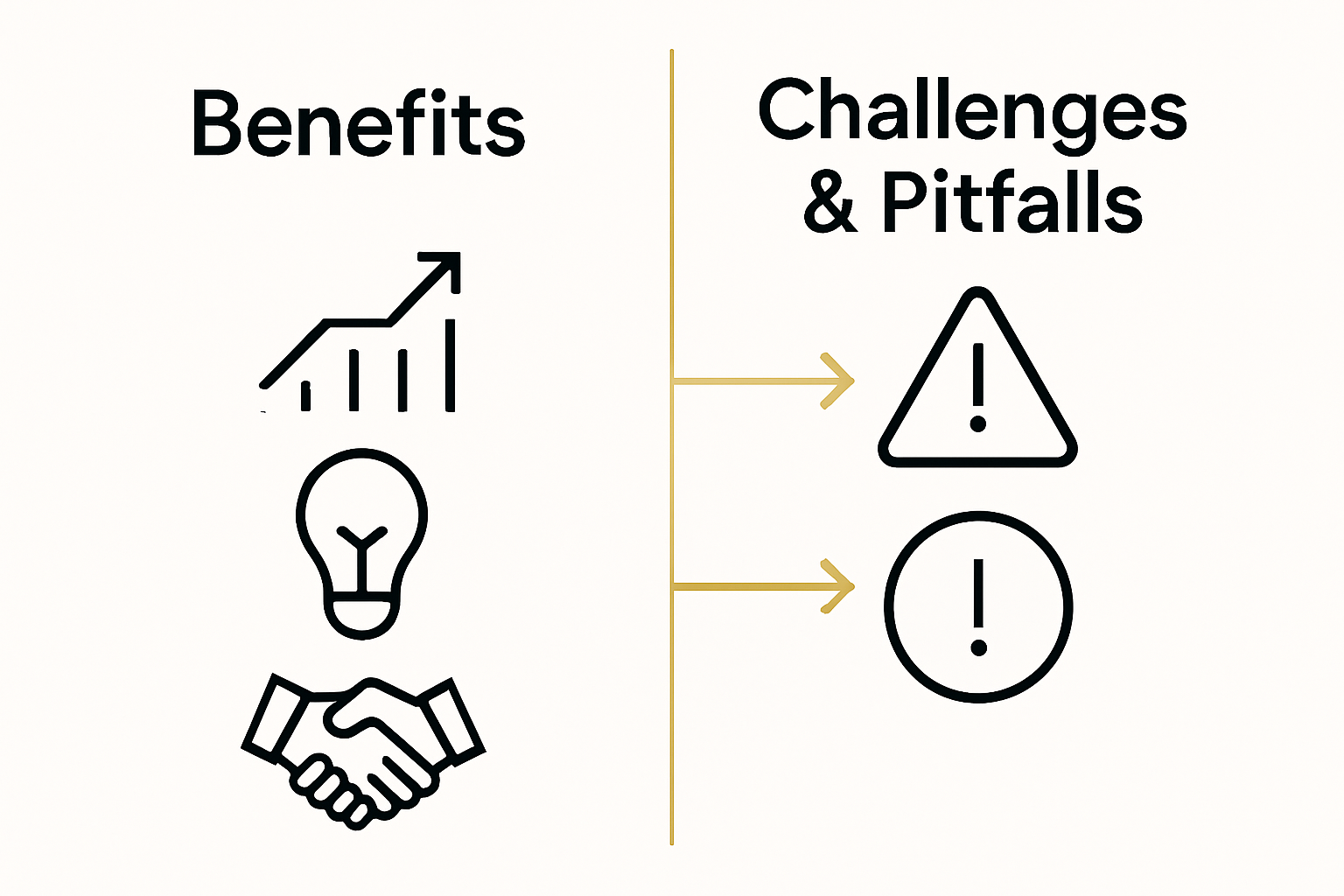
Common pitfalls emerge when organizations approach coaching as a quick fix or fail to establish robust evaluation mechanisms. Successful coaching requires genuine commitment, transparency, and a willingness to embrace uncomfortable personal and professional growth processes. Organizations must recognize that meaningful transformation demands patience, strategic alignment, and a holistic understanding of individual and collective potential.
Unlock Your Business Potential with Expert Coaching Solutions
Struggling to overcome performance gaps or looking to boost leadership capabilities These are common challenges highlighted in the Complete Guide to Business Coaching Services. Whether you want to develop strategic thinking, enhance team dynamics, or create lasting organizational growth coaching provides proven, personalized pathways to success. At Tariq Juneja, you will find tailored coaching programs designed exactly to address these pain points and transform ambitions into measurable results.
Discover how our specialized approaches in Agile Coaching Archives – Tariq Juneja and Change Management Archives – Tariq Juneja integrate strategic guidance and emotional insight to empower professionals and leaders every day.
Take the next step toward elevating your professional journey by booking a free consultation today. Explore proven coaching strategies that align with your unique goals and experience transformative change with Tariq Juneja. Don’t wait to unlock your full potential—begin your growth journey now.
Frequently Asked Questions
What is business coaching?
Business coaching is a strategic professional partnership aimed at enhancing organizational and individual performance through targeted guidance and skill development. Unlike traditional consulting, it focuses on collaboration to unlock potential and create sustainable growth strategies.
What are the key types of business coaching services?
The primary types of business coaching services include executive coaching, performance coaching, career coaching, and leadership coaching. Each type addresses specific development needs and supports professionals in navigating complex business challenges.
What skills should I look for in a business coach?
Essential skills of effective business coaches include empathy, active listening, strategic thinking, communication mastery, and emotional intelligence. These qualities enable coaches to drive meaningful professional development and foster personal growth.
How does the business coaching process work?
The business coaching process typically involves a step-by-step framework: initial assessment of client needs, goal alignment, designing intervention strategies, and ongoing performance monitoring. This structured approach ensures personalized development and measurable outcomes.
Recommended
- Complete Guide to Coaching Meaning in Business – Tariq Juneja
- Understanding the Role of Coaching in Business Growth – Tariq Juneja
- Understanding the Benefits of Business Coaching – Tariq Juneja
- Understanding Coaching for Entrepreneurs: A Comprehensive Guide – Tariq Juneja
- Why Use an Accountant: Complete Guide for Businesses
- Unternehmensberatung im BPO: Alles, was Sie wissen müssen